
日本語English
How to Choose an Audio Interface for Guitarists: 15 Best Picks by Budget
XTONES is a participant in affiliate programs including Amazon Associates and Reverb. We may earn a commission from qualifying purchases made through links on this page, at no extra cost to you.
Contents (30)
In modern guitar recording, an audio interface is far more than just a computer input—it is one of the most critical pieces of gear dictating your overall tone and playability.
Especially in home studios where amp modelers are heavily used, the quality of the incoming DI signal directly determines the realism and clarity of your final amp sound.
In this guide, we have selected 15 current audio interfaces, ranging from budget-friendly value options for beginners to flagship units that meet commercial studio standards.
We break down each model's features, capabilities, and real player feedback to help you find the best unit for your budget and setup.
5 Essential Criteria for Choosing a Guitar Audio Interface
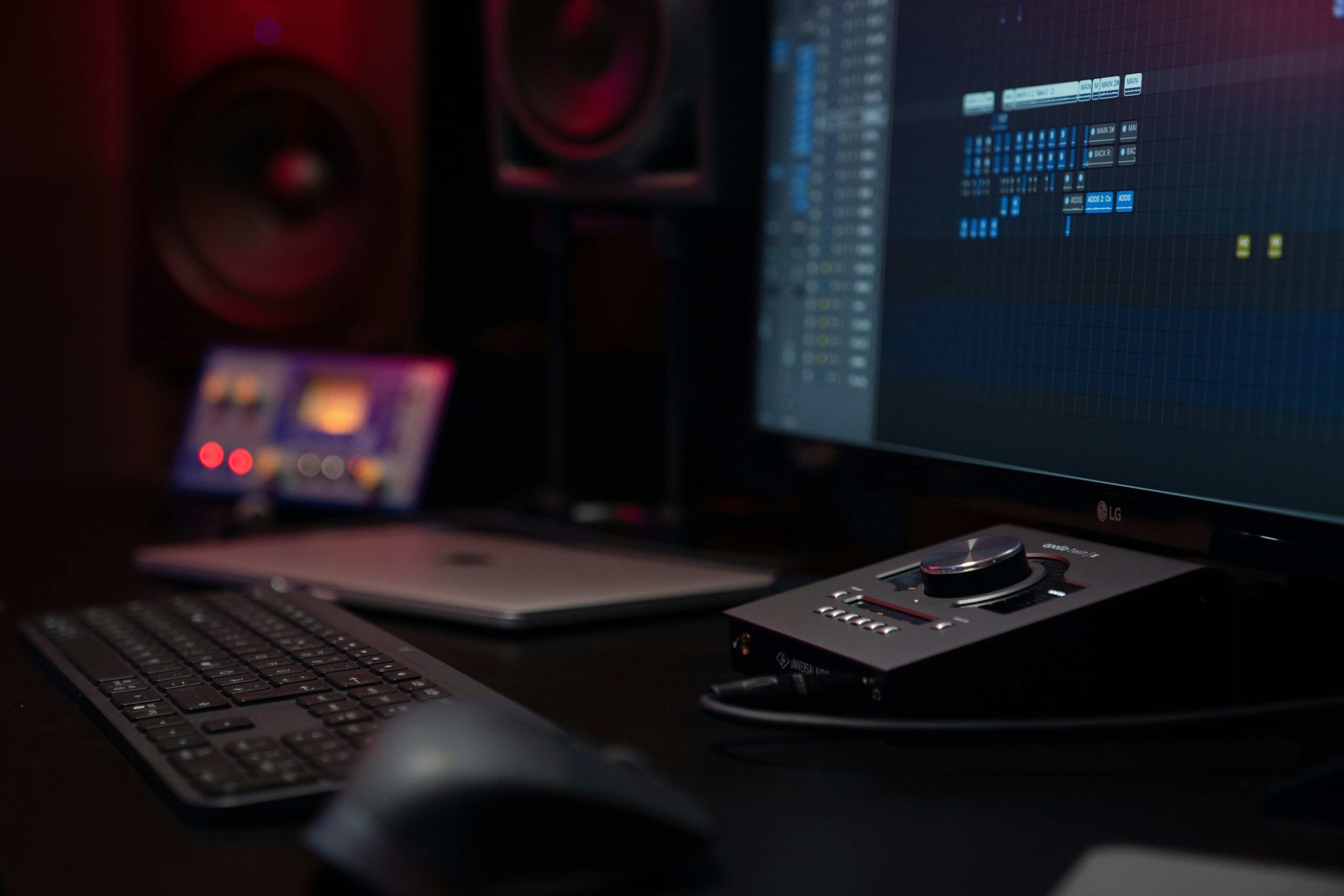
An audio interface serves as the gateway converting your guitar's raw tone into digital data, making it the central piece of gear shaping your final mix.
With modern desktop setups capable of dialing in high-end tones right at home, choosing the right interface is key.
Here are five critical criteria every guitarist should evaluate to avoid buyer's remorse.
1. Hi-Z (Instrument) Input Quality—The Foundation of Your Tone
An electric guitar's output signal is weak. Plugging straight into a standard line input rolls off the high frequencies, leaving you with a dull, muffled tone.
A dedicated Hi-Z (high-impedance) guitar input prevents this signal degradation.
If this circuit is subpar, even top-tier amp modeling software inside a DAW like Logic Pro won't deliver its full potential.
To capture every nuance of touch-sensitive boutique pedals like Vemuram or Landgraff without sacrificing clarity, choosing an interface with a proven preamp and Hi-Z circuit design is essential.
2. Low Latency and Onboard DSP for Stress-Free Playing
One of the biggest hurdles for beginners is latency—the slight delay between striking a note and hearing the processed audio back through your headphones, which can mess up your feel and groove. To solve this, consider two main approaches:
- Choose a model with onboard DSP processing: Interfaces with a dedicated processing chip (DSP) allow you to monitor high-quality amp sounds with near-zero latency, regardless of your computer's CPU load.
- Select a manufacturer with rock-solid drivers: Even without onboard DSP, highly optimized proprietary USB drivers allow you to drop your buffer size to the minimum without crackles or dropouts.
3. Sufficient I/O (Inputs/Outputs) for Rig Expansion
Assuming one input is enough because you only play one guitar can limit your setup later. To leave room for growth, we recommend selecting a model with at least 2 inputs and 2 outputs.
Output options: Beyond the primary L/R output pair for studio monitors, having auxiliary outputs lets you route separate headphone mixes or send signals to external hardware units, significantly expanding your rig's routing flexibility.
Input options: Tracking vocals and guitar simultaneously, or recording stereo time-based effects (such as delay or reverb pedals) directly in stereo (L/R), requires at least two discrete inputs.
4. Reamping Capabilities and Hardware Stompbox Integration
As your recording skills grow, you may want to reamp—sending a clean DI guitar track back out to real tube amps or compact effects pedals for re-recording.
Additionally, more guitarists are capturing their real rigs into digital formats for hardware like TONEX or Quad Cortex.
To streamline these workflows, look for interfaces equipped with dedicated reamp outputs or adjustable input impedance controls to refine your sound without needing extra hardware interfaces.
5. Connectivity and Power Supply Considerations
These operational factors are easy to overlook on a spec sheet but matter daily:
- Computer connection standard: If you use a modern Mac or Windows PC, selecting an interface with native USB-C connectivity ensures stable data transmission without relying on adapter hubs.
- Bus power vs. dedicated power supply: Bus-powered interfaces running off a single USB cable are great for travel. However, depending on your computer, low USB power can lead to performance issues or noise floor problems. For a permanent desktop studio setup, choosing a model powered by a dedicated AC adapter—or one with switchable power options—offers greater reliability.
Best Audio Interfaces Under $200
For guitarists starting home recording, the sub-$200 price point is a competitive space packed with solid technology.
Key considerations here include driver stability for low latency and bundled DAW software so you can start recording immediately.
| Feature / Spec | Steinberg UR22C | PreSonus Studio 24c | Zoom UAC-232 |
| Yen reference | about ¥18,000 (yen reference) | about ¥19,500 (yen reference) | about ¥22,000 (yen reference) |
| Approx. US street | $150 | $150 | $200 |
| Connection | USB 3.0 (Type-C) | USB 2.0 (Type-C) | USB 3.0 (Type-C) |
| Max Resolution | 32-bit / 192kHz | 24-bit / 192kHz | 32-bit float / 192kHz |
| Power Supply | Bus power / AC | Bus power only | Bus power only |
| Analog I/O | 2 In / 2 Out | 2 In / 2 Out | 2 In / 2 Out |
| Max I/O Count | 2 In / 2 Out | 2 In / 2 Out | 2 In / 2 Out |
| Hi-Z Inputs | 1 | 2 | 1 |
| Mic Preamps | 2 | 2 | 2 |
| Headphone Out | 1 | 1 | 1 |
| MIDI I/O | Yes | Yes | Yes |
| Digital I/O | None | None | None |
| Special Ports | None | None | None |
| Onboard DSP | Yes (Built-in FX) | None | None |
| Loopback | Supported | Supported | Supported |
| Bundled Software | Cubase AI | Studio One Artist | Cubase LE |
Approx. US street prices are the article’s US retail figures, rounded, as of November 6, 2026, before sales tax. Not a live quote. Figures kept in yen are a yen reference.
Steinberg UR22C: Reliable Standard with Built-in DSP
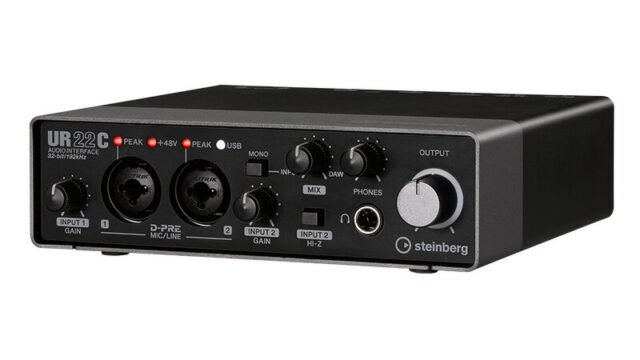
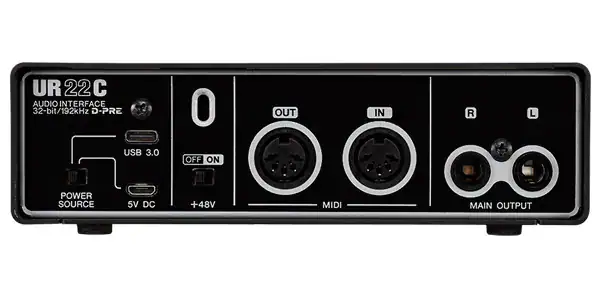
- 32-bit/192kHz High-Resolution Converters
Delivers accurate audio conversion that punches above its price point for clean, precise tracking. - Built-in DSP Mixer and FX
Monitor with onboard reverb and amp models without taxing your computer's CPU, keeping latency unnoticeable during recording. - Durable Metal Chassis
Housed in a rugged metal body built to handle travel and daily studio use over time.
The Steinberg UR22C has long been an entry-level standard for home recording.
Its main strength comes from software-hardware integration: because Steinberg develops both Cubase and the UR series, driver stability is rock-solid.
It avoids common setup issues like missing signal inputs, providing smooth performance on both Windows and Mac.
Combined with the included Cubase AI license, it offers a complete starting package for guitar recording without requiring extra software investments right away.
Positive User Feedback
- "Driver stability is great. I can boot up my PC and start playing right away without troubleshooting."
- "The heavy metal body keeps the interface anchored on the desk even when pulling on heavy instrument cables."
- "Having Cubase AI bundled allowed me to handle tracking, songwriting, and mixing right out of the box."
Critical User Feedback
- "The headphone output volume feels slightly low when driving high-impedance headphones."
- "The audio character is very flat and transparent, but it lacks some depth compared to higher-end interface preamps."

PreSonus Studio 24c: Ready to Record Out of the Box with Studio One
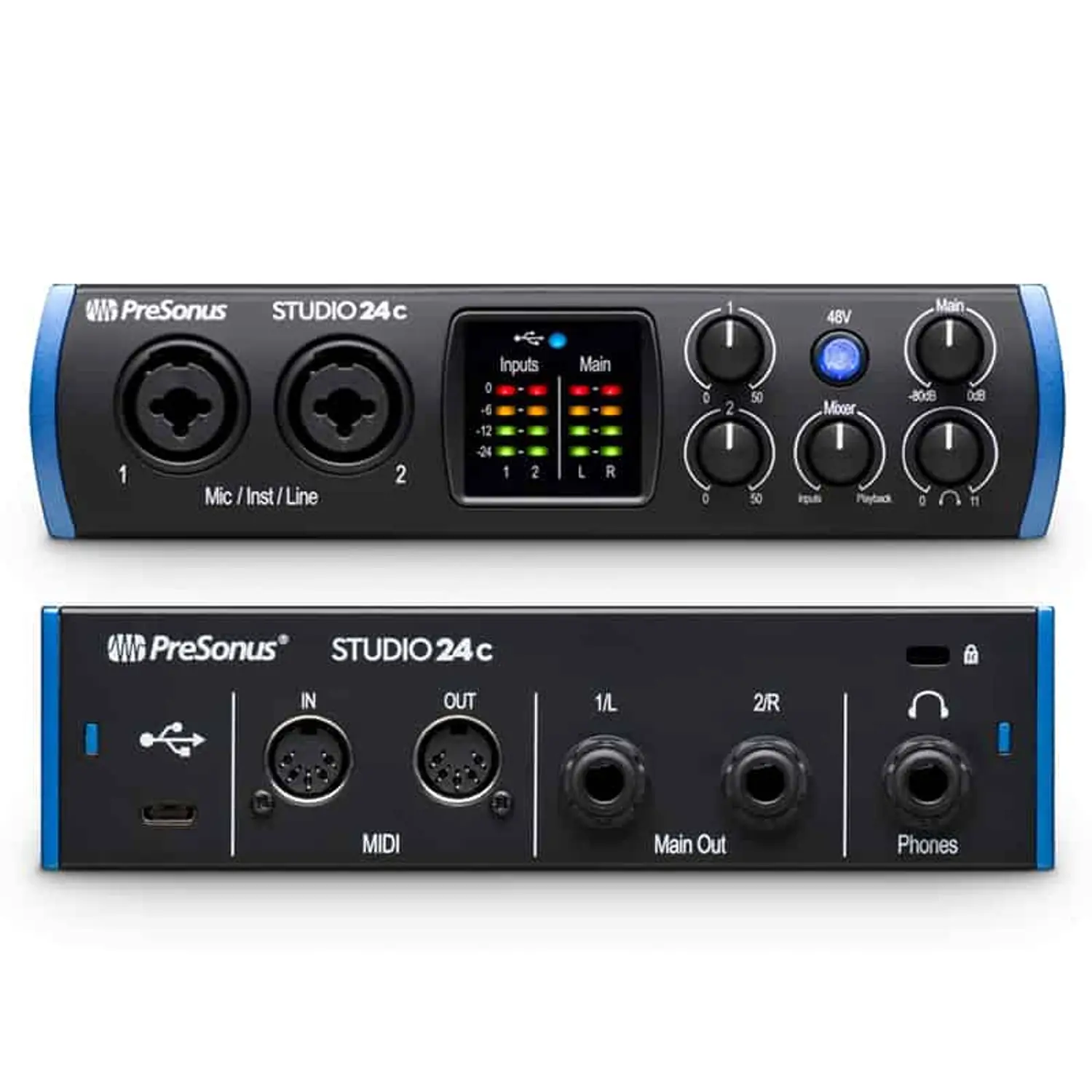
- XMAX-L solid-state mic preamps
- Inherits design principles from PreSonus's high-end consoles, delivering clear sound with plenty of headroom.
- Easy-to-read LED level meters
- Front-panel LED meters display input and output levels separately, making it simple to monitor for clipping.
- Includes full version of Studio One Artist
Bundled with a powerful DAW featuring minimal restrictions, letting you freely add third-party plugins for serious mixing.
The PreSonus Studio 24c is a capable entry-level audio interface that offers a complete ecosystem for music production. Its biggest highlight is the inclusion of Studio One Artist, a DAW highly favored by guitarists for its intuitive workflow. While the free DAW versions bundled with most interfaces impose strict track limits, the Artist edition allows you to load third-party amp modeling plugins to dial in your tone in detail. Additionally, the front-panel LED meters let you instantly verify that your signal isn't clipping during heavy rhythm guitar playing, helping prevent ruined takes.
Positive feedback
- "Getting Studio One Artist alone makes it worth more than the price tag. Recording and editing guitar tracks is effortless."
- "The level meters are great—it's super helpful to visually dial in your guitar gain settings."
- "Thanks to the XMAX preamps, direct-recorded clean tones come through with fantastic clarity and presence."
Negative feedback
- "The gain knobs are a bit small, so your fingers can slip when making precise adjustments."
- "When plugging in a bass with active pickups, the input signal felt a bit hot even with the gain turned all the way down."

Zoom UAC-232: Next-Gen Interface with 32-Bit Float Recording to Prevent Clipping
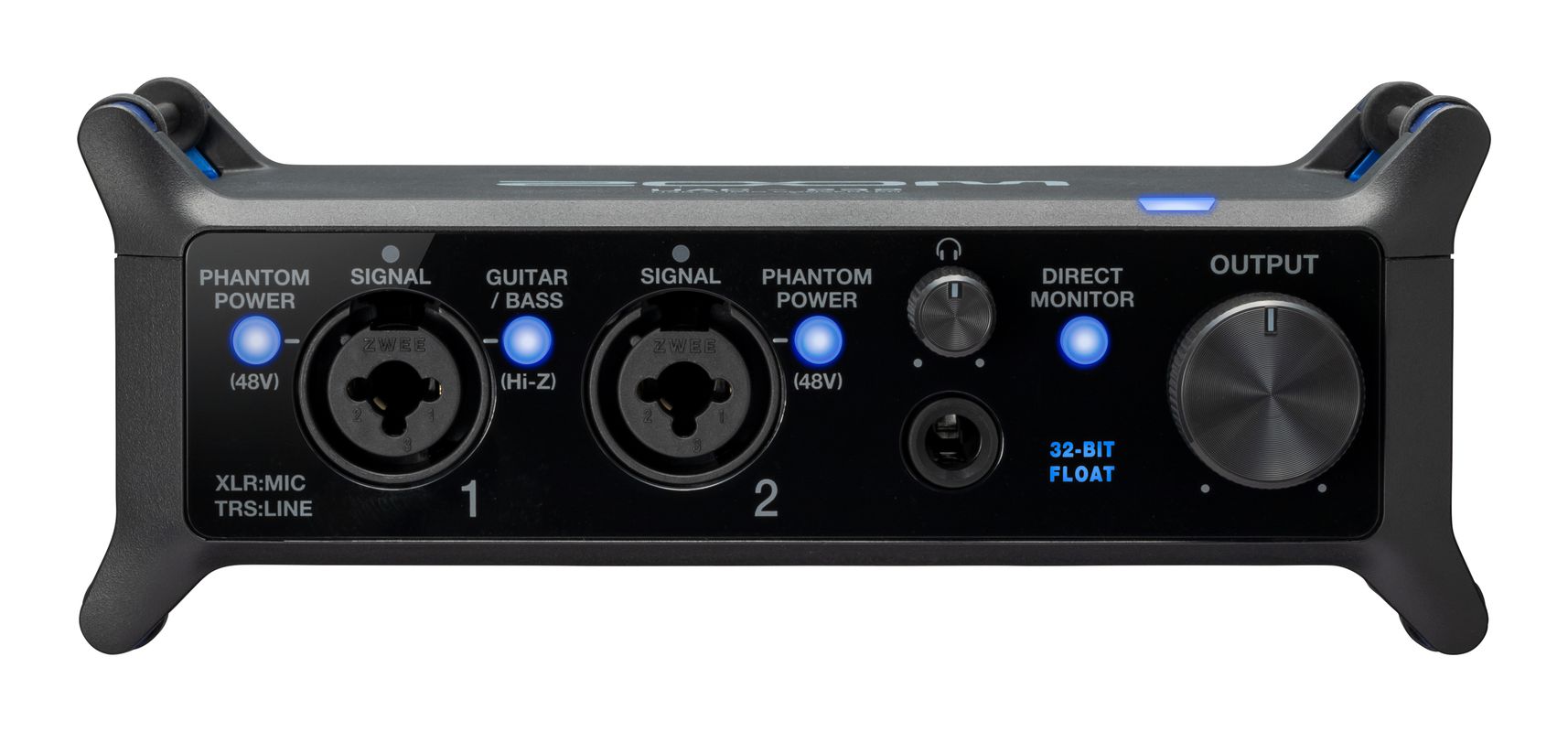
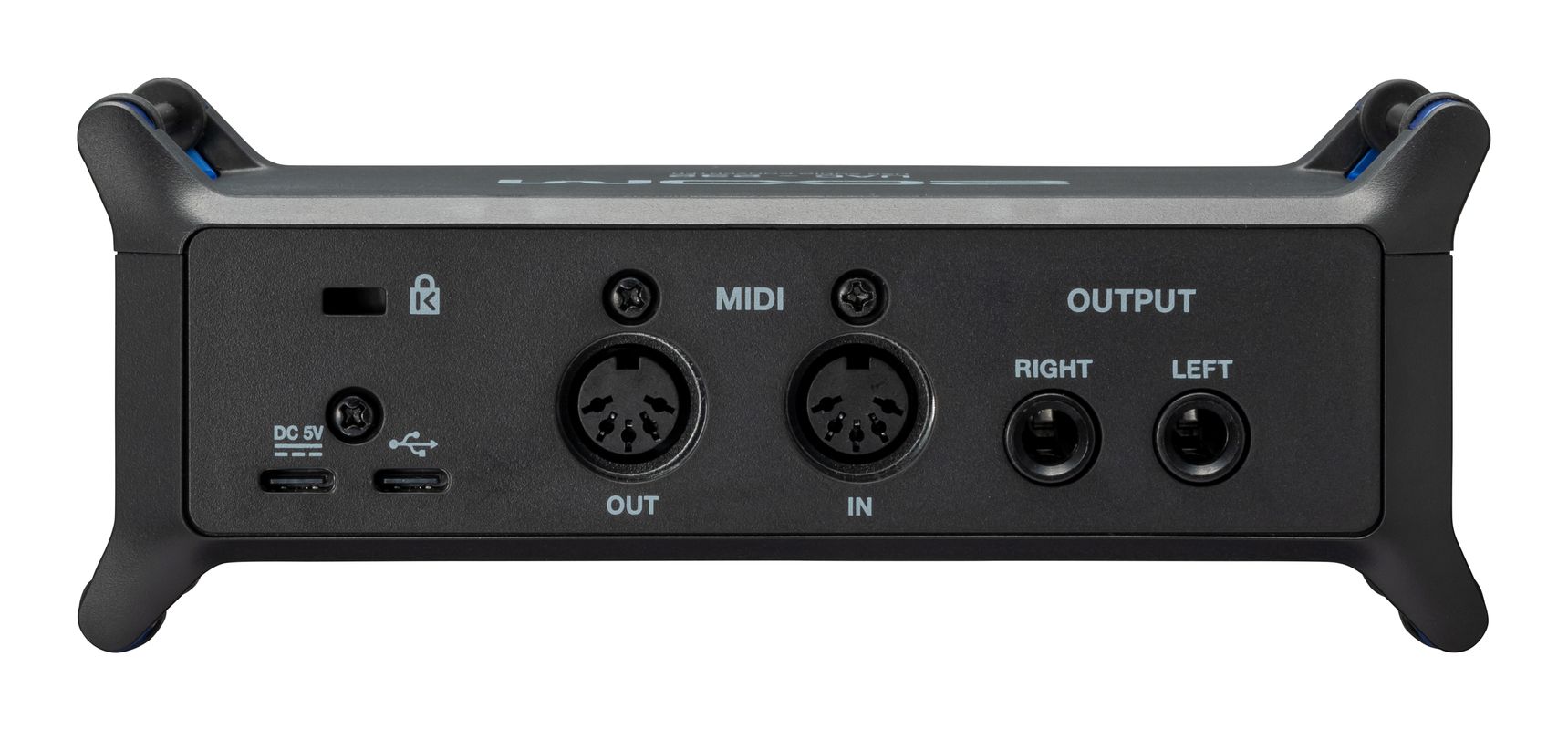
- 32-Bit Float Recording Technology
Dual AD converter circuits eliminate digital clipping entirely, no matter how loud the input signal gets. - High-Quality F-Series Preamps
Inherits preamp circuitry from Zoom's acclaimed F-series field recorders, delivering exceptionally low noise and crystal-clear sound capture. - Lightweight, Compact Chassis
Supports both vertical and horizontal orientation to save desktop space, making it easy to carry to studio sessions.
The Zoom UAC-232 is a next-generation audio interface designed to eliminate digital clipping during tracking. Its 32-bit float recording capability shines during wide dynamic swings, such as shifting from quiet arpeggios to heavy strumming. Traditionally, preventing clipping required precise gain adjustment, but with this unit, you don't need to adjust gain knobs at all—you can normalize or adjust the audio signal later in your DAW. Even when tracking high-gain amps, you don't have to worry about input headroom, letting you focus purely on your performance.
Positive Feedback
- "I didn't realize how liberating it is to not worry about gain staging. I can start playing right away without ever clipping."
- "It's extremely lightweight, so carrying it with my laptop to the studio is effortless."
- "The preamps are remarkably quiet, which significantly cuts down on the background hiss you usually get with high-gain amp sounds."
Negative Feedback
- "The plastic enclosure feels a bit cheap, and the knobs feel light."
- "It doesn't come bundled with software like some other brands, so you'll need to supply your own DAW."

[$150–$350 Range] Go-To Interfaces That Unlock Amp Sim Potential
In this price bracket, AD/DA converter quality takes a significant step up, giving your incoming DI signal much higher resolution.
This allows software amp simulators to reproduce tube saturation and picking response far more realistically.
Another major draw of this class is the inclusion of dedicated analog circuitry that adds custom audio character.
| Feature | Focusrite Scarlett 2i2(Gen4) | Universal Audio Volt 276 | MOTU M2 | SSL SSL 2 | audient iD14mkII |
| Yen reference | about ¥29,700 (yen reference) | about ¥42,000 (yen reference) | about ¥31,000 (yen reference) | about ¥34,000 (yen reference) | about ¥36,500 (yen reference) |
| Approx. US street | $200 | $300 | $200 | $250 | $300 |
| Connectivity | USB 2.0 (Type-C) | USB 2.0 (Type-C) | USB 2.0 (Type-C) | USB 2.0 (Type-C) | USB 3.0 (Type-C) |
| Max Resolution | 24-bit / 192 kHz | 24-bit / 192 kHz | 24-bit / 192 kHz | 24-bit / 192 kHz | 24-bit / 96 kHz |
| Powering | Bus power / External | Bus power / External | Bus power only | Bus power only | Bus power only |
| Analog I/O | 2-in / 2-out | 2-in / 2-out | 2-in / 2-out | 2-in / 2-out | 2-in / 4-out |
| Max I/O Count | 2-in / 2-out | 2-in / 2-out | 2-in / 2-out | 2-in / 2-out | 10-in / 4-out |
| Hi-Z Inputs | 2 | 2 | 2 | 2 | 1 (JFET) |
| Mic Preamps | 2 | 2 | 2 | 2 | 2 |
| Headphone Outputs | 1 | 1 | 1 | 1 | 2 (1/4" & 1/8") |
| MIDI I/O | None | Yes | Yes | None | None |
| Digital I/O | None | None | None | None | ADAT input only |
| Extra Ports | None | None | None | None | None |
| DSP Features | None (Auto Gain) | None (Analog circuit) | None | None | None |
| Loopback | Yes | No | Yes | Yes | Yes |
| Bundled Software | Ableton Live Lite | Ableton Live Lite | Performer Lite, etc. | SSL Production Pack | Cubase LE |
Focusrite Scarlett 2i2: The Modern Standard with Auto Gain
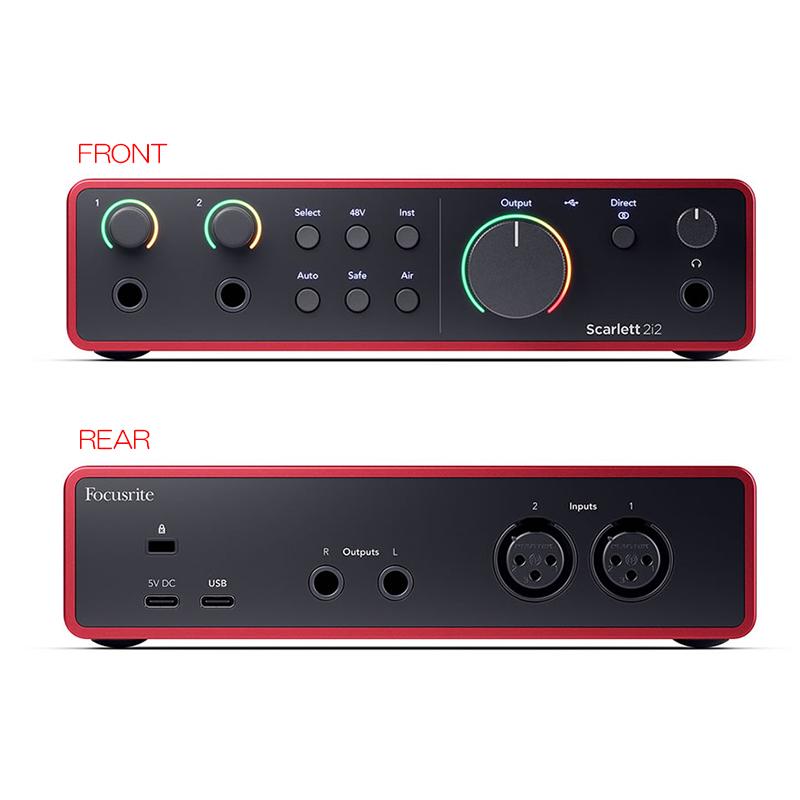
- Wide 120 dB Dynamic Range
Features converters shared with flagship models, capturing subtle picking nuances and dynamic chord playing with exceptional clarity. - Auto Gain and Clip Safe
Automatically configures optimal input levels after a few seconds of playing, while Clip Safe prevents clipping from sudden volume spikes. - Air Mode for Analog Character
Emulates the classic ISA console, adding top-end sparkle and rich midrange harmonics at the press of a button.
This is the latest 4th-generation release of the world's best-selling audio interface. The Scarlett 2i2 Gen 4 goes beyond simple spec bumps by introducing smart features that streamline a guitarist's recording workflow. With Auto Gain, simply play your dynamic passages for a few seconds to set perfect gain levels. The redesigned Air mode adds musical harmonics to clean guitar DI tracks, emulating a vintage console so your tone cuts through the mix naturally.
Positive Reviews
- “Auto Gain is amazing. No more tweaking knobs while checking DAW meters—you can jump right into recording.”
- “Upgraded from Gen 3 and the clarity difference is night and day. The highs cut through much better, making amp sims sound far more realistic.”
- “Engaging Air mode on clean tones instantly makes them sound thick and glossy.”
Negative Reviews
- “Older computer USB ports couldn't supply enough power, so I needed a separate power adapter to use certain features.”
- “The interface hardware is fantastic, but the shipping box was a bit beat up when it arrived.”

Universal Audio Volt 276: Built-in 1176-Style Analog Compressor
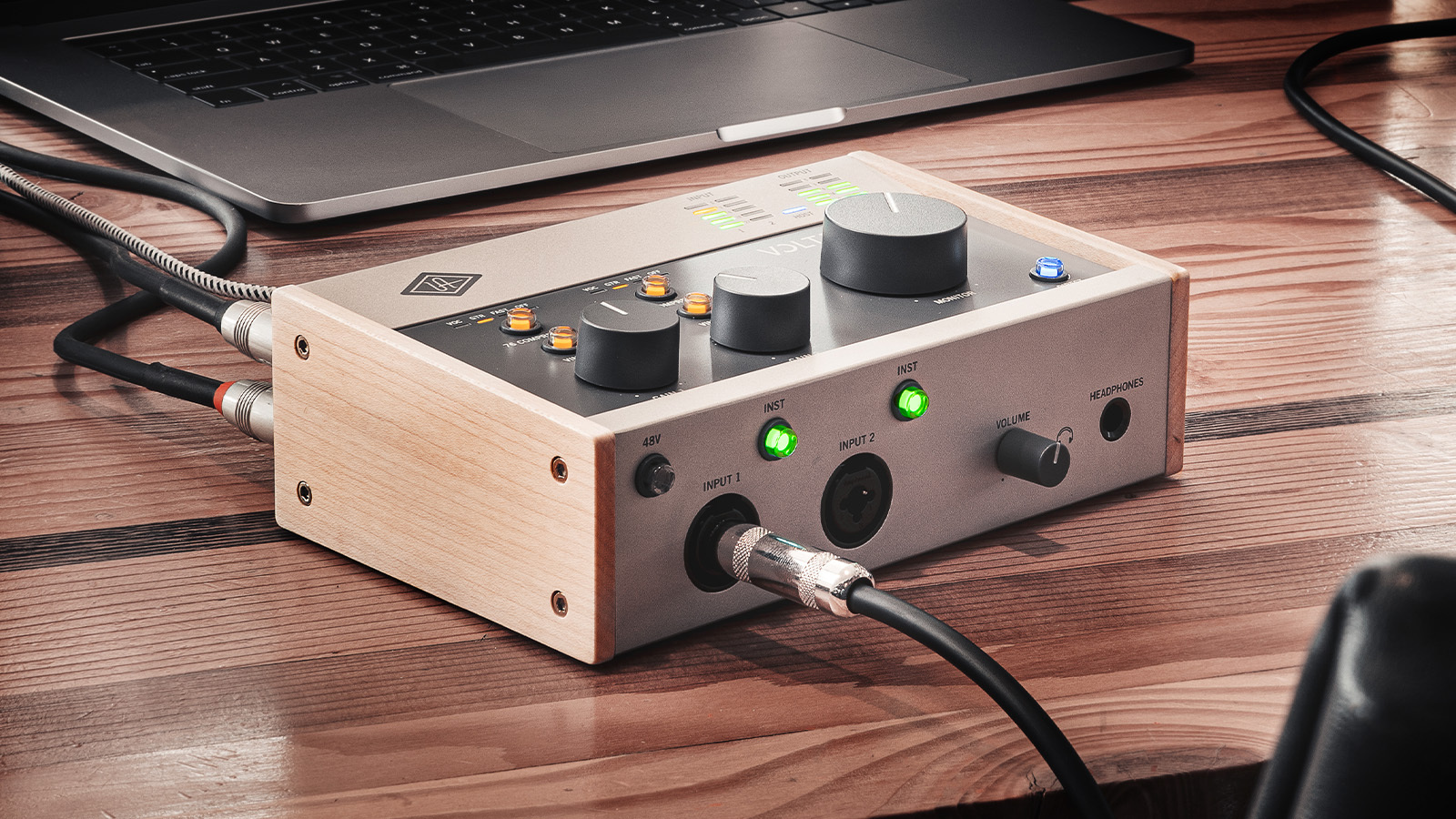
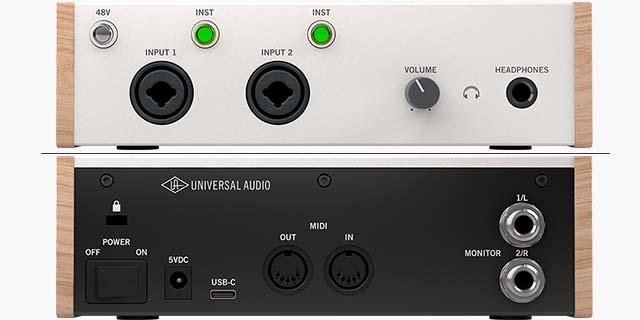
- Built-In Analog 76 Compressor Circuit
Features an onboard analog compressor based on the circuit of the legendary 1176 hardware compressor. - Vintage Mic Preamp Mode
Emulates the rich sound of UA's iconic 610 tube preamp, delivering thick, warm tone at the push of a button. - Sleek Wooden Side Panels
Crafted with wood side panels reminiscent of vintage gear, creating an inspiring aesthetic for your desk.
The Universal Audio Volt 276 is a unique audio interface focused on dialing in a finished sound right at the input stage. Its standout feature is an analog compressor built with genuine hardware circuitry rather than digital effects. When tracking rhythm guitar or slap bass, this onboard analog compressor tames initial attack transients before the audio hits your DAW, making post-processing significantly easier. Engaging Vintage mode strips away digital sterility and physically adds analog weight ahead of amp modelers, making it a powerful asset for tone-conscious guitarists.
Positive Reviews
- "The compressor works amazingly well. Just running rhythm guitar through it gives you a cohesive, professional sound."
- "Tracking bass DI with Vintage mode engaged adds a natural saturation plugins can't match, resulting in a thick, punchy tone."
- "It looks fantastic. The wooden side panels instantly elevate the vibe of the studio setup."
Negative Reviews
- "It doesn't include DSP control software, so it's not ideal for complex routing setups."
- "If you don't intend to use the compressor or Vintage mode, it feels a bit expensive considering the channel count alone."

MOTU M2: Exceptional Playback Clarity and High-Visibility Metering in Its Class
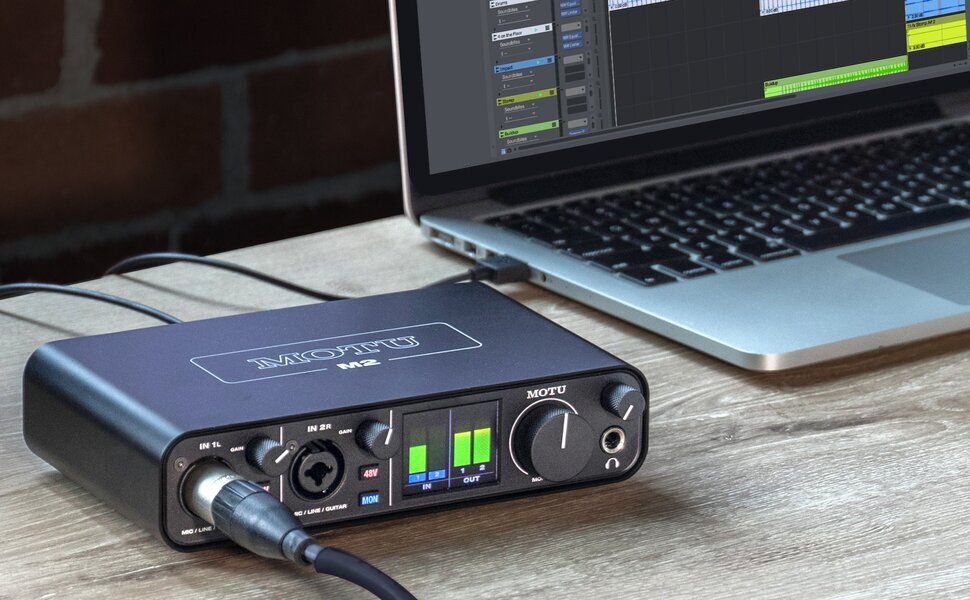
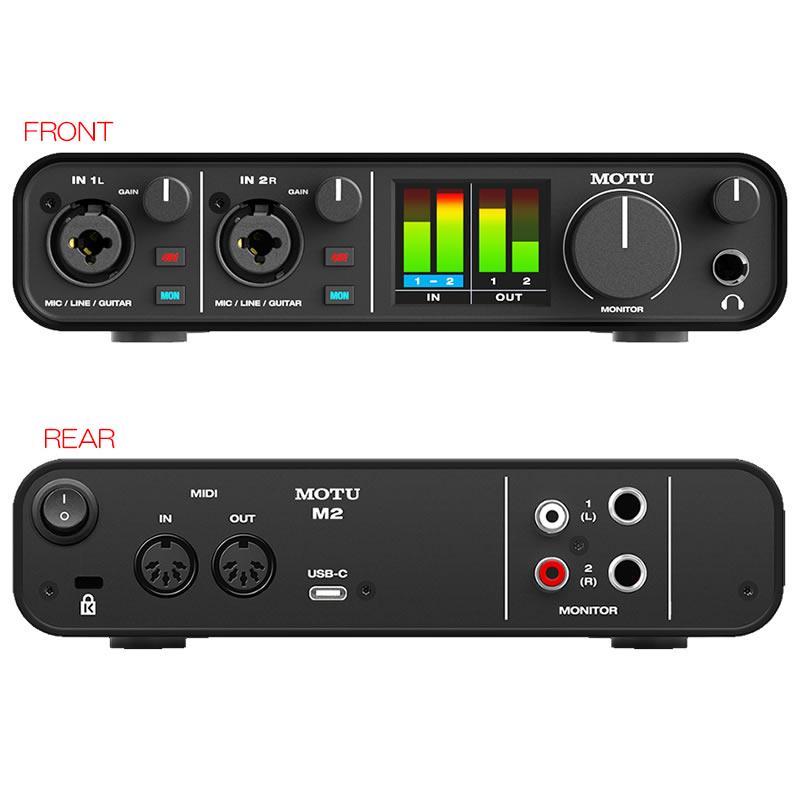
- ESS Sabre32 Ultra DAC Technology
Features top-tier DA converters found in high-end gear costing thousands of dollars, delivering stunning playback quality. - Full-Color LCD Level Meters
Equipped with a crisp full-color display that lets you monitor input and output levels visually with extreme precision. - Optimized Ultra-Low Latency Design
Proprietary drivers deliver minimal round-trip latency, making it ideal for real-time playing and tracking.
Ever since its release, the MOTU M2 has built a dedicated following—so much so that it was hard to keep in stock for a long time. The key to its popularity is sound quality that far punches above its price class. The conversion clarity reveals everything from low-end string separation on guitar to the subtle tails of reverb decay. This lets you hear precisely where your guitar tone sits in the mix. Additionally, latency—often a dealbreaker when running amp software—is kept extremely low, while the highly visible color meters are a massive asset during guitar tracking when precise gain staging is required.
Positive Reviews
- "The output sound quality is good enough to use purely for music listening. I could even pick out bass ghost notes I'd never heard before."
- "The LCD display is beautiful and makes peak levels super easy to spot. It's impressive to get a screen like this at this price point."
- "Driver stability and low latency on Mac are outstanding. Playing through amp sims feels much closer to playing a real amp."
Negative Reviews
- "It's so popular that stock shortages can make it hard to buy right when you want one."
- "The headphone amp output is a bit modest; you'll need to crank the volume to fully drive high-impedance studio headphones."

SSL (Solid State Logic) SSL 2: Legendary Console Sound with "4K" Analog Enhancement
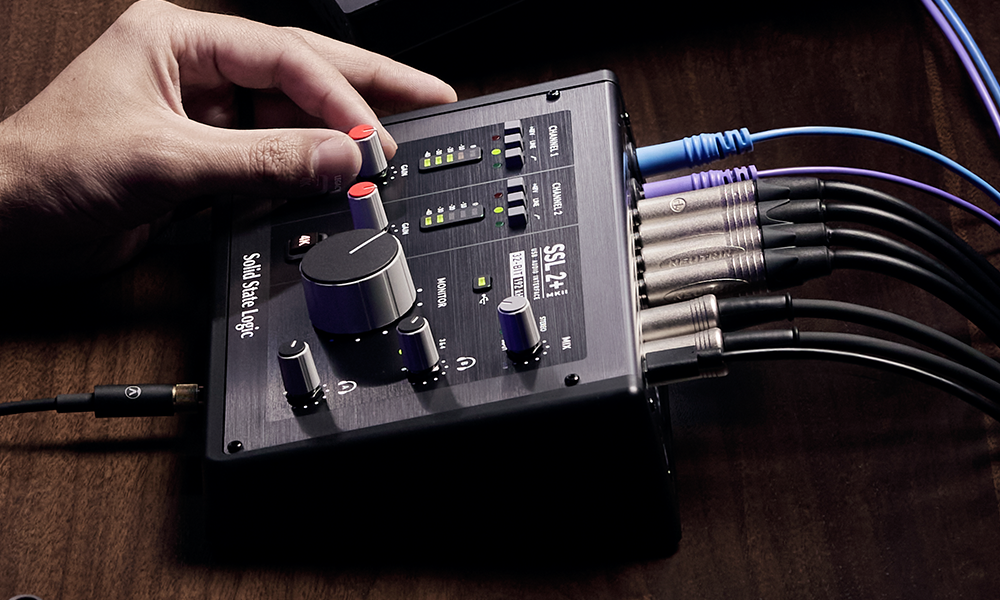
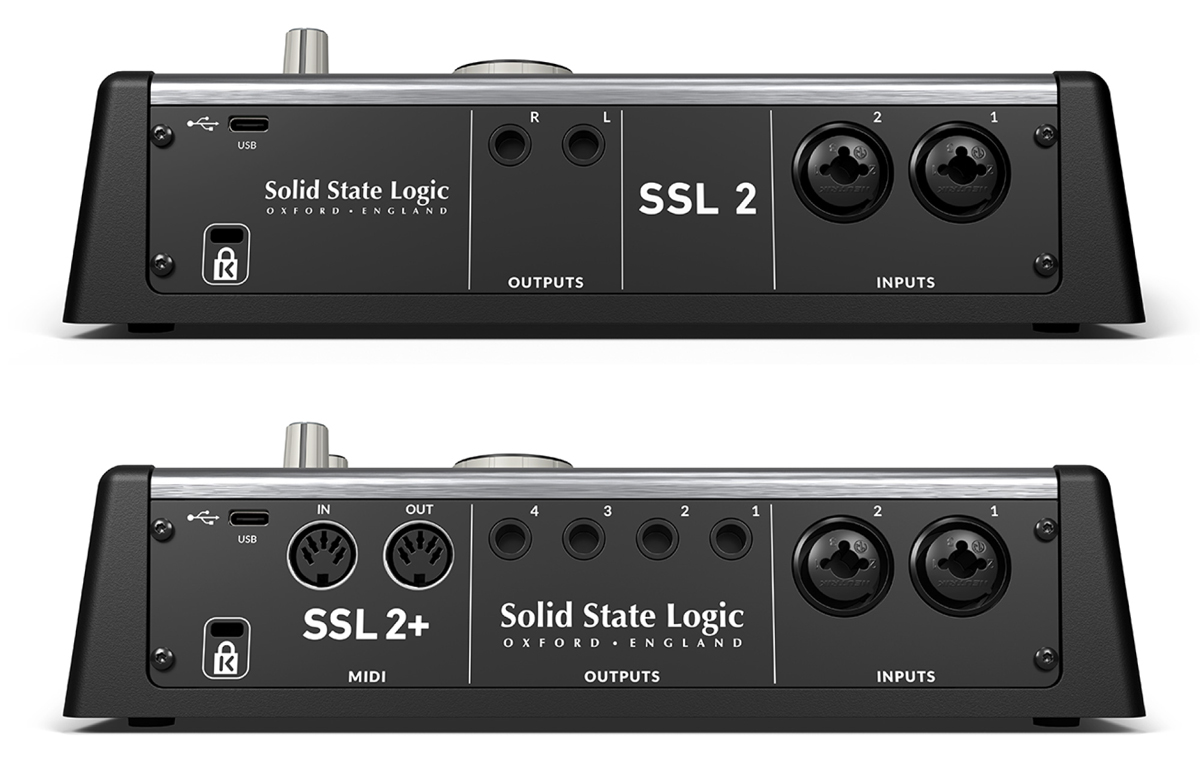
- SSL-designed mic preamps
Ultra-clean preamps carrying the signature sound character of SSL consoles, a world standard in professional recording studios. - Legacy 4K analog enhancement
Emulates the sound of iconic SSL 4000-series consoles by adding high-frequency EQ boost and musical analog saturation. - Pro-grade high-current headphone amp
High-current output easily drives headphones of any impedance with plenty of headroom.
The SSL 2 packs the lineage of massive SSL consoles—which shaped countless iconic records—into a compact desktop interface. For guitarists, what stands out most is the dedicated 4K button. Engaging this switch adds high-frequency EQ boost and subtle analog harmonics characteristic of classic SSL consoles. Turning it on when tracking slightly dark humbucker guitars or direct acoustic guitars sharpens note definition, producing articulate tracks that cut right through the mix. Musicians also appreciate the top-panel layout, which makes dialing in settings fast and intuitive.
Positive User Feedback
- "The 4K button works wonders. Engaging it on acoustic guitar tracking gives crisp clarity without needing post-recording EQ tweaks."
- "The headphone amp has serious power. Even when monitoring guitars at loud volumes, the sound stays clean without breaking up."
- "High-quality components throughout. The knobs have a nice smooth resistance and feel premium."
Critical Feedback
- "It doesn't offer both RCA and TRS outputs, so cable management might take some planning depending on your setup."
- "All inputs and outputs are on the rear panel, which can be slightly inconvenient if you swap guitar cables frequently."

Audient iD14mkII: High-Grade Console-Class Mic Preamps
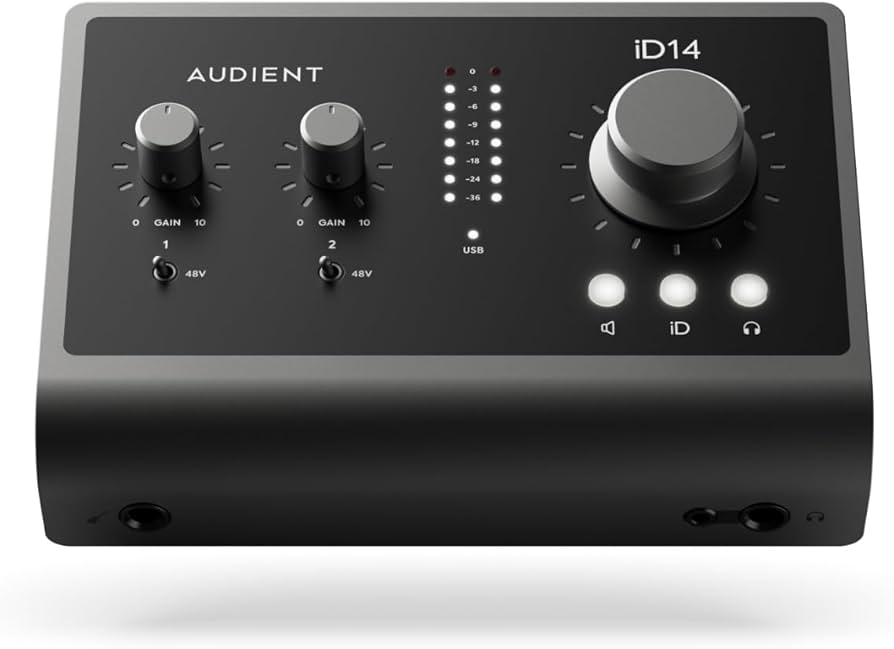
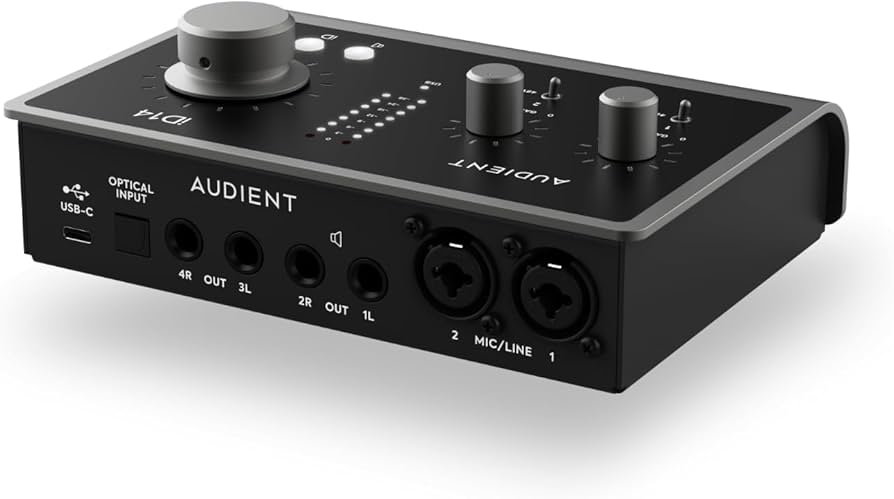
- Audient Console Mic Preamps
Features the same Class-A mic preamp circuit found in their large-format recording consoles, delivering punchy, articulate tone well beyond its price tag. - Dedicated JFET Instrument Input
Uses a JFET circuit designed to mimic a tube amp's input stage for guitar, delivering rich harmonics and a natural feel. - Expandable ADAT Digital Input
Equipped with an ADAT input, allowing you to expand your setup up to 10 inputs by adding an external 8-channel preamp.
The Audient iD14mkII stands out in its price range when it comes to guitar direct input quality. The dedicated instrument input on the front panel utilizes a custom JFET circuit. Featuring electrical characteristics very similar to classic tube amp input stages, plugging your guitar directly into it adds rich harmonics reminiscent of running through an analog pedal. This transforms software amp tones—which can often sound cold or digital—into something much more organic. It is an outstanding interface built with an uncompromised, guitar-first design from input to output.
Positive Feedback
- "I noticed the difference the moment I plugged my guitar into the front JFET input. It captures a thick, solid tone without that thinness typical of standard DIs."
- "The machined aluminum body feels extremely solid, and the knobs have just the right amount of resistance. It's a really satisfying interface to own."
- "Being able to expand inputs later via ADAT is great—you won't need to replace it if you eventually want to track multi-channel drums."
Negative Feedback
- "The routing setup in the dedicated iD mixer software was a bit complex and took some time to get used to."
- "It runs on USB bus power, but getting full performance requires a PC port with sufficient power output."

Around $350–$650: 4 Interfaces for Reamping and Pedals
Past the entry-level price, you enter the realm of advanced gear built around key rig needs—variable input impedance, insert jacks for physical pedal integration, and real-time onboard DSP processing that lets you run plugins without taxing your computer CPU.
| Feature | IK Multimedia AXE I/O | audient iD24 | Apogee Duet 3 | Universal Audio Apollo Solo |
| Yen reference | about ¥55,000 (yen reference) | about ¥62,000 (yen reference) | about ¥88,000 (yen reference) | about ¥84,000 (yen reference) |
| Approx. US street | $350 | $400 | $650 | $500 |
| Connectivity | USB 2.0 (Type-B) | USB 3.0 (Type-C) | USB 2.0 (Type-C) | TB3 or USB-C |
| Max Resolution | 24-bit / 192kHz | 24-bit / 96kHz | 24-bit / 192kHz | 24-bit / 192kHz |
| Power Supply | AC adapter required | Bus-powered only | Bus-powered only | Bus-powered (TB version) |
| Analog I/O | 2 In / 5 Out | 2 In / 4 Out | 2 In / 4 Out | 2 In / 2 Out |
| Max I/O Count | 2 In / 5 Out | 10 In / 14 Out | 2 In / 4 Out | 2 In / 4 Out |
| Hi-Z Inputs | 2 (with Z-Tone) | 1 (JFET) | 2 | 1 |
| Mic Preamps | 2 | 2 | 2 | 2 |
| Headphone Out | 1 | 2 (1/4" & 1/8") | 1 | 1 |
| MIDI I/O | Yes | No | No | No |
| Digital I/O | None | ADAT I/O | None | None |
| Specialized Ports | Amp Out (Reamping) | Insert jacks | None | None |
| DSP Features | None (Built-in tuner) | None | Yes (ECS Channel Strip) | Yes (UAD-2) |
| Loopback | No | Yes | No | Yes |
| Bundled Software | AmpliTube 5 CS | Cubase LE | Ableton Live Lite | LUNA / UAD plugins |
IK Multimedia AXE I/O: Z-Tone Loaded, Purpose-Built for Guitar
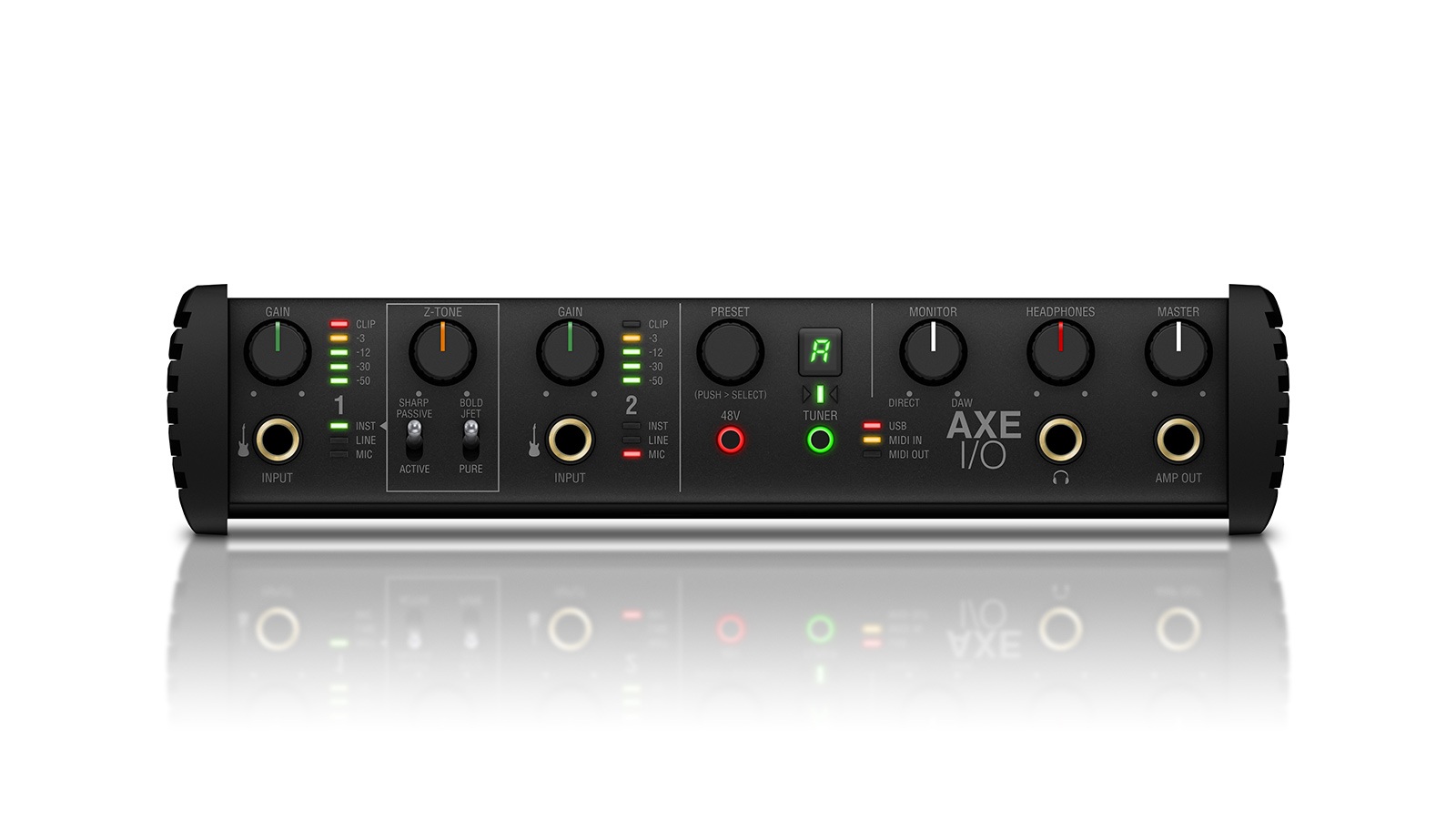
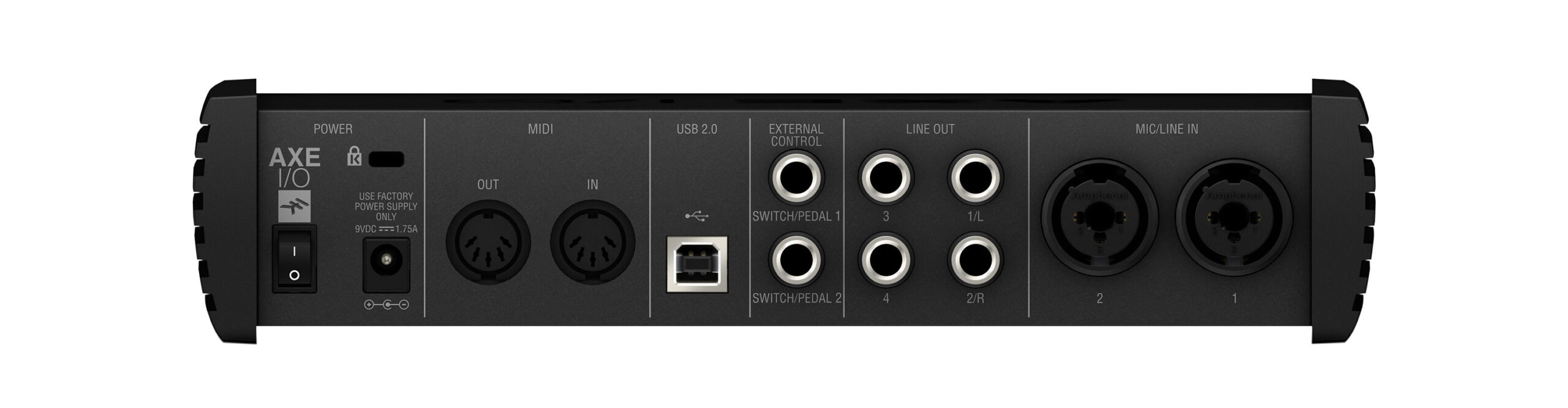
- Proprietary Z-Tone Impedance Control
Continuously varies guitar input impedance to physically adjust pickup character, dialing in everything from sharp tone to a thick, warm voice with stepless control. - Active/Passive Pickup Switch
Selects the optimal circuit for your guitar's pickups at the touch of a switch, preventing unwanted tone coloration or clipping. - Dedicated Amp Out (Reamp Output)
Features an amp-output jack with a built-in ground-loop isolator, allowing you to send recorded tracks straight back out into a real amp.
The IK Multimedia AXE I/O is a dedicated audio interface designed from the ground up for guitarists and bassists. The key innovation is the Z-Tone control on the front panel. While standard interface inputs are fixed, turning the Z-Tone knob lowers impedance to smooth out harsh high end and push mid-range body, creating vintage-style character directly at the hardware stage. Plus, standard inclusion of a dedicated reamp output means you don't need to buy a separate reamp box. Seamless integration with the included AmpliTube software keeps workflow intuitive.
Positive User Reviews
- "The Z-Tone knob feels like a secret weapon. Taming harsh highs at the input stage saves so much time on post-EQing."
- "Being able to reamp noise-free with a single cable is amazing. After tracking, I can take my time tweaking knobs on real pedals to shape my tone."
- "Dedicated hardware controls for AmpliTube mean I rarely have to reach for the mouse."
Critical User Reviews
- "No complaints about the guitar inputs, but the mic preamps are pretty average. It might fall a bit short if your main focus is recording vocals."
- "The unit is surprisingly bulky and takes up significant desk space. You'll definitely need to plan out room for it."

Audient iD24: Easy Integration for Hardware Pedals via Dedicated Inserts
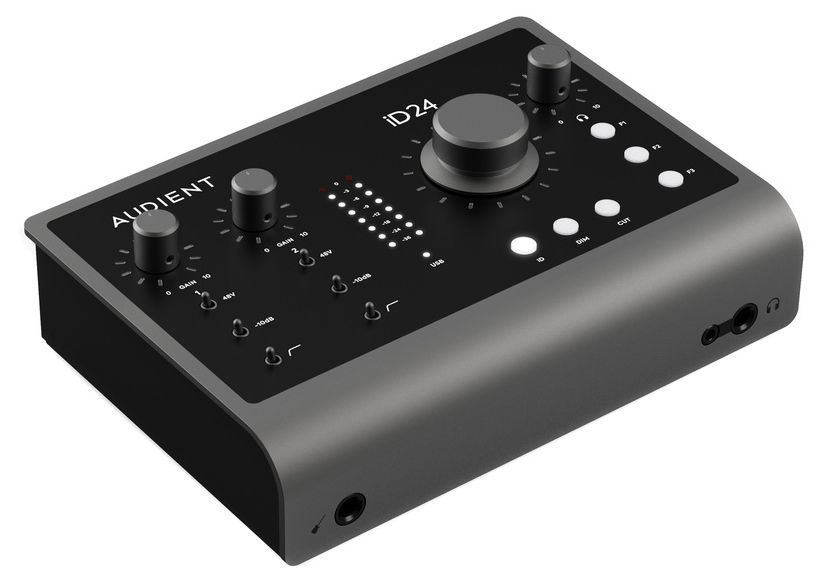
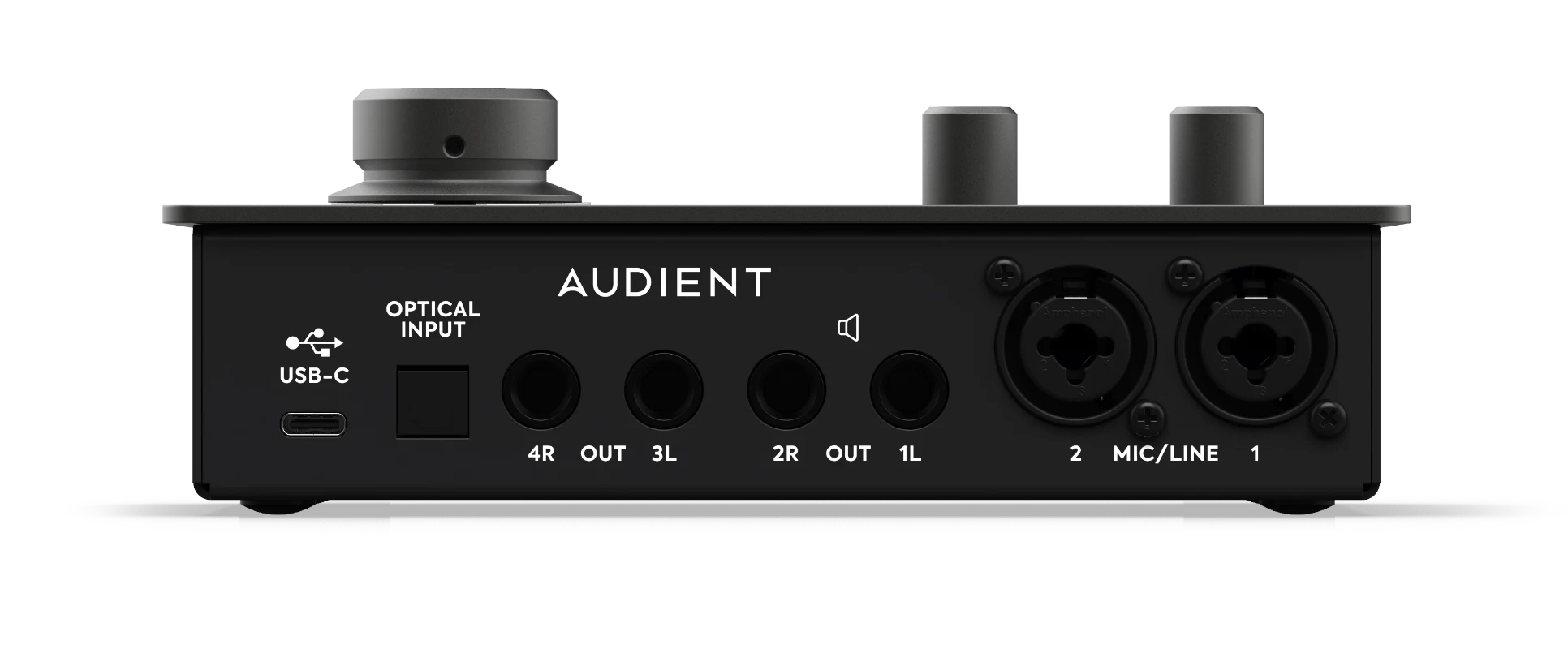
- Balanced Hardware Inserts
Equipped with insert points positioned before the converters, allowing you to integrate your favorite analog pedals directly into your recording signal chain. - Audient Console Mic Preamps
Uses the same full-size console preamps found in higher-end models, delivering whisper-quiet operation and an ultra-wide dynamic range. - Three User-Defined Smart Keys
Assignable physical buttons let you map essential monitor controls like speaker switching and talkback for fast access.
The Audient iD24 delivers authentic console-style routing in a desktop interface. For guitarists, the dedicated hardware insert jacks are a huge asset. They allow you to track through your favorite analog overdrive pedals in pure analog before conversion to digital. Capturing the rich saturation of an analog fuzz pedal without signal degradation makes this an outstanding choice for building a hybrid guitar tone setup.
Positive Feedback
- "Thanks to the insert jacks, I can record hardware pedals on my pedalboard into the DAW with pristine audio quality."
- "The metal toggle switches have a firm, satisfying click—the physical tactile controls are best in class."
- "The balance between the thick sound of the JFET input and the converter resolution is incredible. Recorded tracks sound mix-ready right away."
Negative Feedback
- "The solid metal chassis makes it feel surprisingly heavy, so it is not ideal for portable gear setups."
- "Because it offers so much routing flexibility, mastering the matrix software requires a slight learning curve."

Apogee Duet 3: Built-In DSP with Ultra-Clear, Uncolored Sound
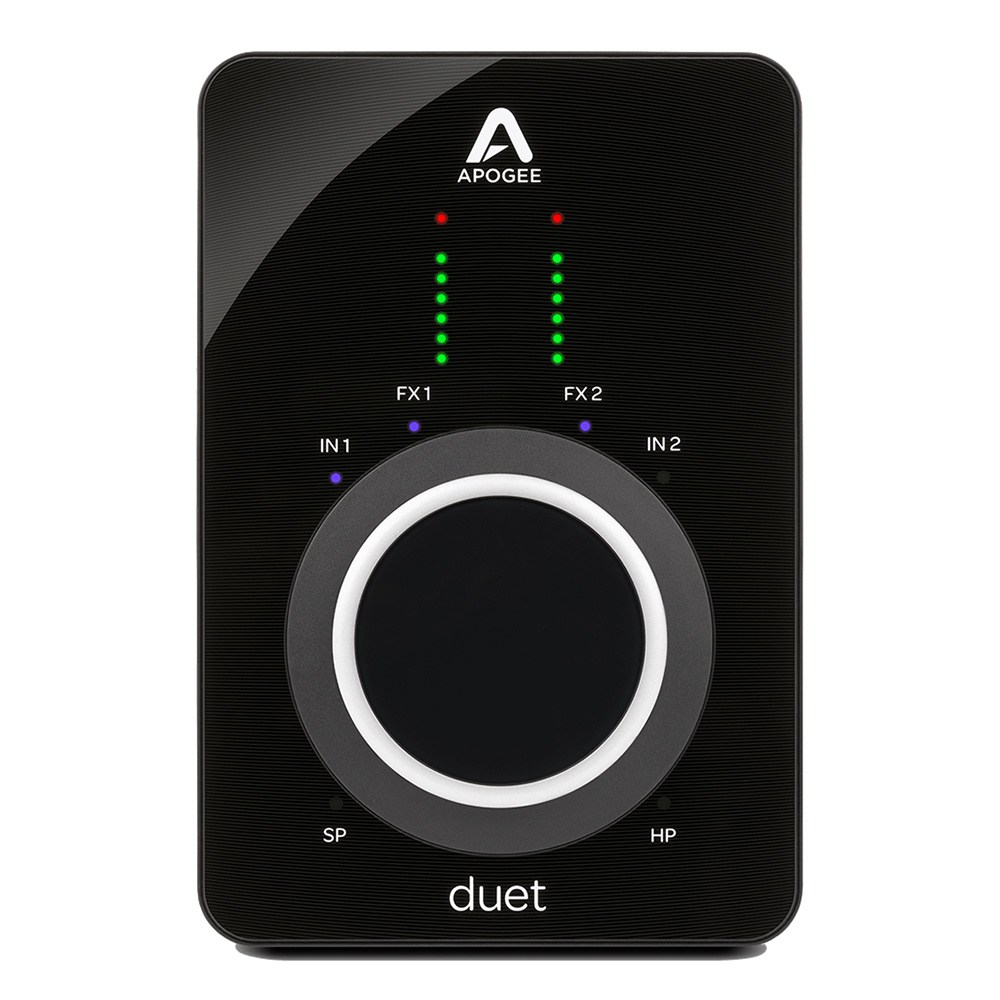
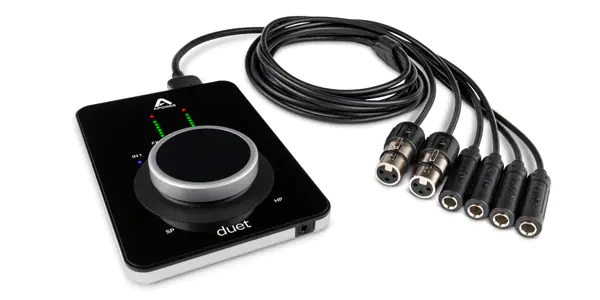
- Advanced Stepped Gain Architecture
Combines analog and digital benefits to maintain an ultra-low noise floor even at high gain settings. - Built-In Symphony ECS Channel Strip
Track through EQ and compression tuned by legendary engineers using zero-latency hardware DSP. - Ultra-Slim Aluminum Chassis
Features scratch-resistant Gorilla Glass and aluminum for an elegant, highly portable design.
The Duet 3 is one of the premier desktop audio interfaces from digital audio pioneer Apogee. Its defining strength is ultimate transparency and signal fidelity. It captures sound with mirror-like accuracy and zero coloration—from the scrape of a pick across guitar strings to the full, resonant low end of the instrument's body. On-board DSP hardware runs high-quality channel strip processing at zero latency without offloading work to your computer's CPU. It is an ideal interface for players who want to record pristine clean tones at peak audio quality.
Pros
- "It records incredibly clear sound—like a thin veil was lifted off my previous interface."
- "The design pairs perfectly with Mac setups and looks great on the desk. The control dial feels very smooth, too."
- "The built-in DSP channel strip is excellent. Applying light compression while tracking pulls the sound together so well that post-processing is barely needed."
Cons
- "Routing inputs and outputs through the breakout cable can make desk cabling a bit messy."
- "It is on the pricier side and feels noticeably optimized for Mac rather than Windows environments."

Universal Audio Apollo Solo: A DSP-Powered Entry Point to the UAD Ecosystem
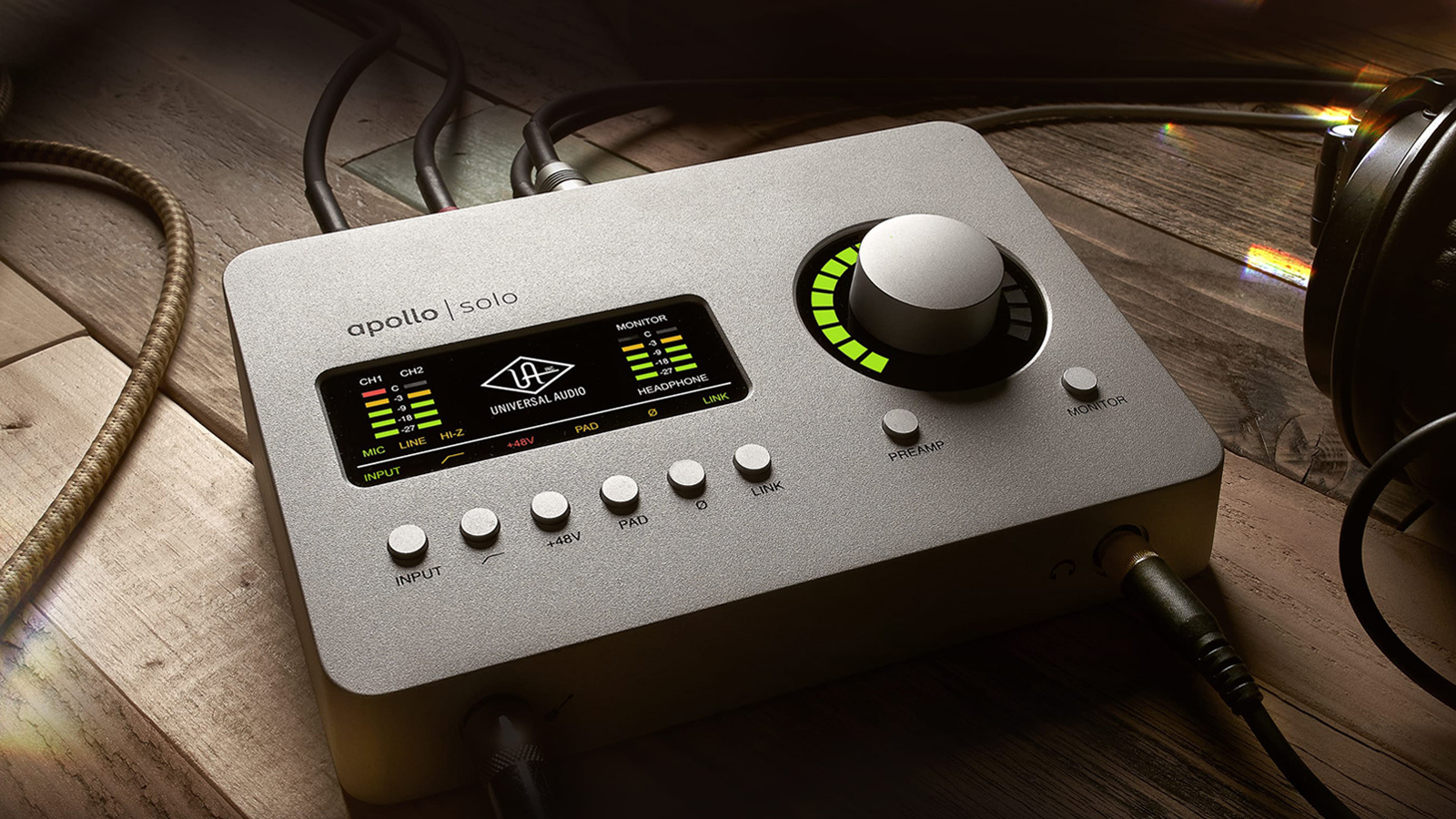
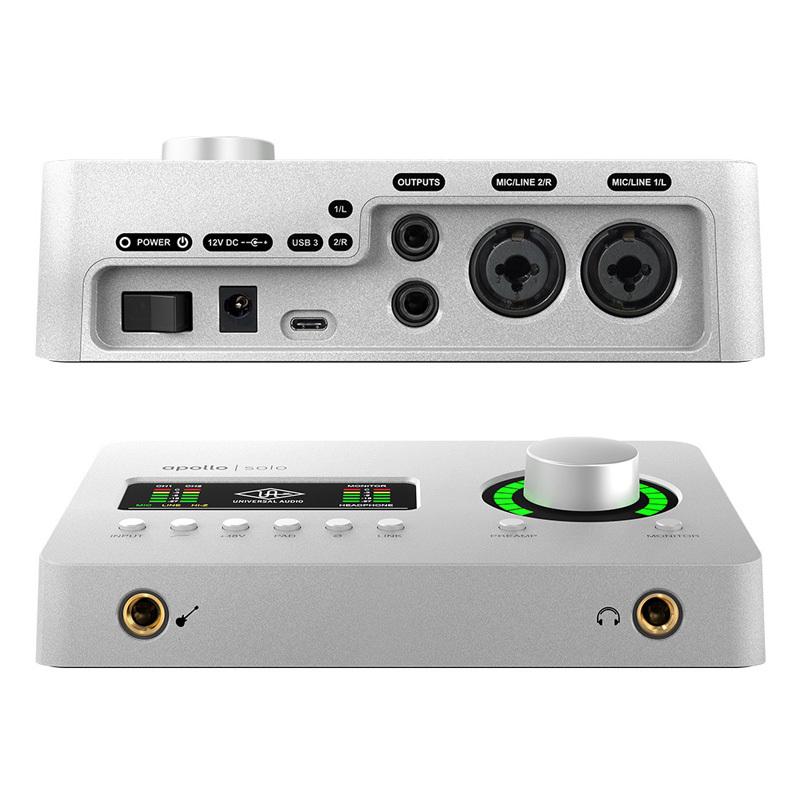
- Unison-Enabled Mic Preamp
Innovative technology where the hardware's physical input impedance automatically adjusts to match the circuit of the amp plugin. - Built-In UAD-2 DSP Accelerator
Record through industry-leading analog emulation plugins with zero latency, all without burdening your computer's CPU. - Compact, Bus-Powered Design
The Thunderbolt 3 model requires no external power adapter, allowing studio-quality guitar tracking anywhere.
The Apollo Solo offers the easiest entry point into Universal Audio's tech, a brand that dominates professional recording studios. The main reason guitarists choose it comes down to the response and feel of its Unison amp modelers. When you load a compatible plugin, the physical analog circuit inside the interface switches dynamically to match the exact impedance characteristics of plugging directly into a hardware amp. As a result, rolling back your guitar's volume cleans up the tone naturally, and pick attack feels virtually indistinguishable from playing through a physical amp.
Positive Reviews
- "Playing through Unison amps is on another level. It feels like standing right in front of a real amp, with authentic response that makes playing a joy."
- "Tracking through plugins with zero latency keeps my timing tight, making rhythm recording much cleaner."
- "The build looks sleek and premium, and the Thunderbolt connection provides rock-solid stability."
Negative Reviews
- "With only a single DSP core, running multiple DSP-heavy plugins hits the processing limit pretty quickly."
- "It gets quite warm during use, so you need to keep it in a well-ventilated space."

[$700–$1,500 Budget] High-End Interfaces for a Top-Tier Desktop Setup
At this price point, you get true professional-grade gear that wouldn't be out of place as the primary interface in a commercial recording studio.
With dynamic range exceeding 120dB and ultra-precise clocking that eliminates jitter, sound imaging and depth improve dramatically.
| Feature / Spec | Universal Audio Apollo Twin X | RME Babyface Pro FS | Antelope Audio Zen Quadro Synergy Core |
| Yen reference | about ¥148,000 (yen reference) | about ¥135,000 (yen reference) | about ¥115,000 (yen reference) |
| Approx. US street | $1,000 | $1,000 | $800 |
| Connectivity | Thunderbolt 3 | USB 2.0 (Type-B) | USB-C or Thunderbolt 3 |
| Max Resolution | 24-bit / 192kHz | 24-bit / 192kHz | 24-bit / 192kHz |
| Power Source | Dedicated AC Adapter | Bus Power / AC | Bus Power Only |
| Analog I/O | 2 In / 4 Out | 4 In / 4 Out | 2 In / 2 Out |
| Max I/O | 10 In / 6 Out | 12 In / 12 Out | 14 In / 10 Out |
| Hi-Z Inputs | 1 | 2 | 2 |
| Mic Preamps | 2 | 2 | 2 |
| Headphone Outputs | 1 | 2 (1/4" & 1/8") | 2 |
| MIDI I/O | None | Yes | None |
| Digital I/O | ADAT In only | ADAT/SPDIF I/O | ADAT/SPDIF I/O |
| Special Connectors | None | None | None |
| DSP | Yes (UAD-2) | Yes (TotalMix FX) | Yes (FPGA+DSP) |
| Loopback | Yes | Yes | Yes |
| Included Software | LUNA / UAD Plugins | None (Includes TotalMix) | Various Onboard FX |
Universal Audio Apollo Twin X DUO/QUAD
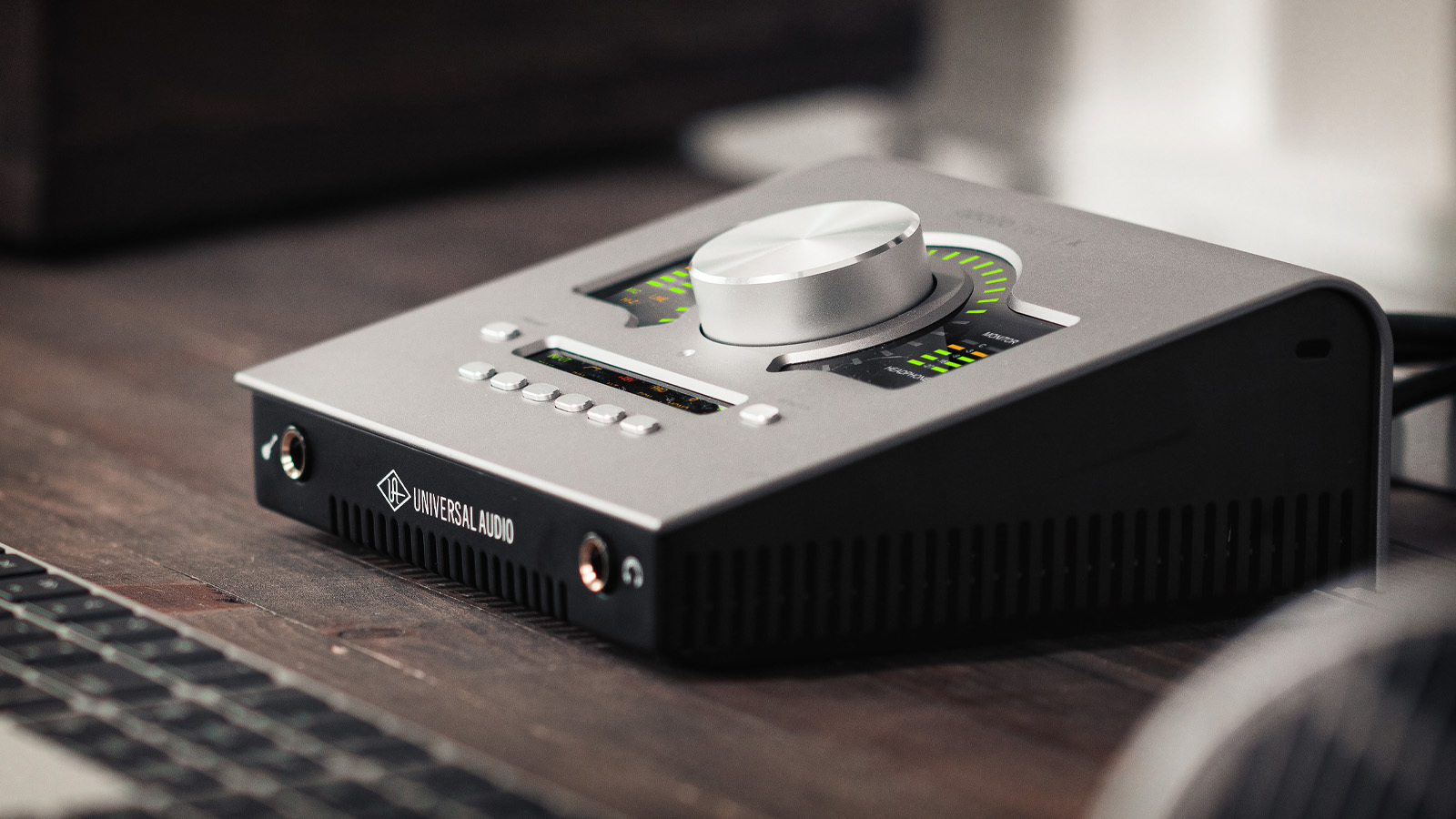
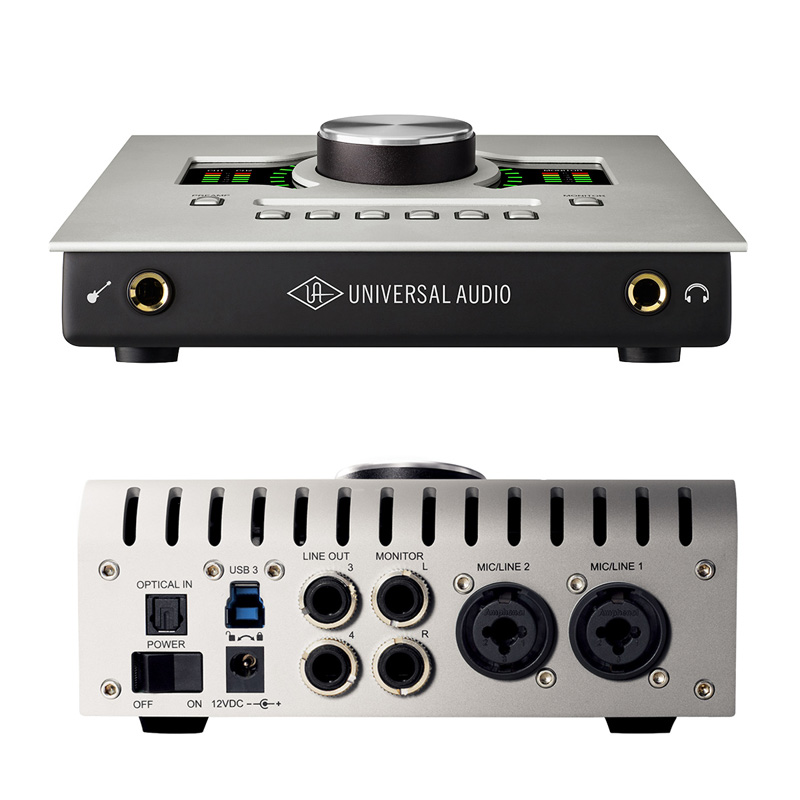
- Elite-Class AD/DA Converters
Delivers a 127dB dynamic range, bringing flagship rackmount sound quality right to your desktop setup. - Powerful DUO or QUAD DSP Processing
Provides massive processing power to run multiple heavy UAD plugins simultaneously all the way through mixdown. - Expandable ADAT Optical Input
Allows adding external preamps for up to 10 input channels, making it suitable for tracking full drum setups and live sessions.
The Apollo Twin X is the undisputed king of desktop audio interfaces found on producer desks worldwide. Compared to the Solo, its converters are upgraded to elite-class quality, offering a night-and-day difference in sound resolution and stereo imaging width. From a guitarist's perspective, its greatest asset is the generous DSP headroom, allowing you to run Unison amp models paired with heavy downstream effects like compressors and reverbs without breaking a sweat. It frees you from computer CPU limitations, creating an environment that feels like running high-end analog outboard gear right on your rack.
Positive Feedback
- “Upgraded from the Solo, and the difference in converter quality blew me away. The tight low end and extended highs are on another level.”
- “With the QUAD model, you can load top-tier plugins on guitars and vocals without worrying about DSP headroom.”
- “Once you get into the UAD ecosystem, there's no turning back. Every amp model sounds convincingly like real tube amps.”
Critical Feedback
- “The interface itself is pricey, and building up a library of enticing UAD plugins requires additional investment.”
- “The routing in the dedicated Console software can be complex, and until you get used to it, figuring out audio signal flow can be confusing.”

RME Babyface Pro FS
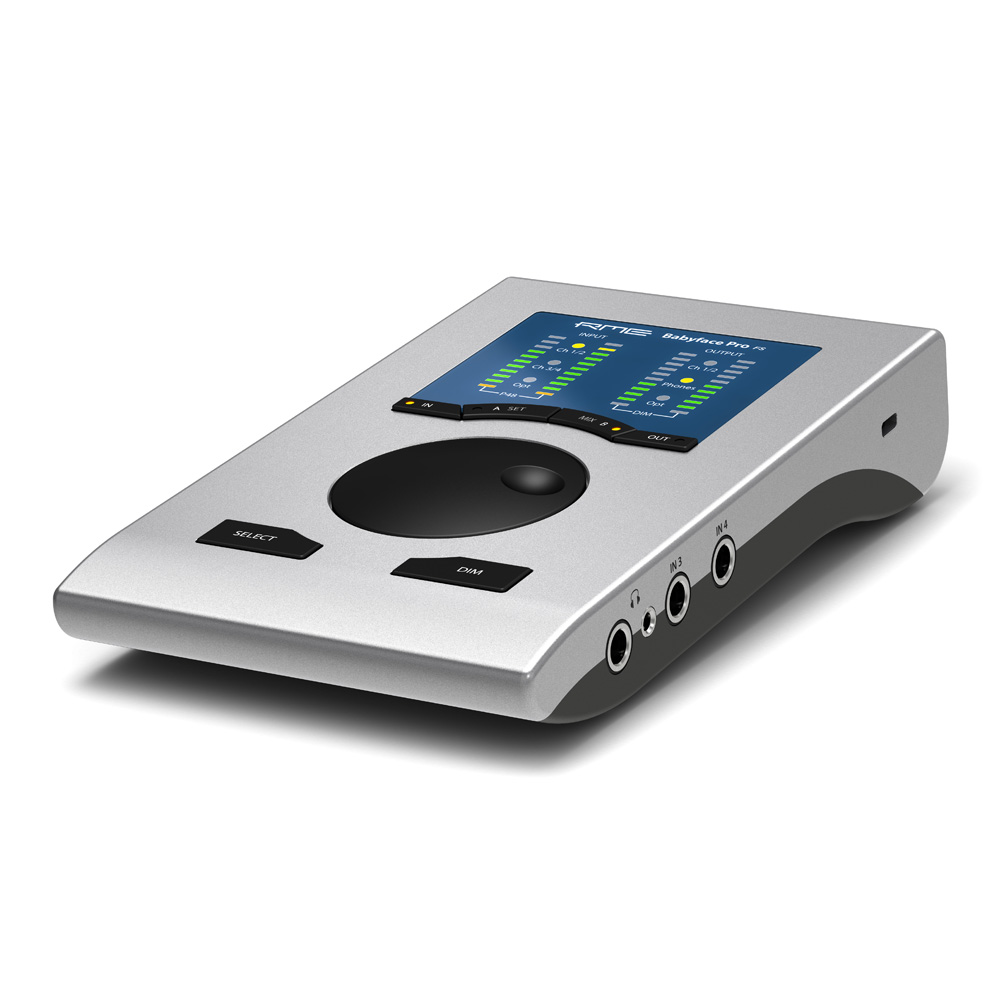
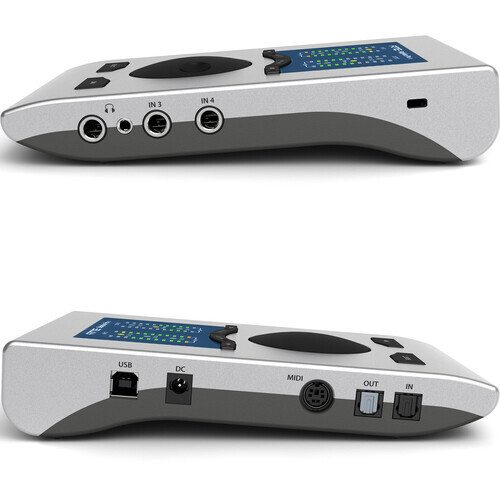
- Ultra-Precise SteadyClock FS
Features a femtosecond clock that suppresses jitter down to quadrillionths of a second, ensuring rock-solid conversion with zero spatial blur. - Incredible Routing with TotalMix FX
Includes a powerful mixer software that lets you freely blend input signals with software playback and route them to any output. - Rock-Solid Driver Stability
RME's proprietary audio core delivers exceptionally low latency and prevents dropouts even under high CPU loads.
The flagship mobile audio interface from German audio manufacturer RME. Its main strength isn't flashy analog emulation, but pure, uncolored transparency paired with bulletproof stability that never freezes. Guitar signals converted digitally through SteadyClock FS reach your DAW with surgical accuracy, preserving sharp picking transients without rounding off the attack. This allows you to extract the full potential of third-party amp modelers. Even at ultra-low buffer settings, it stays clean and noise-free, earning immense trust from guitarists who rely on laptops as live rig processors.
Positive Reviews
- "I've been producing for years and tried many interfaces, but RME's driver stability is on another level. I can use it live without any stress."
- "Since there's zero coloration added to the sound, plugins sound exactly as intended. The resolution when running high-gain amps is scary good."
- "With TotalMix FX, you can set up separate zero-latency mixes for vocals and streaming. Nothing beats its flexibility."
Negative Reviews
- "TotalMix FX's UI feels outdated and has a steep learning curve if you don't fully understand signal routing concepts."
- "It lacks flashy built-in plugin processing, so it might not suit players looking for hardware analog warmth."

Antelope Audio Zen Quadro Synergy Core
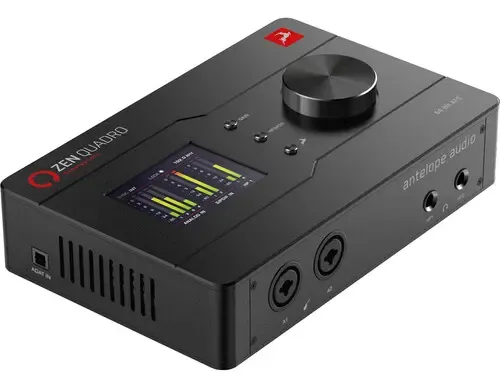
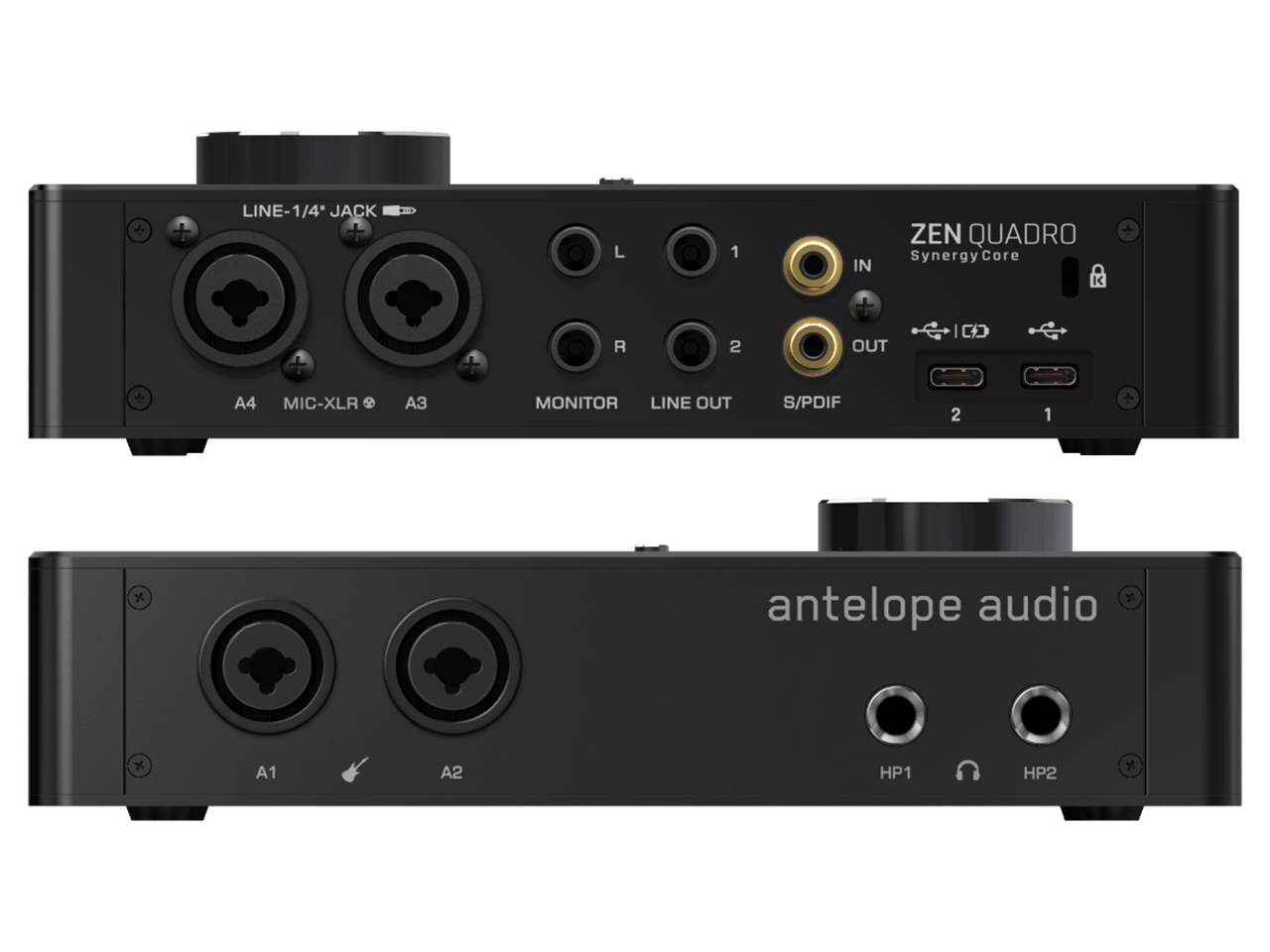
- Hybrid DSP and FPGA processing
Combining two chipsets delivers massive processing power to run dozens of real-time effects with near-zero latency. - 64-bit AFC technology
Employs high-end mastering clock technology to deliver an incredible 3D soundstage and exceptional note separation. - Bundled with vintage effects
Includes a generous suite of high-quality effects right out of the box, meticulously modeling real hardware amps and cabs.
The Antelope Audio Zen Synergy Core is a modern high-end interface combining high-grade clocking for 3D sound imaging with FPGA-driven zero-latency processing.
Because the FPGA chip excels at parallel processing, latency remains virtually zero even when stacking multiple amp models and time-based effects on a guitar signal.
With dozens of vintage amp models and cabinet options built right in, you can dial in professional guitar tones straight from the unit without even opening your DAW.
The soundstage painted by the 64-bit AFC clocking is vast, making reverb depth and chorus width remarkably vivid and distinct.
Positive Reviews
- "The note separation is insane. Playing clean guitar arpeggios gives you a 3D depth where every note pops right in front of you."
- "The onboard amp modeling sounds incredibly lively and easily stands shoulder-to-shoulder with UAD."
- "The display on the unit is gorgeous, and recalling presets instantly via physical buttons means you can dial in sounds without looking at a computer screen."
Critical Reviews
- "Initial setup and software activation can be cumbersome, and occasional bugs can be frustrating."
- "The unit gets quite warm during use, which can be a bit concerning during long sessions."

Over $1,500: No-Compromise Flagship Studio Gear
This price tier represents the pinnacle of interface performance, packing the sound and quality of top-tier commercial recording studios into desktop-friendly formats.
Built without cost constraints, these interfaces capture every detail and dynamic nuance of your guitar with exceptional accuracy.
| Feature | Apogee Symphony Desktop | RME Fireface UCX II | Universal Audio Apollo x4 |
| Yen reference | about ¥240,000 (yen reference) | about ¥220,000 (yen reference) | about ¥298,000 (yen reference) |
| Approx. US street | $1,500 | $1,500 | $2,200 |
| Connectivity | USB 2.0 (Type-C) | USB 2.0 (Type-B) | Thunderbolt 3 |
| Max Resolution | 24-bit / 192kHz | 24-bit / 192kHz | 24-bit / 192kHz |
| Power Source | AC Adapter Only | AC Adapter Only | AC Adapter Only |
| Analog I/O | 2 In / 4 Out | 8 In / 8 Out | 4 In / 6 Out |
| Max Total I/O | 10 In / 14 Out | 20 In / 20 Out | 12 In / 18 Out |
| Hi-Z Inputs | 1 | 2 | 2 |
| Mic Preamps | 2 | 2 | 4 |
| Headphone Outputs | 2 | 1 | 2 |
| MIDI I/O | None | Yes | None |
| Digital I/O | ADAT/SPDIF I/O | ADAT/SPDIF I/O | ADAT/SPDIF I/O |
| Extra I/O | None | Word Clock, etc. | None |
| DSP Processing | Yes (Hardware DSP) | Yes (TotalMix FX) | Yes (UAD-2 QUAD) |
| Loopback | Supported | Supported | Supported |
| Included Software | Apogee FX Plugins | None (TotalMix included) | LUNA / UAD Plugins |
Apogee Symphony Desktop: Desktop AD/DA Pinnacle with Ultimate Sound Clarity
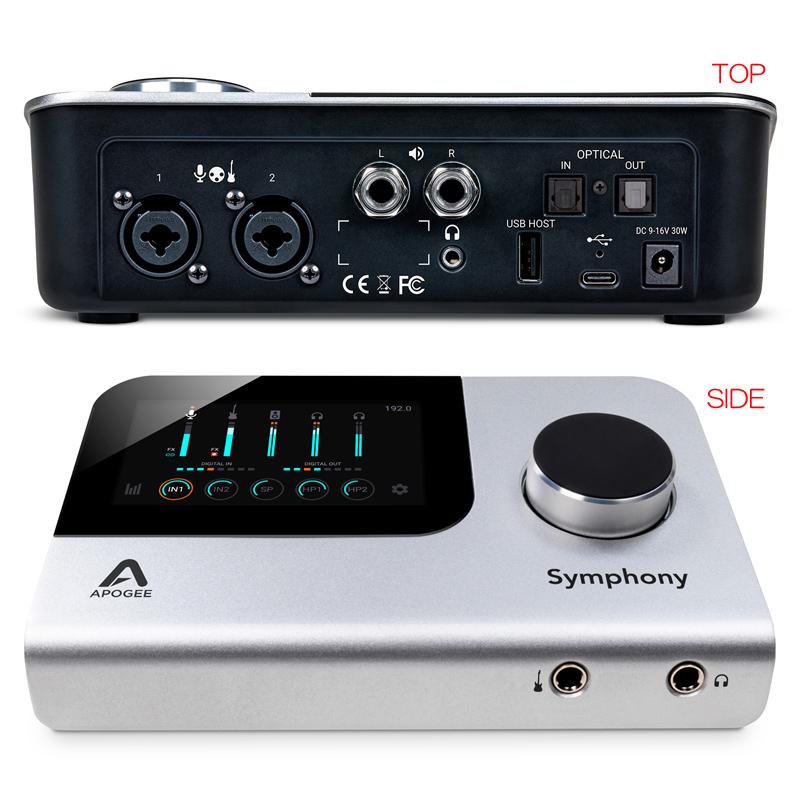
- Symphony-Class Flagship Converters
Packs the exact AD/DA conversion circuits used on countless Grammy-winning recordings into a desktop chassis. - Alloy Mic Preamp Emulation
Reconfigures the physical analog circuitry to accurately recreate vintage preamps like classic Neve units. - Dual DSP Print & Monitor Modes
Seamlessly switch between hardware DSP for zero-latency tracking (Print) and native plugins for mixdown options.
The Apogee Symphony Desktop is a benchmark for sonic performance in desktop audio interfaces.
Its resolution is remarkable—capturing acoustic guitars with a microphone exposes every detail, from subtle body resonance to room ambiance, with breathtaking realism.
For electric guitar DI tracks, the preamp emulation lets you add the rich, musical harmonic saturation of multi-million-dollar vintage consoles directly at the hardware level.
The top-panel touchscreen offers quick, hands-on control, allowing you to dial in input gain and monitor mixes without constantly checking your DAW screen.
Positive Reviews
- "The audio quality is on a whole different level. Compared to standard mid-tier interfaces, the dynamic range and low noise floor make a massive difference."
- "The touchscreen responds smoothly like a smartphone, making tone adjustments and gain staging feel very physical and intuitive."
- "DI guitar tracks recorded through the preamps sound so full that running them through light amp modeling yields production-ready tones immediately."
Critical Reviews
- "Because it uses high-end processing components, the enclosure runs noticeably warm. It gets quite warm during extended summer sessions."
- "The price point is very steep, making it overkill if you only do casual home demo recording."

RME Fireface UCX II: Outstanding Clock Precision and Superior Routing
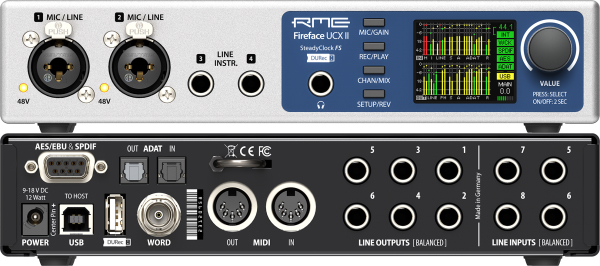
- Standalone Recording via DURec
Record and play back all I/O channels directly to a USB drive without connecting a computer. - Latest SteadyClock FS Technology
Further optimizes ultra-low jitter clocking for rock-solid, flawless AD/DA conversion even under demanding conditions. - Versatile DC-Coupled I/O
Packs extensive I/O into a half-rack footprint, including DC-coupled outputs capable of controlling modular synths to meet complex professional routing needs.
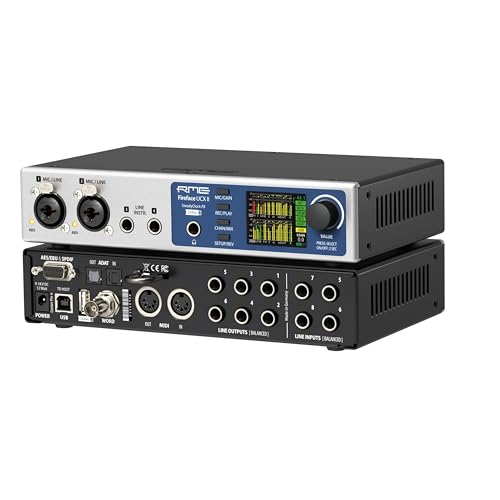
The Fireface UCX II is a feature-packed half-rack unit that showcases the pinnacle of RME engineering.
Whether placed on a desktop or rack-mounted for live playback, it guarantees bulletproof reliability in demanding professional environments.
For guitarists, DURec and flexible I/O routing are standout benefits.
You can capture daily practice ideas in high quality by simply inserting a USB flash drive and playing—no need to boot up a computer.
Plus, when setting up complex reamping environments with multiple vintage amps, TotalMix FX delivers complete routing freedom.
Positive Feedback
- "DURec is a game-changer for recording without a PC. During studio rehearsal, I grab feeds straight from the mixer and record directly to a USB drive."
- "Upgrading to the SteadyClock FS makes the stereo image ridiculously tight and focused. Reverb tails are crystal clear."
- "I keep it powered on 24/7 and it never fails. The drivers have never crashed once—unmatched reliability."
Critical Feedback
- "Navigating everything with the small front-panel display and a single encoder is tough, so you end up relying on the computer software anyway."
- "With so many connections packed onto the rear panel, cabling gets pretty crowded, making frequent repatching a bit cumbersome."
Universal Audio Apollo x4: A Pro-Grade Interface with Ample DSP Power and Analog I/O
- Four Unison-Enabled Mic Preamps
While the Twin offers two, the x4 features four preamps, providing the expandability needed for drum miking or tracking a full band live in one take. - Standard QUAD Core Processing
Built-in DSP handles heavy UAD plugin loads effortlessly, powering demanding mix sessions without breaking a sweat. - Flagship-Grade Converters
Equipped with the same top-tier converters found in UA's rackmount models, delivering expansive dynamic range and ultra-low-noise performance.
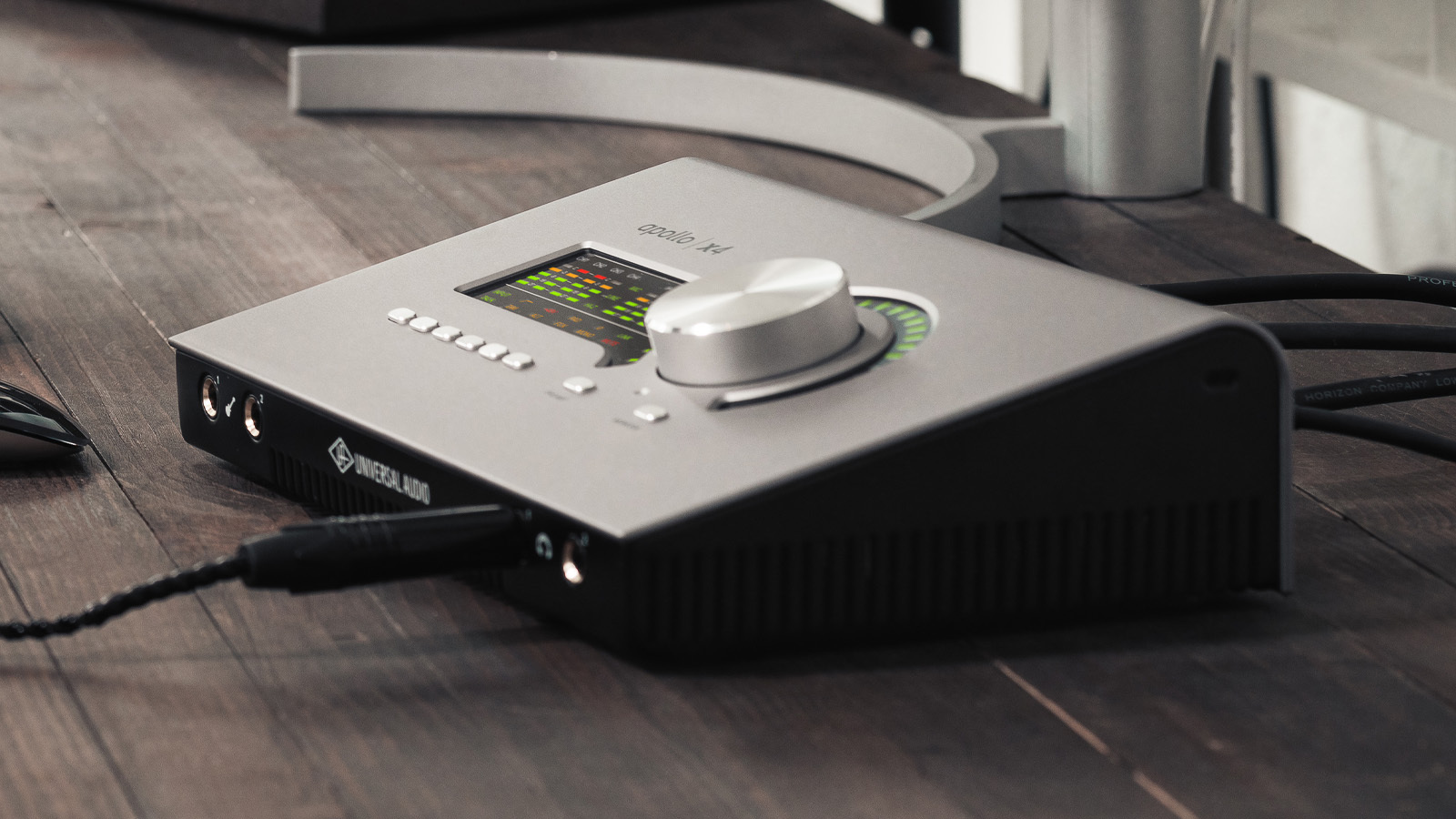
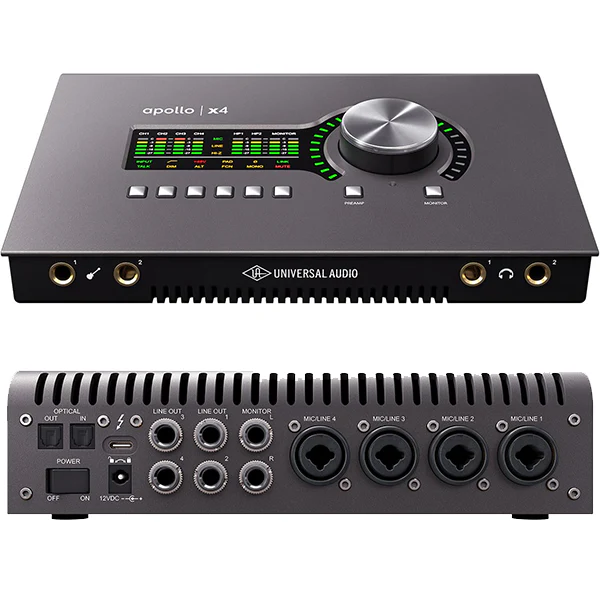
The Apollo x4 is Universal Audio’s answer for creators who need more I/O than the Twin provides.
It retains a sleek desktop workflow while packing four mic inputs and versatile output routing onto the rear panel.
Guitarists can keep their guitar and vocal mics connected at all times, letting them start recording immediately when inspiration strikes—no swapping cables required.
With four Unison preamps, you can mic up a guitar amp with multiple microphones and process each signal with preamp models and compressors in real time with zero latency, bringing pro studio techniques straight to your desktop.
Positive Reviews
- "Being able to record two guitars and vocals through Unison amp modeling simultaneously raised our session quality dramatically."
- "Having two independent headphone outputs is fantastic—I can send a custom monitor mix to the vocalist while keeping my own."
- "The wider chassis compared to the Twin gives more breathing room around the knobs, making hands-on control feel much better."
Critical Reviews
- "At this price point, it's frustrating that a Thunderbolt cable isn't included, and the power supply unit is surprisingly bulky."
- "Even with QUAD core DSP, running heavy, modern UAD plugins across multiple channels can max out DSP resources faster than expected."

Summary: Find the Right Interface for Your Playing Style
Upgrading your audio interface can dramatically improve your guitar recording setup.
Start by setting your budget and deciding what matters most—whether that is a hassle-free setup, rich analog character, or a professional, latency-free environment.
Pick the interface that best fits your workflow and take your music production to the next level.