
日本語English
VALETON GP-5 vs. IK Multimedia TONEX ONE: Next-Gen Ultra-Compact Modeler Comparison
XTONES is a participant in affiliate programs including Amazon Associates and Reverb. We may earn a commission from qualifying purchases made through links on this page, at no extra cost to you.
Contents (10)
"The era of fitting a real amp into the palm of your hand has finally arrived."
VALETON GP-5
IK Multimedia TONEX ONE
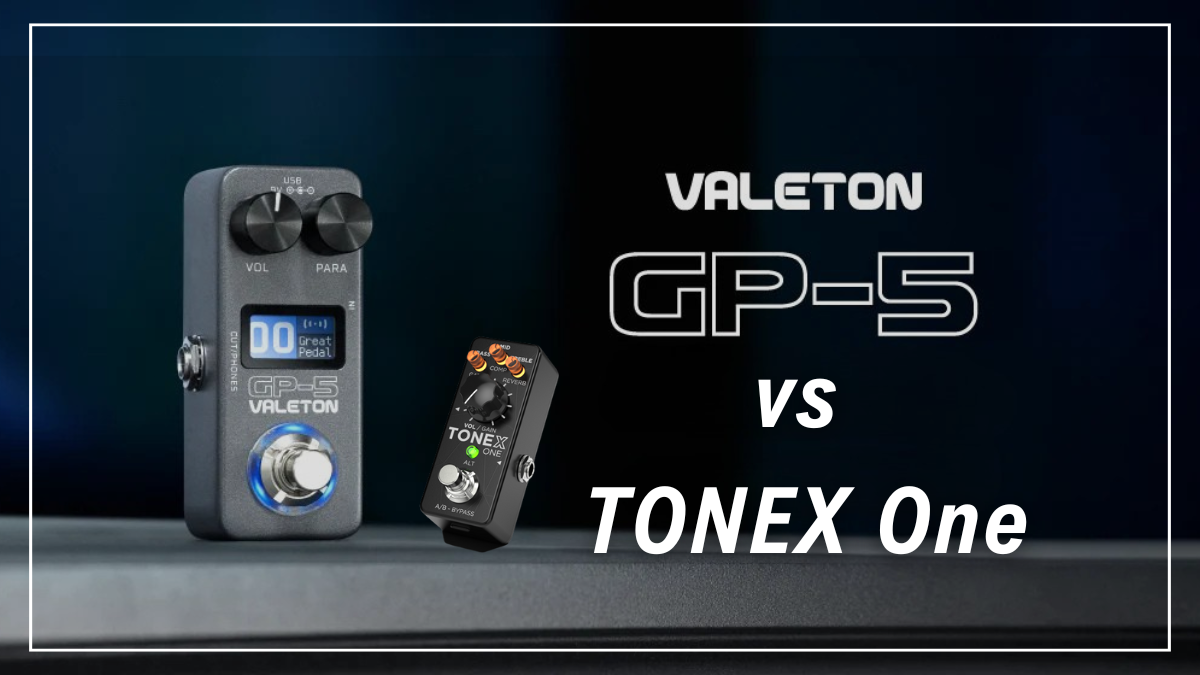
Both are ultra-compact pedals weighing around just 200 grams, next-gen tools that use profiling and AI modeling to capture the response of legendary tube amps. One is a feature-packed all-in-one multi-effects unit around $80, while the other is a sound-focused pedal around $180 packing high-end tone—two unique choices with distinct personalities.
Below, we compare the GP-5 directly against the TONEX ONE, breaking down tone, features, workflow, and player feedback. From home practice to direct live gigs and desktop recording—here is everything you need to choose the right "pocket rig" for your setup.


GP-5 vs TONEX One: Spec Comparison
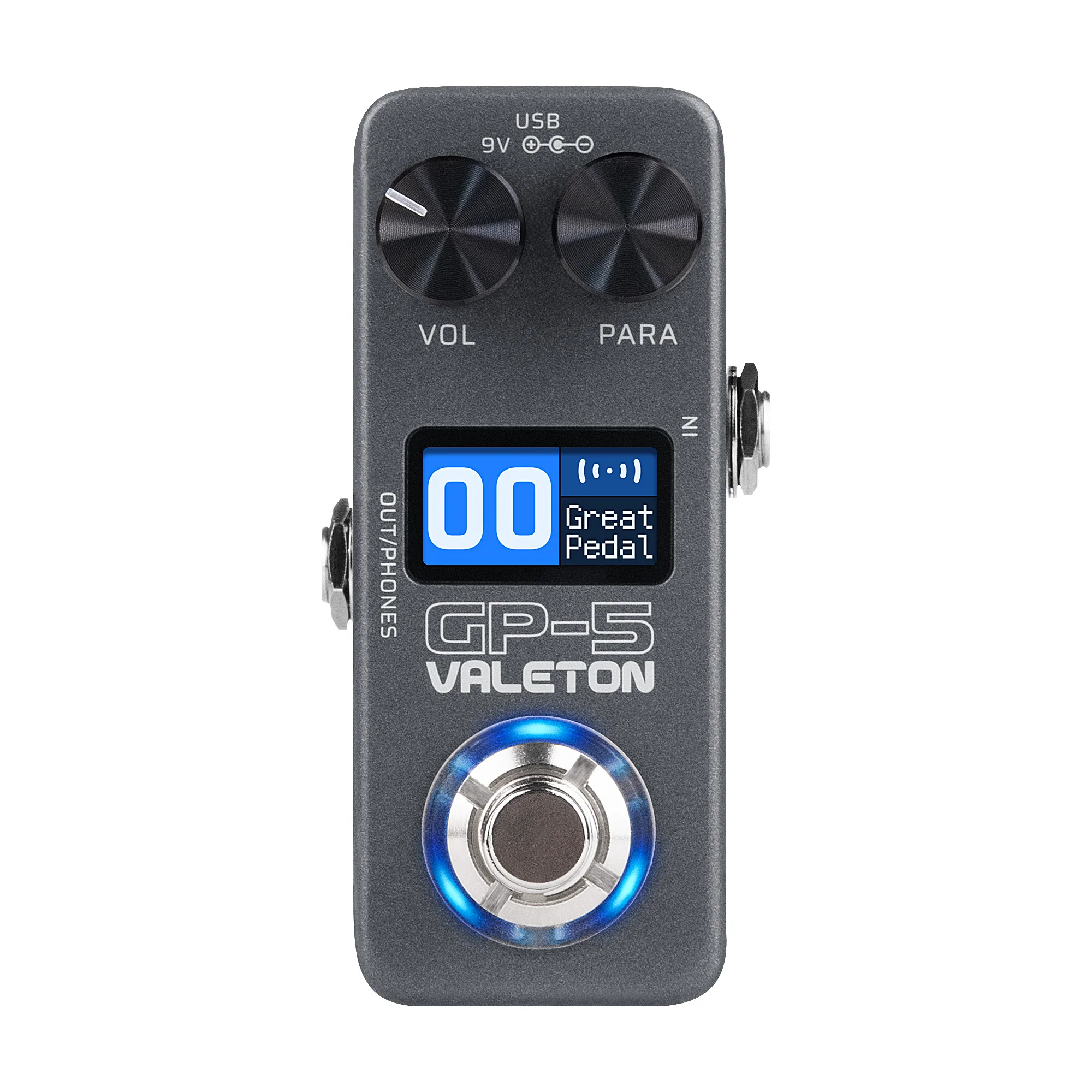 |  | |
| Dimensions | Approx. 94 × 51 × 55 mm | Approx. 48 × 94 × 53 mm |
| Weight | 237 g | 160 g |
| AD/DA Conversion | 24-bit / 44.1 kHz (100 dB S/N ratio) | 24-bit / 192 kHz (123 dB dynamic range) |
| Amp Modeling | SnapTone (NAM-based) amp & pedal models. 50 preloaded, up to 80 saved slots | Tone Models powered by AI Machine Modeling. 20 saved slots (200+ included in library, 45,000+ via ToneNET) |
| Total Effects | 100+ (drive, modulation, time-based, etc.) | Built-in: EQ, comp, noise gate, reverb, etc. (5 reverb types) *Delay and modulation presets supported via firmware update |
| Simultaneous Effects | Up to 9 blocks | 1 amp model + built-in FX (EQ/Comp/Gate/Reverb) |
| Cabinet IRs | Supports 20 user third-party IRs (50 factory IRs included) | IR loader functionality (supports custom IRs and IK VIR cabinet technology) |
| Preset Memory | 100 patches (50 user + 50 factory) | 20 customizable user presets |
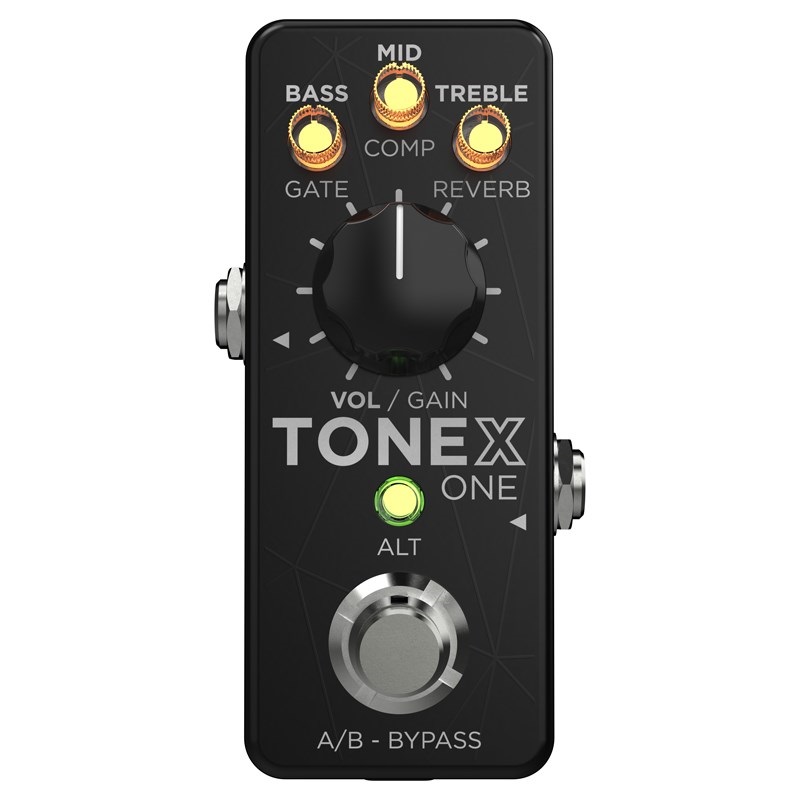
| User Interface | 1 footswitch (4 modes), 2 knobs, 1 display screen | 1 footswitch (2 modes), 1 main knob + 3 micro knobs, no display |
| I/O | 1/4" mono guitar input, 1/4" TRS stereo output, USB-C, Bluetooth 5.0, headphone output support | 1/4" mono guitar input, 1/4" TRS stereo output, USB-C, headphone output support (No Bluetooth) |
| Power | 9V DC (center negative) or USB bus power | 9V DC (center negative, 120 mA) or USB bus power |
| Audio Interface | 2-in/2-out (recording & re-amping support, 44.1 kHz / 16-bit) | 2-out stereo (recording support, 24-bit / 44.1 kHz) |
| Tuner | Built-in (hold footswitch to engage) | Built-in (hold footswitch to engage) |
| Other Features | Built-in drum machine (100 rhythms), mobile app editing via Bluetooth, USB-MIDI control support (requires USB host) | Includes TONEX software (for Tone Model creation & ToneNET connection), AmpliTube 5 SE included; Joe Satriani signature version available |
| Approx. US street | $80 | $180 |
Approx. US street prices are rounded retailer prices as of November 6, 2026, before sales tax. Not a live quote.
GP-5 vs TONEX One: Key Features of Each Model
What Is the Valeton GP-5?
- Uses SnapTone™ (NAM-based tech) with 50 preloaded amp and pedal profiles
- Over 100 high-quality built-in effects, supporting up to 9 simultaneous blocks
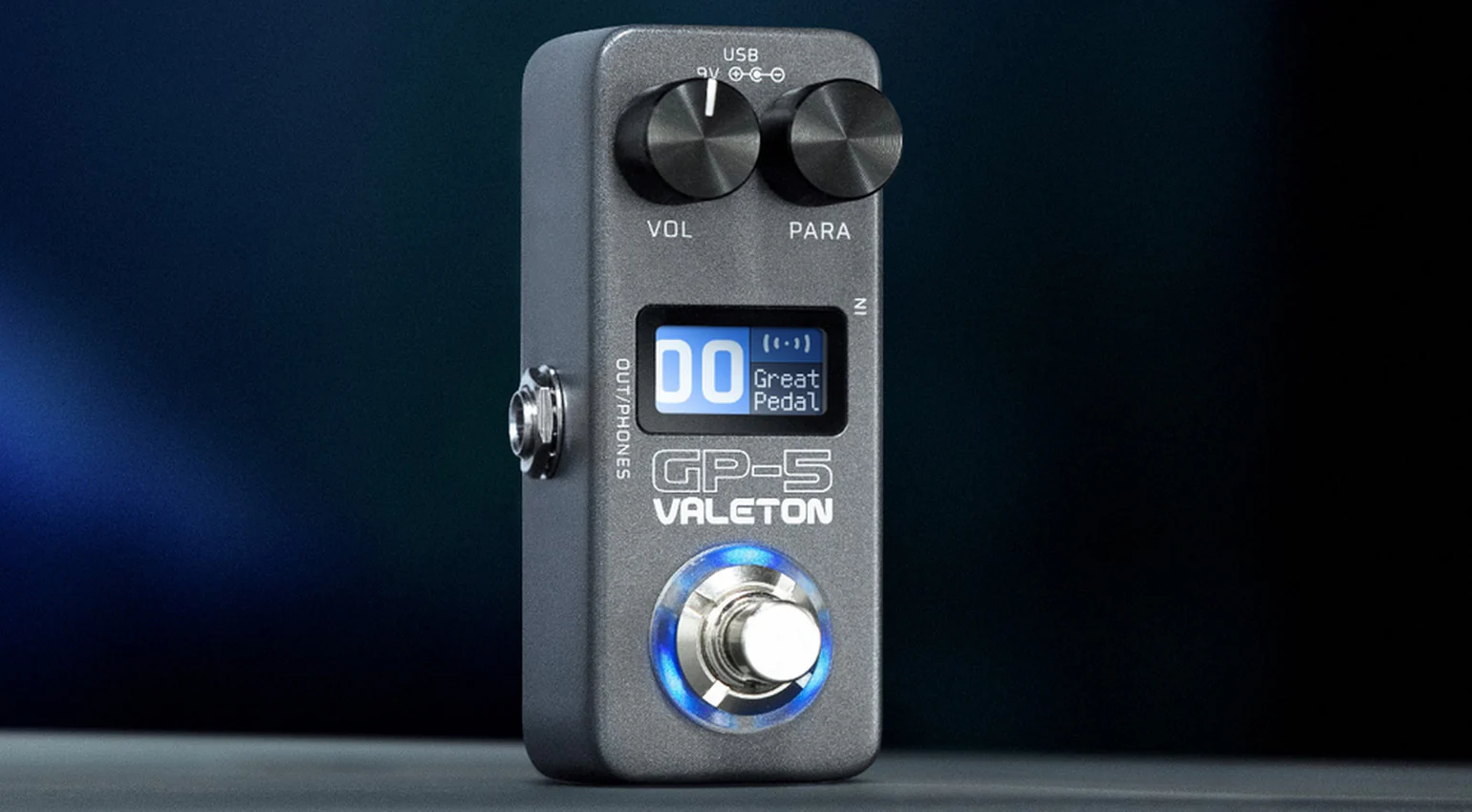
- Intuitive layout with a 1.4-inch color LCD and an LED-ringed footswitch
- 20 user slots for third-party IRs plus 50 factory IR presets
- Equipped with Bluetooth 5.0 and a USB-C audio interface (2-in/2-out, 44.1 kHz)
- Built-in drum machine with 100 patterns and a looper for practice and writing
- Ultra-compact enclosure (237 g, ~9 cm wide) with USB bus power support
- Exceptional value, typically about $80
The GP-5 packs a multi-effects engine and modern profiling tech into a palm-sized enclosure. Because SnapTone™ can load open-source Neural Amp Modeler (NAM) profiles, you can tap into thousands of authentic amp and pedal tones shared worldwide.
With over 100 onboard effects and support for up to nine simultaneous blocks, it handles complete signal chains in a single box. The color LCD and companion mobile app make editing parameter settings straightforward despite the pedal's small footprint. Bluetooth audio playback and the built-in drum machine also make setting up a practice rig fast and simple.
Connected via USB-C, it functions as a 2-in/2-out audio interface ready for home recording. Packing this level of versatility into such a portable pedal at this price point makes it an impressive value.
What Is the IK Multimedia TONEX ONE?
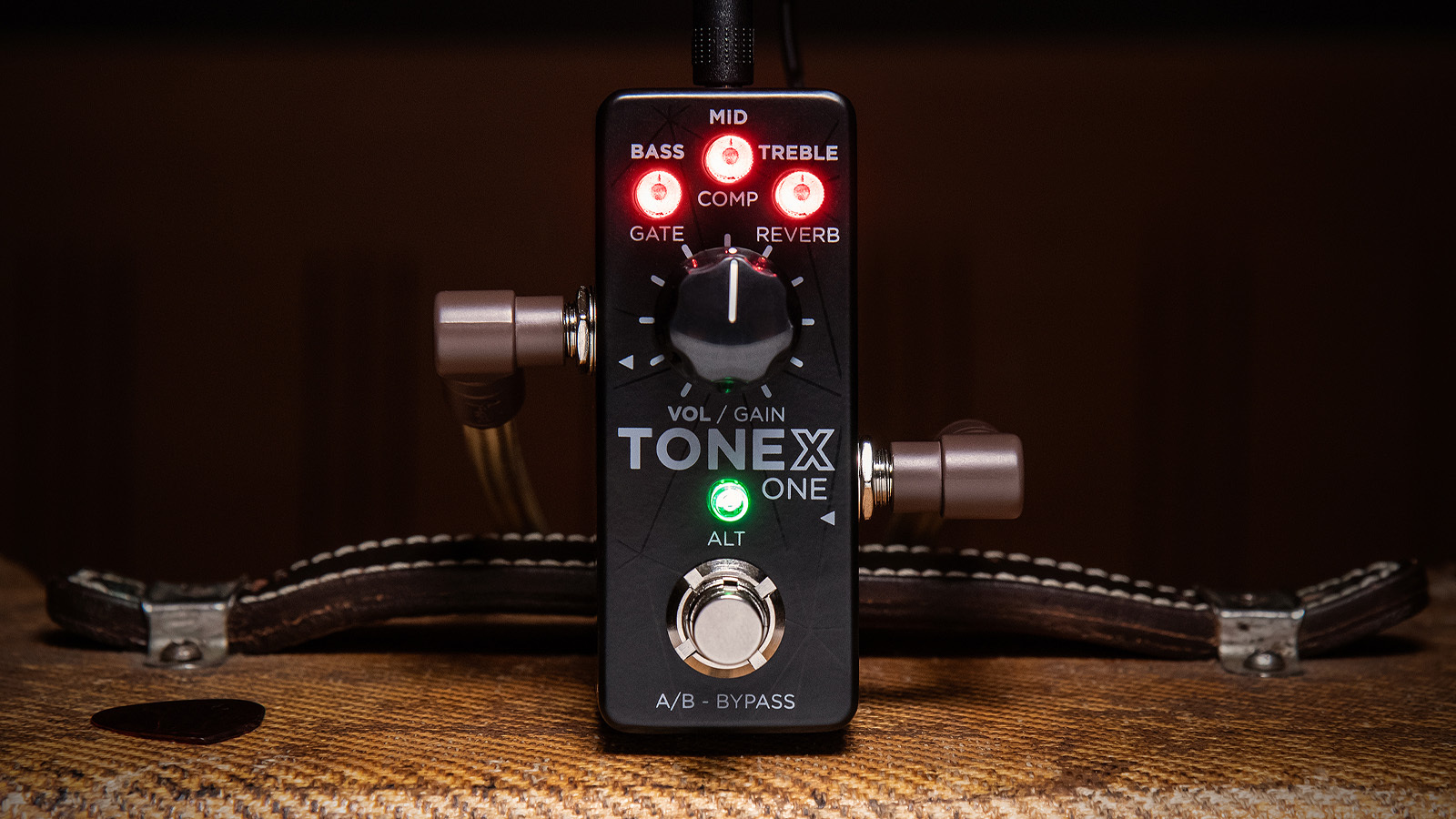
- Stores up to 20 Tone Models captured via AI Machine Modeling directly on board
- Includes 200+ premium models out of the box plus access to over 45,000 tones on ToneNET
- 24-bit / 192 kHz AD/DA converters with 123 dB dynamic range for high-resolution audio
- Single footswitch operates both Stomp and Dual (A/B channel switching) modes
- Quickly adjust EQ, comp, noise gate, and 5 reverb types using 3 micro-knobs
- Built-in cabinet IR loader with IK VIR™ tech, plus support for 3rd-party IRs
- Functions as a USB-C audio interface (24-bit / 44.1 kHz) and integrates with Tone Capture software
- Ultra-compact aluminum enclosure (48 × 94 mm, 160 g) priced around $180
The TONEX ONE is a micro-sized pedal capable of loading Tone Models created with AI Machine Learning to precisely recreate the response and character of real amps and pedals. You can store up to 20 models directly on the pedal and load tens of thousands of additional tones via the included software and ToneNET.
Equipped with high-performance 24-bit / 192 kHz AD/DA conversion and 123 dB of dynamic range, it delivers exceptionally detailed, amp-like tone. Controls are kept straightforward with micro-knobs and RGB LED indicators, making on-the-fly tweaking and A/B switching quick and easy.
It also doubles as a USB-C audio interface, allowing you to capture your own amps or pedals with the companion software and take them anywhere on your pedalboard. For players wanting top-tier tone in a pocket-sized package for gigs or home recording, the TONEX ONE delivers incredible value.
GP-5 vs TONEX One | Sound Quality and Modeling Differences
VALETON GP-5
- SnapTone™ (NAM-based) delivers Kemper-level realism at an accessible price point
- 50 factory profiles + support for up to 80 user slots
- Flexible cab switching with 50 factory IRs and 20 user IR slots
- 100 built-in effects with up to 9 simultaneous blocks to build complete, ready-to-use rigs
TONEX One
- AI Machine Modeling faithfully captures the harmonics and compression of tube amps
- 24-bit / 192 kHz resolution and a wide 123 dB dynamic range for high-definition clarity
- Outstanding expandability with Premium Tone Models plus access to over 45,000 profiles on ToneNET
- Natural room feel with IK's proprietary VIR™ technology and user IR support
In terms of sound quality, TONEX One is engineered for top-tier performance across both hardware and algorithms. Harmonics and picking response feel remarkably like a real tube amp, while 192 kHz processing and a generous 123 dB of headroom capture every subtle nuance. Access to ToneNET lets players add countless iconic amp captures and artist models, making it ideal for anyone seeking both tone variety and raw realism.
Considering its price point, the GP-5 delivers impressive realism—with quality NAM profiles, it gets surprisingly close to TONEX's feel. Its main strength lies in running up to 9 effect blocks (including modulation and delay), allowing you to craft self-contained, stage-ready presets right out of a single pedal. With extensive cabinet choices, it's ready for immediate use in home recording or streaming. In short: TONEX takes a slight edge in pure amp capture, while the GP-5 leads in complete signal-chain versatility.
GP-5 vs TONEX One | Usability and Control
VALETON GP-5
- 1.4-inch color LCD provides a clear visual overview of your signal chain
- Single footswitch with switchable modes for patch navigation, stomp mode, and tuner access
- Wireless editing via Bluetooth mobile app alongside PC editor support
- Built-in drum machine and looper accessible directly on the pedal, great for practice
TONEX One
- Screenless design featuring 1 footswitch and 4 control knobs
- Streamlined UI limited to 2 modes: Stomp (ON/OFF) and Dual (A/B switching)
- Detailed editing and Tone Model management require the TONEX software on PC/Mac
- Hardware controls focus on preset recall and basic adjustments for EQ, gate, and reverb
When it comes to usability, TONEX One is designed around a minimalist, live-first philosophy. A simple click switches between ON/OFF or A/B Tone Models, keeping performance straightforward and error-free on stage. Because it lacks a display, deep parameter editing cannot be done on the fly; tones must be dialed in beforehand using the TONEX software.
The GP-5 features a small yet readable LCD and flexible footswitch modes to toggle individual effects or change patches. Bluetooth mobile editing makes quick parameter tweaks on stage or in the studio hassle-free, while the built-in drum machine and looper turn it into a handy standalone practice tool. To summarize: TONEX One suits players who prioritize pure tone with streamlined controls, while the GP-5 is ideal for those who want agile control over a full-featured setup.
GP-5 vs TONEX One | User Reviews and Feedback
Positive Feedback
VALETON GP-5
- Incredible value—NAM profile support, IR loader, and Bluetooth in an affordable unit
- 9 simultaneous blocks let you craft complete gig-ready presets in a micro pedal format
- Built-in drum machine and looper make it effortless to jump right into practice
- Handy USB audio interface functionality delivers surprisingly clear tones for home recording
- Color LCD reduces editing friction and makes navigation intuitive even for beginners
TONEX One
- 123 dB dynamic range and AI modeling yield convincing tube-like depth and dynamics
- Over 45,000 models on ToneNET ensure you can find virtually any amp sound you want
- Capture feature lets you take your own amp sound anywhere in a pocket-sized footprint
- Dual mode (A/B) allows one-touch switching between clean and lead channels
- Sturdy aluminum chassis fits easily into tight spots on any pedalboard
Negative Feedback
VALETON GP-5
- Single footswitch means external MIDI control is necessary for complex mid-song switching
- Cannot run external IR blocks simultaneously when using NAM profiles, adding extra tone-shaping steps
- Initial firmware exhibits noticeable volume differences between patches, requiring manual leveling
- Lightweight body can slide on hard surfaces when stomped
- Editor app and manuals could offer better localized documentation and support
TONEX One
- Lack of a display makes deep parameter editing difficult on stage
- Multi-function micro knobs can be fiddly to adjust on dark stages
- Volume variations between Tone Models require careful preset leveling before gigs
- Companion software UI has a slight learning curve at first
- Additional time-based effects depend on firmware updates and lack deep on-device editing
GP-5 vs TONEX One | Which Should You Choose?
Who should get the VALETON GP-5?
- You prioritize maximum value
If you want as many features as possible on a budget, the GP-5 is hard to beat. Covering multi-effects to profile-based amp modeling in an accessible price range, it offers unmatched value. - You want a compact, all-in-one setup
From a desktop practice tool to a grab-and-go rig for jams or a backup for larger gear, the GP-5 covers broad ground. The built-in drum machine, Bluetooth audio streaming, and headphone output make silent late-night practice effortless. - You like combining multiple effects
If you build tones with time-based effects, modulation, and drives combined, the GP-5 fits the bill. Running up to 9 simultaneous blocks lets you stack amps, cabs, and effects freely. Wireless mobile app editing keeps parameter tweaks straightforward despite the tiny footprint. - You plan to integrate with MIDI or existing gear
The GP-5 supports MIDI control via USB, enabling external switchers or controllers to select patches and toggle effects remotely. It adapts easily as a central hub on a compact pedalboard alongside other pedals. - You want an easy entry into modern modeling tech
If you're curious about open-source amp modeling like NAM without investing in high-end units, the GP-5 is a great gateway. Accessing free open-source profiles lets you explore digital amp modeling without a steep commitment.
Who should get the TONEX One?
- You want top-tier amp tone above all else
For tone purists who care most about amp dynamic response, TONEX One delivers. AI Machine Modeling brings authentic tube feel and responsiveness to home rigs and recordings alike. - You want access to a massive library of amp models
Whether you want classic Marshalls, Fenders, or high-gain Mesa options, ToneNET gives you access to tens of thousands of captures. Having vintage amps and artist profiles inside a micro pedal is a key highlight for tone collectors. - You want an amp/cab block on your existing pedalboard
Place TONEX One at the end of your pedalboard as a compact amp and cab simulator. Setting up a clean amp profile and running your external drive pedals into it offers an intuitive live rig. Built-in gate, comp, and reverb provide basic utility while your board handles the rest. - You want to capture and carry your own amps
With TONEX hardware and software, you can capture your favorite real-world amps and drive pedals. Packing your go-to sound into a pocket pedal lightens your transport load while keeping your core tone intact. - You want room to grow in an expanding ecosystem
As part of IK's TONEX ecosystem, your saved Tone Models seamlessly transfer if you upgrade to the full TONEX Pedal down the road. It also integrates smoothly into hybrid recording environments alongside software like AmpliTube.
Both the Valeton GP-5 and IK Multimedia TONEX One showcase how far modern compact pedal modeling technology has come.
The GP-5 excels as a versatile, palm-sized tool that handles full rigs, while TONEX One focuses on uncompromised amp tone in a tiny footprint. While their approaches differ, both aim to compress full-scale amp performance into ultra-compact pedals.
Your choice depends on your specific needs: if you want full signal-chain flexibility and multi-effects, the GP-5 is an agile partner; if your main focus is authentic, top-tier tube amp feel, TONEX One delivers.
Both pedals deliver performance well beyond their price tags. Modern digital gear gives players incredible options—whether you choose the GP-5 or TONEX One, both offer fresh inspiration and impressive tones for your setup. Test them in your own signal chain to find the best fit for your rig.