
日本語English
Strymon CANOGA Vintage Silicon Fuzz: Series A Analog Fuzz [Sound Demo & Buzz]
XTONES is a participant in affiliate programs including Amazon Associates and Reverb. We may earn a commission from qualifying purchases made through links on this page, at no extra cost to you.
Contents (10)
That fizzy silicon fuzz—thick harmonics and wall-of-sound pressure—has hooked countless guitarists. At the same time, players keep running into the same practical problems: it disappears in a band mix, the noise floor is rough, and putting a buffer or wah in front can make the circuit fall apart.
Strymon’s answer for fuzz fans stuck in that dilemma is
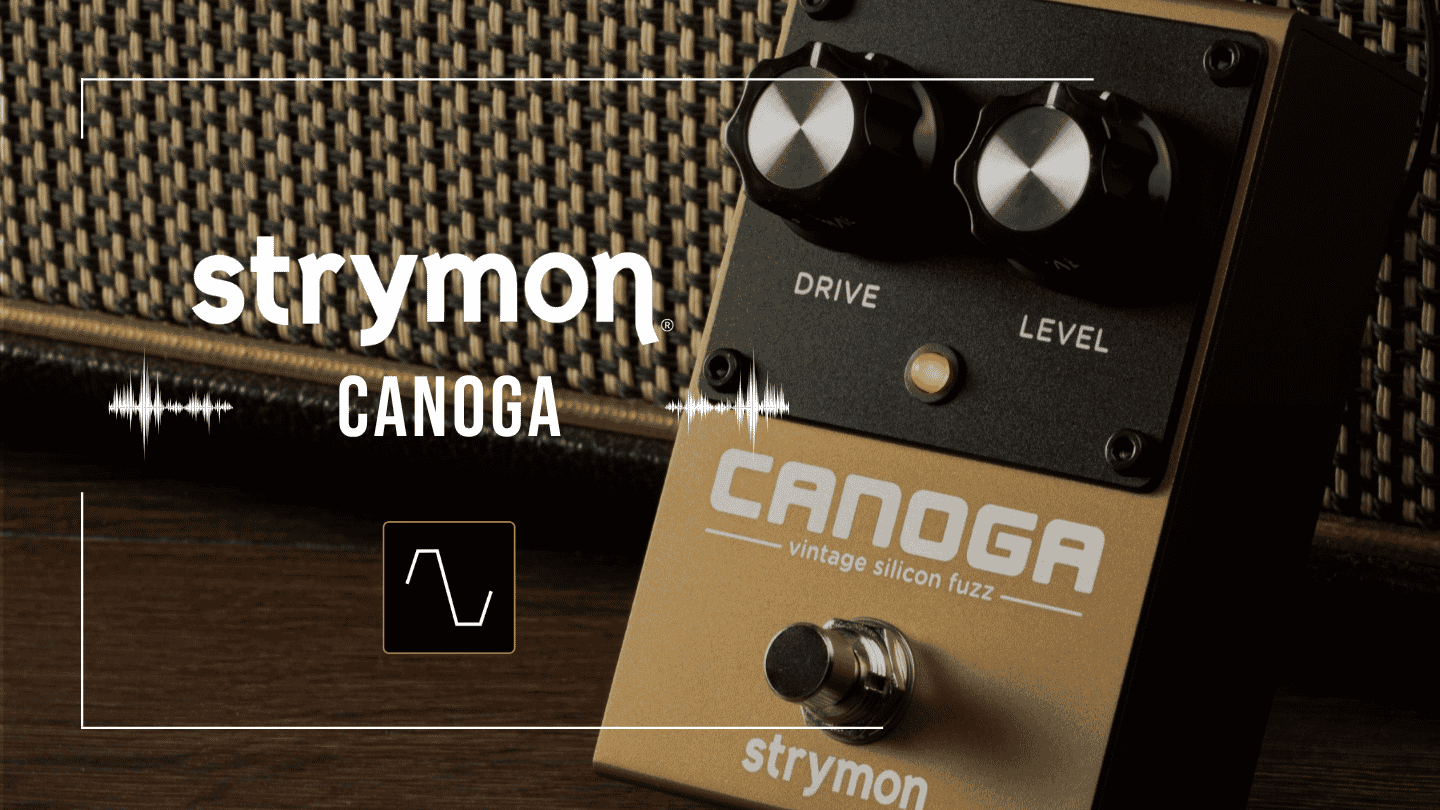
Strymon CANOGA
It respects the chaos of classic fuzz circuits while turning them into a tool that actually holds up on loud stages and in detailed studio sessions.
This guide digs into the design ideas and what makes this fuzz pedal stand out.

Strymon CANOGA|Looks & Specs
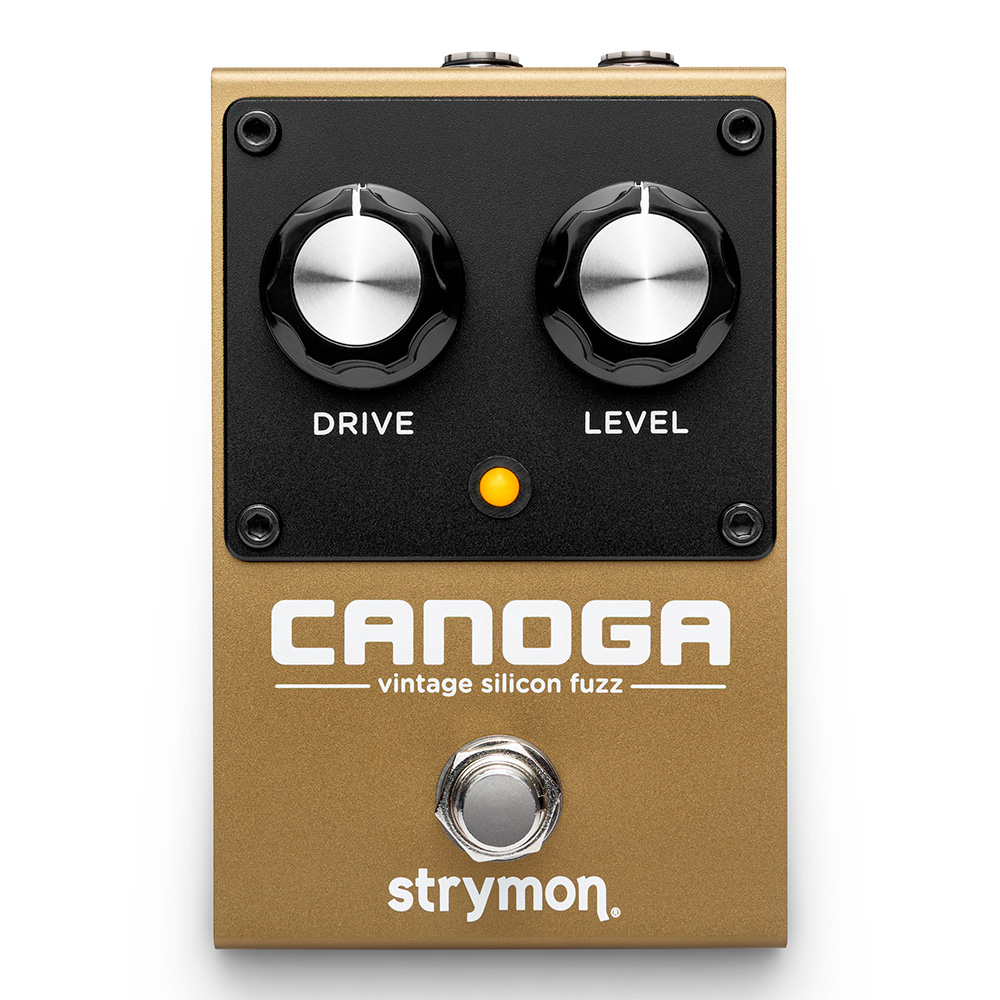
Strymon CANOGA basics
| Circuit | Fully analog, custom-tuned silicon transistor circuit |
| Bypass | True bypass (electromechanical relay) |
| Input | Mono input (unbuffered, low impedance) |
| Output | Mono output (high impedance) |
| Controls | DRIVE, LEVEL |
| Power | 9V DC center-negative, 50mA+ |
| Dimensions | 11.1 x 7.2 x 4.0 cm |
To recreate vintage fuzz behavior, the input is deliberately unbuffered and low-impedance. That means it wants a direct guitar pickup feed—designed to live at the front of your signal chain.
The high-impedance output is tuned so the pedal keeps interacting in an analog way with whatever follows it, sending that classic fuzz character to the amp without washing it out.
Strymon CANOGA|Golden-Era Tone Built for Modern Stages
A pure analog circuit rebuilt by a digital powerhouse
At the heart of CANOGA you’ll find custom-tuned silicon transistors—not a DSP chip. Starting from a classic Fuzz Face-style topology, Strymon’s team spent years dialing in the circuit: taming the peaky quirks of vintage pedals while keeping enough clarity to cut through a modern mix.
Cleanup that tracks your guitar volume
The real draw is how tightly it follows your guitar’s volume knob. Roll it back with the fuzz still on and the treble sparkle stays put. You’re not just losing gain—you get a clear, crispy, almost bell-like clean that feels closer to a quality preamp or clean boost than a dying fuzz.
Seamless gain from crunch to lead
Crank DRIVE and LEVEL for thick, sustained lead fuzz. Ease the guitar volume back a touch and it flips into rich, bluesy crunch. No stomp required—touch and the volume knob alone can move you from semi-clean shimmer to full-on drive. That expression range is where CANOGA earns its keep.
Strymon CANOGA|Sound Demos
Strymon CANOGA|Reviews & Player Buzz
Positive feedback
- Cleanup from maxed knobs is clean and musical when you roll the volume back
- Stacks beautifully into a lightly overdriven amp
- Simple two-knob layout—fast, intuitive tone shaping
Critical feedback
- It can sound a bit too polished. If you want that wild, barely-controllable vintage chaos, it may feel too well-behaved.
- Pricey relative to the part count
- A different direction from the usual Strymon vibe—for better and worse
Wrap-Up|Pure Analog with a Distinct Strymon Stamp
- Old-school players who ride the guitar volume knob
If you want clean-to-lead dynamics from the guitar alone, this is built for that approach. - Players pushing a tube amp at the edge of breakup
Hitting a lightly driven amp with CANOGA adds thick, musical harmonics in the spirit of 1960s–70s guitar heroes. - Tone hunters chasing that bell-like clean
If you still think “fuzz = noisy chaos,” try rolling the volume back—the glassy clean can outshine a solid clean boost.
Strymon CANOGA sits at the opposite end of the spectrum from do-everything multi-FX and preset-heavy drive pedals.
Two knobs, a preferred place in the chain, and zero forgiveness for sloppy pick attack—it will absolutely pick its player.
Find the sweet spot and treat the volume knob like a conversation partner, though, and you get dynamics and grit that digital algorithms still struggle to fake.
A fitting launch for Strymon’s Series A chapter: deep affection for analog circuits, crystallized in one box. If you want to level up how your hands shape drive, put it on the board and hear it for yourself.