
日本語English
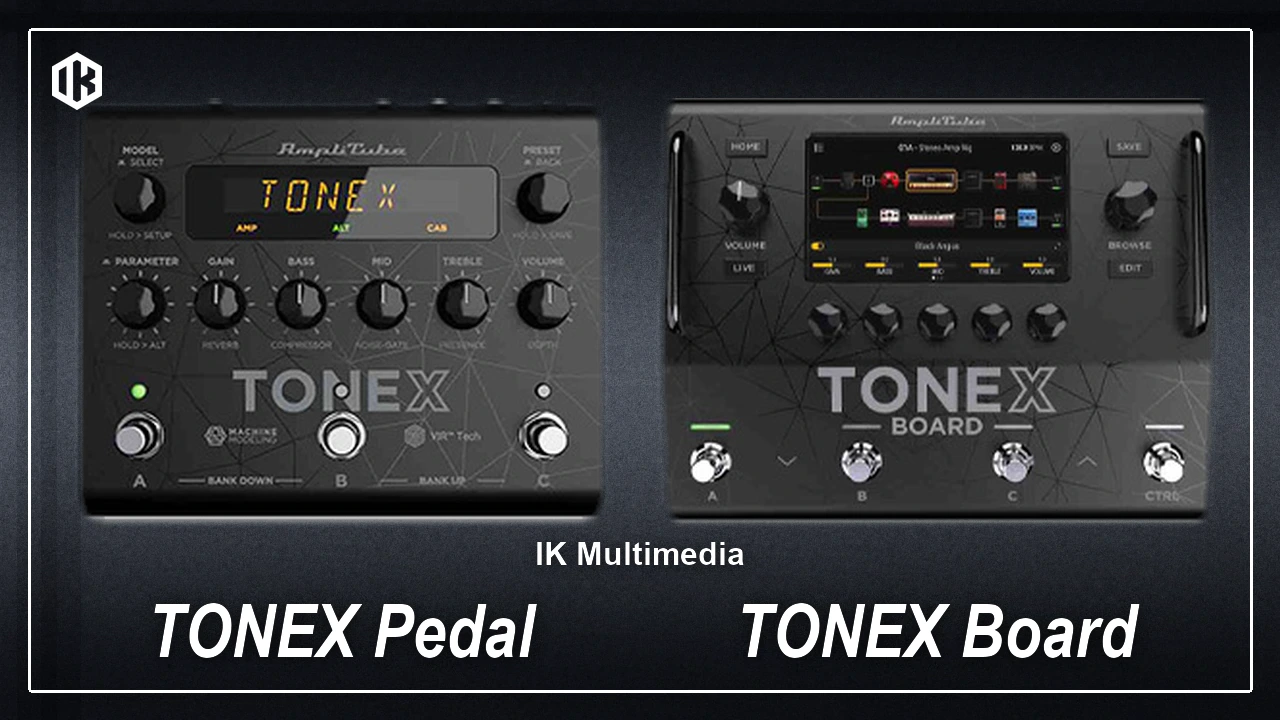
TONEX Pedal vs TONEX Board: Is the Pedal Enough, or Do You Need the Full Floorboard? [2026]
XTONES is a participant in affiliate programs including Amazon Associates and Reverb. We may earn a commission from qualifying purchases made through links on this page, at no extra cost to you.
Contents (21)
Start here
You've locked in on the TONEX sound—now the fork is whether to stay with TONEX Pedal on your pedalboard or move up to the Board. Both share AI Machine Modeling Tone Models and ToneNET, but they differ in simultaneous Tones, preset capacity, controls, and how much they can run the whole system.
We'll line up the choice around live use, system expansion, and budget.
Release and pricing now
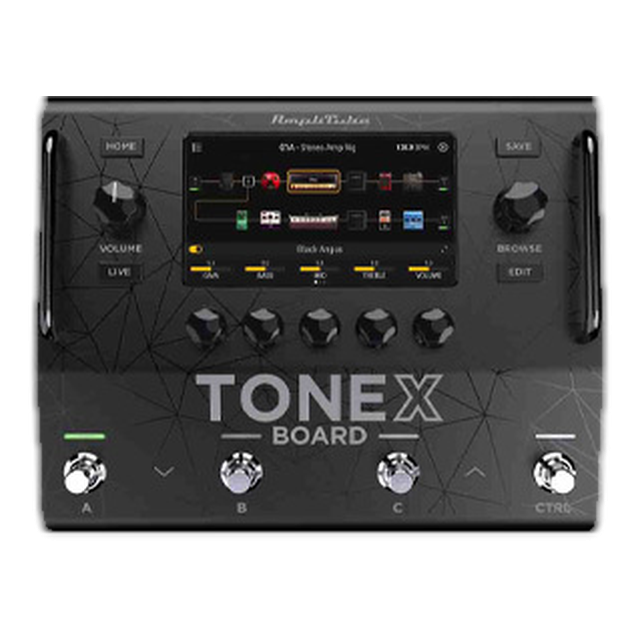
TONEX Board began Japanese retail in September 2026 at about $1,000 before tax. Specs lean board-core: 5-inch touch, up to 4 simultaneous Tones, up to 1,440 presets, plus XLR and an FX loop.
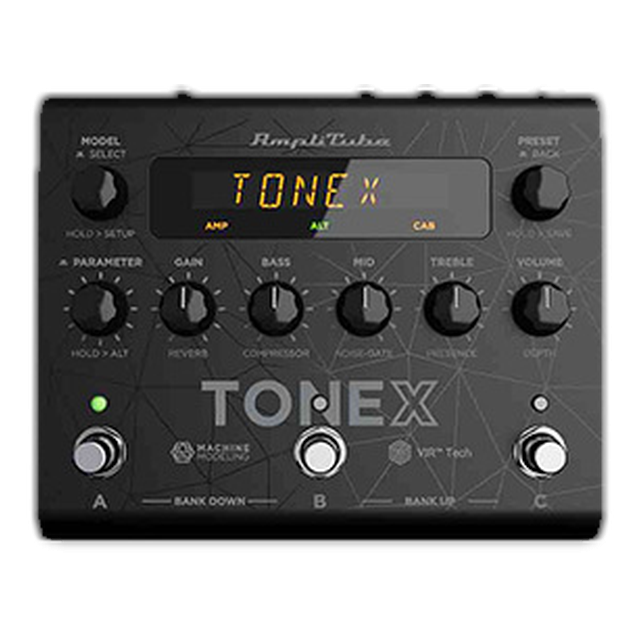
TONEX Pedal has been the go-to since 2023: 150 onboard presets, a compact chassis, and live essentials like MIDI, EXP, and headphones. Street price usually sits around $400, with used and stock easier to find.
What we'll compare
Five comparison axes below. Read them for where your bottleneck is now—not just the numbers.
- Simultaneous Tones / signal design — TONEX Pedal is built around one chain. Board uses dual paths with up to 4 simultaneous Tones.
- Preset capacity and gig workflow — 150-slot pedal workflow vs Board's 1,440 slots with setlist-minded capacity.
- Controls — Knobs + footswitches with stompbox feel vs 5-inch touch + encoders / scenes.
- I/O and system expansion — TONEX Pedal's stereo out + MIDI/EXP vs Board's dual XLR paths, FX loop, and dual EXP.
- Size / price — ~$400 class that fits a board gap vs ~$1,000 class that owns the center.
Specs and features compared
Comparison based on official and Japan retail info. Treat prices as ranges—they move.
| Spec | TONEX Pedal | TONEX Board |
|---|---|---|
| Role | Stage-ready AI tone pedal | Floor all-in-one / system hub |
| MSRP / street (tax-incl. guide) | About $400 (approx. US street) | About $1,000 (approx. US street) |
| Simultaneous Tone Models | One-chain focused (Amp/Cab/Stomp as Tones) | Up to 4 (Amp + Stomp per path × 2 paths) |
| Presets | Up to 150 (3×50 banks) | Up to 1,440 (12-setlist scale) |
| Built-in effects | Gate/EQ/Comp/Mod/Delay/Reverb—enough for live | 70+ types, up to 12 slots per chain |
| Controls | Knobs + footswitches (stomp workflow) | 5-inch touch + encoders / 4 switches |
| Main outputs | Stereo L/R, headphones | XLR stereo + TRS stereo (two independent paths) |
| Expansion | MIDI IN/OUT、EXP×1、USB IF | MIDI, dual EXP, stereo FX loop, USB-C (4in/2out) |
| Footprint | Compact ~176×142×55 mm | 235×184×72 mm / ~1.6 kg |
| Best for | Core or sub on an existing board; simple setups | Main board, multi-path live, PA direct |
Sources: IK Multimedia official (TONEX Pedal / TONEX Board); Hookup, Sound & Recording, and other Japan announcements. Board is newly released—firmware updates can change the feel.
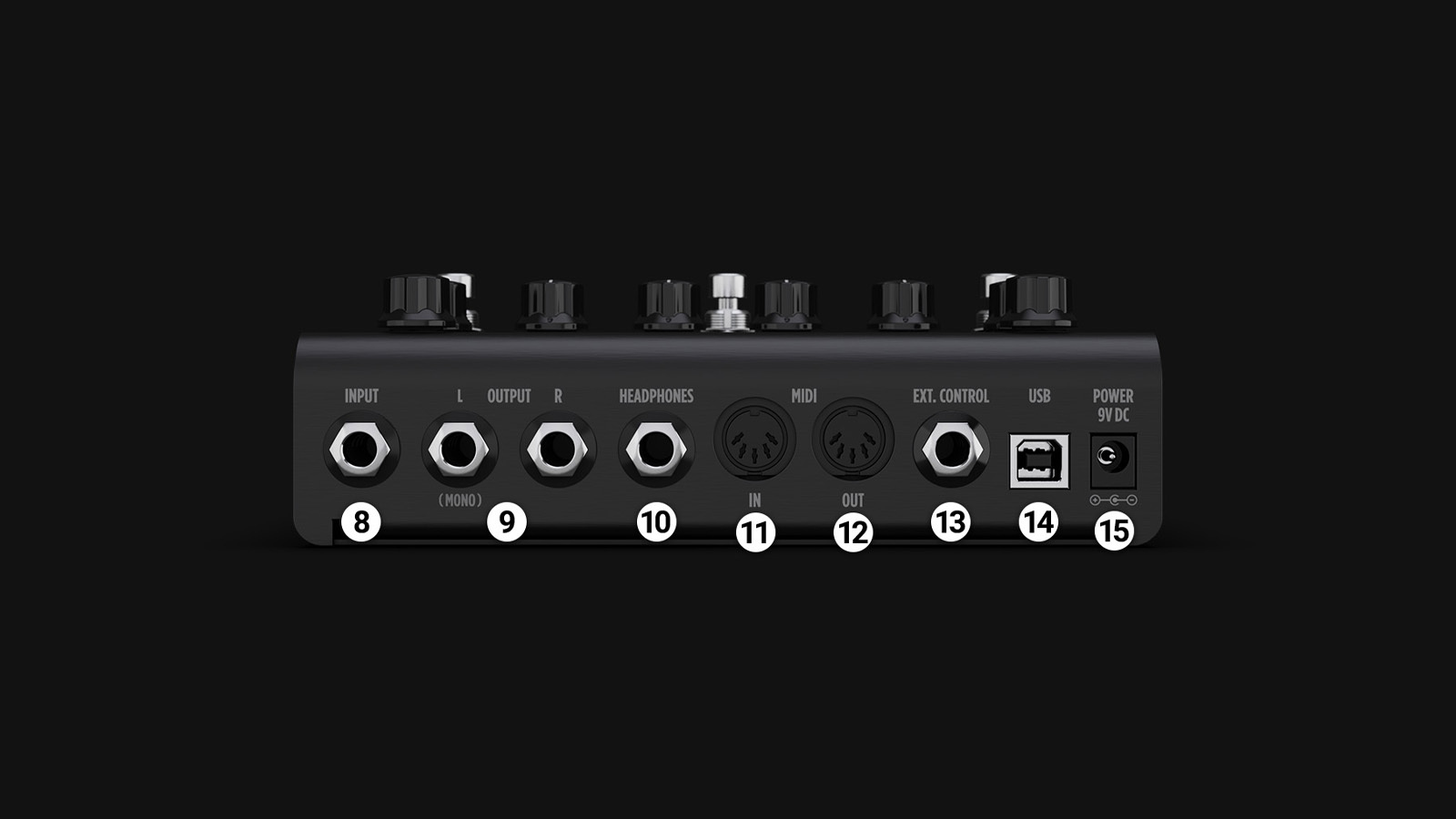 TONEX Pedal · rear I/O
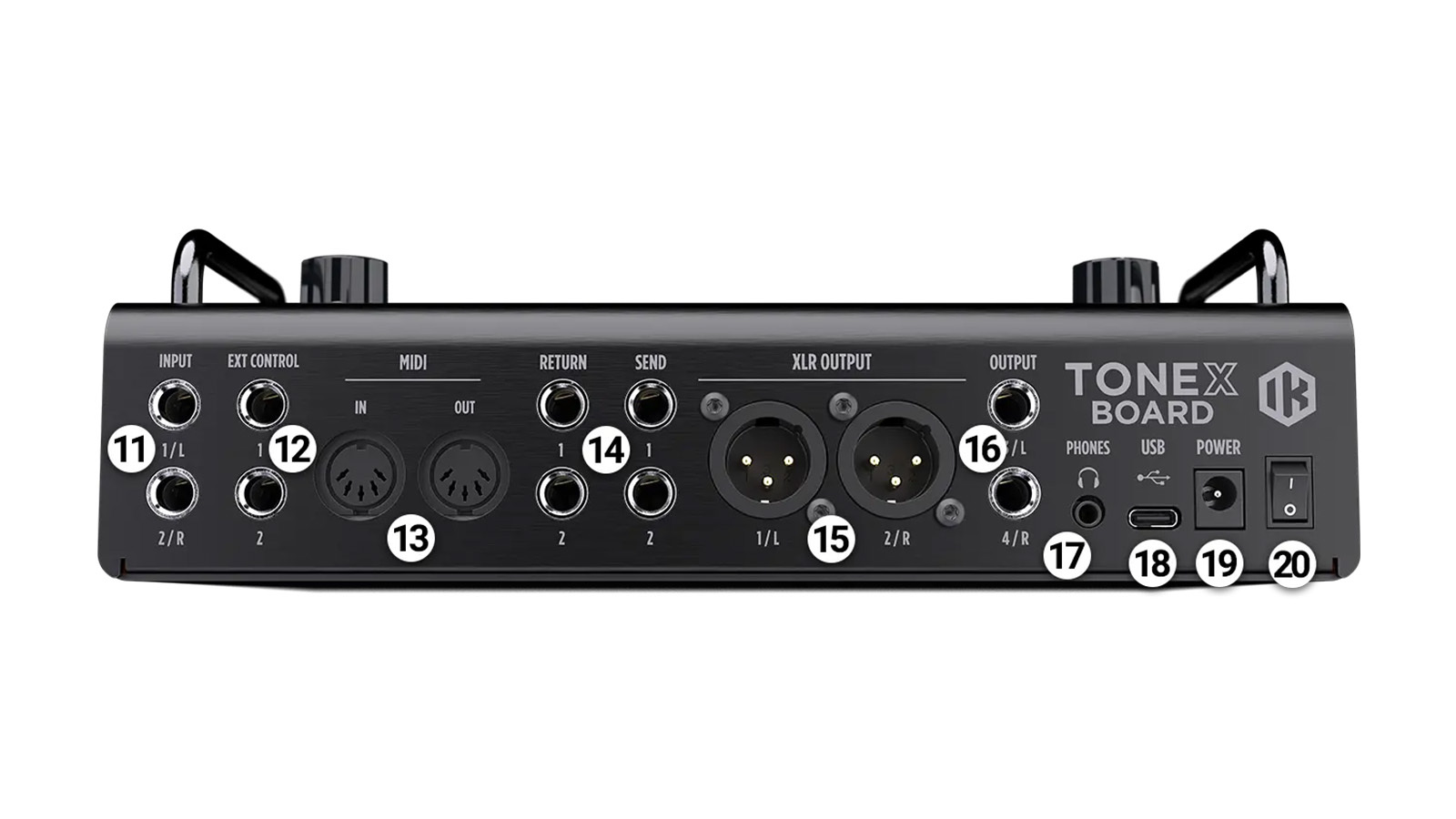 TONEX Board · rear I/O
Get a feel from the demos
Official sound demos and playing demos. Use them to feel Tone Model character and how each unit plays.
Where opinions split
Topics that split communities and reviews. Focus on workflow differences more than tone taste.
hot = hot debate right now · warn = watch for mismatched expectations · neu = easier to compare calmly
Board is still building hands-on reviews. Before you buy, check the latest firmware and local coverage too.
Breaking down each axis
Simultaneous Tones and signal design
TONEX Pedal centers on fast switching of one finished Tone (a rig with amp/cab/stomp). It plays well as part of a pedalboard—stack with drive pedals, sit in front of an amp, or go cab-sim to line.
Board assumes dual signal paths and can run up to four Tone Models at once. Stereo dual-amp, Wet/Dry, amp + AI stomp stacks—it's the step from single-tone switching to building a full system.
Presets and how you run them live
TONEX Pedal's 150 presets are often enough to lock in one to a few gigs; the usual move is to swap the rest from PC/app. Bank/preset footswitching is intuitive and hard to flub.
Board's up-to-1,440 presets are built for setlist-scale storage. Multiple artists or long tours stay resident more easily, and touch browse plus Scene/Stomp modes shift weight toward building on the fly.
Controls: stompbox feel vs finishing on-screen
TONEX Pedal keeps strong knob-and-footswitch stomp feel—muscle memory works on dark stages. Deeper editing is meant for the editor app.
Board's 5-inch touch and encoders pull parameter tweaks and scene changes onto the pedalboard. Preset/Scene/Stomp modes let it swing from stompbox to multi-FX.
I/O, PA, and system integration
TONEX Pedal covers live-to-simple-recording alone with stereo outs, headphones, MIDI, EXP, and USB audio. When you need XLR, an external DI is the usual add-on.
Board's independent XLR and TRS paths, freely placeable stereo FX loop, dual EXP, and MIDI make it easy to unify PA direct, external effects, and wireless. It's the board brain when you want fewer cables and boxes.
Price and upgrade decisions
The price gap is roughly 3×. If TONEX Pedal already covers gigs and the only gaps are capacity, simultaneous processing, XLR/FX loop, or on-unit editing, Board pays off. If you mainly want a Tone entry point and solid one-rig live use, staying on TONEX Pedal is the rational call.
Where each model sits
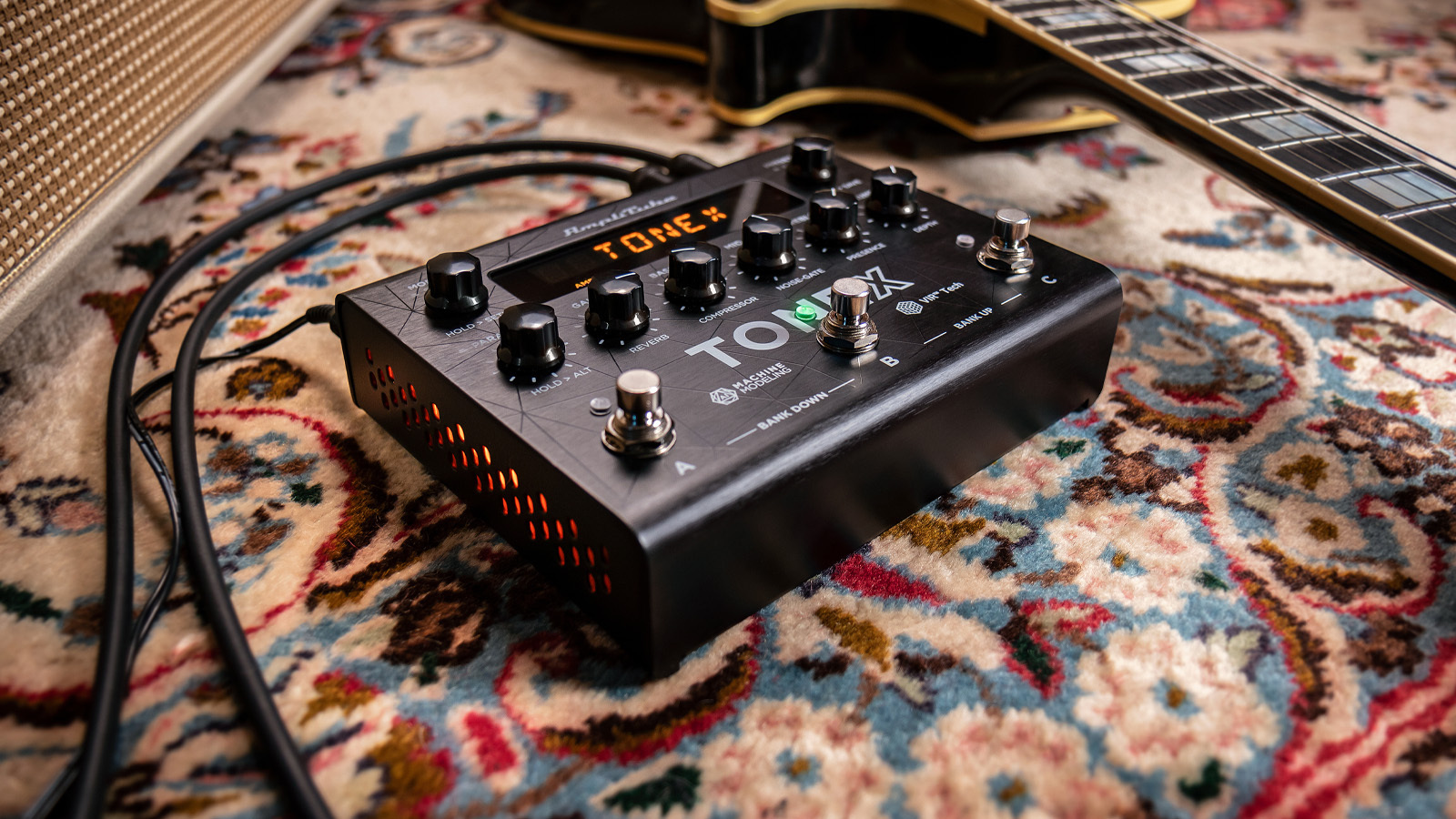
TONEX Pedal
The standard way to put AI tones on a pedalboard. Compact, ~$400 class, 150 presets, MIDI/EXP/headphones—live essentials covered. Easy as core or sub on an existing board, and the shortest path to take ToneNET assets to the stage.
When you want dual amps, lots of resident presets, dual XLR, or deeper on-unit editing, Board is the next step.
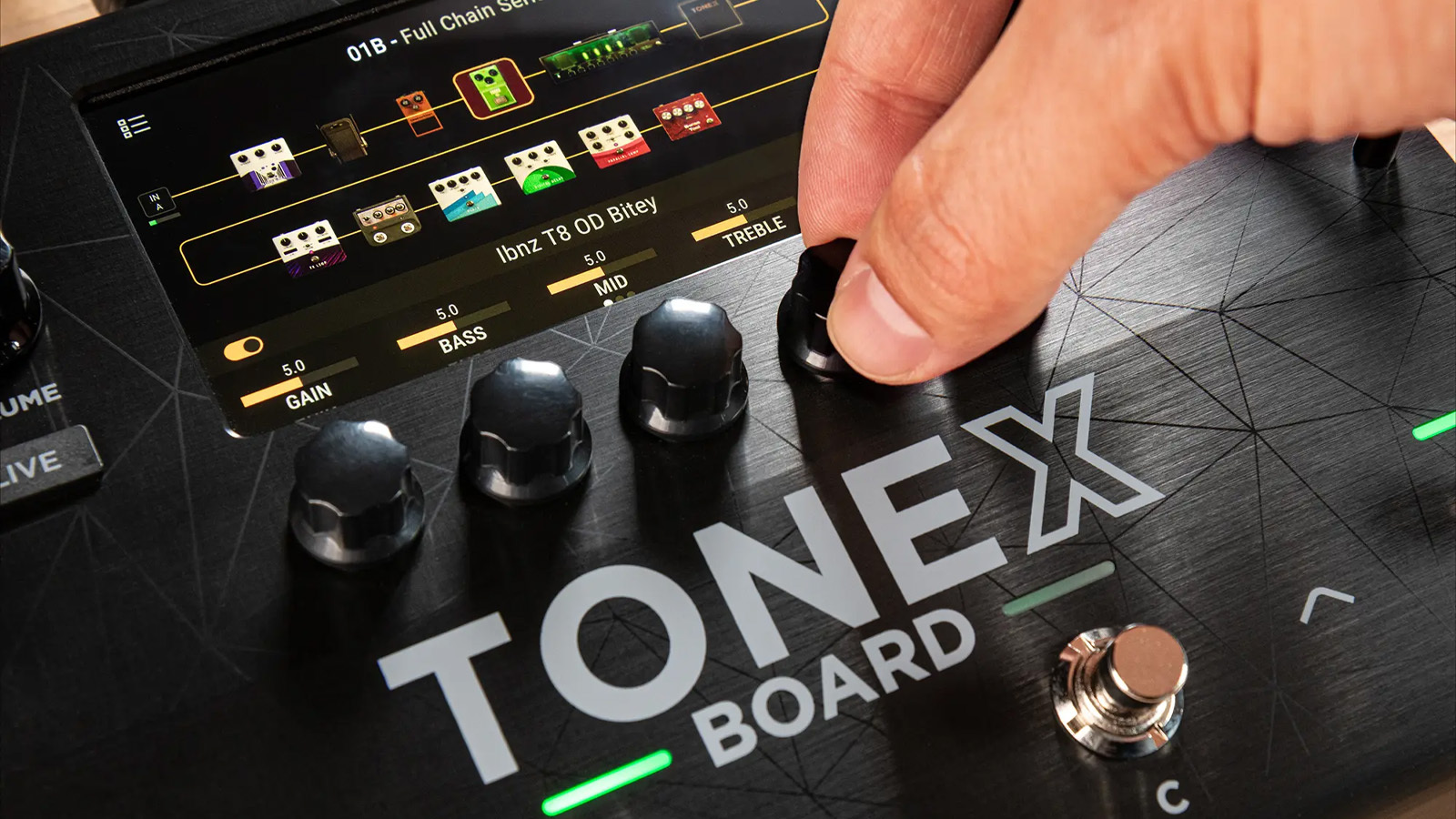
TONEX Board
Flagship of the TONEX ecosystem. Up to 4 simultaneous Tones, 70+ effects, 1,440 presets, 5-inch touch, XLR/FX loop—built as the floorboard hub.
Price and size change how you plan the board. It's for players who already treat TONEX as the tone baseline and feel short on simultaneous processing and I/O.
Who it's for
This isn't about which is better—it's about which role fits.
A good fit
TONEX Pedal is a fit if you…
- Run gigs around one main rig
- Want to share space with other pedals / save board real estate
- Want ToneNET assets on stage without stretching the budget
- Prefer stompbox-style control
TONEX Board is a fit if you…
- Want dual amp / Wet/Dry / 4 simultaneous Tones
- Want big preset libraries or setlists resident on the unit
- Want a hub with XLR direct and an FX loop
- Want touch UI for on-the-fly editing
Easier to skip for now
TONEX Pedal may feel short if you…
- Want to layer multiple Tones at once
- Can't keep up swapping within 150 presets
- Need dual XLR or a freely placeable FX loop
Board may be overkill if you…
- Your set is done with single-Tone switching
- Need a board gap / want to keep many other pedals
- Would rather put budget into guitars or other gear right now
Wrap-up & next step
In short: TONEX Pedal is the unit for bringing AI tones onto the board as a reliable pedal; TONEX Board is the unit for putting TONEX at the center of a live/system rig. Same Tone ecosystem—different layers for simultaneous processing, preset scale, controls, and I/O—so match the job, not the brand alone.
If you’re stuck, name the bottleneck first: stable day-to-day use of one finished rig, or a command center for many paths and a big library. The former points to TONEX Pedal; the latter to Board. Already on TONEX Pedal? Check whether Board actually fills the gaps you feel (simultaneous Tones / resident presets / XLR & FX loop / on-screen control).