
日本語English
Universal Audio Interface Buyer's Guide: Apollo vs. Volt Differences, Use Cases, & Reviews
XTONES is a participant in affiliate programs including Amazon Associates and Reverb. We may earn a commission from qualifying purchases made through links on this page, at no extra cost to you.
Contents (20)
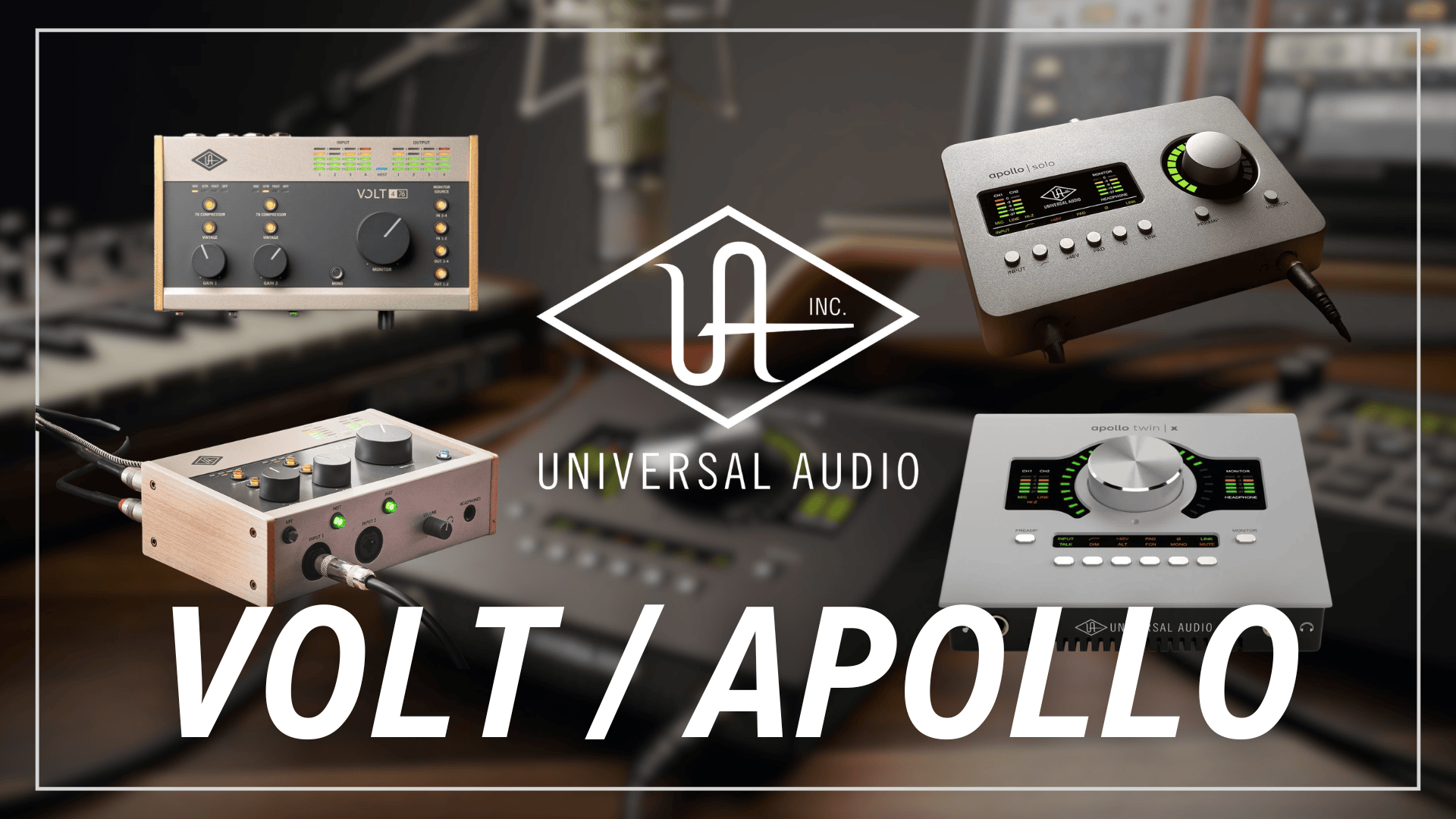
Universal Audio (UA) audio interfaces let you achieve coveted pro-studio sound right at your desktop. However, when deciding which to buy, many creators find themselves torn between two entirely different lineups: the Volt series, which delivers intuitive operation and analog vibe, and the Apollo series, built around massive DSP power for professional environments.
While both lineups are exceptional gear, choosing a model that doesn't fit your playing style—or your long-term setup vision for capturing vintage gear tones with extreme fidelity—can lead to major regret down the line.
This guide breaks down the three defining differences between these two series that spec sheets alone won't tell you. Whether you're a beginner wanting quick, thick tones without dealing with complex software settings, or a serious creator aiming to capture prime guitar tones without compromise, this complete breakdown will help you choose the right audio interface for your setup.
The 3 Key Differences Between Apollo and Volt
"I know Universal Audio sounds great, but which one should I actually buy?"
To help you answer that question, we'll focus on three core differences in the actual recording experience that don't show up on a spec sheet.
Once you understand these differences, it will be clear which interface fits your needs.
Where the Effect Processing Happens: Built-In DSP vs. Native
Apollo (Onboard DSP)
Because the Apollo's onboard DSP chips offload all processing, computer CPU load remains at zero no matter how heavy your amp modelers or effect plugins are. This keeps latency—the delay between striking a string and hearing audio back in your headphones—virtually imperceptible (near zero). For guitarists who cannot tolerate timing slop or lost touch nuances, this is a massive advantage.
Volt (Native Processing)
The Volt does not include onboard DSP and handles audio I/O only. When running amp modelers or plugin effects in your DAW, all processing relies entirely on your computer's CPU. On slower computers, latency can become noticeable as processing lags. However, with modern high-performance computers—such as Apple Silicon M1/M2 Macs—this latency is often low enough for comfortable tracking.
Unison Technology Support
One defining capability exclusive to the Apollo series is Unison technology.
What is Apollo's Unison Technology?
Standard software amp modeling simply applies digital processing after the signal is recorded.
Unison technology goes further: when you select a modeled vintage unit (such as a vintage Marshall amp or Neve preamp) in software, the Apollo physically adjusts its hardware input impedance and gain staging to match.
Your guitar's pickups interact with the hardware as if plugged directly into the original gear, accurately replicating its true electrical behavior. This dynamic response and realistic feel cannot be replicated on the Volt series.
Instant Tone via Analog Circuits
On the flip side, the Volt series (specifically the 76 models) features its own unique advantage: instant analog tone at the push of a button.
Volt's Vintage Preamp and 76 Compressor
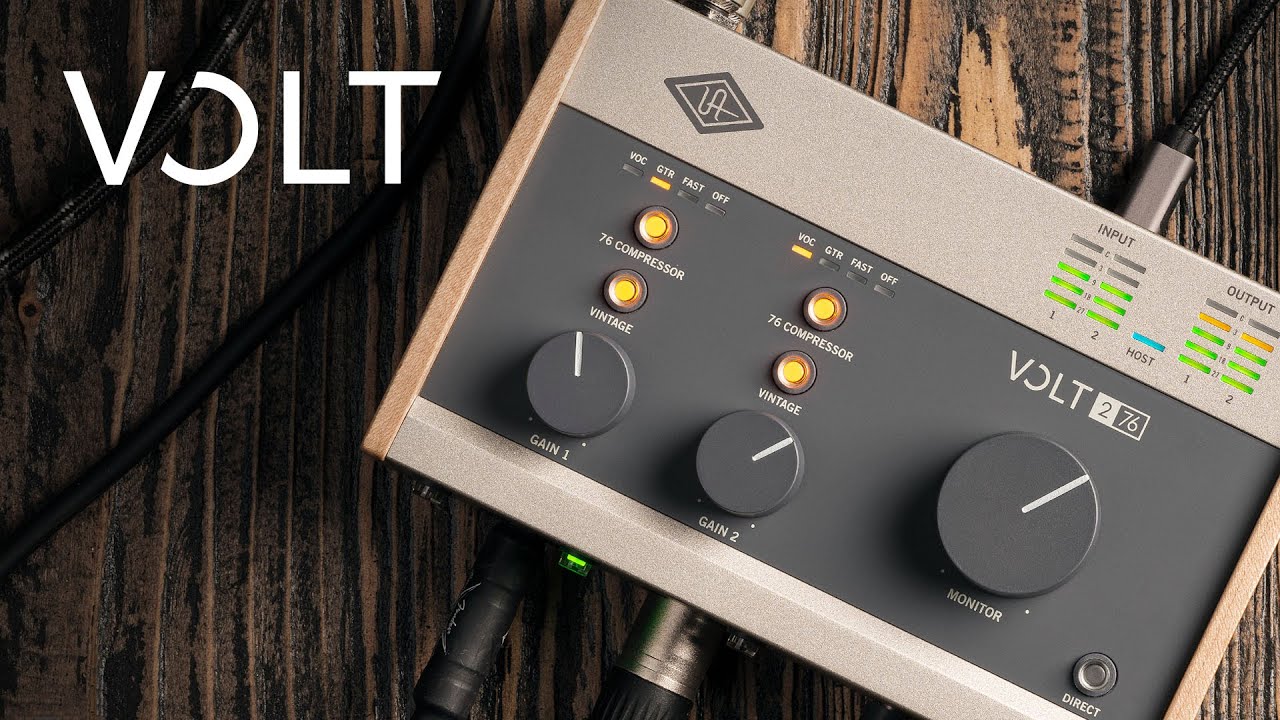
The Volt front panel features dedicated hardware buttons labeled "VINTAGE" and "76 COMPRESSOR" (*76 Compressor on 76 models only).
Engaging these routes your signal through real built-in analog circuitry. There's no need to open software menus or tweak complex plugin parameters. For example, pressing the "GTR" (Guitar) button on the 76 Compressor while tracking funk rhythm guitar instantly delivers punchy, studio-ready tone with enhanced attack.
For players who want an intuitive workflow without spending time tweaking software settings, Volt's straightforward hardware approach is a massive advantage over Apollo's deeper control environment.
Volt Series: For Players Seeking Intuitive Control and Analog Tone
Volt Lineup Comparison Table
| Volt 1 | Volt 176 | Volt 2 | Volt 276 | Volt 4 | Volt 476 | Volt 476P | |
| Yen reference | about ¥22,000 (yen reference) | about ¥33,000 (yen reference) | about ¥28,000 (yen reference) | about ¥42,000 (yen reference) | about ¥39,000 (yen reference) | about ¥55,000 (yen reference) | about ¥72,000 (yen reference) |
| Approx. US street | $140 | $200 | $190 | $300 | $250 | $350 | $450 |
| Analog I/O | 1 In / 2 Out | 1 In / 2 Out | 2 In / 2 Out | 2 In / 2 Out | 4 In / 4 Out | 4 In / 4 Out | 4 In / 4 Out |
| Mic Preamps | 1 | 1 | 2 | 2 | 2 | 2 | 4 |
| Hi-Z (Guitar) Inputs | 1 | 1 | 2 | 2 | 2 | 2 | 4 |
| Line Inputs (Rear) | None | None | None | None | 2 | 2 | None |
| Headphone Outputs | 1 | 1 | 1 | 1 | 1 | 1 | 2 |
| Vintage Mode | Included | Included | Included | Included | Included | Included | Included |
| 76 Compressor | None | Included | None | Included | None | Included | Included |
| MIDI I/O | Yes | Yes | Yes | Yes | Yes | Yes | Yes |
| Max Resolution | 24-bit/192kHz | 24-bit/192kHz | 24-bit/192kHz | 24-bit/192kHz | 24-bit/192kHz | 24-bit/192kHz | 24-bit/192kHz |
| Power Source | USB Bus Power | USB Bus Power | USB Bus Power | USB Bus Power | AC Adapter | AC Adapter | AC Adapter |
| Bundled Software | Ableton, etc. | Ableton, etc. | Ableton, etc. | Ableton, etc. | Ableton, etc. | Ableton, etc. | Ableton, etc. |
The Volt series offers the most accessible entry point to Universal Audio's renowned studio sound.
There is no need to configure complex routing or software settings on your computer screen.
Even beginners unfamiliar with recording gear can achieve rich, classic analog tone simply by pressing physical buttons on the front panel.
Below is a detailed look at all seven models in the series and what their analog circuitry brings to the table.
Volt 1
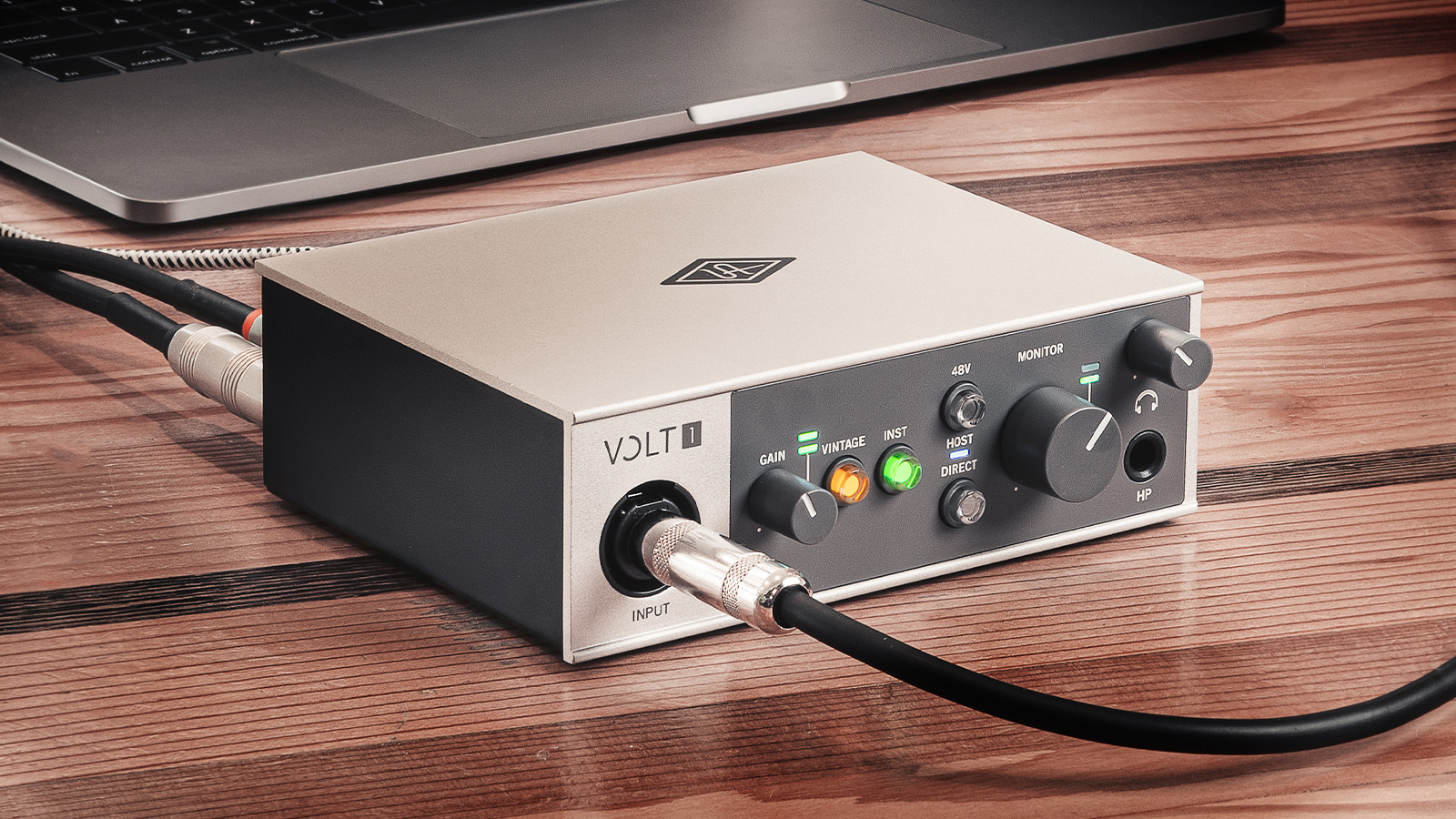
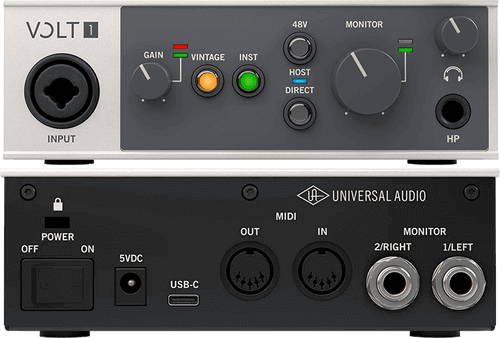
- Simple 1-In / 2-Out Setup with Intuitive Controls
Features a front-panel combo jack supporting mic, line, and instrument inputs alongside rear stereo outputs for studio monitors. The streamlined layout delivers an intuitive workflow ideal for beginners. - Vintage Mic Preamp Mode
Adds the sound profile of UA's legendary 610 tube preamp at the press of a button, imparting rich analog harmonics and warmth to counteract sterile digital signals. - Pro Software Bundle
Includes pitch-correction software Melodyne Essential, Ableton Live Lite, plus Marshall- and Ampeg-style amp modeling plugins—offering software value that exceeds the price of the interface itself for immediate music production.
The Volt 1 is Universal Audio's most accessible entry-level interface—a 1-in/2-out, bus-powered unit. While omitting costly DSP and analog compression circuits, it includes the analog Vintage Mic Preamp mode to add musical warmth to budget setups. It is ideal for home recording beginners or creators focusing on single-source tracking like vocals or solo guitar.
Positive Feedback
- "In the ¥10,000 range, the sound is good, and Melodyne being included makes this a great fit for recording vocals."
- "Sound quality is top-tier in the ¥10,000 range—very clear and transparent."
- "A solid choice for live streaming and recording vocals or single instruments."
Negative Feedback
- "If you're going to use the Vintage Preamp mode, the Volt 176 with its built-in analog compressor feels like a better option. The Vintage mode alone feels a bit subtle."

Volt 2
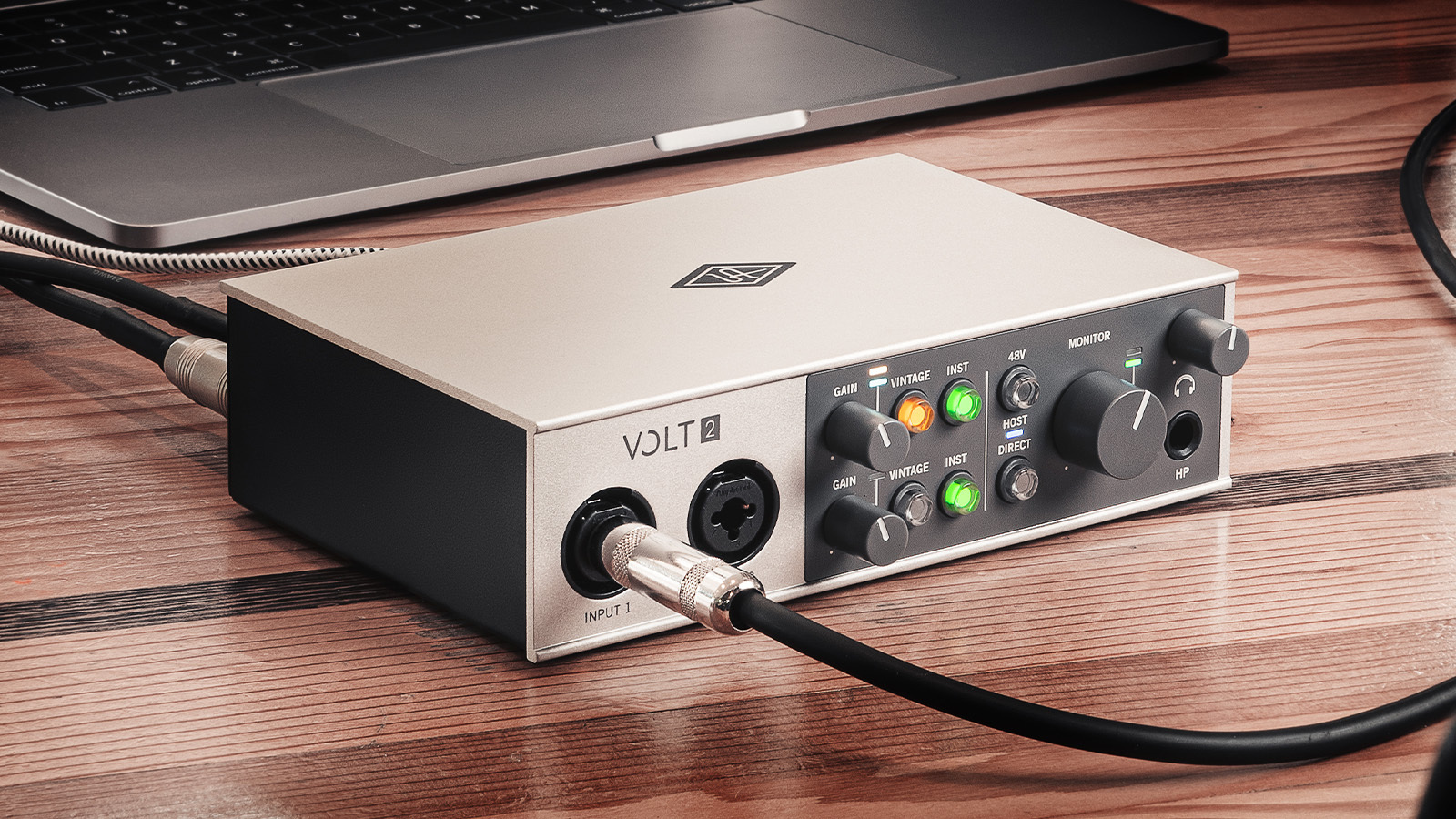
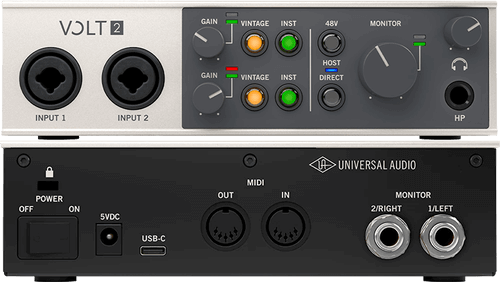
- Full support for singer-songwriter tracking with 2-in/2-out
Features two front-panel combo jacks, each equipped with independent gain controls and Vintage mode switches. Apply analog saturation independently to both vocals and instruments during simultaneous recording. - Flexible direct monitoring
Offers zero-latency monitoring direct from the hardware with switchable mono and stereo modes. When tracking with a single mic, switching to mono (illuminated blue) prevents the signal from appearing in only one ear. - Seamless mobile integration with iOS devices
Pair with a Lightning-to-USB 3 Camera Adapter (sold separately) and external power (5V DC jack) to set up a mobile recording rig on iPhone or iPad for portable production anywhere.
This standard model features dual combo jacks designed primarily for singer-songwriters and solo performers. The Vintage preamp mode can be applied to both inputs simultaneously, making it ideal for tracking vocals and acoustic guitar together in stereo. Positioned in a competitive 2-in/2-out market alongside rivals like the MOTU M2 and SSL 2, it stands out with its rich analog preamp feel and bundled software package.
Positive User Feedback
- "Recording and playback sound remarkably clear and detailed, punching way above its price point."
- "Includes Melodyne Essential for vocal pitch correction, which alone is worth about ¥10,000."
- "The switchable mono/stereo direct monitoring is super handy for single-mic recording, solving the issue of audio only coming out of one ear."
Negative User Feedback
- "Lacks native loopback functionality, which makes it less convenient for PC live streaming setups."
- "When using Vintage mode on vocals, cranking the gain easily causes digital clipping. Without built-in analog compression, setting levels takes careful tweaking."

Volt 4
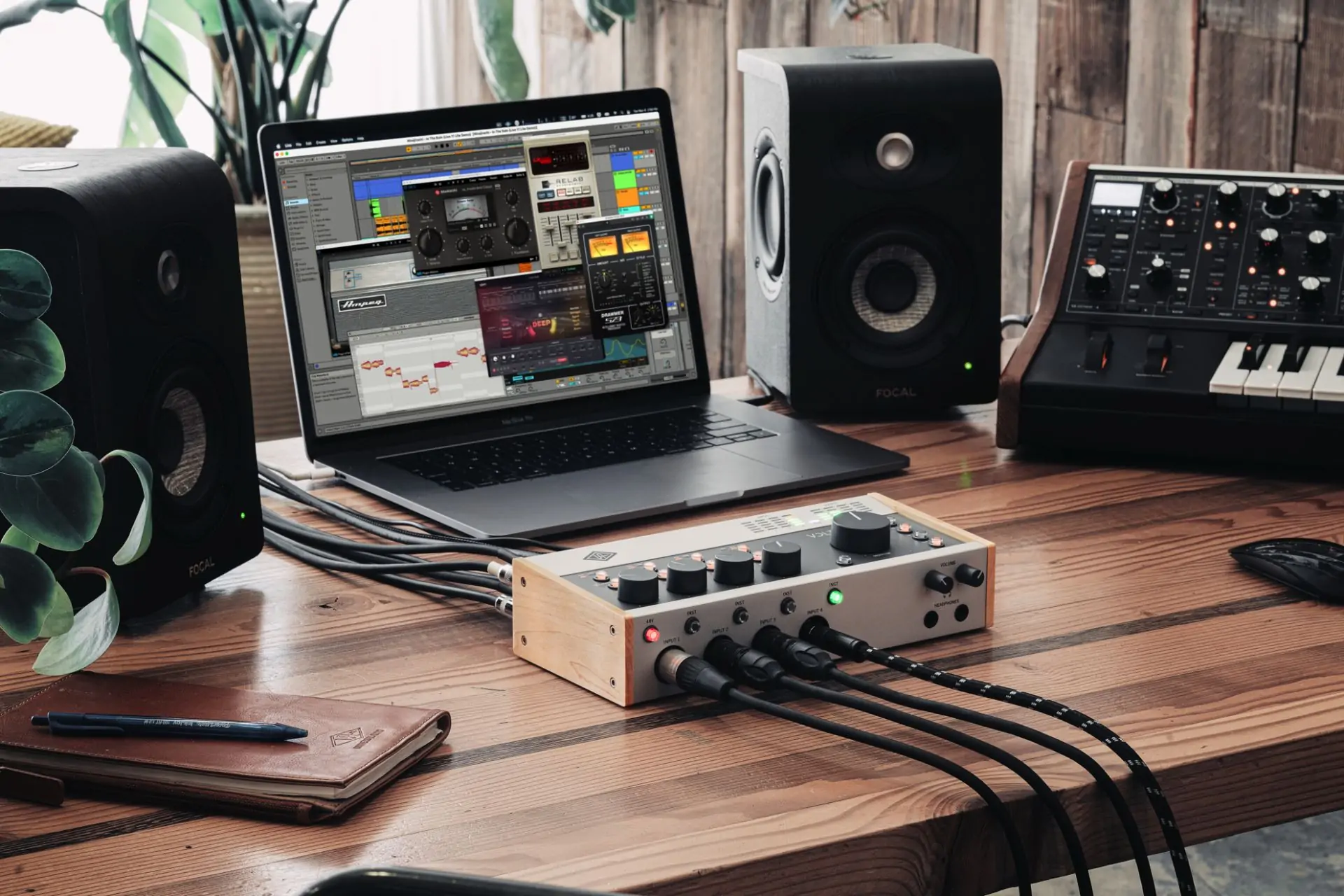
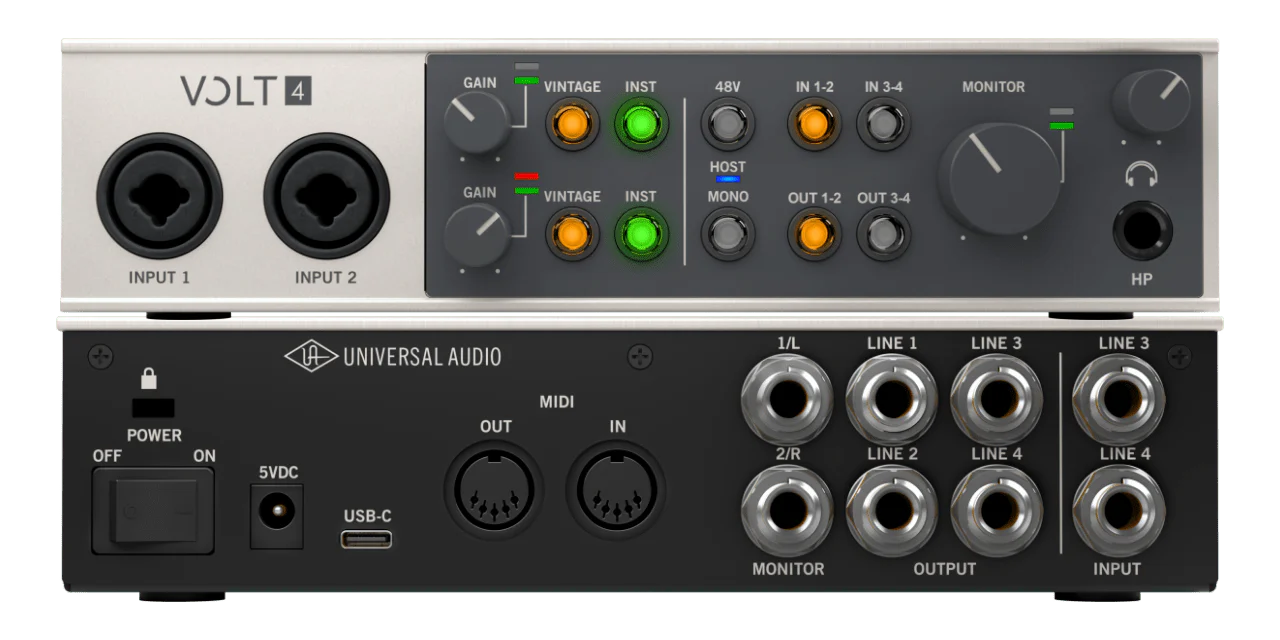
- Comprehensive 4-in/4-out I/O and Expandability
In addition to the two front combo jacks, two line inputs are included on the rear panel. This allows stereo outputs from keyboards or external hardware effects to stay permanently connected, enabling a more flexible home studio setup. - Robust, Refined Industrial Design
Combining an understated, minimal look with wooden side panels, the enclosure fits naturally into any room setup. A rugged metal chassis ensures long-term durability under heavy use. - Reliable Operation via Dedicated Power Supply
In addition to USB bus power, it supports external power via an included AC adapter. This guarantees stable operation when running multiple channels simultaneously or powering high-consumption devices.
This mid-range model expands to a 4-in/4-out configuration by adding two rear line inputs. Designed for seamless integration with hardware synths and outboard gear, it offers greater routing flexibility for home studios. By omitting built-in analog compressor circuits to keep costs down, it serves as a solid I/O hub for beatmakers and electronic music creators who need multi-channel connectivity.
Positive Feedback
- "It doesn't try to be flashy, but the solid build and clear audio quality make it a remarkably well-balanced interface."
- "The understated design is fantastic. It fits seamlessly into my room setup."
- "Having dedicated line inputs that bypass the mic preamps adds good expandability. Being able to run on external power instead of relying solely on bus power gives great peace of mind."
Negative Feedback
- "Because it lacks a loopback feature, it isn't ideal for complex live streaming setups."
- "There are no onboard DSP effects, so you can't apply standalone reverb or processing."

Volt 176
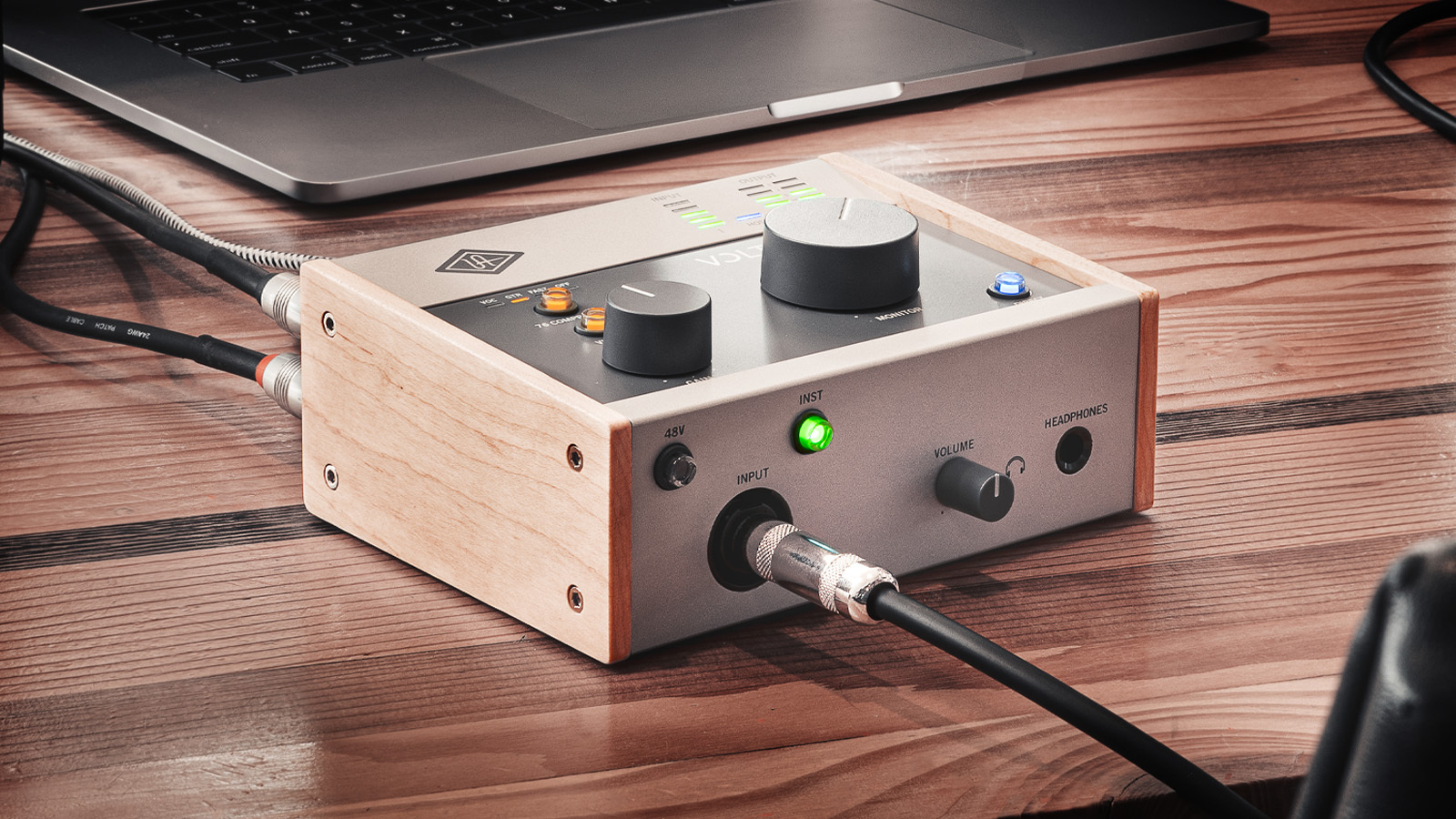
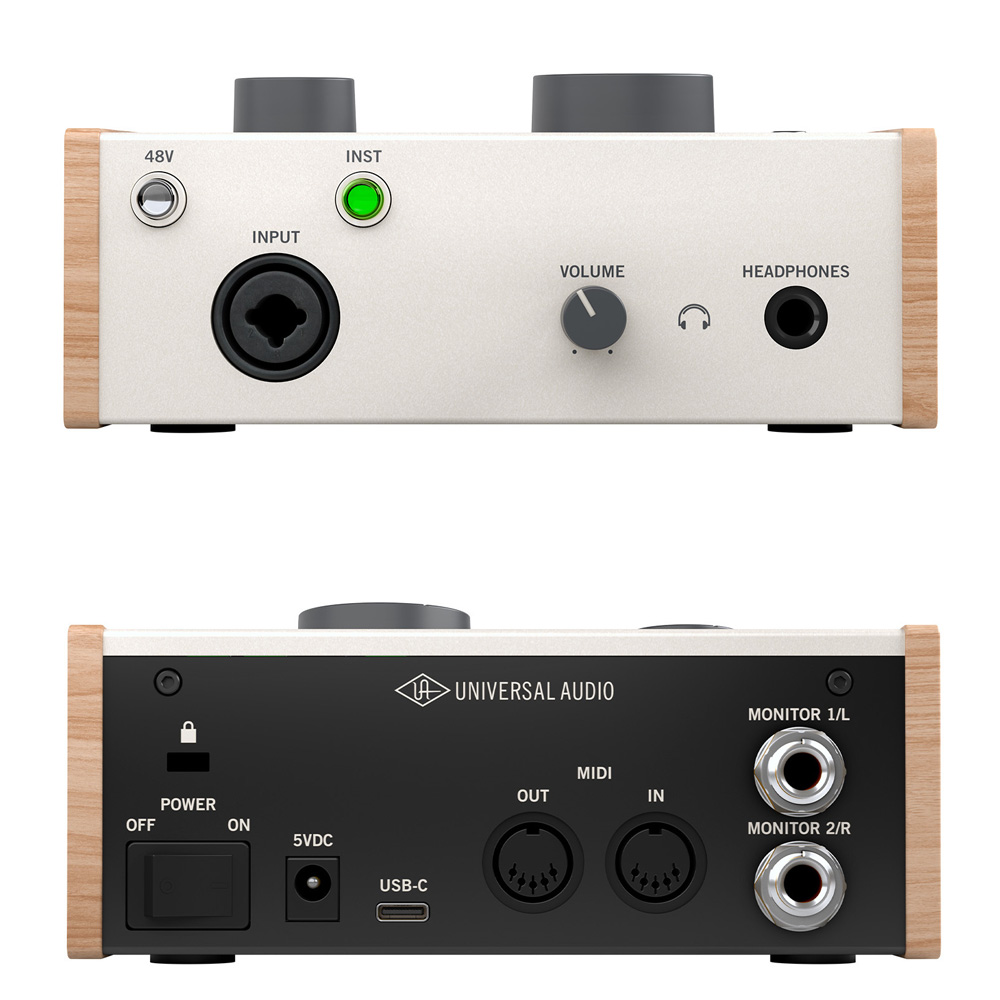
- Built-in 76 Compressor (analog compressor) circuit
Features an analog circuit inspired by the legendary 1176 Limiting Amplifier. It controls input signal transients automatically at the push of a button, leveling out vocal volume differences and creating punchy sound instantly before A/D conversion. - Three compression presets for different applications
Easily switch between three presets using front-panel buttons: "VOC" (vocals), "GTR" (guitar/bass), and "FAST" (ultra-fast attack). Provides optimal compression for your source without requiring deep knowledge of technical parameters. - Compact footprint with uncompromised sound quality
By limiting the input to a single channel, the enclosure stays compact while housing the exact same AD/DA converters and analog circuitry as higher-end models. Delivers uncompromised audio quality even on cramped desks or in mobile setups.
Featuring a built-in analog compressor inspired by UA's iconic 1176, this specialized interface is tailored for solo vocalists and streamers. By streamlining the input to a single channel, it keeps the price around $200 while giving you hardware-level control over audio peaks to boost punch and presence. Operating independently of computer software, it serves as an immediately practical, stream-ready interface for live singing streams, podcasts, and video production.
Positive Reviews
- "Getting an audio interface with an analog compressor in the low ¥30,000 range is a surprise. It's incredibly easy to use for live vocal streams."
- "The analog compressor is super straightforward—it adds nice warmth without making the audio sound thin, and overall sound quality is fantastic."
- "The output sound is remarkably clear and detailed, and combining it with the Vintage Mic Preamp mode gives you a rich analog character."
Negative Reviews
- "Because input is restricted to just one combo jack, expandability feels a bit limited for the price."
- "It lacks hardware loopback functionality and built-in DSP effects like reverb, which can make it a bit inconvenient as a dedicated streaming setup."

Volt 276
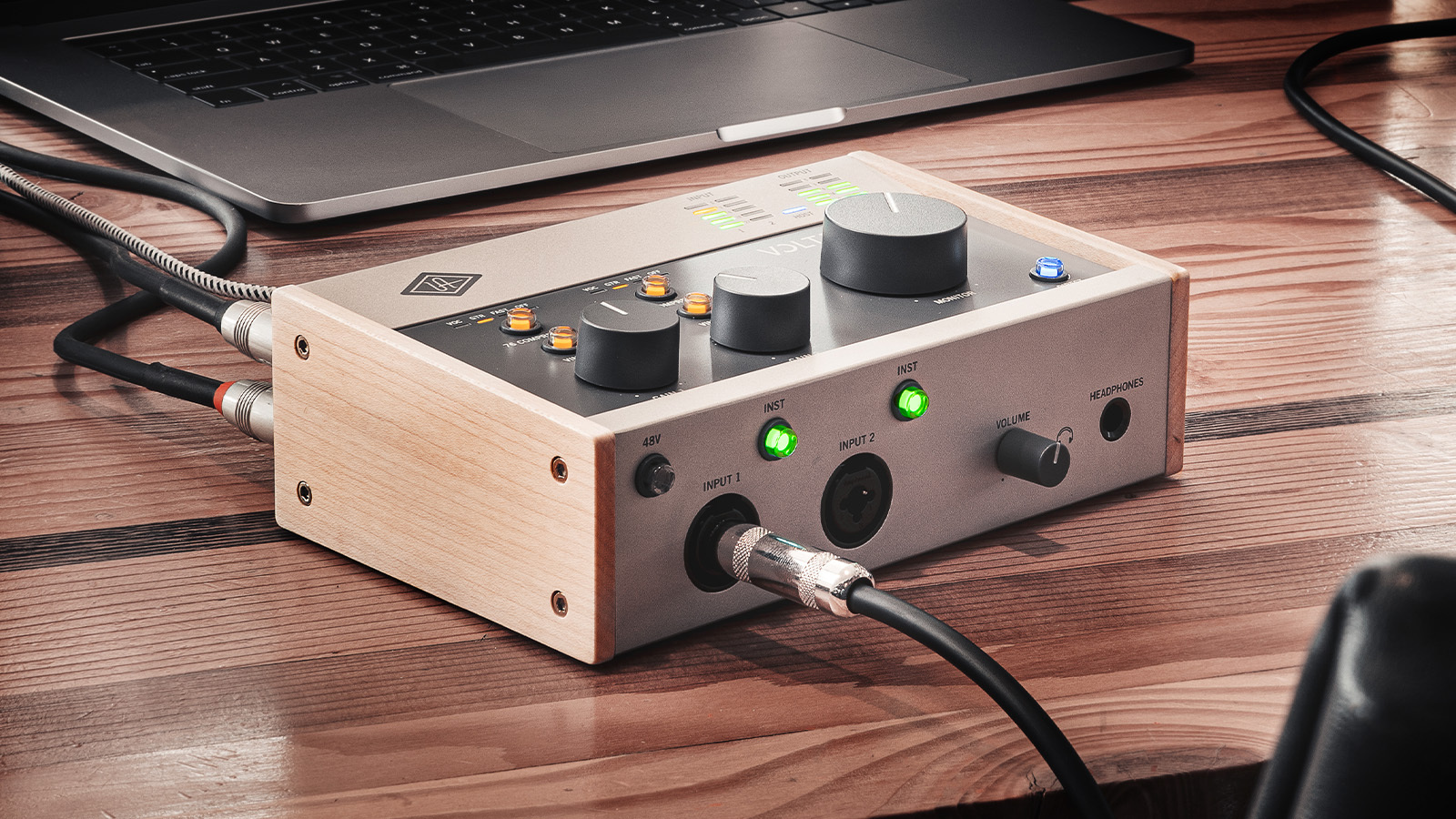
- Dual independent 76 Compressor circuits for simultaneous processing
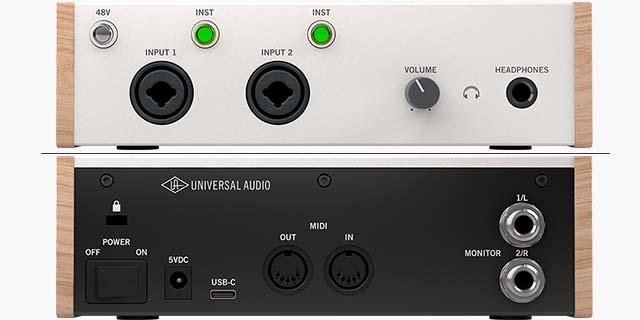
Features independent 76 Compressor circuits for each of the two inputs. This lets you record simultaneously with tailored presets—like applying "VOC" for vocals and "GTR" for acoustic guitar—right at the input stage. - Professional recording workflow in a desktop format
Brings a classic pro workflow—adding harmonic character via a mic preamp and taming peaks with compression before tracking into your DAW—into a compact desktop unit without needing thousands of dollars in analog outboard gear. - Comprehensive third-party software bundle
While it doesn't include built-in UAD DSP processing, it comes bundled with top-tier third-party software from Softube, Plugin Alliance, Celemony, and more to support your mix after tracking.
Featuring dual combo jacks and independent analog compressors, the Volt 276 is a centerpiece model in the Volt series. It was designed to make tracking vocals and guitar simultaneously effortless, giving you pro-level analog compression straight at the input. Offering the best balance of features and price, it is an ideal choice for creators looking to build a serious analog recording setup at home.
Positive Reviews
- "The vintage mic preamp and analog compressor sound great, and the compressor itself is super easy to use."
- "Great for vocal covers and livestreaming—it gives you a thick, professional vocal tone right out of the box."
- "Being able to engage compression with a single hardware button without relying on computer software is huge for keeping levels consistent during live streams."
Negative Reviews
- "The biggest drawback is the lack of a built-in loopback function for sending a stereo mix back to the PC."
- "Compared to competing interfaces in the same price range with more I/O options, it feels a bit light on ports and features unless your needs are very specific."

Volt 476
- Intuitive front-panel monitor routing
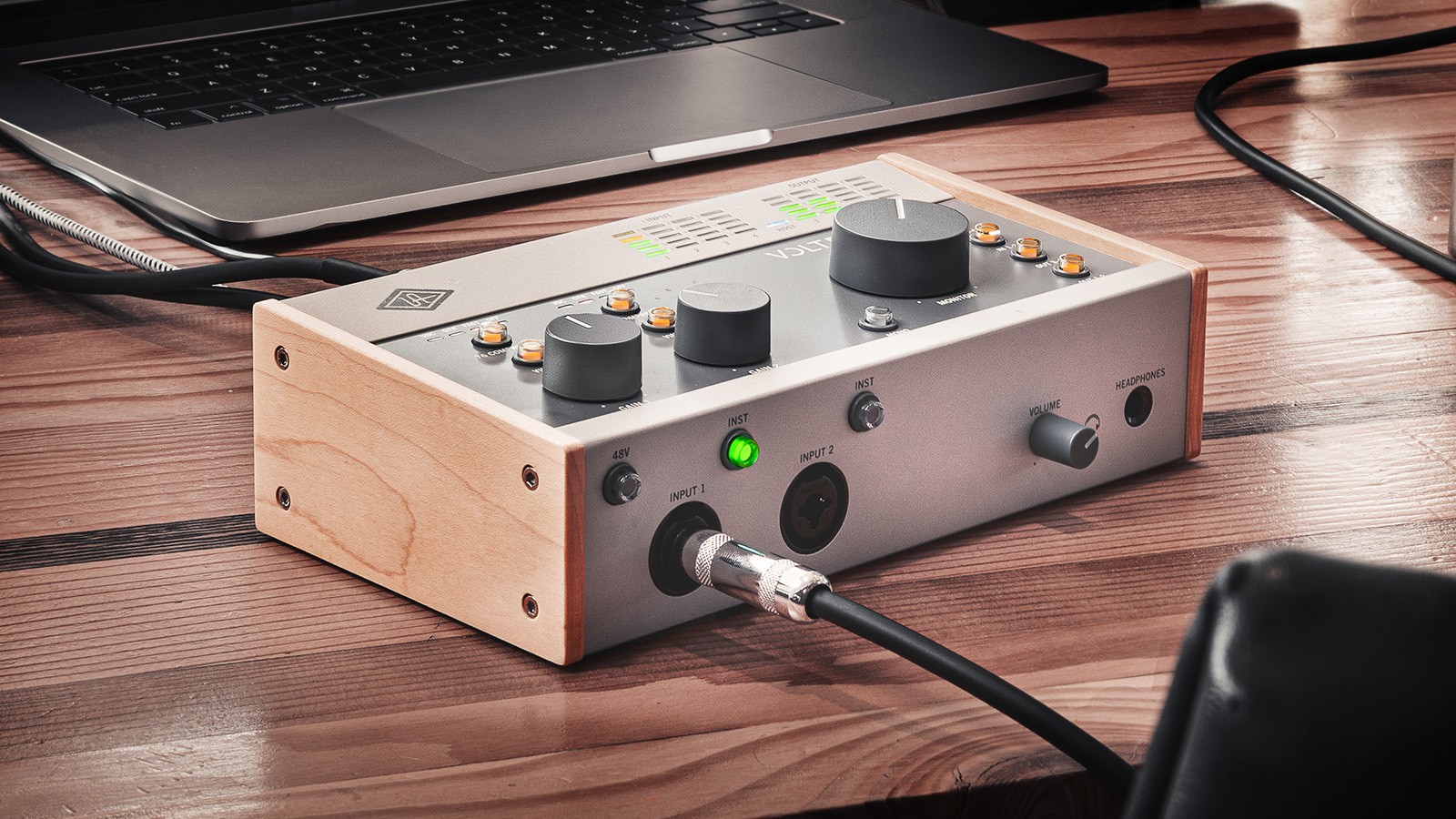
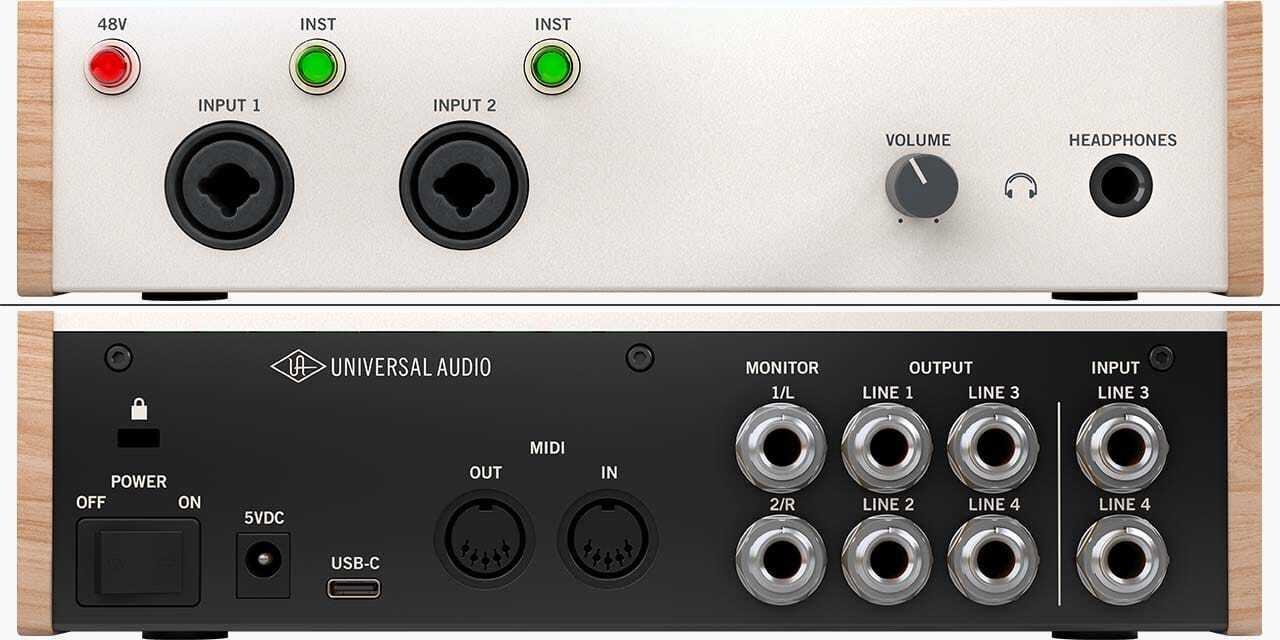
Top-panel "MONITOR SOURCE" buttons (IN 1-2, IN 3-4, OUT 1-2, OUT 3-4) let you switch headphone and speaker outputs instantly on the hardware itself, enabling flexible monitoring without opening your DAW. - Hybrid input layout for clean source management
The two front inputs feature combo jacks with a Vintage Mic Preamp mode and 76 Compressor, while the two rear inputs are dedicated line inputs. This makes it easy to keep microphone tracking separate from external synth or line-level sources. - Transparent audio specs with high-grade AD/DA conversion
Supporting up to 24-bit/192 kHz, the converters deliver clear, uncolored resolution. Combining analog circuit warmth with modern digital conversion accuracy, it cleanly captures the fine details of any source.
With its 4-in/4-out I/O setup and top-panel monitor source selector buttons, this mid-tier interface is tailored for studio environments. Packed with two analog compressors, it fits creators who frequently track line sources like keyboards or need flexible hardware monitoring setups, such as switching between multiple pairs of studio monitors.
Positive Feedback
- "Having analog compression plus physical buttons on the interface to change monitor outputs is super convenient."
- "The Vintage Mic Preamp mode adds nice warmth, and the overall sound quality is transparent and high grade."
- "With 4-in/4-out expandability, it's perfect for using line inputs for synths alongside mic inputs at the same time."
Negative Feedback
- "With a max gain of 55 dB, it can run low on headroom when using low-output dynamic mics."
- "Lacks onboard DSP effects and loopback functionality, making it less ideal for live streaming that requires complex internal routing."

Volt 476P
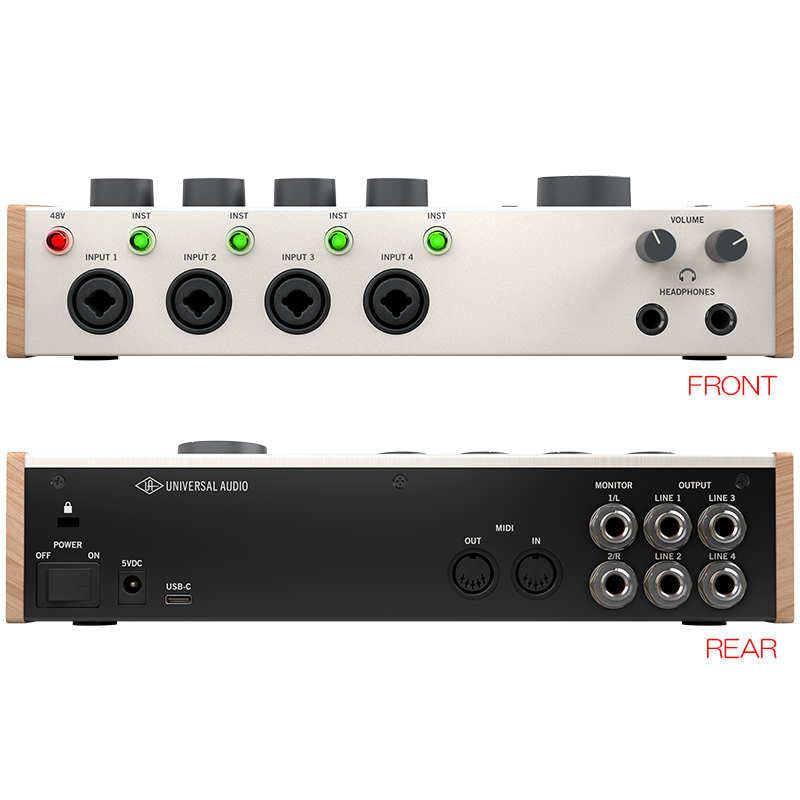
- 4 Vintage Preamps & 76 Compressors Fully Loaded
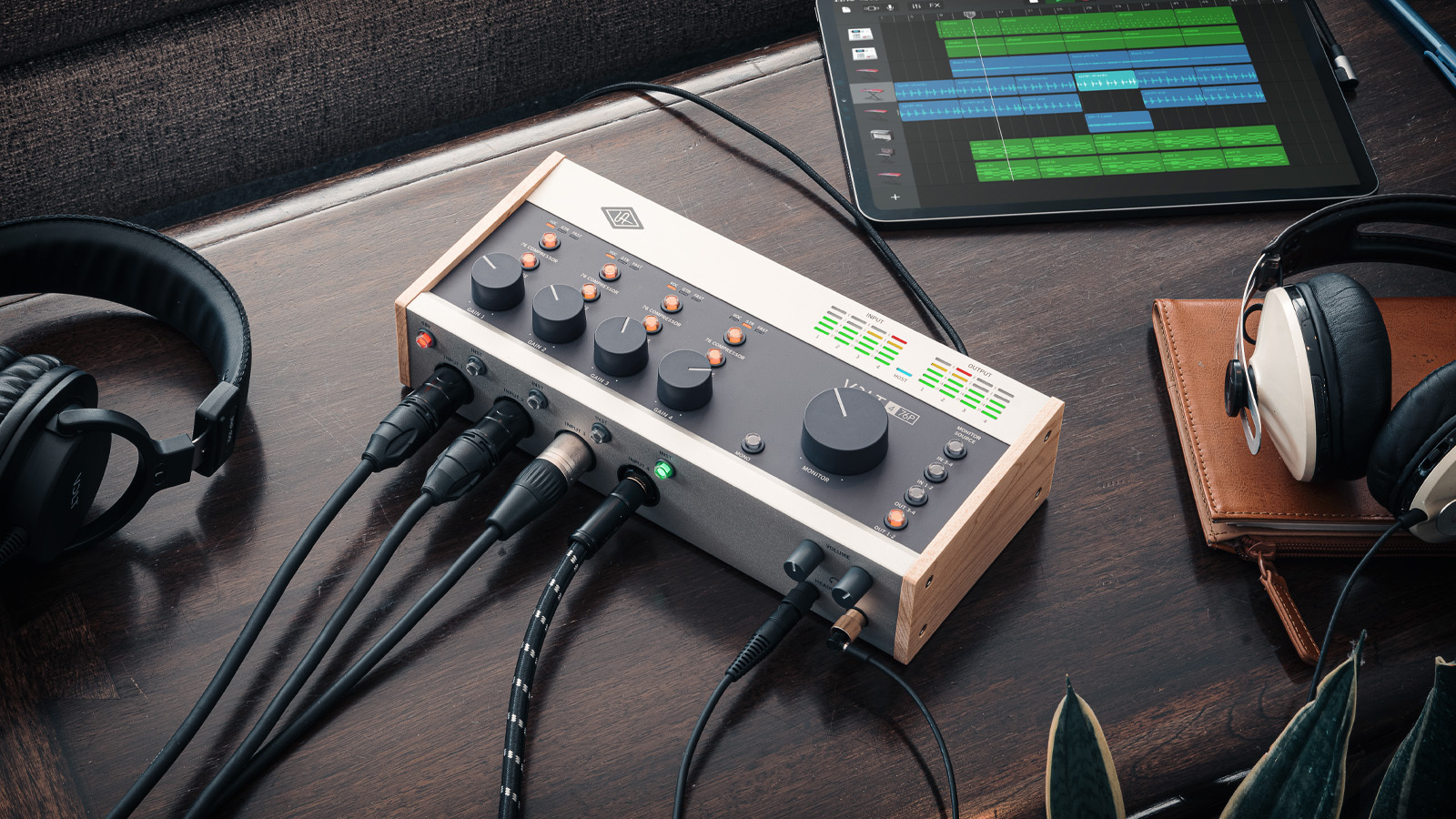
With four combo jacks across the front panel, each input features independent controls for Vintage mode and the 76 Compressor. Shape every signal at the hardware level during multi-mic drum tracking or four-person podcast sessions. - Dual Headphone Outputs Built for Collaboration
Two independent headphone outputs on the front panel allow a vocalist and engineer—or a podcast host and guest—to monitor at their ideal volumes, making collaborative sessions run smoothly. - Rugged Desktop Chassis & Reliable Operation
Featuring a heavy, solid metal enclosure that stays planted even with multiple cables plugged in. Built for long sessions, its clean layout of physical controls ensures easy visibility to prevent mistakes during multi-channel tracking.
The flagship model of the Volt series pushes capabilities further by packing mic preamps and analog compression into all four inputs. Designed for studio applications requiring multiple microphones simultaneously—like drum tracking, multi-person podcasting, or collaborative sessions—it delivers consistent, high-quality analog processing across every connected source.
Positive Feedback
- "Having the analog compressor and Vintage mic preamp mode on all four combo jacks is incredibly useful for band tracking and podcasting."
- "The dual independent headphone outputs let the performer and engineer dial in their own monitoring levels during recording."
- "Bundled software like Melodyne and Ableton Live Lite makes this an exceptional starter package for multi-mic setups."
Negative Feedback
- "While features are impressive, the price tag around ¥69,300 makes it a tougher value proposition."
- "Despite being a high-end model, it lacks built-in loopback capability, so streaming setups require workarounds."

[Apollo Series] For Those Seeking Uncompromising Pro Environments and Zero Latency
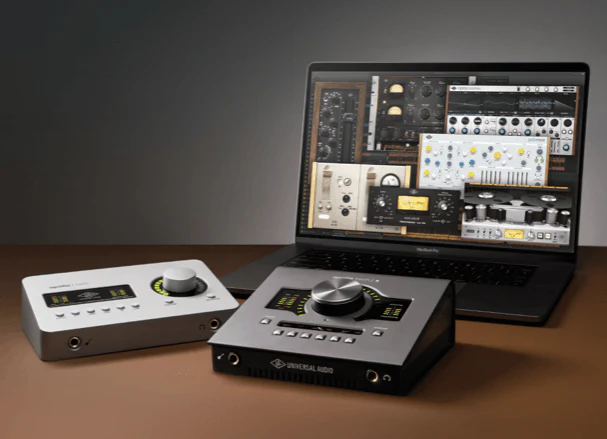
Series Comparison Chart
| Feature | Apollo Solo / Solo USB | Apollo Twin X DUO | Apollo Twin X QUAD | Apollo x4 |
| Yen reference | about ¥84,000 (yen reference) | about ¥148,000 (yen reference) | about ¥198,000 (yen reference) | about ¥298,000 (yen reference) |
| Approx. US street | $500 | $1,000 | $1,400 | $2,200 |
| Connectivity / OS Support | TB3 (Mac/Win) or USB3 (Windows only) | Thunderbolt 3 (Mac/Win) | Thunderbolt 3 (Mac/Win) | Thunderbolt 3 (Mac/Win) |
| DSP Processors | SOLO (1 core) | DUO (2 cores) | QUAD (4 cores) | QUAD (4 cores) |
| Analog Inputs | 2ch | 2ch | 2ch | 4ch |
| Analog Outputs | 4ch (incl. monitor) | 6ch (incl. monitor/line) | 6ch (incl. monitor/line) | 10ch (incl. monitor/line) |
| Unison Preamps | 2 | 2 | 2 | 4 |
| Hi-Z (Guitar) Inputs | 1 | 1 | 1 | 2 |
| Headphone Outputs | 1 | 1 | 1 | 2 (independent volume control) |
| Digital Inputs | None | ADAT / S/PDIF (up to 8ch expansion) | ADAT / S/PDIF (up to 8ch expansion) | ADAT / S/PDIF (up to 8ch expansion) |
| Digital Outputs | None | None | None | ADAT / S/PDIF (up to 8ch expansion) |
| Max Resolution | 24-bit / 192 kHz | 24-bit / 192 kHz | 24-bit / 192 kHz | 24-bit / 192 kHz |
| Power Supply | TB3 model: Bus-powered USB model: External AC | External AC power supply only | External AC power supply only | External AC power supply only |
| Included Software | Realtime Analog Classics Bundle, etc. | Essentials+ Bundle, etc. (varies by generation) | Essentials+ Bundle, etc. (varies by generation) | Studio+ Bundle, etc. (varies by generation) |
Approx. US street prices are the article's official overseas figures, rounded, as of November 6, 2026, before sales tax. Not a live quote. Figures kept in yen are a yen reference.
Apollo Solo & Apollo Solo USB
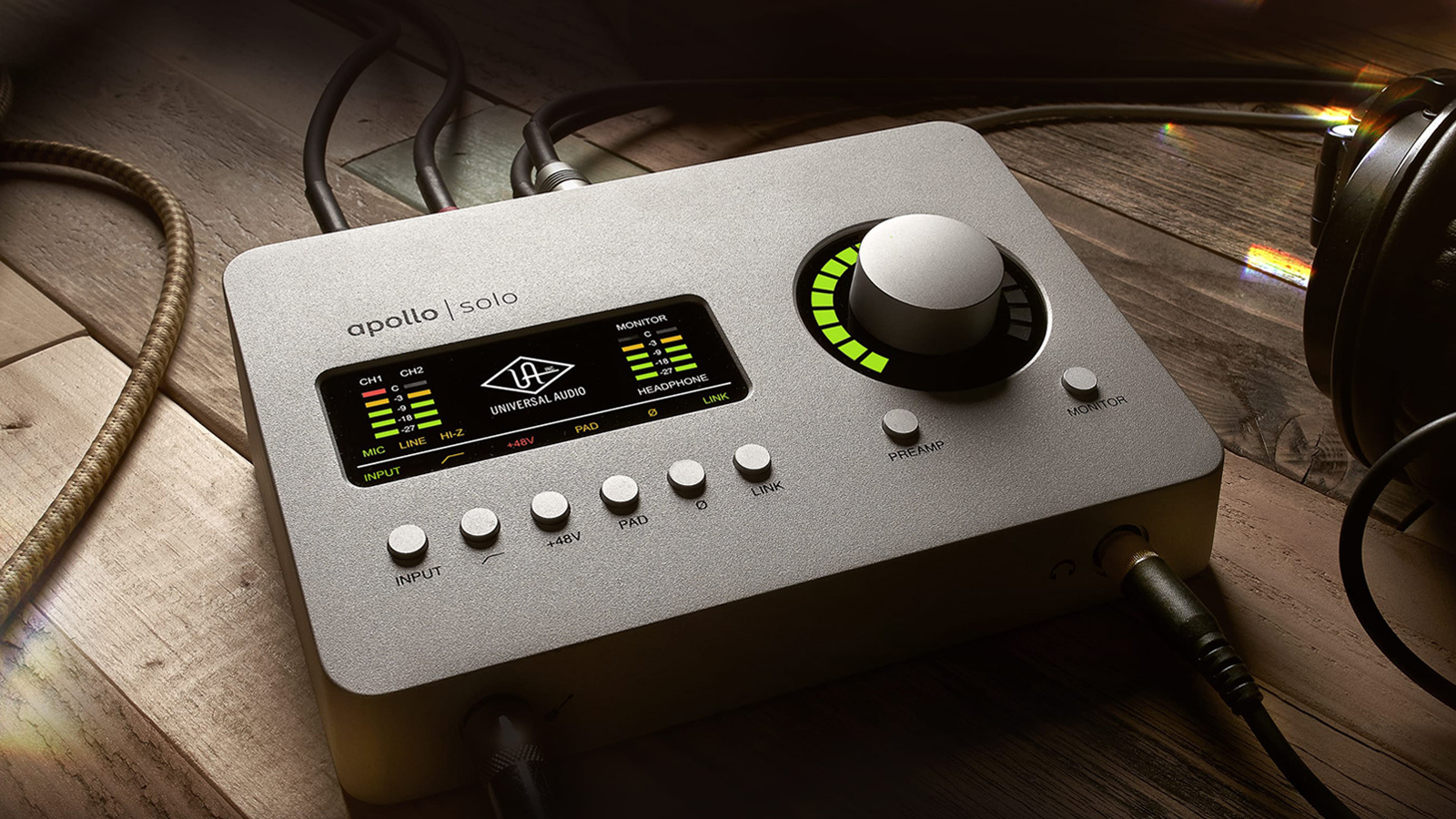
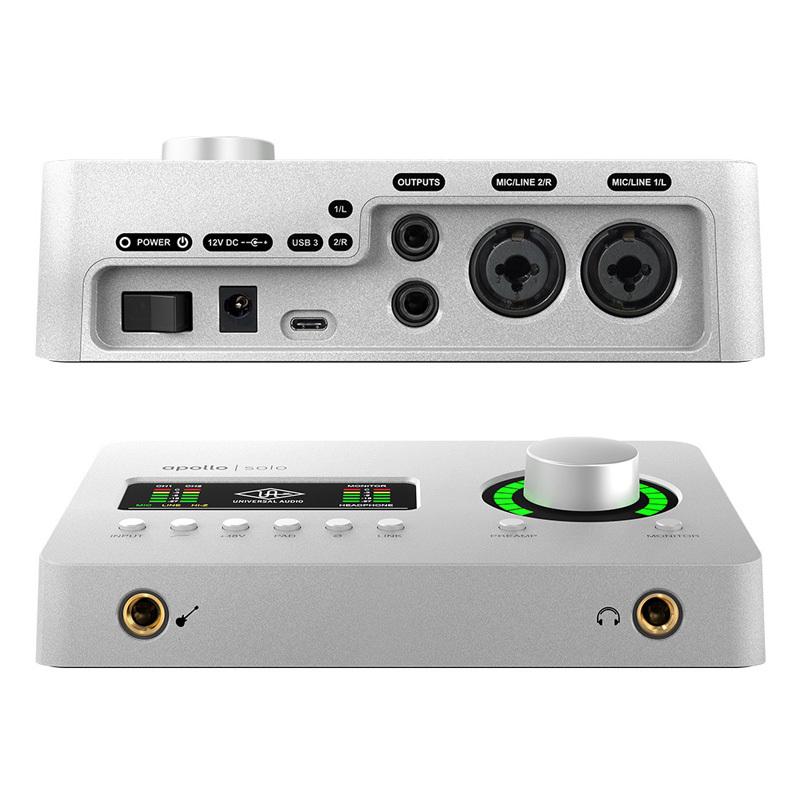
- Unison Technology Preamps
Equipped with two combo inputs. Inserting preamp models like Neve or Helios in the UAD software dynamically alters hardware impedance to accurately match the behavior and tone of the original hardware. - Near-Zero Latency Real-Time Processing
Runs UAD plugins using on-board DSP, freeing your computer's CPU. Allows latency-free monitoring and tracking while running CPU-heavy analog-modeled compressors and reverbs. - OS-Optimized Hardware Design
The Thunderbolt 3 model supports bus power and integrates seamlessly with LUNA DAW. Meanwhile, the USB model (Windows-only) is built for a stable Windows recording setup with USB 3.0 connectivity and external AC power.
Positioned as the entry point to the Apollo series, this portable desktop interface features a single SHARC DSP core (SOLO). Designed to deliver studio-quality recording in a compact package you can take anywhere in a backpack, it is ideal for mobile vocal tracking and editing. With a bus-powered Thunderbolt 3 version for Mac/Windows and an AC-powered USB version exclusively for Windows, it caters to a wide range of computer setups.
User Feedback: Pros
- "The preamps are high quality, delivering clean recordings with zero unwanted coloration."
- "The bundled UAD plugins sound incredible, and running pro-grade effects with no noticeable latency is amazing."
- "It's lightweight and compact, making it easy to set up a high-quality recording rig anywhere."
User Feedback: Cons
- "With only one DSP core (SOLO), you can't run many UAD plugins at once, and heavy plugins hit the DSP limit quickly."
- "System requirements are demanding. The Thunderbolt cable is sold separately, and Windows compatibility can be tricky."

Apollo Twin X DUO
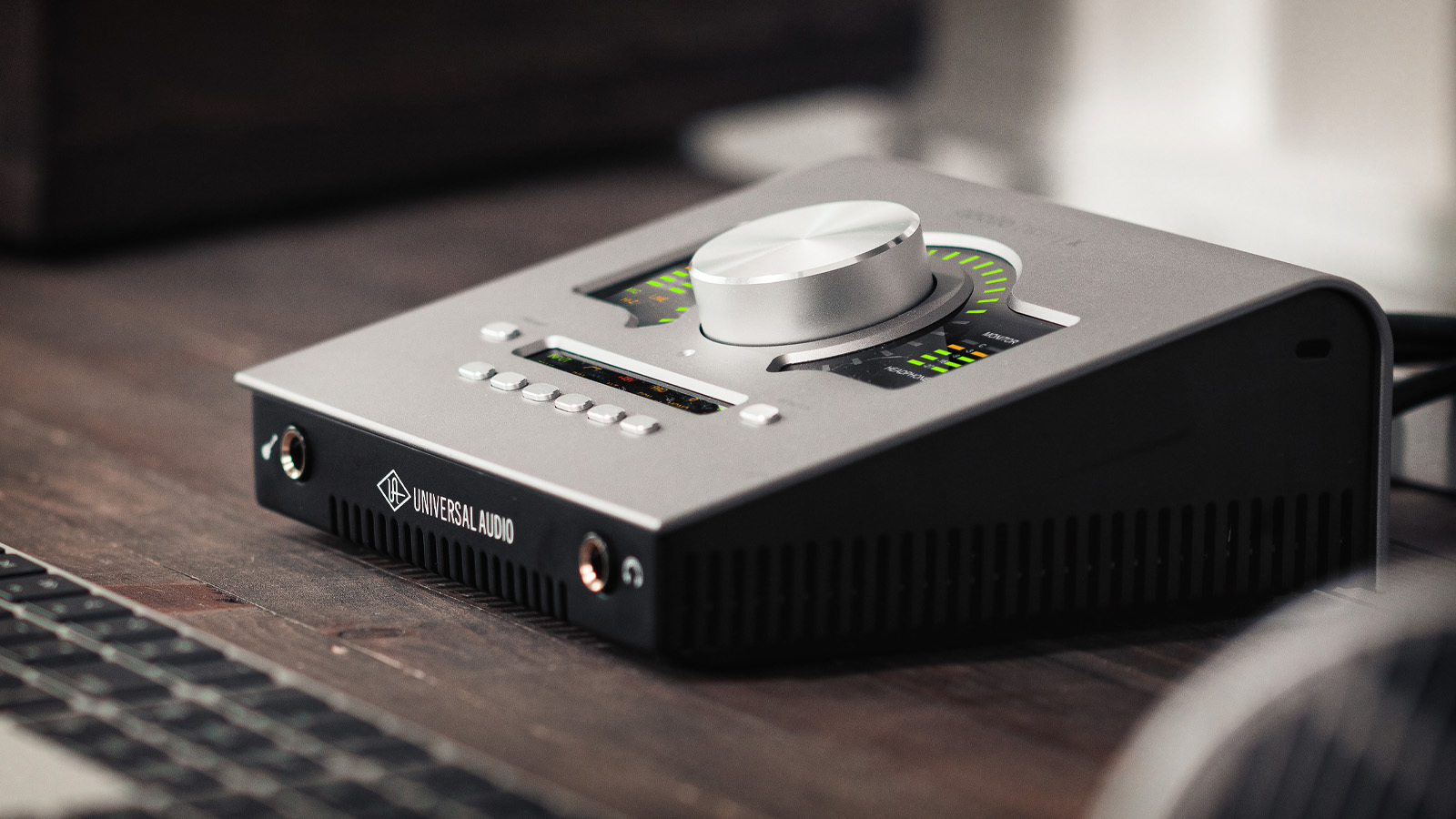
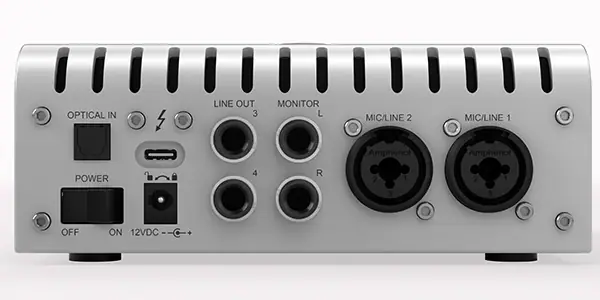
- Next-level clarity with Elite-Class AD/DA conversion
Upgraded from the previous-generation Apollo Twin MkII, this converter delivers 127 dB of D/A dynamic range. It accurately renders fine nuances like spatial depth and reverb tails, elevating your monitoring environment. - Expandable 10-in/6-out setup with optical input
In addition to two Unison mic preamps, it features an optical (ADAT/SPDIF) input. Adding an external mic preamp lets you expand up to 8 additional input channels, giving you flexibility for future system expansion like drum recording. - Bundled premium plugins in the Heritage Edition
Along with the standard Realtime Analog Classics bundle, it includes five premium plugin titles from Teletronix, Pultec, and UA—worth thousands of dollars—allowing top-tier mixing right out of the box.
This 10-in/6-out desktop interface has become a de facto standard in home studios worldwide. Featuring the same Elite-Class AD/DA converters as flagship UA models, it maximizes baseline recording and playback performance. Powered by two DSP cores (DUO), it serves as a benchmark workflow for tracking vocals through Unison preamps, compressors, and EQs in series with near-zero latency.
Positive Feedback
- "The mic preamps sound fantastic, and the overall build quality is high. Plus, the UAD plugins are top-tier."
- "Sound quality for both recording and playback is excellent, and you can really hear the benefits of the Elite-class converters."
- "With the DUO core, I can run 3 to 4 lighter plugins simultaneously while tracking vocals, which is perfect for printing effects."
Negative Feedback
- "System requirements are high, so singer-songwriters might hit performance bottlenecks if their computer isn't up to spec."
- "It doesn't come with a Thunderbolt 3 cable, which is inconvenient since you have to buy an expensive cable separately."
About Plugin Bundles
Essentials+ Edition
"A starter kit to experience essential UA sounds"
- Included plugins: Approx. 20 plugins
- Highlights:
Includes classic flagship Universal Audio compressors (1176, LA-2A), Pultec EQs, and standard guitar/bass amp models from Marshall and Ampeg. - Who is this for?
For users who want to lower initial costs when buying an Apollo interface, or who rely primarily on physical hardware pedals for effects and only need minimal software plugins on their computer.
Studio+ Edition
"A complete studio setup packed into a comprehensive bundle"
- Included plugins: 50+ plugins (adds over 30 premium plugins to the Essentials+ bundle)
- Highlights:
Adds a deep lineup of pro tools used in modern mixdowns, including Auto-Tune (pitch correction), flagship Lexicon reverbs, Studer tape machine saturation, and Avalon channel strips. - Who is this for?
For users who need vocal pitch correction, or who want to complete everything in the box—from tracking to professional-grade mixing and final touches.
Apollo Twin X QUAD
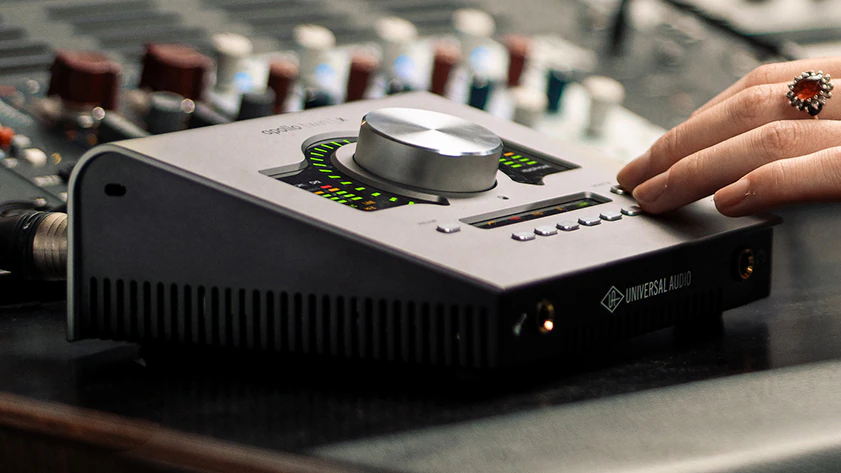
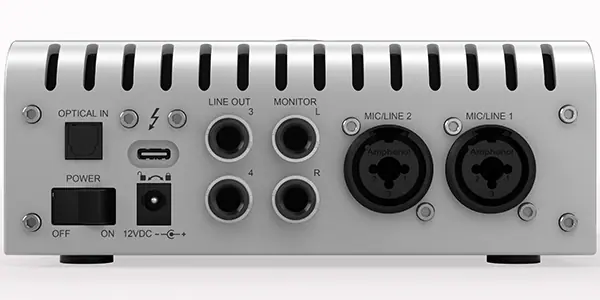
- Massive processing power driven by QUAD DSP
Packing four DSP cores doubles the plugin capacity compared to the DUO. You can freely insert DSP-heavy plugins across multiple tracks without bottlenecking your workflow, enabling detailed tone shaping. - Integrated front-panel talkback microphone
The built-in microphone allows instant communication with performers in a vocal booth, bringing studio-grade talkback functionality directly to your desktop. - Seamless LUNA DAW integration (Mac)
Integrates fully with Universal Audio's LUNA recording system. Combining Apollo DSP with native processing delivers deep analog tape machine emulation and Neve summing directly within the DAW environment.
Building on the pristine audio specs of the Twin X DUO, this professional desktop interface doubles the DSP capacity with four cores (QUAD). Designed for creators running heavy UAD plugins (vintage EQs, tape machine emulations, reverbs) during tracking and mixdown, it serves as a powerful production hub that relieves your computer's CPU load.
Positive Feedback
- "You can easily run 12 to 16 lighter plugins or mix in heavier DSP processors, taking full advantage of the onboard processing."
- "Compared to the DUO, you can use significantly more UAD plugins during mixdown, allowing detailed sound shaping without worrying about CPU load."
- "Seamless integration with LUNA DAW gives you a top-tier mixing environment that feels like working on an analog console."
Critical Feedback
- "It is a high-end investment, so if you don't actually need four DSP cores, you might end up underutilizing it."
- "Setting up Thunderbolt on Windows can run into compatibility issues, requiring extra troubleshooting to get a stable configuration."

About Plugin Bundles
Essentials+ Edition
"A starter kit to sample core Universal Audio sound"
- Included plugins: Around 20 plugins
- Main contents
Includes UA's flagship compressors (1176, LA-2A), Pultec EQs, and essential Marshall guitar amp and Ampeg bass amp models. - Who is it for?
Ideal for players looking to enter the Apollo ecosystem while keeping initial costs low, or those who rely mostly on physical hardware pedals and only need a basic suite of plugins on their computer.
Studio+ Edition
"A complete recording studio suite in a box"
- Included plugins: 50+ plugins (adds over 30 high-end plugins to the Essentials+ bundle)
- Main contents
Adds a massive selection of pro mixing tools used in real studios, including Auto-Tune (pitch correction), top-tier Lexicon reverbs, Studer tape machine saturation, and Avalon channel strips. - Who is it for?
Great for creators who want vocal pitch correction or want to take tracks from recording to professional mixing and mastering entirely inside their computer.
Apollo x4
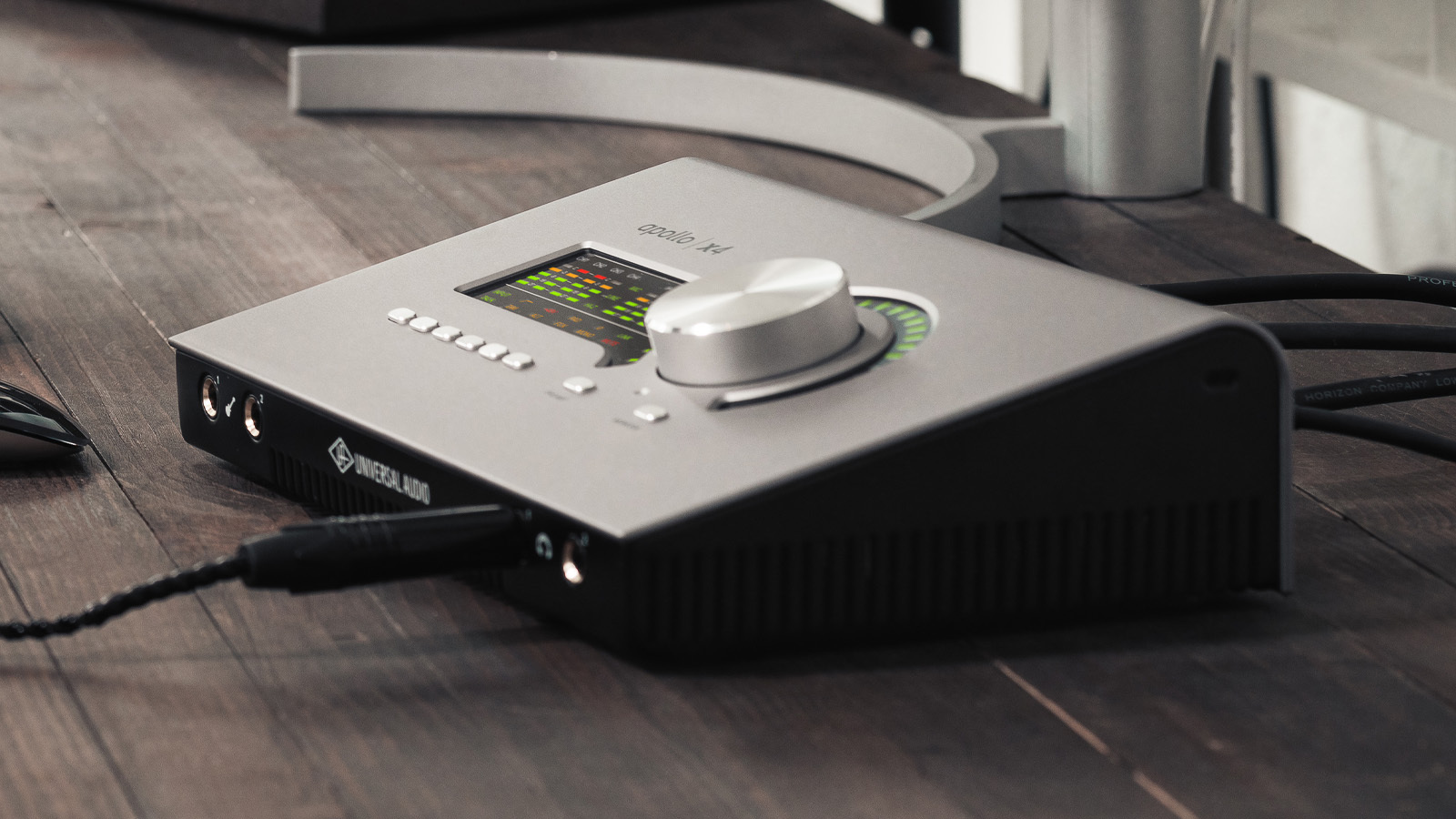
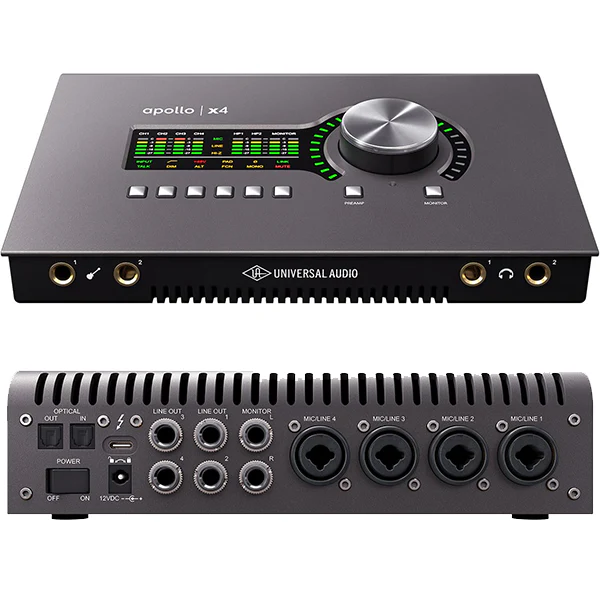
- Multichannel recording with 4 Unison mic preamps
Features four Unison-enabled preamps in a desktop footprint. Track drums with multiple mics or record full live bands with top-tier analog preamp emulation across every line. - Advanced monitoring and calibration support
Equipped with UA's highest-resolution D/A converters. Built-in Apollo Monitor Correction via Sonarworks integration accurately corrects speaker and headphone room response for a completely flat mixing environment. - Ultimate expansion via multi-unit cascading
As your studio grows, you can cascade up to four Thunderbolt Apollo interfaces and up to six UAD-2 devices. Seamlessly aggregate system I/O and DSP power to serve as the center of a larger recording rig.
Featuring four Unison mic preamps and 12-in/18-out connectivity, this flagship desktop model is engineered to serve as the centerpiece for smaller studios. It easily handles multi-mic drum tracking and live band recording while packing QUAD-core DSP for complex mix sessions. Delivering audio specs and routing capabilities that rival rackmount units like the Apollo x6 and x8, it brings top-tier performance right to your desktop.
Positive Feedback
- "With four Unison mic preamps, you can run incredible analog emulations across full band recordings or drum setups."
- "Monitoring directly through the DAW with UAD's workflow and plugins is fantastic."
- "The D/A conversion resolution is top-tier, and paired with Sonarworks monitor correction, it gives you extremely accurate monitoring."
Critical Feedback
- "Some plugins aren't available natively (Spark) yet, so you still rely heavily on DSP."
- "It requires a large power adapter and isn't bus-powered, which reduces portability for mobile recording."

Summary: How to Choose a Universal Audio Interface
- Who Should Choose the Volt Series?
Ideal for intuitive guitarists who want warm analog sound without dealing with complex software setup on a computer. It is perfect if you want proven quality on a budget or value a sleek design that looks great on your desktop.
- Who Should Choose the Apollo Series?
Built for serious players who zero-tolerance latency from amp modelers and refuse to compromise on tone. It is an essential setup for mixing at a professional standard with UAD plug-ins or capturing your prized analog gear with maximum fidelity.
The Go-To Volt Model: Volt 276
If you are unsure which Volt model to get, you cannot go wrong with the Volt 276—it features an 1176-style analog compressor and ample input channels.
With a single button push, it instantly gives your rhythm guitars and vocals a thick, professional presence that keeps you inspired while recording.
The Apollo Benchmark: Apollo Twin X DUO
If you are investing in a professional recording setup, the desktop industry-standard Apollo Twin X DUO is your best option.
It gives you the advantage of tracking and monitoring at the exact same quality as top studios worldwide, right from your home workstation.
The Ultimate Rig for Tone Archiving: Apollo x4
If you own vintage tube amps or high-end boutique pedals and plan to capture their raw tone as digital captures (such as for the Quad Cortex) to build a lasting archive, the Apollo x4 is in a class of its own.
Investing up front in the Apollo x4—with its generous analog I/O and top-tier DSP power—paired with high-grade studio monitors delivers the best long-term value for advanced setups.