
日本語English
9 Best Power Attenuators by Type: Basics, Key Advice & Reviews
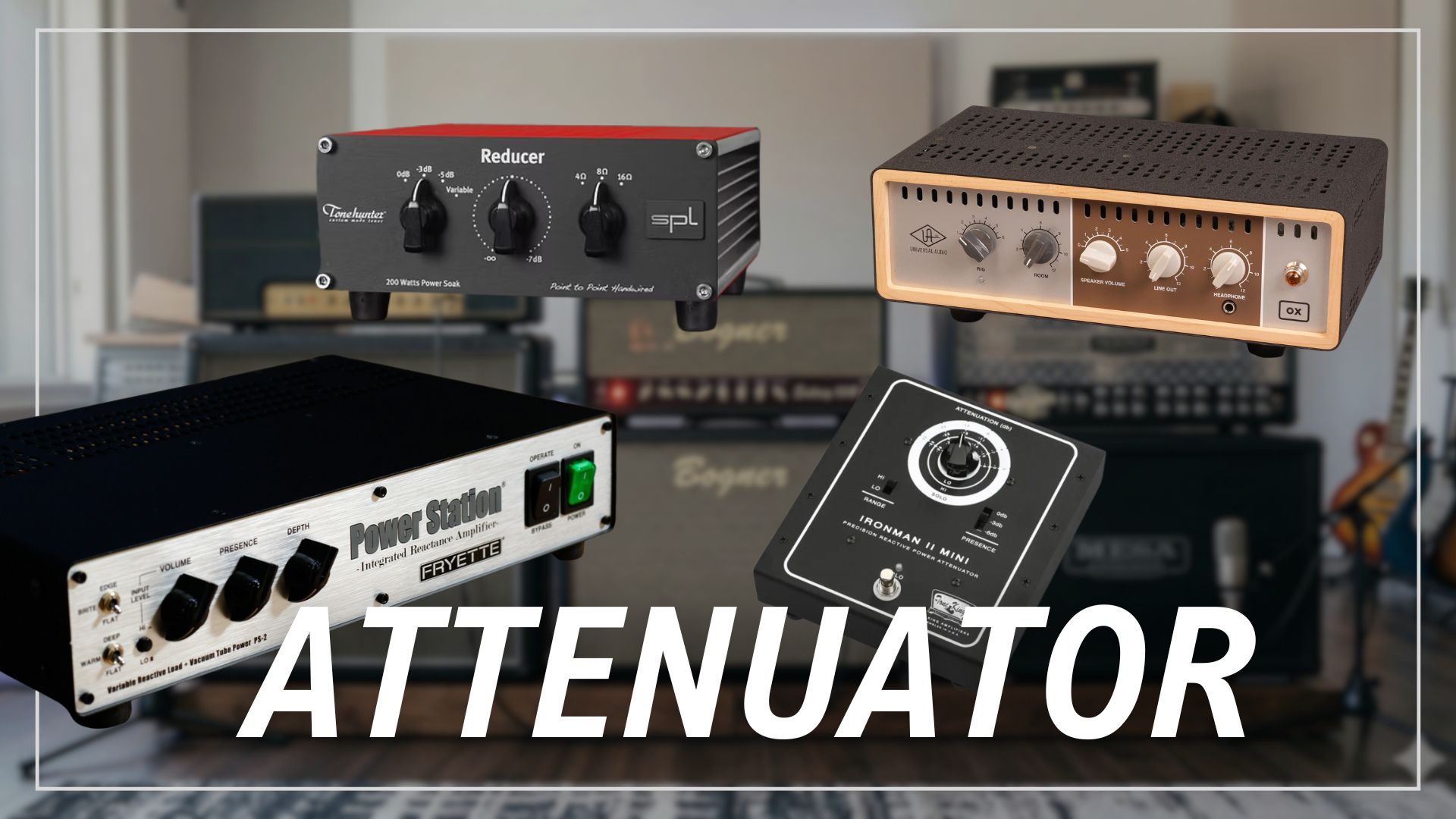
XTONES is a participant in affiliate programs including Amazon Associates and Reverb. We may earn a commission from qualifying purchases made through links on this page, at no extra cost to you.
Contents (21)
The true potential of a tube amp comes from pushing its power tubes to full capacity, creating rich saturation and complex harmonics. However, cranking a tube amp at home or in small venues is nearly impossible in modern living environments.
That is where an attenuator comes in.
This guide covers everything from attenuator basics and buying criteria to practical usage tips, along with eight models worth a look selected for different setups. Find the best unit for your rig and unlock 100% of your amp's potential.
Why Do You Need an Attenuator? (Difference from Master Volume)
Many guitarists think, "My amp has a master volume, so why would I need an attenuator?" However, the two serve fundamentally different roles.
A master volume reduces the level of the drive generated in the preamp stage before sending it to the power amp stage. This means the power tubes are not working hard at all, so you miss out on the signature compression, punch, and response of power-tube drive.
An attenuator, on the other hand, sits between the amp output and the speaker cabinet, attenuating the high-power signal by converting part of it into heat. This allows you to dime your amp's volume knobs (pushing the power tubes into heavy saturation) while keeping the acoustic sound in the room manageable. To get genuine cranked-tube tone at lower volumes, an attenuator is essential.
4 Key Factors to Consider When Choosing an Attenuator
1. Match the Impedance (Ω) of Your Amp and Cabinet
Impedance matching is the single most critical factor when selecting an attenuator.
• What is impedance?
Impedance represents electrical resistance, measured in ohms (Ω). On the back of guitar amps and cabinets, you will see labels like 4Ω, 8Ω, or 16Ω.
• Selection tip
As a rule, the amp output impedance, attenuator impedance, and cabinet input impedance must all match. Mismatched impedance puts heavy strain on the amp transformer and can cause serious damage.
• Useful feature
Choosing a model with a multi-impedance switch (4Ω / 8Ω / 16Ω) offers flexibility if you change amps or cabs in the future.
2. Choose a Power Handling Capacity (W) with Enough Headroom
Next, check the power handling capacity (wattage rating) of the attenuator.
• The tube amp wattage trap
Even if a tube amp is rated at 50W, pushing it near maximum volume generates peak power output significantly above its rated spec.
• Selection tip
A safe rule of thumb is to choose an attenuator rated for roughly double your amp's output wattage. For a 50W tube amp, a 100W-capable attenuator is recommended. Operating near the safety limit can lead to overheating or component failure.
3. Attenuation Control Type (Stepped vs. Continuous)
How the attenuation is adjusted makes a big difference in daily usability. Attenuators typically use one of two control methods.
• Stepped attenuation
Uses fixed switches like -8 dB, -16 dB, or -20 dB. Simpler internal circuitry helps preserve tone clarity, but you lose fine control between steps.
• Continuous (variable volume knob)
Functions like a standard volume control, letting you fine-tune the output seamlessly. This is ideal for home practice where precise volume adjustments are required for quiet environments.
4. Built-in Reactive Load / Dummy Load Function (Use Without a Speaker Cabinet)
If you plan on silent recording or headphone practice, check whether the attenuator includes a dummy load (load box) function.
• What is a dummy load function?
It allows the unit to safely absorb the amp's power output without a speaker cabinet connected.
• Selection tip
Running a tube amp without a speaker load will damage the output transformer. A built-in dummy load allows you to record via line output directly into an audio interface without making room noise—an essential feature for silent late-night home recording.
Comparison Table
| Specs | Bugera PS1 | Crews GB-VI | Rivera RockCrusher | Tone King Ironman II Mini | SPL Reducer | Torpedo Captor X | Universal Audio OX | Fryette PS-2A | Boss Waza TAE |
| Circuit Type | Resistive | Resistive | Reactive | Reactive (Transformer) | Resistive (Pro Quality) | Reactive | Reactive | Reactive + Tube | Reactive + Digital |
| Attenuation Control | Continuous | Continuous 50% to 0% | 5-step (stepped) + continuous 5 fixed attenuation steps plus continuous control in "Studio" mode | 18 total steps (6 steps × 3 settings) 18 fixed settings via 6-way rotary switch, HI/LO toggle, and Solo function | 2-step (stepped) + continuous | 3-step (stepped) 3-way switch (0 dB / -20 dB / -38 dB) | 6-step (stepped) Fixed steps: 0 / -6 / -12 / -24 / -36 dB / Mute | Continuous Re-amping style allows >100% volume boost | Continuous Re-amping style allows >100% volume boost |
| Supported Impedance (Ω) | 4 / 8 / 16 | 4 / 8 / 16 | 8 / 16 | 8 (Fixed) | 4 / 8 / 16 | 8 or 16 | 4 / 8 / 16 | 2/4 / 8 / 16 | 4 / 8 / 16 |
| Max Power Handling | 100W | 150W | 120W | 30W | 200W | 100W | 150W | 200W | 150W |
| Dummy Load | No | Yes | Yes | Yes | No (Mute mode available) | Yes | Yes | Yes | Yes |
| IR / Cab Sim | No | No | No | No | No | Yes | Yes | No | Yes |
| Re-amping Function | No | No | No | No | No | No | No | Yes (Tube) | Yes (Analog) |
Budget-Friendly Entry & Passive Models
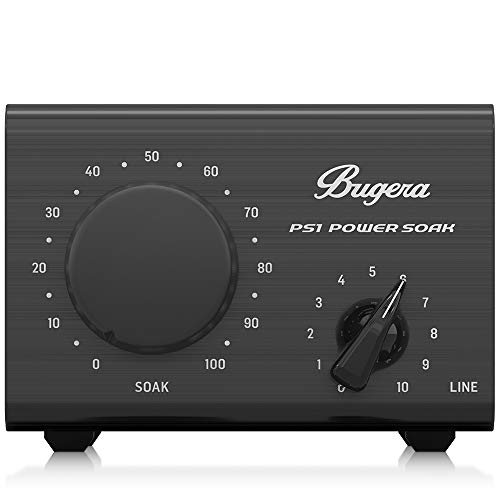
Bugera / PS1
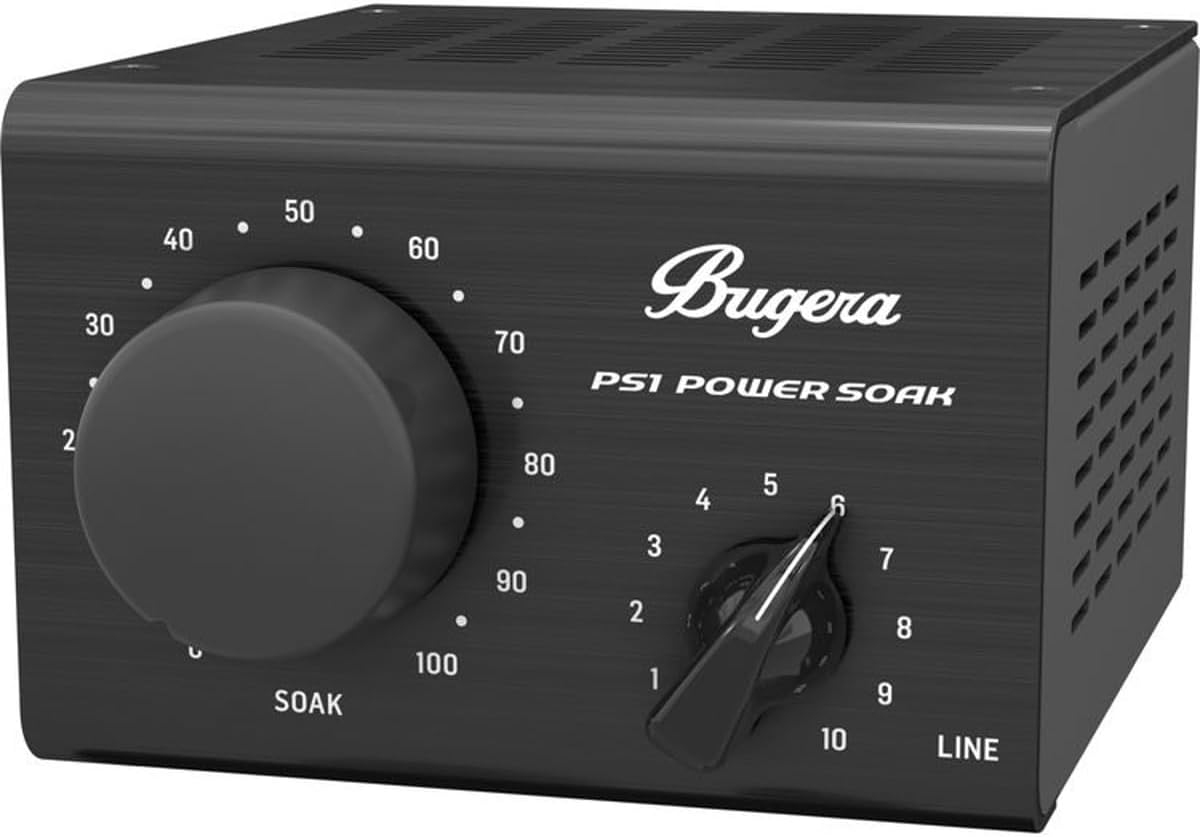
| Circuit Type | Resistive (Passive) |
| Max Power Handling | 100W |
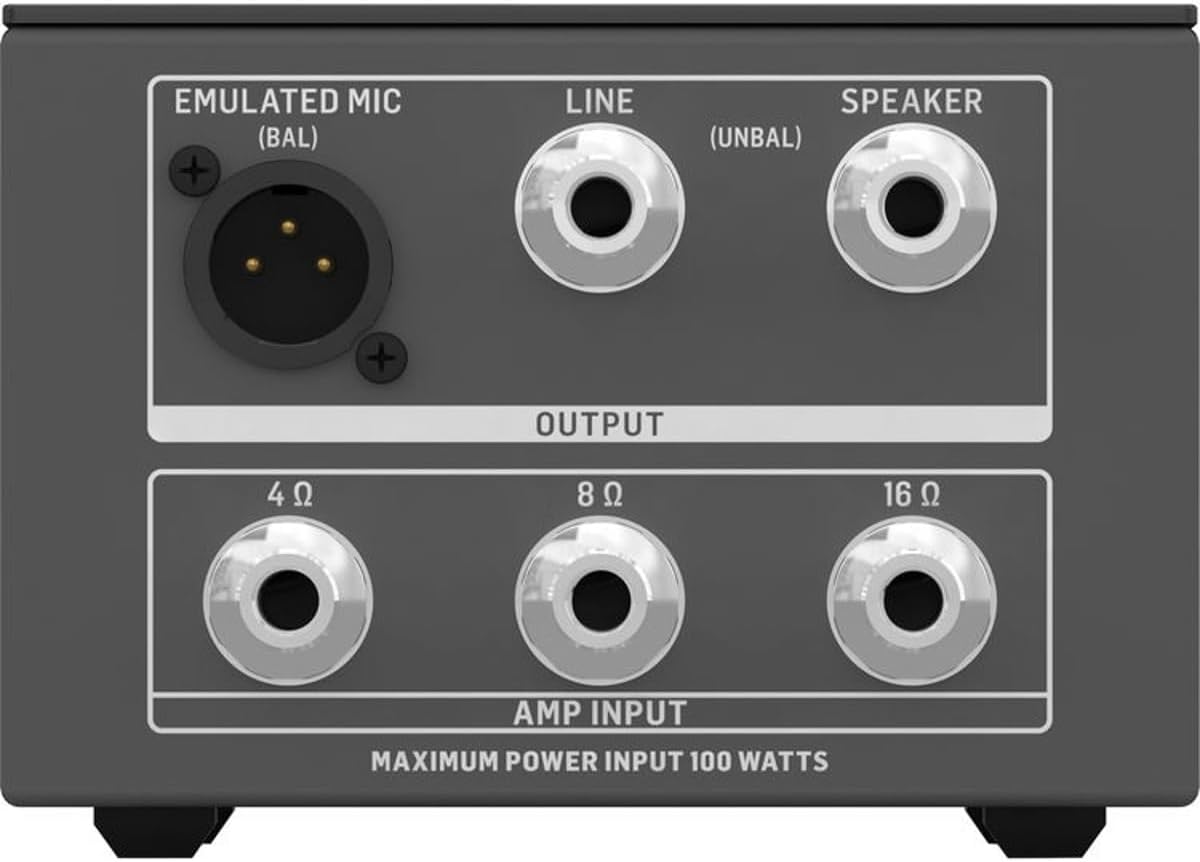
| Impedance | 4Ω, 8Ω, 16Ω (Dedicated input jacks) |
| Dummy Load | No (Speaker connection required) |
| Power Supply | None required |
- Outstanding Value
Significantly lower-priced than most attenuators on the market, making it an accessible entry point for home players looking to shave off volume. - Handles Up to 100W Amps
Despite its budget passive design, it can handle high-wattage 100W tube heads and combos safely. - Mic-Emulated Line Output
Includes an XLR output to send a direct signal to a mixer or audio interface while running sound through the speaker cab. - No External Power Required
Connects directly between your amp and speaker cab with speaker cables, eliminating the need for a power adapter.
As a passive attenuator rated for 100W, the PS1 is widely popular for its price. While heavy attenuation triggers the treble roll-off typical of resistive circuits, it delivers solid results when you just need to knock off a bit of volume at home.
User Pros
- "While you can't push it into extreme attenuation silently, it works great for driving the power tubes slightly at home."
- "Extremely affordable. At this price point, replacing it isn't a huge stress."
User Cons
- "Cutting volume by more than half causes noticeable high-end loss and a muffled tone."
- "The unit gets quite hot during heavy use, so you can't stack anything on top of it."
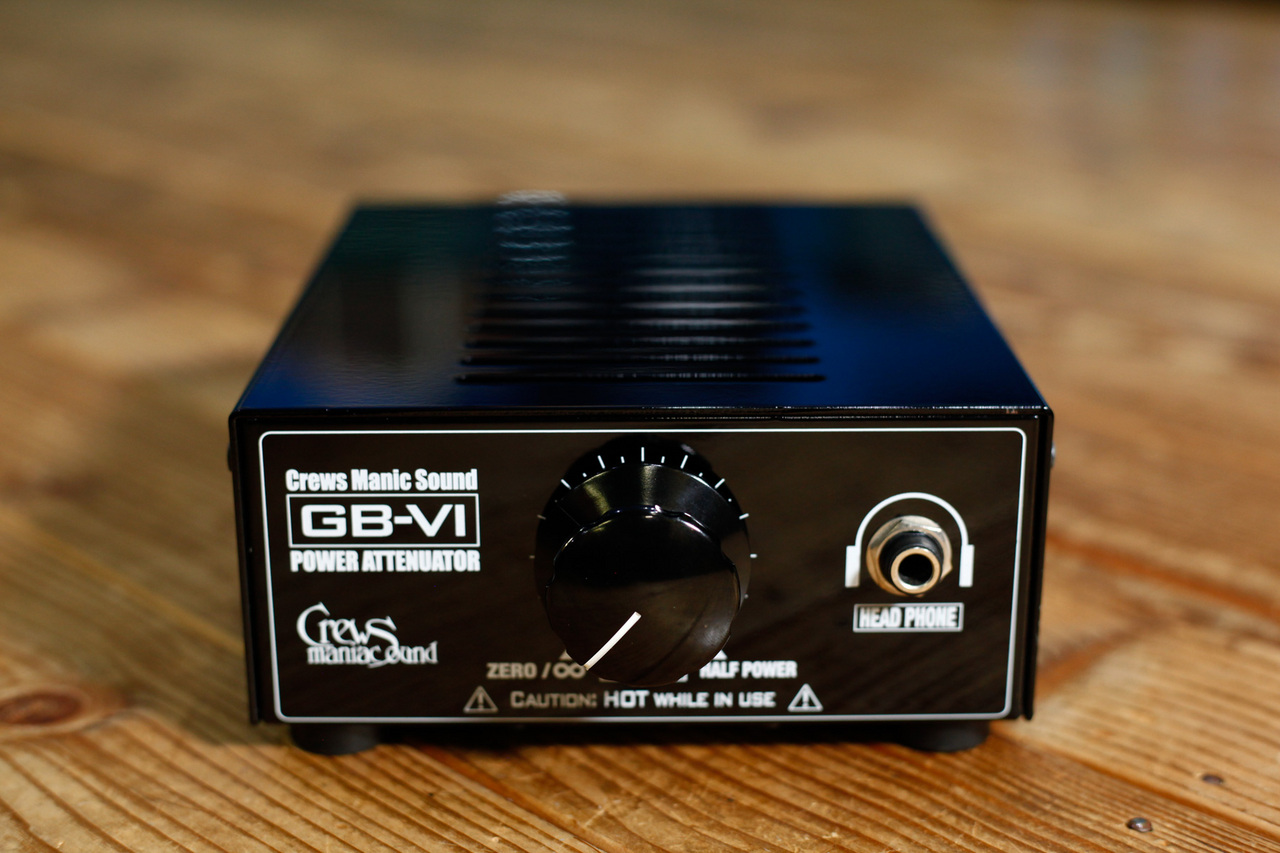
Crews Maniac Sound / GB-VI
| Circuit Type | Resistive (Passive) |
| Power Handling | 150W |
| Impedance | 8Ω or 16Ω (Selected at purchase) |
| Dummy Load | Yes |
| Power Required | None |
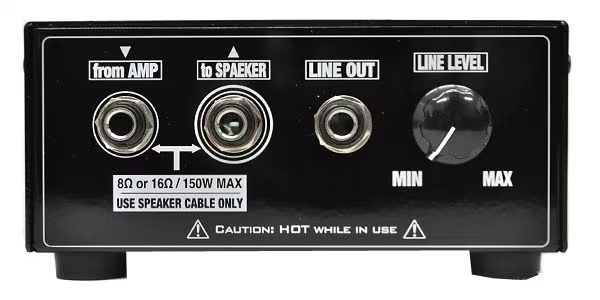
- Reliable Made-in-Japan Quality
- Hand-assembled by a high-end Japanese brand, built with incredible durability to handle demanding pro environments.
- Handles High-Output Amps up to 150W
Designed with high power handling to safely take dimed monster amps over 100W. - Headphone Output for Late-Night Practice
Includes a headphone jack and level control directly on the attenuator, letting you monitor real amp drive tone directly. - Dummy Load for Silent Operation
Converts 100% of the amp's output to heat without connecting a cabinet, making it ideal for silent home recording setups.
A staple passive attenuator from high-end Japanese brand Crews Maniac Sound. Handling high-power amps up to 150W and featuring both dummy load functionality and a headphone output, it excels in everything from home practice to late-night recording. While high-end loss at heavy attenuation is physically inevitable with resistive designs, its rugged build quality and reliable Japanese construction have made it a longtime favorite.
Positive Reviews
- "Invaluable for running a 100W amp at home. The build is rock-solid and gives total peace of mind."
- "Great for running line-out into an audio interface with a cab sim."
- "Reliable Japanese quality. I've used it heavily for years and it shows no signs of breaking."
Negative Reviews
- "If you turn the volume down significantly, you inevitably lose some high-end clarity, making the tone a bit muffled."
- "Because impedance is fixed (dedicated 8Ω or 16Ω models), you might not be able to use it if you get a different amp."

High-End Reactive Models Focus on Tone & Quality
Tone King / Ironman II Mini
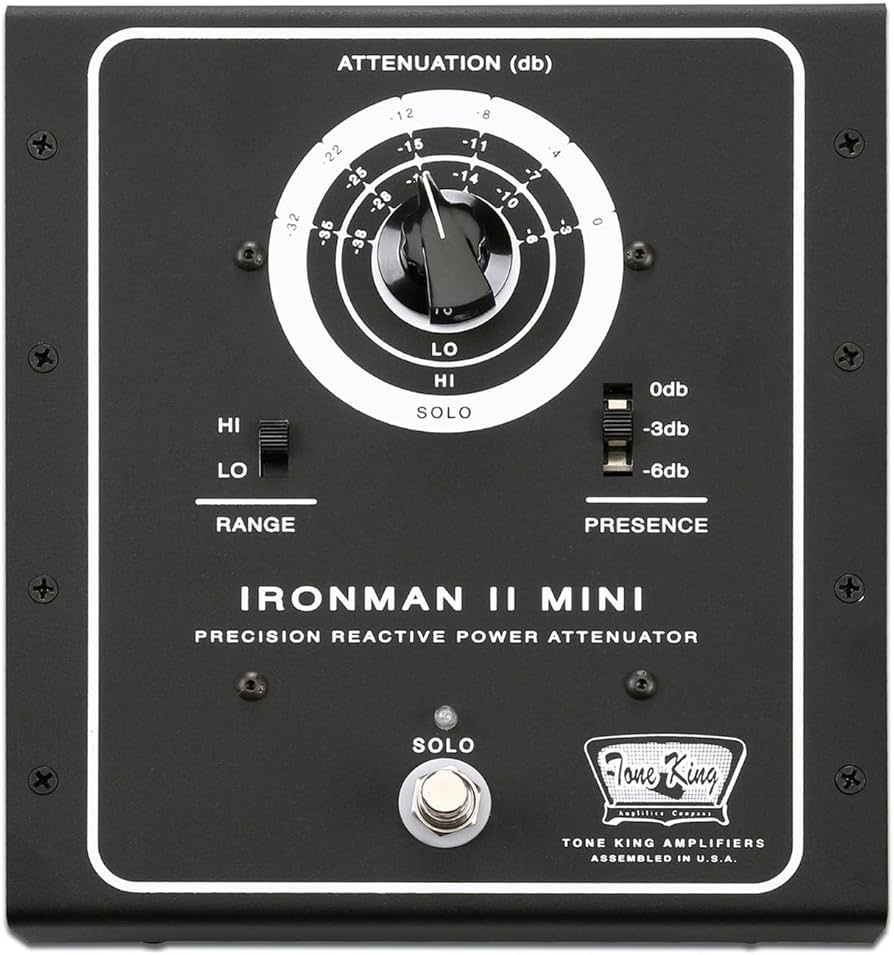
| Circuit Type | Reactive (Transformer-Coupled) |
| Power Handling | 30W max |
| Impedance | 8Ω |
| Dummy Load | Yes |
| Power Supply | 9V DC or 2x AA batteries (for relay switching) *Power required only when using SOLO mode |
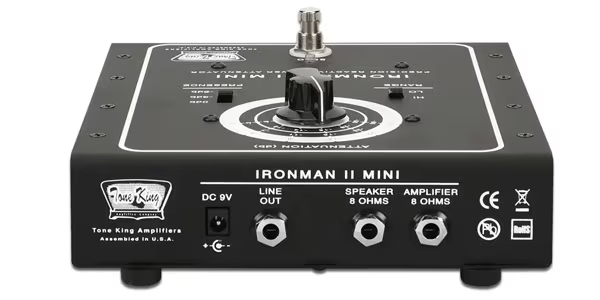
- Transformer-Coupled Circuit
Using a custom transformer circuit rather than simple resistors perfectly preserves your amp's natural harmonics and sustain, even at whisper-quiet volumes. - Pedalboard-Friendly Size
Exceptionally compact for a high-end attenuator, making it easy to mount directly onto your pedalboard. - Gig-Ready Solo Switch
Instantly toggle between two pre-set volume attenuation levels via footswitch to act as a volume boost for solos. - Presence Switch for Top-End Correction
Provides a 3-position switch to restore high-frequency response to match your amp's voice when heavily attenuated. - Dummy Load & Line Out
Functions as a dummy load for direct line recording without connecting a speaker cabinet (for amps up to 30W).
Designed to let low-wattage tube amps (30W or under) sound their best at low volumes, this top-tier reactive attenuator uses a proprietary transformer design. Harmonics and dynamic feel remain completely intact even at whisper-level output. Features like a footswitchable volume jump for lead solos deliver outstanding practicality on stage.
Positive Reviews
- "Virtually zero tone suck. The character stays lively even when attenuated all the way down."
- "The solo footswitch is amazingly useful for live gigs. It's worth buying for that feature alone."
- "The Presence switch lets you fine-tune top-end compensation so it pairs easily with any amp."
Negative Reviews
- "Capped at 30W maximum handling, so it can't be used with larger 50W or 100W heads."
- "Pretty expensive for its size—it costs almost as much as a small tube amp itself."

Rivera / RockCrusher
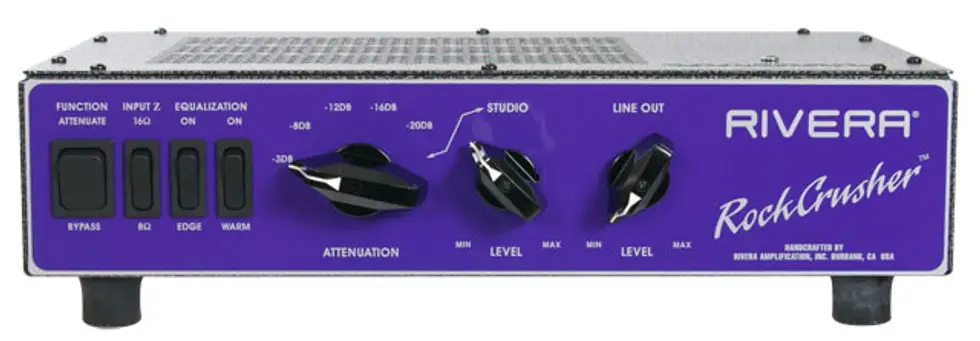
| Circuit Type | Reactive load |
| Max Power Rating | 120W |
| Impedance | 8Ω, 16Ω (selectable) |
| Dummy Load Feature | Yes |
| Power Source | None required |
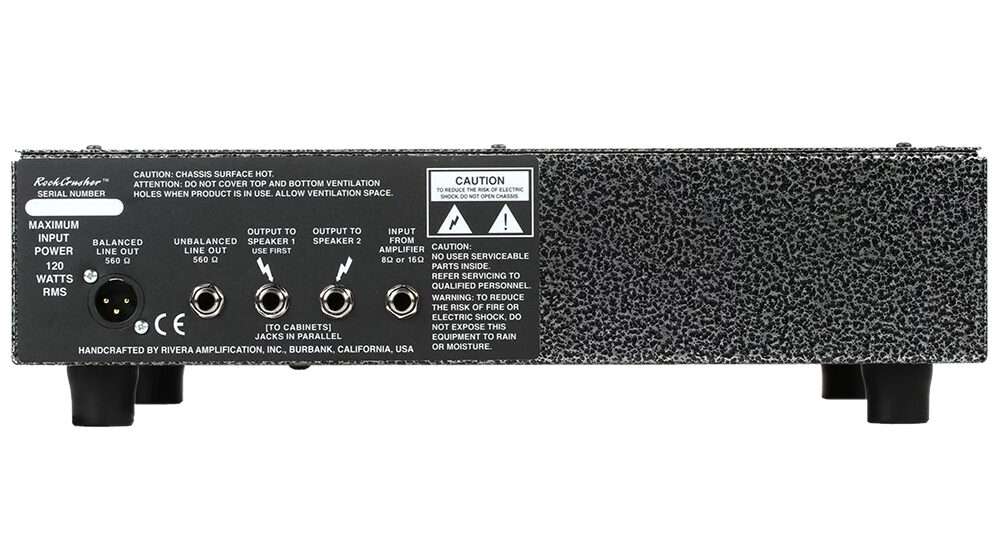
- Full Reactive Load
Faithfully reproduces the impedance curve of a real speaker cabinet, preserving pick response and dynamics even at quiet volumes. - Studio-Grade EQ Switches
Features Edge and Warm switches to compensate for high and low frequencies lost to human perception during heavy attenuation. - Fine-Tuning Studio Mode
In addition to stepped attenuation, a continuous Studio knob allows fine volume control at bedroom levels—perfect for home practice. - Pro-Grade Heavy-Duty Build
Built for the road with a heavy-gauge steel chassis and large heat sinks for reliable thermal management.
Developed to push tube amps to their full potential, this high-end attenuator uses a reactive load that mimics a real speaker cabinet, keeping your amp's feel and touch sensitivity intact.
User Pros
- "Even cranking the amp volume, the touch dynamics stay intact—impressive."
- "The Edge switch keeps the highs clear even at bedroom volumes."
- "Built like a tank—reassuringly tough."
User Cons
- "It's big and heavy, so it's not practical to carry around."
- "It's expensive—sometimes costing more than the amp itself."
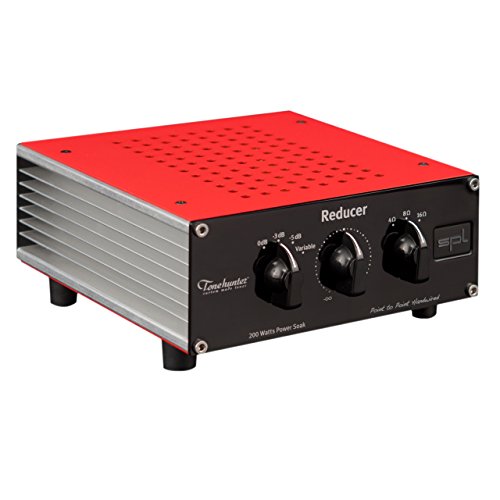
SPL / Reducer
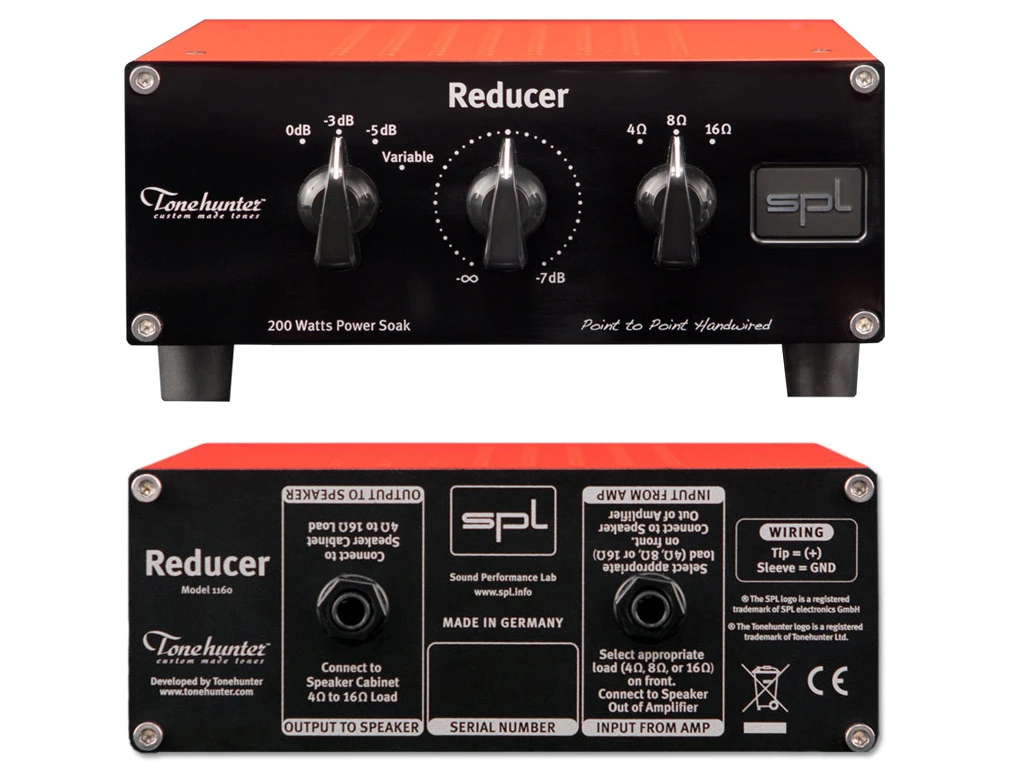
| Circuit Type | Resistive (High-quality passive) |
| Max Power Rating | 200W |
| Impedance | 4Ω, 8Ω, 16Ω (selectable) |
| Dummy Load Feature | No (*Zero-volume setting functions as a dummy load) |
| Power Source | None required |
- Pro-Audio Level Signal Clarity
Hand-built by the legendary German audio manufacturer to minimize tone coloration and tone suck. - Universal Impedance Switching
Toggle between 4Ω, 8Ω, and 16Ω with a single rear switch, making it compatible with virtually any tube amp setup. - Continuous Fine Adjustment
Combines stepped attenuation (-3dB, -5dB, etc.) with a continuous Variable knob for ultra-low volume fine-tuning—ideal for home practice. - Point-to-Point Wiring
Features hand-wired signal paths without PCBs, transferring pure tube tone directly from amp to cabinet.
Designed by SPL, the esteemed German pro-audio manufacturer, this high-end attenuator uses a straightforward passive resistive circuit. Thanks to point-to-point wiring with premium components, it minimizes tone coloration and signal loss. Stripped of unnecessary features to focus purely on volume reduction, it has earned strong acclaim among professional guitarists.
User Pros
- "My old attenuator lost a lot of high end, but this holds onto tone remarkably well even at whispering volumes."
- "Pricey, but the quality makes it far better than settling for a budget option."
- "Keeps the original amp tone intact, and its straightforward layout makes it easy to use live."
User Cons
- "With heavy bass settings, choking the volume back with the Variable dial loses some low-end punch."
- "About ¥80,000 (yen reference) is a lot to spend on a pure attenuator with no digital features."
[Home Recording Focus] Load Box with Digital IR
Two Notes / Torpedo Captor X
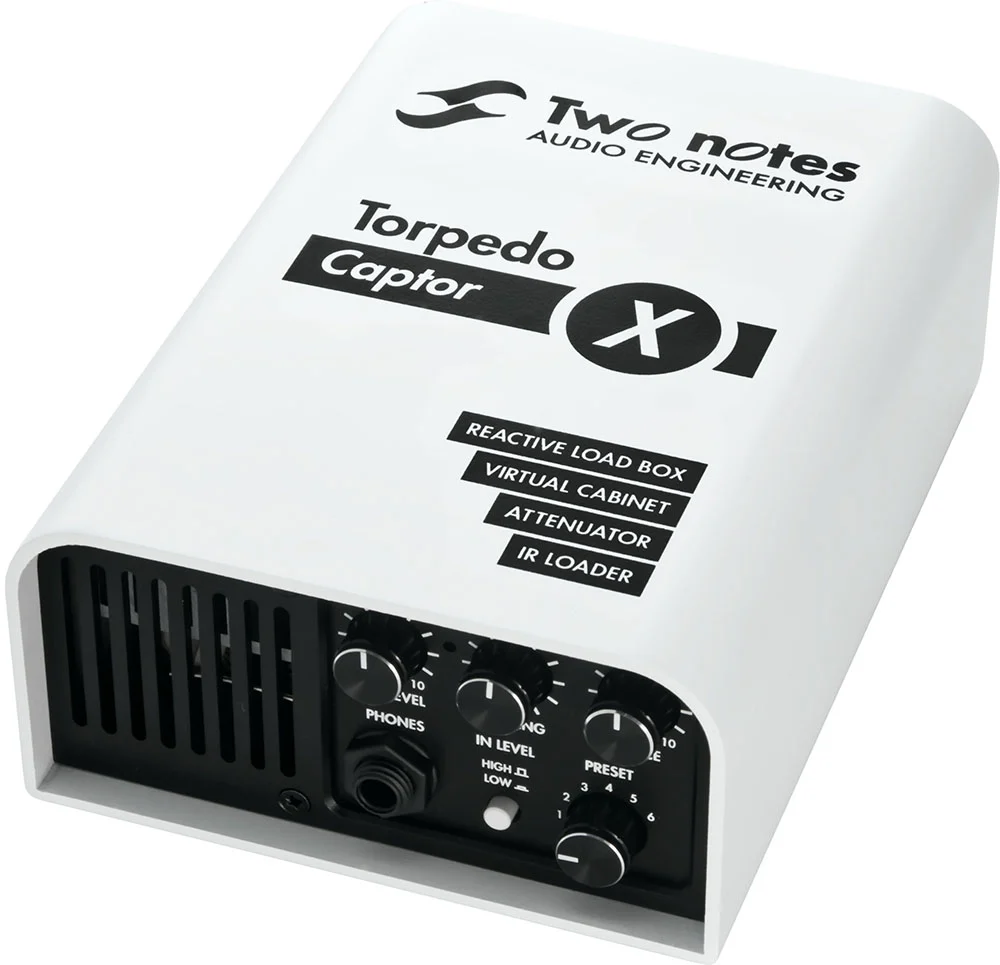
| Load Type | Reactive load |
| Max Power Handling | 100W |
| Impedance | 8Ω or 16Ω (select at purchase) |
| Dummy Load | Yes |
| Cabinet IR | Built-in (Proprietary & third-party support) |
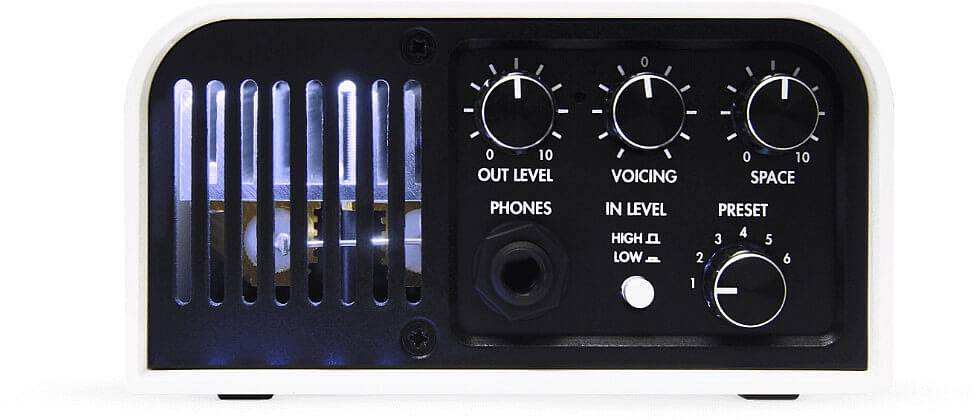
- High-Quality Cabinet Simulator
Integrates with a dedicated app, letting you intuitively edit a wide selection of cabinet and mic combinations to craft pristine direct tone. - Built-In Ambient Effects
Includes studio-grade effects like reverb, enhancer, and noise gate, allowing full practice sessions using just the unit and headphones. - Stereo XLR Outputs for Live and Recording
Stereo output allows sending expansive reverb sounds or different cabs on left/right channels straight to a PA or DAW. - Compact, Lightweight Chassis
Packs an impressive feature set into a compact, light footprint that sits easily on top of an amp head.
A massive hit often described as a "Swiss Army knife" for home recording guitarists. Along with solid performance as a reactive load, it features powerful app-driven IR capabilities. The built-in headphone jack also makes it ideal for silent late-night practice.
Pros
- "Switching cabs and mics via the mobile app is intuitive and fun."
- "Built-in stereo reverb and enhancer sound fantastic through headphones."
- "Compact and lightweight enough to sit neatly on top of an amp head."
Cons
- "Only 3 attenuation levels (Full, Mid, Low), so there is no fine adjustment."
- "Max power handling is 100W, so it cannot be used with ultra-high-wattage amps."

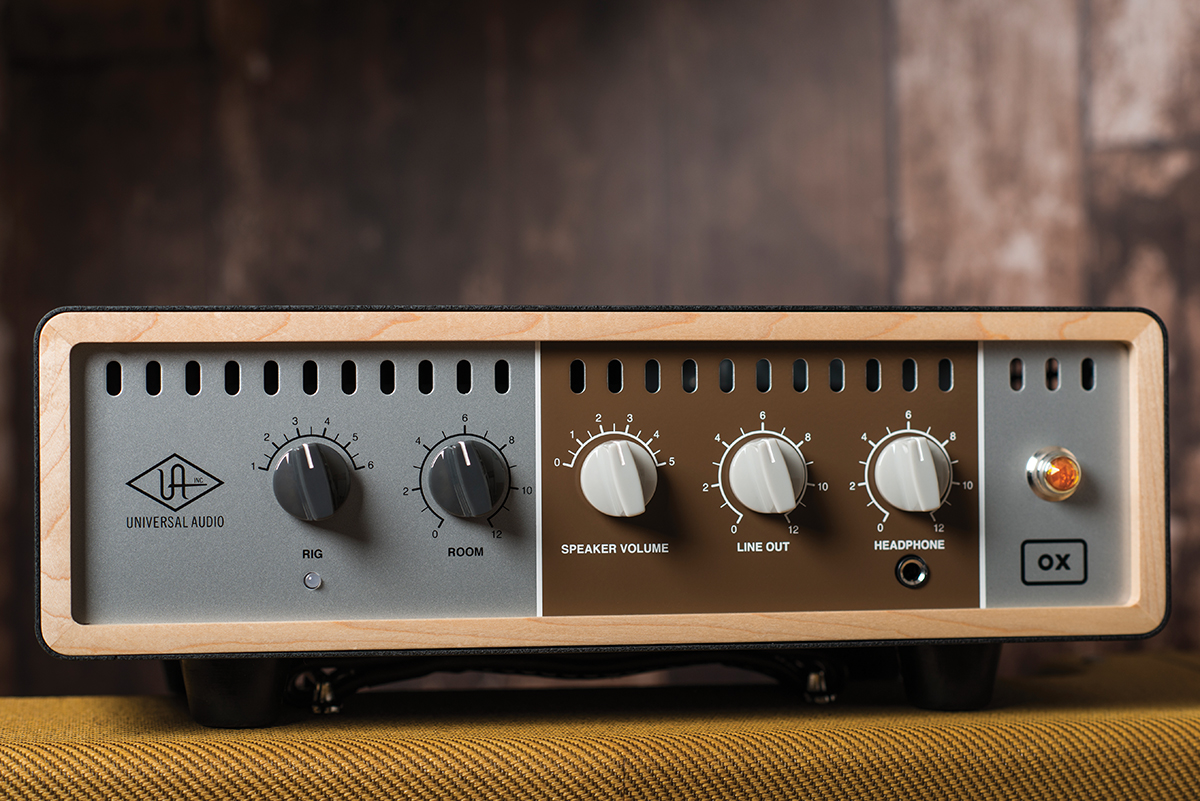
Universal Audio / OX
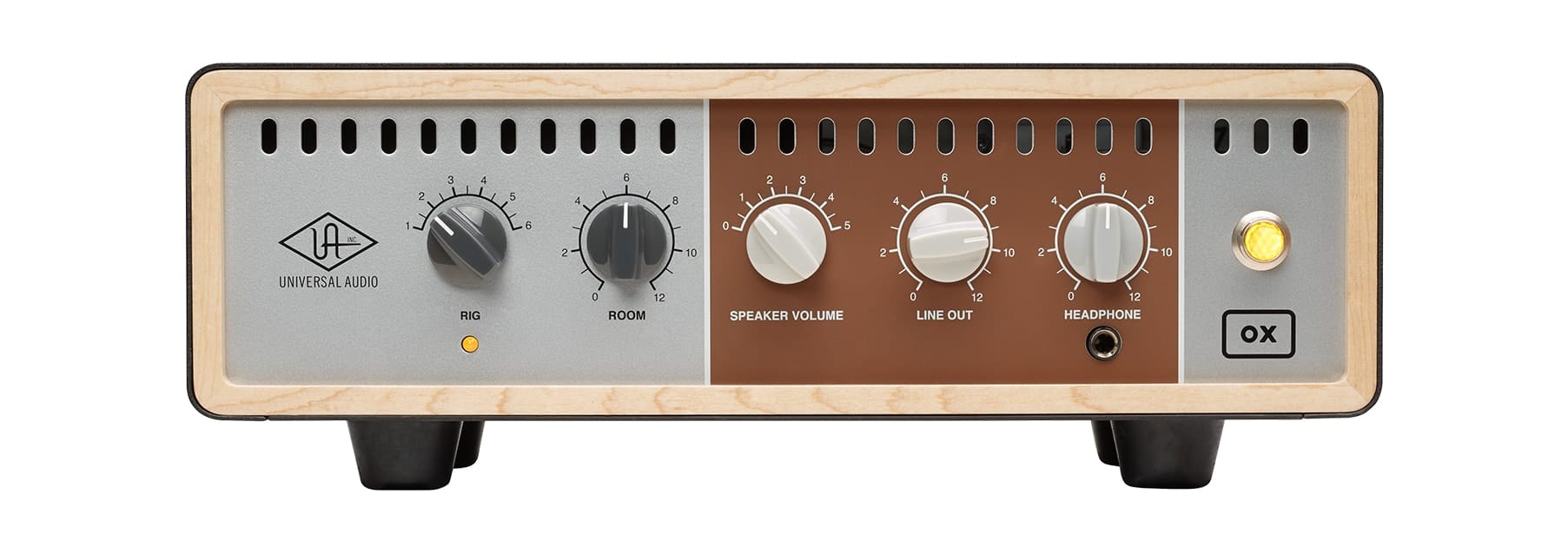
| Load Type | Reactive load |
| Max Power Handling | 150W |
| Impedance | 4Ω, 8Ω, 16Ω (switchable) |
| Dummy Load Function | Yes |
| Cabinet IR | Built-in (Dynamic Speaker Modeling) |
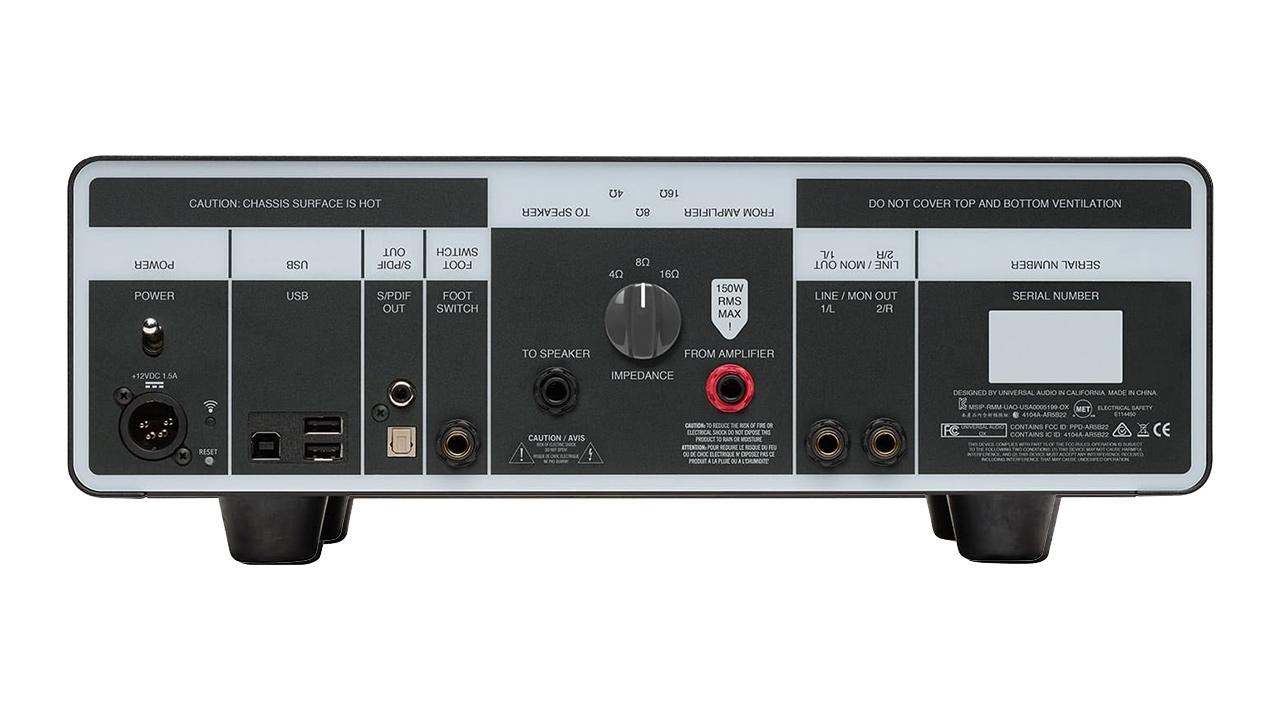
- Dynamic Speaker Modeling Technology
Goes beyond static IRs to recreate the physical cone movement and speaker breakup using top-tier modeling technology. - Studio-Quality Onboard FX
Includes UA's premium effects essential for pro studios, such as the 1176 compressor and plate reverb. - Realistic Room Mic Control
Precisely adjust microphone placement and room ambience to capture the exact sense of space you'd get in a professional studio. - Intuitive Analog-Style Controls
Despite being a sophisticated digital unit, the front panel features physical knobs like a traditional amp for quick, intuitive tone shaping.
This flagship reactive load box is a top choice for professional guitarists worldwide. UA's analog modeling technology authentically captures room ambience and speaker breakup. Delivering exceptional tone directly from the unit, it excels both in the recording studio and as a direct line-out solution for live performances.
Positive Feedback
- "The recorded sound feels like it was tracked by a pro engineer in a world-class studio."
- "The room mic simulation is outstanding—the sense of air and space is on another level compared to other gear."
- "The attenuator function sounds extremely natural, and playing through a real cabinet feels great."
Negative Feedback
- "Wi-Fi connection can be unstable, occasionally dropping communication with the app."
- "No support for loading third-party IRs—you can only use the built-in cabinet models."

[Ultimate Versatility] Re-Amping Solution
Fryette / Power Station PS-2
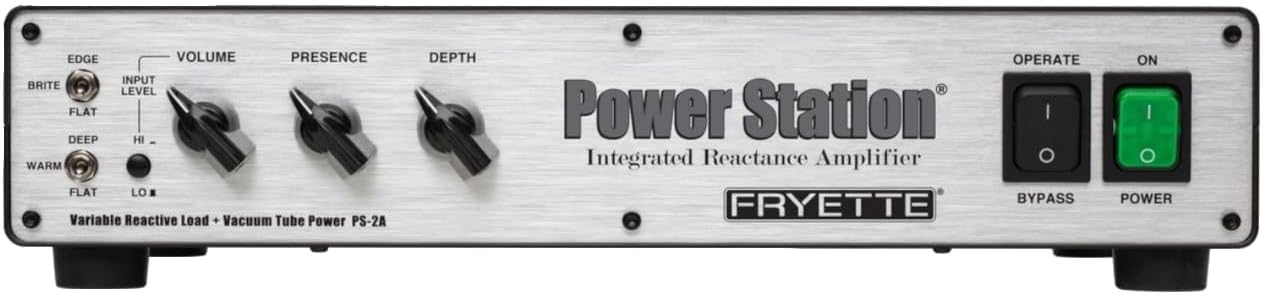
| Circuit Type | Reactive load + 50W tube power amp |
| Max Power Handling | 200W |
| Impedance | 2/4Ω, 8Ω, 16Ω (Independent input/output switching) |
| Dummy Load | Yes |
| Re-Amping Function | Yes (50W 6L6 tube) |
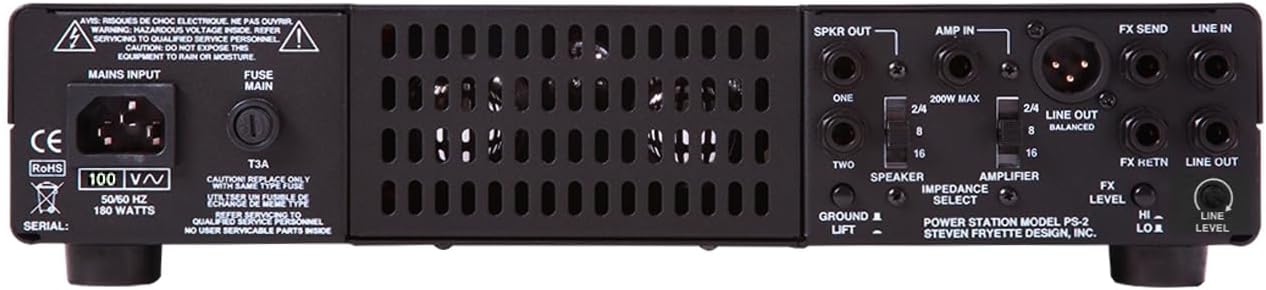
- Re-amping design for effortless volume control
By stepping the amp's output down to line level and re-amplifying it through the built-in 50W tube power amp, you get complete volume control while preserving your tone, regardless of amp size. - Boost small amps to gig-ready volumes
Take the sound of a small 5W practice tube amp and scale it up to a full 50W—loud enough to cut through live drums on stage. - Add an effects loop to any amp
Easily integrate time-based effects like delay and reverb cleanly into vintage Fender or Marshall amps that lack built-in effects loops. - Independent input and output impedance matching
Safely connect gear with mismatched impedances—like running a 4Ω amp head into a 16Ω cabinet—that would normally risk damaging your gear.
This unit takes a completely different approach from traditional attenuators. Beyond just attenuating high-volume amps, it can also boost low-wattage amps (like a 5W combo) up to the volume of a 50W stack amp. Because re-amplification is tube-driven, it avoids solid-state harshness, making it an ideal solution for integrating vintage Marshalls into modern setups.
Positive Feedback
- "Even at whisper volumes, none of the tube warmth or dynamics are lost."
- "Being able to run time-based effects cleanly into a vintage Fender is super useful."
- "Boosting a small Champ up to venue volumes is impressive."
Critical Feedback
- "The internal cooling fan can be a bit noticeable when it kicks in."
- "Because it uses vacuum tubes, it requires periodic maintenance and tube replacements."

Boss / Waza Tube Amp Expander
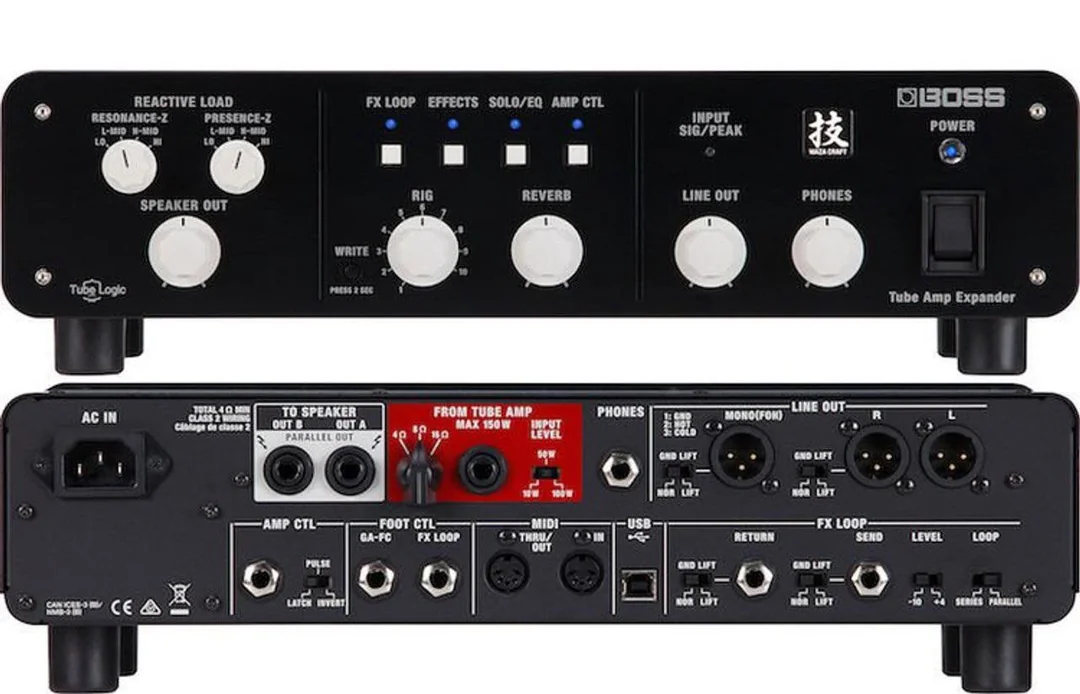
| Circuit Type | Reactive load + 100W analog power amp |
| Max Power Handling | 150W |
| Impedance | 4Ω, 8Ω, 16Ω (switchable) |
| Dummy Load | Yes |
| Re-amping | Yes (100W Class AB analog) |
- Built-In 100W Class AB Analog Power Amp
Seamlessly re-amplifies the signal captured by the reactive load through a discrete analog 100W power amp that preserves picking nuances. - High-Quality BOSS Effects Suite
Using the dedicated editor, freely route BOSS's massive library of studio-grade effects internally—including compression, delay, reverb, and EQ. - USB Audio Interface Functionality
Connect directly to your computer via USB to record studio-quality cabinet sounds straight into your DAW. - Instant Rig Switching & MIDI Control
Save amp settings, effects, and IR combinations into "Rigs" and recall them instantly via onboard knobs or external MIDI controllers. - Immersive 3D Headphone Sound
Proprietary spatial audio technology recreates the realistic air and ambience of a multi-mic recording setup in your headphones, preventing ear fatigue during long late-night practice sessions.
Built with BOSS’s flagship engineering, this unit serves as the ultimate command center for expanding tube amps. It combines a reactive load with a 100W Class AB analog power amp for re-amping, while adding USB audio interface capabilities and an IR loader to handle every routing need from live shows to studio recording.
Positive Feedback
- "The thrill of cranking a 100W Marshall wide open at home through headphones is unreal."
- "You can drive a physical cab on stage while sending a flawless IR tone straight to FOH."
- "Since it replaces an audio interface, multi-FX unit, and attenuator all in one, it actually ends up being a great value."
Negative Feedback
- "It's fairly heavy and takes up significant space due to its rackmount size."
- "Because it's so feature-packed, it takes a little time to learn all the deep editing options in the app."

Summary | Finding the Right Attenuator for Your Setup
Attenuators top the list of gear that tube amp enthusiasts agree they wish they had bought sooner.
- Practicing at home on a budget: Passive models
- Preserving your amp's natural feel and response: Reactive models
- Late-night home recording or headphone practice: IR-equipped models
- Serving as the core of your overall rig: Re-amping models
Choose the ideal model for your playing style and needs, and experience the true voice of your tube amp.