
日本語English
[Comparison] Darkglass Anagram vs. Neural DSP Nano Cortex: Key Differences and How to Choose Between Two Pro-Favored Compact Modelers
XTONES is a participant in affiliate programs including Amazon Associates and Reverb. We may earn a commission from qualifying purchases made through links on this page, at no extra cost to you.
Contents (14)
NAM and Neural Capture—two groundbreaking technologies rewriting the rules of amp simulation—are now fitting into compact units.
For guitarists and bassists, they have become key contenders powering next-generation tone shaping.
Darkglass Anagram
Neural DSP Nano Cortex
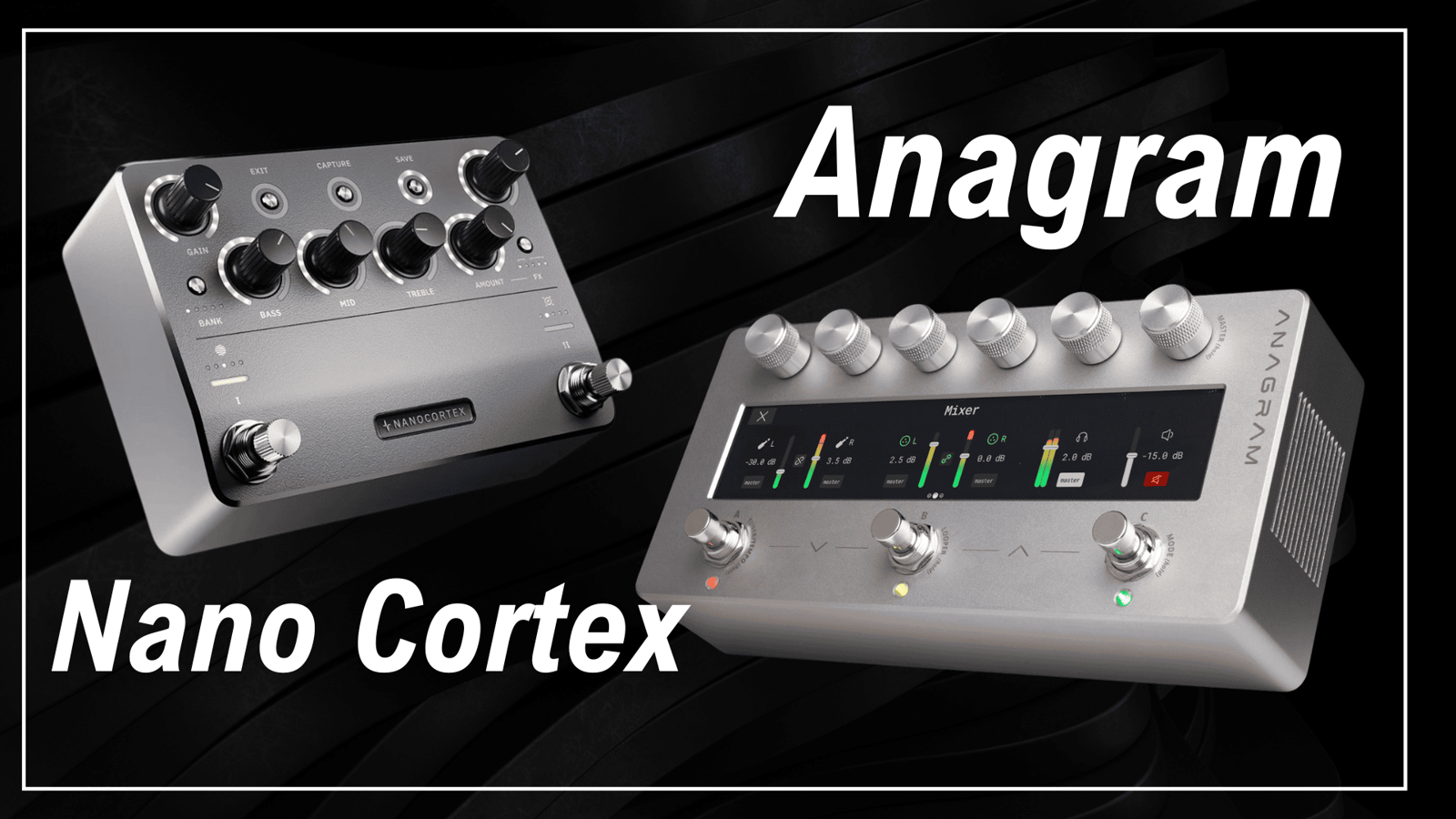
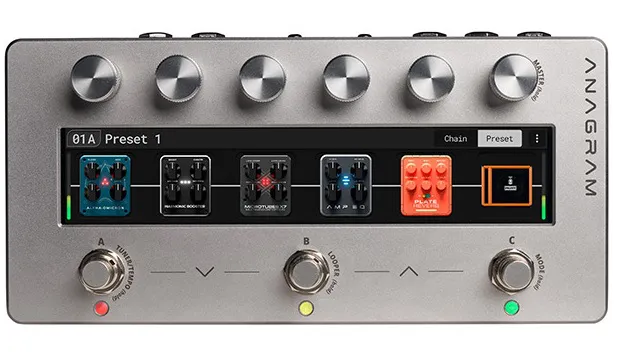
The Anagram is a bass-focused multi-effects unit that carries on signature Darkglass bass tones while delivering incredible expandability with NAM and AIDA-X support.
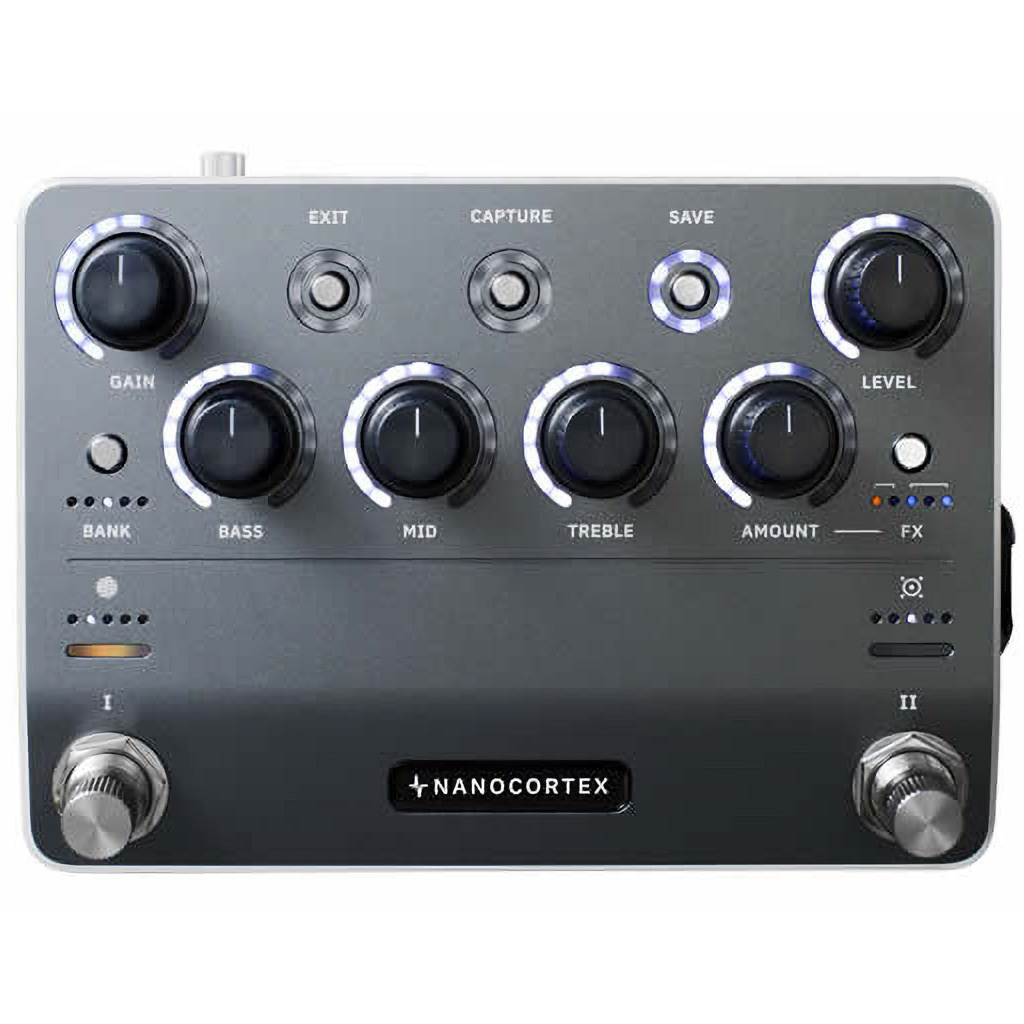
On the other hand, the Nano Cortex condenses Neural DSP's flagship Neural Capture tech into a pocket-sized ultra-compact capture pedal and IR loader.
This guide provides a comprehensive comparison of both units across sound quality, features, I/O, usability, and portability,
helping you decide which one best fits your workflow for home recording, live performance, and pedalboard integration.
An essential breakdown for any player looking to stay current with modern modeling gear.


Anagram vs Nano Cortex|Specs Comparison
 |  | |
|---|---|---|
| Model | Darkglass Anagram | Neural DSP Nano Cortex |
| Modeling Method | NAM / AIDA-X support (Open-source models) | Neural Capture (Profiling) |
| Onboard Effects | ~50 types + expandable via NAM | Preset-focused, Capture + onboard effects |
| Screen / Interface | 7-inch touchscreen + 6 knobs + 3 footswitches | No LCD screen, 2 footswitches Mainly controlled via app |
| Performance Modes | Preset / Scene / Stomp modes (Standalone operation) | Preset switching (App-dependent, no scenes) |
| IR Support | User IR loader | User IRs (256 slots) |
| Looper | Built-in stereo looper Continuous playback during scene switches | |
| Tuner | Built-in, activated by holding footswitch | Built-in, activated via button |
| USB Audio I/F | Supported (up to 2-in/2-out equivalent) | Supported (up to 7-channel I/O) |
| MIDI | IN/OUT (3.5mm TRS) Preset & parameter control | IN (TRS) Basic PC/CC control |
| I/O Connectors | 1x 1/4" IN, 2x XLR OUT 2x 1/4" OUT, 1x SEND/RETURN 1x HP OUT | 1x 1/4" IN, 2x 1/4" OUT, 1x XLR/TS IN 1x HP OUT, 1x MIDI TRS |
| Dimensions | Approx. 210 × 105 × 62 mm | Approx. 144 × 103 × 62 mm |
| Weight | Approx. 815 g | Approx. 620 g |
| Power Supply | 9V DC (2A recommended) USB-C PD supported | 9–12V DC USB-C PD supported (5V 1.5A+) |
| Price | about $1,200 about ¥154,000 (yen reference) | about $550 about ¥100,000 (yen reference) |
| Key Strengths | NAM workflows Optimized for bass Intuitive touchscreen UI | Instant access to Captures Ultra-compact pedalboard integration Recording features |
Approx. US street prices are rounded retailer prices as of November 6, 2026, before sales tax. Not a live quote. Figures kept in yen are a yen reference.
Anagram vs Nano Cortex|Features & Capabilities Compared
Sound Quality & Modeling Technology
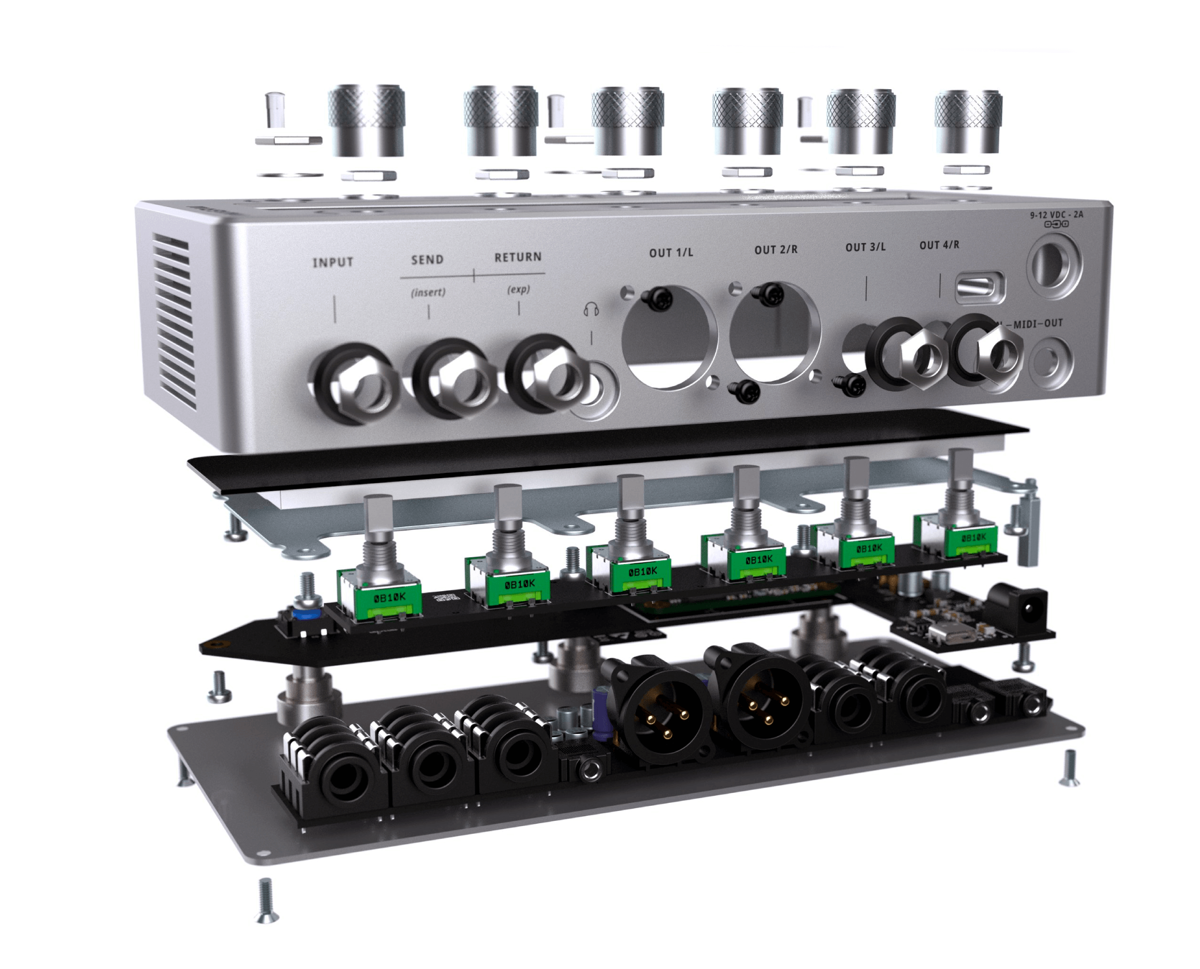
The Darkglass Anagram is powered by an onboard 6-core DSP capable of running open-source amp models like NAM (Neural Amp Modeler) and AIDA-X.
This gives it the hardware processing power to recreate highly realistic amp tones—sounds that were previously difficult to run outside of software plugins.
Running NAM profiles (trained amp models) demands significant processing power, and the Anagram packs a CPU built for that workload, delivering realism on par with software versions.
In addition, it includes Darkglass's signature bass preamps and drive circuits, featuring bassist staples like Microtubes-series drive tones and compressors out of the box.
It native supports cabinet IRs and lets you construct signal chains with up to 24 effect blocks, allowing you to dial in studio-quality tones ranging from pristine cleans to heavy drive.
Users praise its sound quality, noting that "the Anagram is nearly perfect in every way—easy to tweak and offers fantastic NAM compatibility."
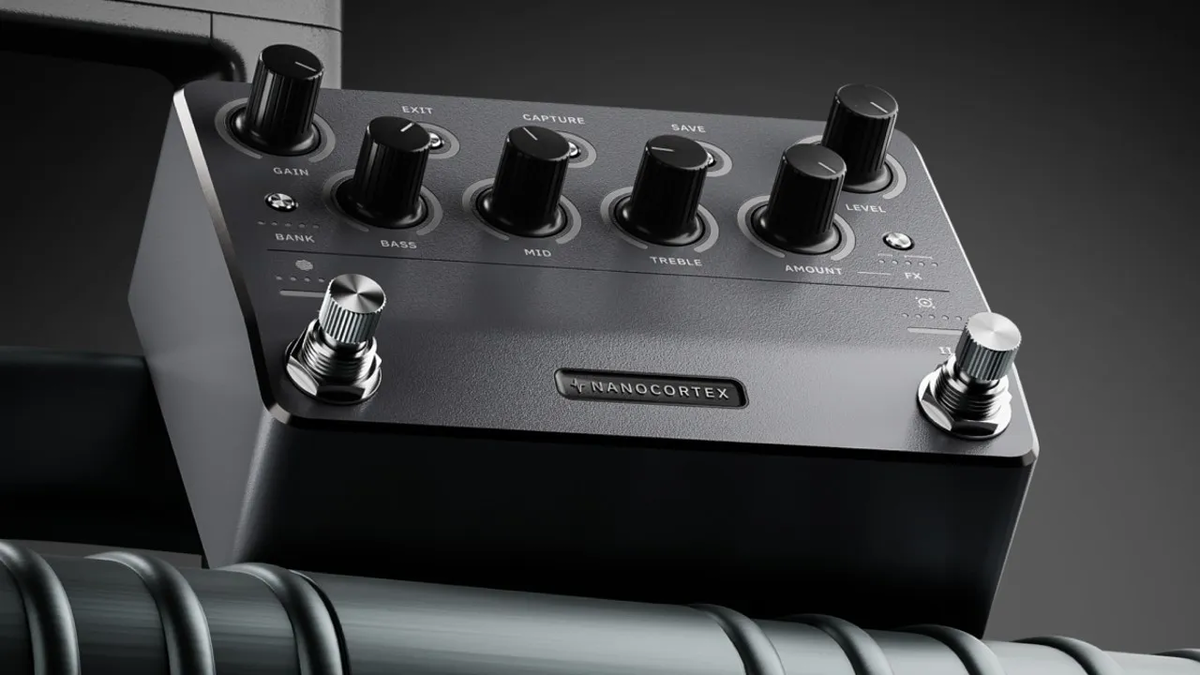
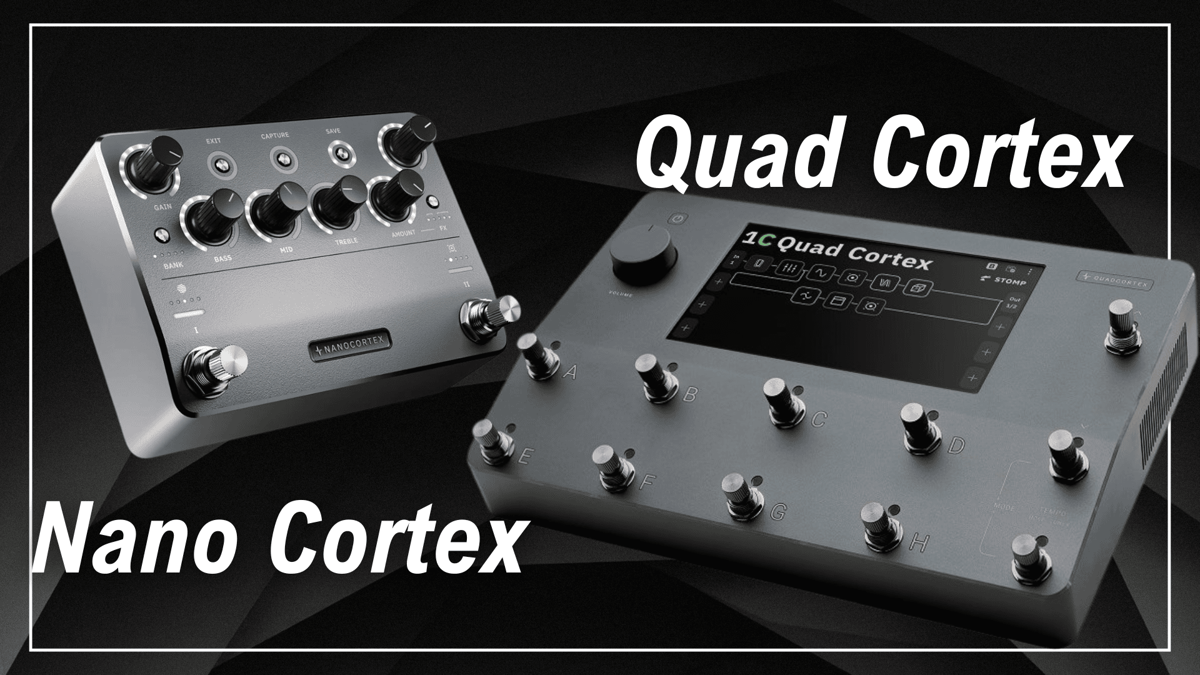
On the other hand, the Neural DSP Nano Cortex distills the Neural Capture technology from the flagship Quad Cortex into a compact pedal format.
You can capture (profile) an amp or drive pedal in just about 5 minutes, with resolution and audio fidelity that Neural DSP officially claims matches the Quad Cortex.
This means you can capture the tone of your own tube amps or prized vintage drive pedals at home and bring them directly to stage gigs.
While its built-in effect count is lower than the Anagram's, updates continue to expand the library, offering high-quality presets and Captures covering everything from clean tones to high-gain sounds.
Tone-crafting reviews for the Nano Cortex are overwhelmingly positive:
"Many of the Nano Cortex presets sound so authentic in a blind test that they could easily pass for a real amp."
It also loads up to 256 cabinet IRs and comes bundled with premium IRs featuring 5 microphone options and 6 positions, making it a robust standalone IR loader as well.
In short, both units deliver exceptional audio quality that is hard to fault.
The Anagram offers great future-proofing thanks to open NAM support and excels at bass tone reproduction.
The Nano Cortex benefits from Neural DSP's extensive library of Captures and active user community, offering gig-ready tones for both guitar and bass.
Features & Operating Experience
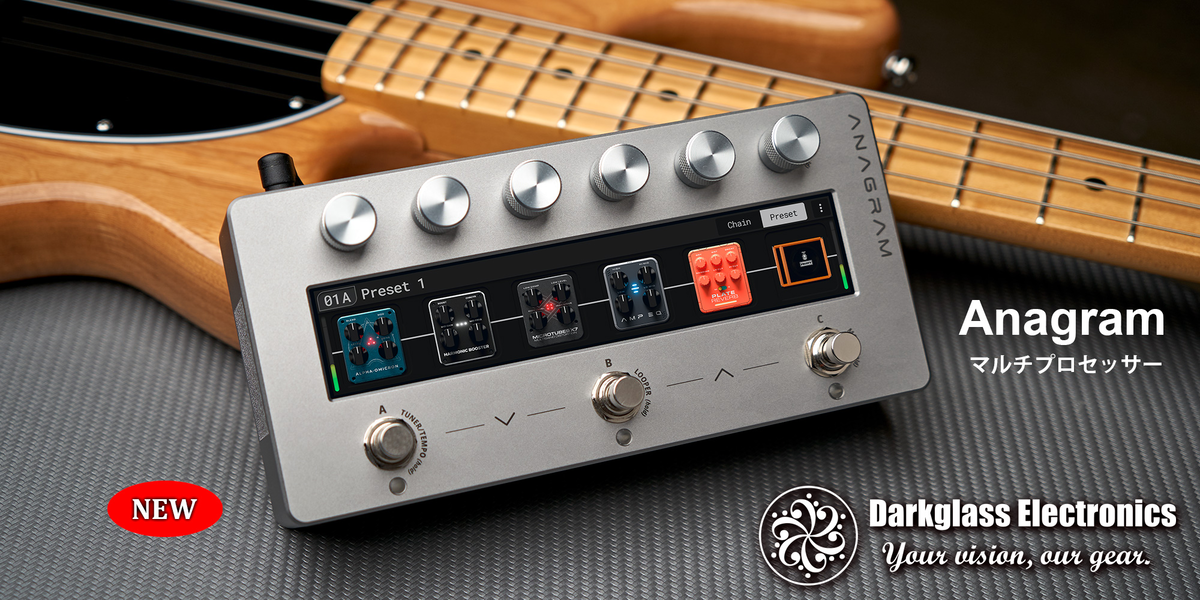
- 7-inch high-brightness touch display onboard.
- Drag-and-drop effect block routing on screen.
- 6 rotary encoders and 3 footswitches.
- 3 performance modes: Preset, Scene, and Stomp.
- Load and manage NAM models, IRs, and presets via Darkglass Suite.
- USB-C connectivity to PC for use as an audio interface.
- Built-in tuner, looper, and tap tempo.
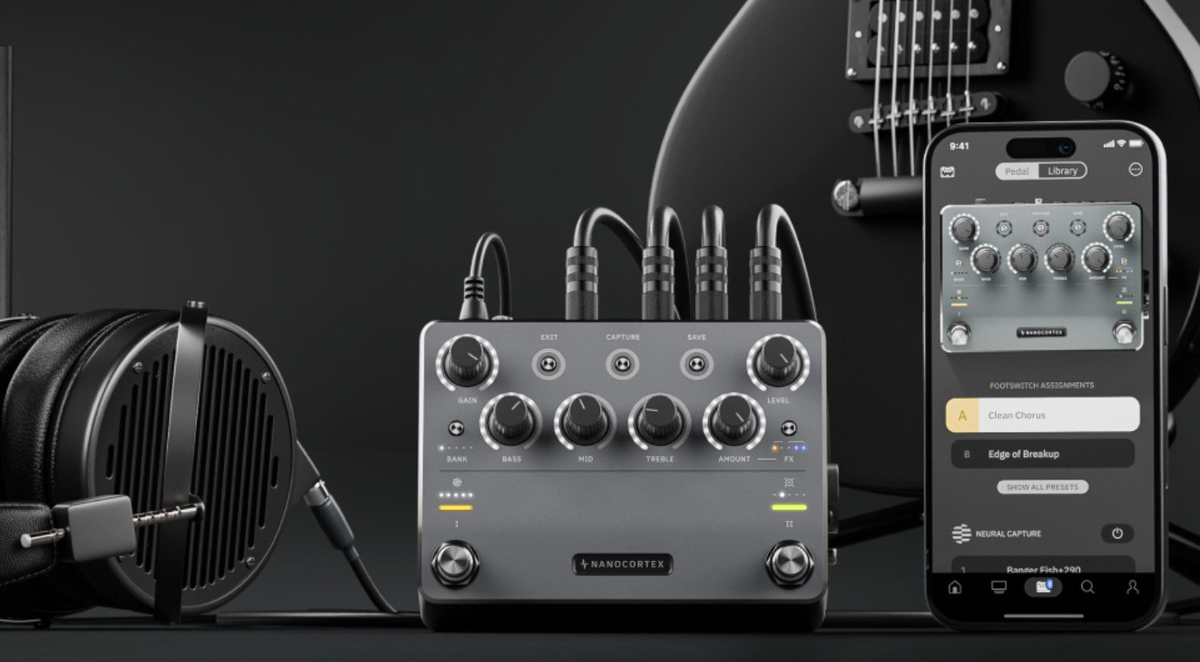
I/O Connectors & Routing Flexibility
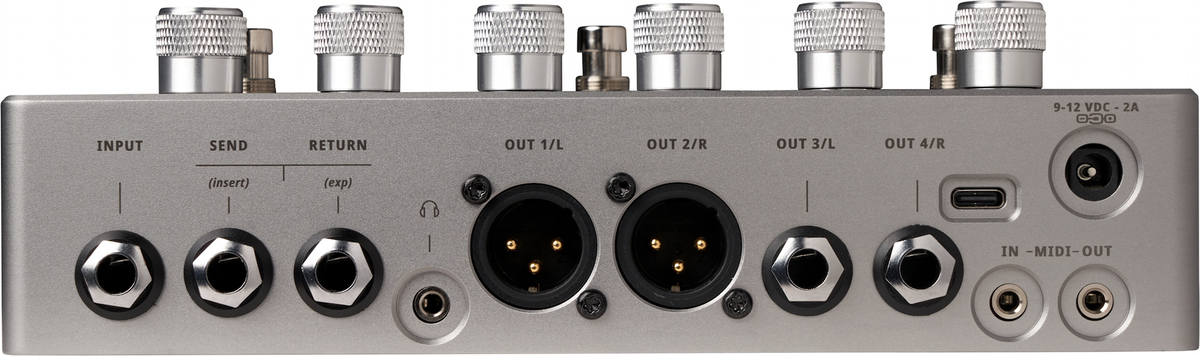
While compact, the Darkglass Anagram comes equipped with a comprehensive array of I/O connectors.
The top panel features a 1/4" mono instrument input alongside stereo Send and Return jacks.
These Send/Return jacks let you set up an effects loop or run a 4-cable method with external pedals or amp FX loops.
You can insert Send, Return, or FX Loop blocks anywhere in the Anagram's internal signal chain, giving you complete freedom over external hardware routing.
It even includes split signal balance controls and phase inversion options for Send routing, offering plenty of flexibility for complex parallel setups.
Outputs include dual stereo output options (1/4" standard phone and XLR), plus a 3.5mm headphone output.
Sending a single stereo signal simultaneously to 1/4" and XLR outputs is supported, and a ground lift switch is included for noise-free direct PA connections.
For instance, during live gigs, you can run XLR straight to the house PA while routing 1/4" outputs to a stage power amp or stage monitors.
You can also split wet/dry signals across outputs—allowing bassists to send a clean DI out of one channel and an effected signal out of the other.
The Anagram also includes 3.5mm TRS MIDI IN/OUT for MIDI integration with other gear (such as changing presets via Program Change messages).
The USB-C port handles PC connectivity and audio interface functions, supporting stereo USB audio I/O.
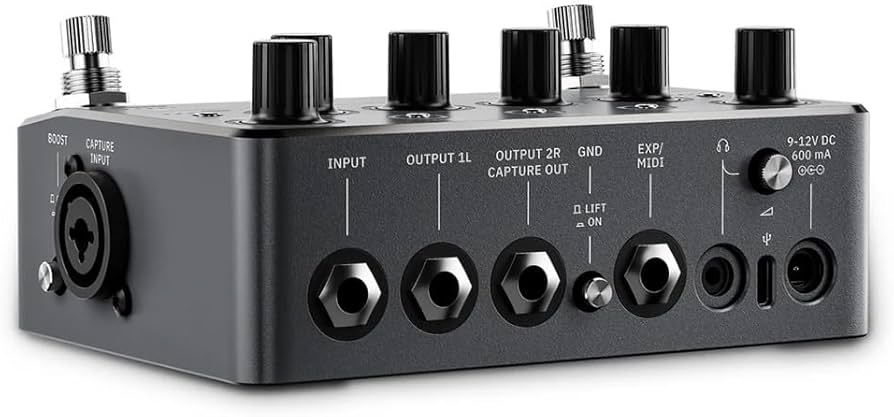
The I/O on the Neural DSP Nano Cortex isn't quite as extensive as the Anagram's, but it covers all essential needs.
It features a single 1/4" mono instrument input, 1/4" main L/R stereo outputs, a 3.5mm headphone output, and an XLR/TS combo Capture input.
The Capture input is designed for plugging in a microphone during the Neural Capture process.
While not used during normal playing, it can double as a microphone input when connected to a PC as an audio interface.
While the Nano Cortex lacks a dedicated FX loop send, it includes a TRS EXP/MIDI jack for connecting external MIDI footswitches or expression pedals.
However, because there is only one TRS jack, connecting both a volume pedal and a MIDI footswitch simultaneously isn't straightforward—a design trade-off to keep in mind.
Regarding routing, the Nano Cortex uses a fixed-slot signal chain.
Specifically, the core structure offers up to 7 blocks: Pre-FX x2 → Amp & IR x2 → Post-FX x3. Firmware updates have added flexibility by letting you assign your choice of effects to Pre-FX and Post-FX blocks.
However, it does not support fully free parallel splitting or multi-output routing like the Anagram, operating primarily through a single stereo signal path.
Running two amp Captures simultaneously (dual-amp setup) is supported, allowing you to route different amps to L and R channels for a pseudo dual-signal path.
Portability, Size & Power Requirements
Both units are highly portable, but the Nano Cortex is exceptionally small.
The Darkglass Anagram measures approximately 210 × 105 × 62 mm and weighs 815 g, taking up about the footprint of three standard BOSS compact pedals on a pedalboard.
Considering it houses a 7-inch touchscreen, its compact footprint is impressive.
By comparison, the Neural DSP Nano Cortex measures about 144 × 103 × 62 mm and weighs 620 g—even smaller, taking up roughly the footprint of two MXR-sized pedals.
Both units have slightly deep enclosures, but weighing less than a standard 500 mL water bottle, the Nano Cortex adds virtually no burden to your gig bag.
While the Nano Cortex wins on ultimate portability, the Anagram is still compact enough for practical pedalboard integration.
The Anagram features a rugged metal chassis built for professional touring use.
Darkglass is known for high build quality and precision knobs, and users frequently note that the Anagram delivers "outstanding build quality and feel."
The Nano Cortex also features a solid aluminum chassis designed to handle heavy foot-stomping on stage.
Both units offer the durability needed to handle stage use with confidence.
Looking at power specs, both operate on standard 9V DC power.
The Anagram comes with a dedicated 9V center-negative power supply.
While exact current draw isn't published, it likely requires around 1A, so check your pedalboard power supply capacity before plugging in.
The Nano Cortex operates on 9–12V DC and consumes around 600 mA.
Many high-output commercial power supplies can handle it, but a standout feature is its USB-C power compatibility.
The Nano Cortex can run directly off USB-PD power banks or phone chargers supplying 5V 1.5A or more, letting you power it anywhere with a single USB cable.
The Anagram also supports USB-C power delivery, though it specifically requires a USB Power Delivery (PD) charger.
If you have a laptop PD charger or compatible power bank, you can run the Anagram without an AC outlet as well.
That said, since the Nano Cortex works on standard 5V USB power, it pairs exceptionally well with portable power banks, making it ideal for outdoor or on-the-go sessions.
Anagram vs Nano Cortex|Use Case Comparison
Home & Studio Recording
Both units feature built-in audio interface functionality, making them excellent choices for home recording.
The Nano Cortex operates as a 7-channel USB interface, supporting advanced setups like recording clean dry tracks and processed stereo signals simultaneously.
If you like reamping performances or applying different Captures in post-production, the Nano Cortex is tailored well for studio recording.
Meanwhile, the Anagram acts as a straightforward 2-channel audio interface, but its onboard effects and amp models sound so polished that you can record album-ready tracks right out of the box.
Its intuitive UI makes detailed tone editing easy before tracking, making it great for players who want to dial in their sound and record immediately.
Both units feature headphone outputs, making silent late-night practice and monitoring comfortable.
Live Gigs (Amplifier-Free Direct to PA)
For amp-less setups—going direct to PA or through FRFR speakers—both units can serve as the centerpiece of your rig.
The Anagram features balanced XLR outputs, letting you plug straight into the mixing console without needing a DI box.
The XLR outputs also include a ground lift switch to eliminate ground loop noise.
The Nano Cortex only provides 1/4" line outputs, so using a DI box is recommended when connecting to a PA.
However, its compact size makes it exceptionally easy to integrate into a pedalboard.
Functioning as a true "pedalboard amp," placing the Nano Cortex at the end of your signal chain allows it to handle amp, cabinet, and microphone duties all in one.
For live tone switching, the Anagram lets you prepare detailed scenes in advance and switch settings with a single footswitch press, minimizing hassle on stage.
The Nano Cortex relies primarily on preset switching, but features gapless switching so delay tails decay smoothly without audio dropout—perfect for changing patches between songs.
However, onboard effect toggling on the Nano Cortex is somewhat limited, so if you need to switch individual effects on and off mid-song, pairing it with an external MIDI switcher is worth considering.
In addition, both units include built-in tuners with mute support, eliminating the need for a standalone tuner pedal.
Live Gigs (Using with Amplifiers & Pedalboard Integration)
When integrating with your amp head or external pedals, the Anagram's flexibility really shines.
For instance, you can use the 4-cable method to insert the Anagram into your amp's FX loop, combining your amp's drive with the Anagram's time-based and modulation effects.
By configuring Send/Return blocks, you can create hybrid setups—such as using your tube amp's preamp section while relying on the Anagram for cab IRs.
Conversely, inserting the Nano Cortex into an amp's FX loop isn't as straightforward, as it is primarily designed to replace an amp altogether.
If you want to use it alongside an amp, you'll need to route it thoughtfully as an effect unit or cab simulator before or after your amp input.
When it comes to pedalboard integration, the Nano Cortex's minimal footprint is a major advantage.
It sits easily alongside drive pedals or modulation stomps without hogging space, and USB power compatibility helps keep your board lightweight.
While the Anagram requires more physical space, it fulfills multiple roles in a single unit (multi-effects + preamp + cabinet IR loader + audio interface), effectively replacing several standalone pedals to save overall board space.
From a guitarist's perspective, note that the Anagram's built-in models lean heavily toward bass amps.
While it includes a few guitar-friendly clean models like Fender-style cleans, most factory amp models are tuned for bass.
Therefore, guitarists using the Anagram will likely want to load custom guitar amp models from the NAM community.
In contrast, the Nano Cortex includes factory Captures of Mesa Boogie and Fender tube amps out of the box, making it gig-ready for guitarists right away.
While it isn't as simple as "Anagram for bassists, Nano Cortex for guitarists," keeping your primary instrument in mind will help guide your decision.
Anagram vs Nano Cortex | Reviews & Reputation
Positive Feedback
Darkglass Anagram
Intuitive controls and rock-solid build quality
"Extremely intuitive interface. Crafting tones from scratch is effortless, and being able to save default settings for each effect is super convenient."
Flexible tone sculpting with NAM support
"It plays NAM profiles, lets you load up to 24 effects, and includes a touchscreen. The Darkglass Anagram has arrived!"
Ultra-low latency for live and studio use
"Ultra-low latency handles everything from detailed studio tracking to live performances effortlessly."
Neural DSP Nano Cortex
High-quality sound in a compact build
"The Nano Cortex is currently the best all-in-one capture device in terms of value, portability, and ease of use."
Intuitive controls and seamless app integration
"Features straightforward physical controls paired with seamless app integration."
Fast boot times
"Boots up much faster than the QC. If you run it into a tube amp's FX return and switch on the Nano when you turn on the amp, it's ready before the tubes warm up."
Critical Feedback
Darkglass Anagram
Tone character might not suit everyone
"The signature Darkglass sound feels a bit too aggressive and harsh for my taste."
Expression pedal connectivity
"It's disappointing that there's no way to connect an expression pedal."
Higher price point
"It's on the pricier side, so you really have to weigh its cost-performance against competing options."
Neural DSP Nano Cortex
Limited effect options
"The built-in effect selection is limited, and you can't reorder the signal chain."
No built-in display limits deep editing
"Without an onboard screen, you have to rely on a smartphone or tablet for detailed editing and navigation."
Inflexible IR routing per output
"You can't apply a cab IR to one output while bypassing it on the other."
Anagram vs Nano Cortex | Which One Should You Pick?
- Darkglass Anagram
A feature-packed all-in-one unit with expandability via NAM support, a flexible UI, and comprehensive I/O.
While expensive, its do-it-all versatility and potential for future firmware updates make it well worth the investment.
It's ideal for bassists who also play guitar, users wanting hardware access to the latest NAM community captures, and tone geeks who love deep tweaking. - Neural DSP Nano Cortex
An ultra-portable modeler that brings Quad Cortex capture tech into an accessible format.
At roughly half the price of the Anagram and in a much smaller footprint, it’s far easier to integrate into existing setups.
It's a great match for guitarists who want to capture their own amps and pedals, or anyone seeking great tone quickly with simple controls.
Keep in mind that deep editing requires a mobile app and connectivity is more streamlined than full-sized flagships.
Still, packing genuine Neural DSP capture tone into a pedalboard-friendly size is a major selling point.
Both units easily meet the demands of modern guitarists and bassists.
While their design philosophies differ, both deliver top-tier sound quality.
When comparing these multi-effects units,
go with the Anagram for ultimate versatility and deep features, or the Nano Cortex for maximum portability and plug-and-play ease.
Consider your playing style and setup needs to choose the best option.
Either unit makes a powerful centerpiece that will elevate your tone on stage and in the studio.