
日本語English
Fractal AM4 vs. FM3 Comparison: Features, Applications, and Sound Demos
XTONES is a participant in affiliate programs including Amazon Associates and Reverb. We may earn a commission from qualifying purchases made through links on this page, at no extra cost to you.
Contents (9)
The AM4 is an enticing compact multi-effects pedal, but many players face the same dilemma:
"Which one should you pick: the AM4 or the FM3?"
Packing amp modeling derived directly from the Axe-Fx series, both deliver top-tier feel and detail from clean to high-gain. So what actually separates them, and which one fits your rig?
Here, we keep the core audio quality summary straightforward and focus on the key practical differences: simultaneous effect limits, scene switching options, connectivity (including 4CM and MIDI), size, weight, and price.
Is the compact, gig-ready AM4 right for you, or do you need the feature-dense, deep-tweaking FM3?
We break down how to choose the best option for your preset setup and portable needs so you can buy with confidence.


Fractal AM4 vs FM3 | Specs & Hardware
 |  | |
|---|---|---|
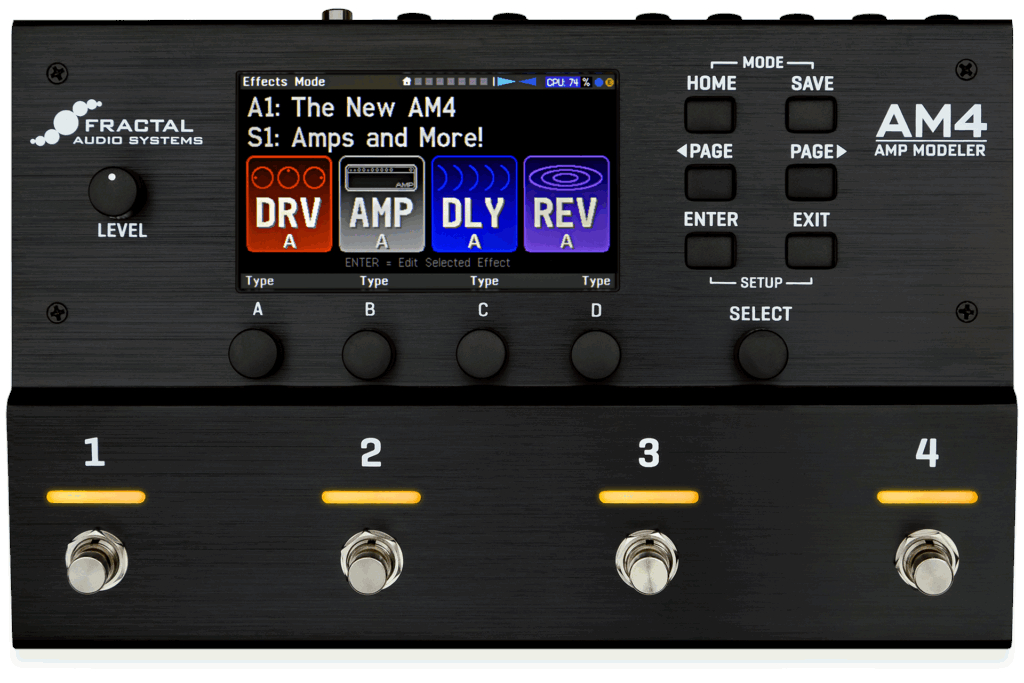
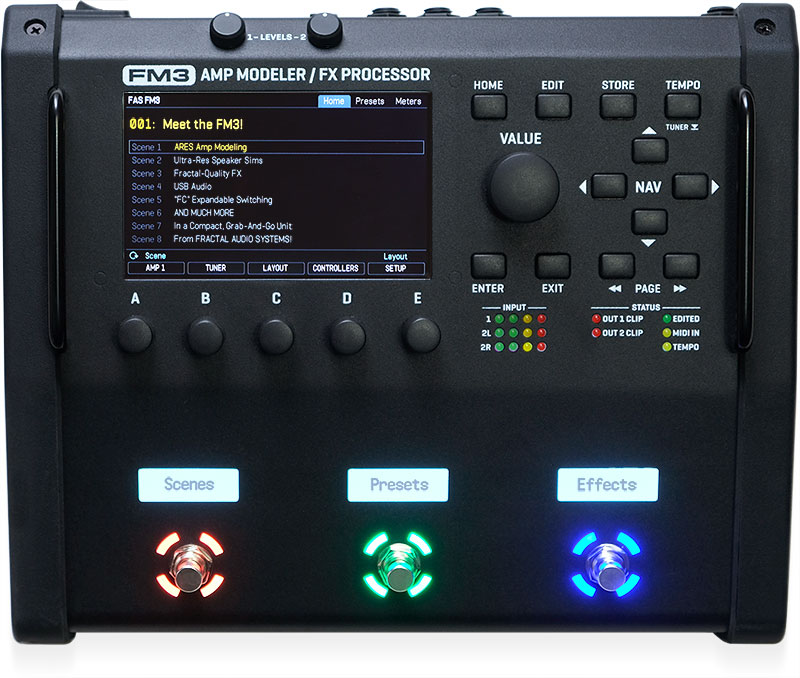
| Model Name | AM4 (Amp Modeler) | FM3 Mark II Turbo |
| Main Purpose & Product Type | Dedicated amp modeling for pedalboards | All-in-one multi-effects floor unit |
| Amp Modeling Engine | Cygnus X3 (derived from Axe-Fx III) | Cygnus X2 (derived from Axe-Fx III) |
| Amp Models | Over 240 | Over 300 |
| Speaker / Cabinet | DynaCab supported (45+ built-in cabs) | UltraRes IR + DynaCab supported (extensive factory IRs + user IR slots) |
| Effects & Block Count | Essential set: ~77 drive types, ~79 reverbs, modulations, etc. / Fixed 4 blocks | Extensive: Delay, reverb, modulation, looper, etc. (Axe-Fx III level) / Flexible block configuration |
| Presets / Scenes | 104 presets × 4 scenes (gapless switching) | 512 presets × 8 scenes (gapless switching) |
| DSP / CPU | 1GHz ARM Cortex-A15 + TI C66x DSP ×1 (~half the processing capacity of Axe-Fx III) | 3-core "Griffin" DSP + dedicated GPU (compatible with FM9/Axe-Fx III presets) |
| Inputs & Outputs | Guitar in (Auto-Z), stereo FX loop, balanced outputs (2× TRS), headphones, S/PDIF in/out, USB-C (4×4 audio & MIDI), MIDI In/Out, 2× EXP | Guitar in (Humbuster supported), stereo in, 2× stereo out (including XLR), headphones, S/PDIF out, USB 4×4 audio & MIDI, MIDI In/Out, 2× EXP, FASLINK II |
| Foot Control | 4 onboard switches: Preset/Scene/Effect switching, tuner. 4-channel switching in Amp mode | 3 onboard switches (LED rings + mini LCDs). Multi-layout and Views. Expandable via FC-6/FC-12 |
| Dimensions & Weight | Approx. 254 × 160 × 57 mm, approx. 1.6 kg | Approx. 512 × 233 × 88 mm, approx. 5 kg |
| Approx. US street | $700 | $1,100 |
Approx. US street prices are rounded retailer prices as of November 6, 2026, before sales tax. Not a live quote.
Fractal AM4 vs FM3 | Tone & Sound Demos
Both the AM4 and FM3 feature top-tier modeling technology derived from Fractal Audio's flagship Axe-Fx III. The AM4 runs Fractal's Cygnus X3 amp engine, while the FM3 uses Cygnus X2 (with the Mark II update giving access to over 400 presets).
Both faithfully capture the tone and response of real tube amps, covering everything from clean settings to high-gain aggression. The AM4 includes over 240 amp models, while the FM3 steps up with more than 300. Both feature Axe-Fx cabinet simulation: the AM4 combines intuitive DynaCab™ (45+ cabs) with UltraRes™ IRs, while the FM3 pairs DynaCab™ with a massive factory library of over 2,200 Axe-Fx III IRs (plus 1,024 user slots).
In terms of core tone, modeling performance is virtually identical; Fractal Audio notes that the AM4's amp sounds are identical to their flagship units. However, the AM4 deliberately streamlines the signal chain with a focused four-block architecture (such as Amp, Drive, Delay, and Reverb), offering quick access to built-in noise gates, EQ, boost, and reverb parameters to shape full, solid tones without bloat. By contrast, the FM3 retains nearly the full block catalog of the Axe-Fx, including loopers and a wider range of modulation effects.
DEMO
AM4
FM3
Fractal AM4 vs FM3 | Effects & Signal Chain
Looking at effect variety, the AM4 covers essential needs with roughly 77 drive types, 79 reverbs, and over 150 modulation options. The FM3 packs Axe-Fx III–grade blocks (including a looper), covering standard delay, reverb, compression, and modulation alongside deeper specialty processors. While the AM4 leaves out niche blocks like Formant, IR Capture, Pitch Shifter, and Ring Modulator to streamline tone sculpting, the FM3 offers almost the entire suite for maximum routing flexibility.
Signal chain flexibility is another differentiator. The AM4 uses a fixed, straightforward four-block structure (Amp, Drive, Delay, Reverb) built around intuitive operation. The FM3 uses a grid layout that allows free placement of blocks, complex parallel routings, and custom signal paths. For four-cable method (4CM) setups, both units feature stereo FX loops to integrate smoothly with pedalboards or external amps.
Fractal AM4 vs FM3 | Presets, Channels & Controls
The FM3 offers a significantly larger preset memory: 512 presets with 8 scenes each, compared to the AM4's 104 presets with 4 scenes (with 4 channels per scene). Both support gapless switching, allowing seamless tone changes live without audio dropouts.
For onboard control, the AM4 features four durable footswitches that switch roles between presets, scenes, effects, and tuner. In its new Amp mode, the footswitches directly select between four channels, color-coded by LEDs for instant visual status. The FM3 provides three switches with color LED rings and mini scribble-strip LCDs, utilizing tap/hold functions across eight layouts. It can also be expanded seamlessly using FC-6 or FC-12 foot controllers via FASLINK II.
Fractal AM4 vs FM3 | Connectivity & I/O
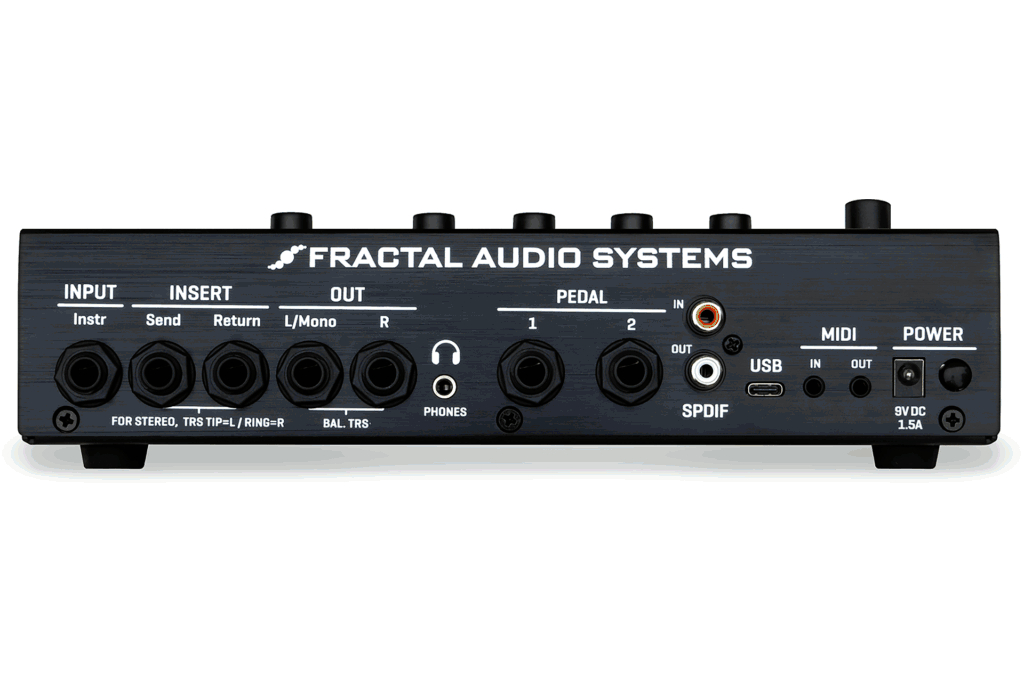
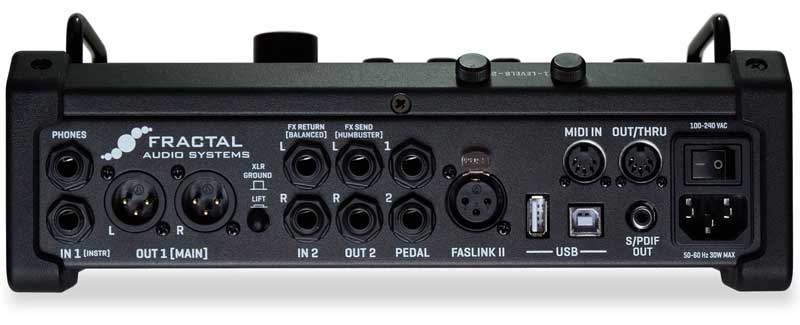
Both units offer robust I/O for stage and home recording. The AM4 includes a low-noise guitar input with Auto-Z impedance matching and a 4×4 USB-C audio/MIDI interface for easy recording and re-amping. It also features balanced TRS stereo outputs, a headphone jack, S/PDIF I/O, and a stereo FX loop. The FM3 adds XLR stereo main outputs and additional stereo I/O for complex routing scenarios.
For example, on the FM3 you can send Outputs 1/2 to the house PA while routing Outputs 3/4 to a dedicated stage power amp. Both feature dual expression pedal ports and full MIDI integration, making it easy to run 4CM setups, feed amp power sections, or split signals across different setups.
Fractal AM4 vs FM3 | User Feedback & Reviews
AM4
Pros / Positive Feedback
- 「True Axe-Fx feel in a compact size. Crisp clean response and satisfying gain saturation.」
- 「Fast switching between presets and scenes. The 4-switch setup makes live operation clean and simple.」
- 「DynaCab is super intuitive. You get a stage-ready tone quickly without getting lost in endless IR files.」
Cons / Limitations
- 「Limited simultaneous block count. Running multiple delays and parallel modulation isn't really doable.」
- 「Fewer specialty effect options. Might feel light if your sound relies on wild pitch or synth FX.」
- 「Only four footswitches, so complex song-specific switching might require external controllers.」
FM3
Pros / Positive Feedback
- 「Huge routing flexibility with blocks. Easy to recreate complex parallel rigs right out of your head.」
- 「Powerful Scene and Layout control. Gives you deep control over sound variations within a single song.」
- 「Top-tier effect quality and selection. Time-based and dynamic processing are genuine studio grade.」
Cons / Limitations
- 「Noticeable size and weight. It can make a compact board heavy quickly.」
- 「Steep learning curve. Tone is amazing, but initial setup takes time.」
- 「Requires CPU management. Stacking heavy reverbs and multiple delays demands careful preset budgeting.」
Fractal AM4 vs FM3 | Which One Should You Choose?
Choose the AM4 if you want:
- A compact, gig-ready setup using a few versatile presets
- A space-saving footprint on your pedalboard for direct PA output or home recording
- Top-tier amp and cab quality without needing complex parallel routings
- Easy USB recording and re-amping right out of the box
Choose the FM3 if you want:
- Deep effect tweaking with parallel delays and modulations tailored to each song
- Advanced integration with external amps and pedals via 4CM or MIDI
- An all-in-one standalone rig utilizing extensive presets and scenes for full live sets
- Expanded control options using FC-6 or FC-12 foot controllers
If you want to focus on core amp tone and integrate seamlessly into a pedalboard, the AM4 is the way to go. Designed around a "100% tone, streamlined functionality" concept, it suits players who value mobility, clean board integration, and straightforward operation. With built-in USB audio and a dedicated headphone jack, it's equally capable for home recording and streaming.
On the other hand, if you need deep feature routing and expansive internal effects, the FM3 is the better fit. Operating much like a compact Axe-Fx III, it provides a vast selection of effects and block options. It excels as a complete, standalone rig or when paired with larger pedalboards and rack gear.
In summary, the AM4 is compact, lightweight, and focused on pure amp and cab performance. The FM3 leverages expansive presets, deep effect routing, and broad hardware expansion. Weigh your budget, pedalboard space, and routing needs to pick the unit that best fits your workflow.