
日本語English
Kemper vs. Fractal vs. Helix vs. Quad Cortex: How to Choose (Post-Helix Stadium)
XTONES is a participant in affiliate programs including Amazon Associates and Reverb. We may earn a commission from qualifying purchases made through links on this page, at no extra cost to you.
Contents (36)
- Looking to upgrade to a high-end multi-effects processor?
- Wondering about the relative strengths of Kemper, Fractal, Helix, and Quad Cortex?
- Want to weigh the pros, cons, and player feedback before picking the right one for your setup?
This guide is for you.
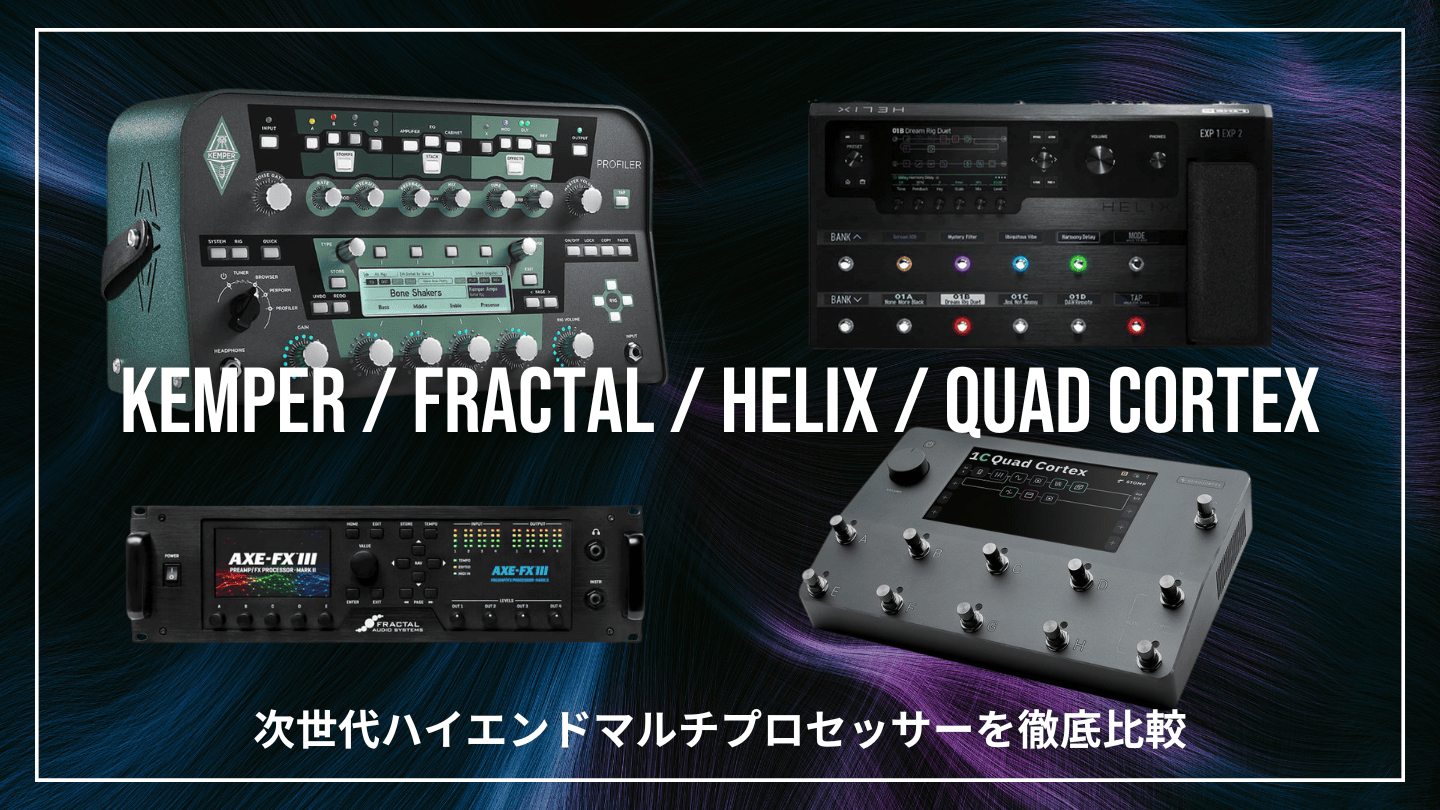
Here, we compare the top-tier flagship units: Kemper, Fractal, Helix, and Quad Cortex. For Helix, we focus on the current Floor and LT models while noting how they fit alongside the Helix Stadium.
- Real amp feel & profiling: Kemper
- Deep sound editing & raw DSP power: Fractal (Axe-Fx III / FM9 Mark II Turbo)
- Intuitive UI & gig-ready balance: Helix Floor / LT (with the latest generation being Stadium)
- Compact format, AI capturing & future-proofing: Quad Cortex
We break down the pros, cons, and target player profile for each brand, ending with a shortlist recommended by use case.
Flagship Multi-Effects Processors: 4-Brand Comparison
 |  | 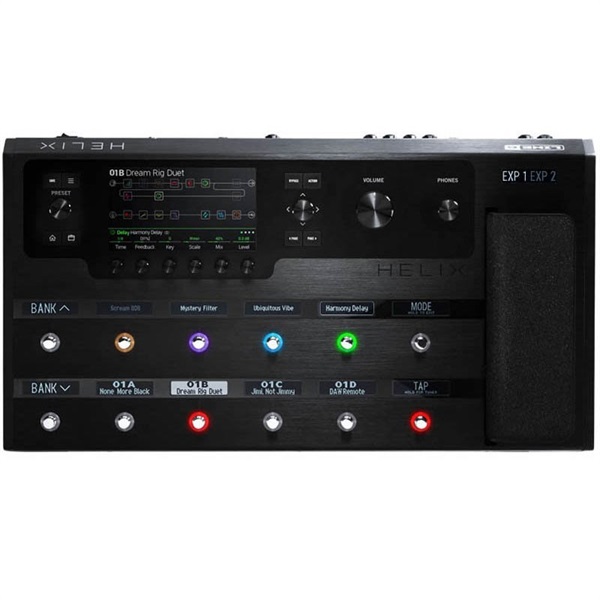 | 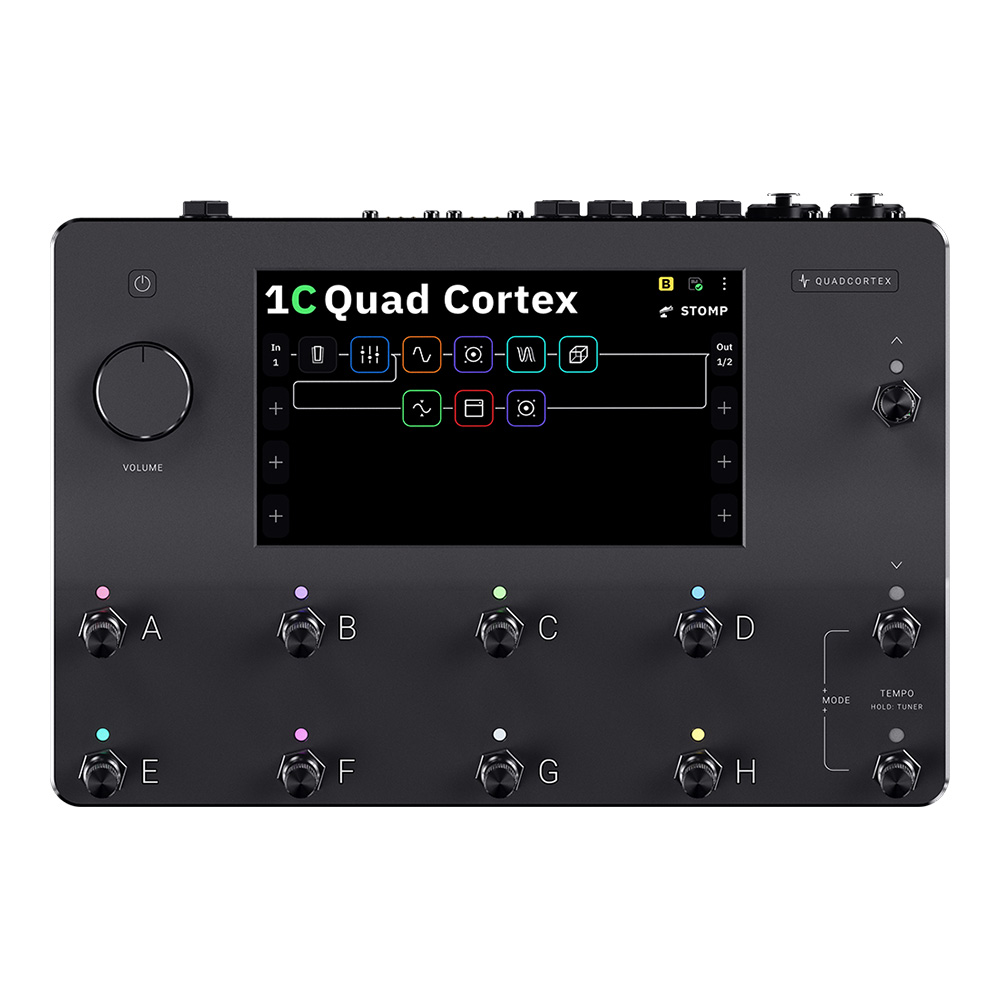 | |
|---|---|---|---|---|
| Model | Kemper Profiler Head / Stage | Fractal Audio Axe-Fx III / FM9 Mark II Turbo | Line 6 Helix Floor / LT | Neural DSP Quad Cortex |
| Tone Tech | Profiling (Analyzes physical amps) | Full Modeling (Component-level circuit emulation) | Full Modeling (DSP acoustic/component modeling) | Hybrid (Circuit modeling + AI machine learning) |
| Amp Models & Tones | Hundreds built-in + thousands shared online | Axe-Fx III: 289+ amp models FM9: Same models (subject to CPU limits) | 80+ amp models, cabs & more (latest FW) | 50+ amp models, numerous cabs, shared user captures |
| Profiling / Capturing | Profiles physical amps and drive pedals | AI captures amps, cabs, and pedals | ||
| Effects | Standard multi-FX suite | Extensive, studio-grade FX | 100+ versatile effects | Solid core set; growing with updates |
| Flexibility & Updates | Thousands of rigs on Rig Exchange; custom IR loading; regular updates | 2,000+ IR library; custom IR support; frequent free updates | 128 presets w/ Snapshots; custom IR support; free FW updates | Wi-Fi cloud sharing; 8-in/8-out USB audio interface; ongoing FW updates |
| Price Range | ~$1,700–$2,500 (Head/Stage) | Axe-Fx III: ~$2,700 FM9 Mark II Turbo: ~$1,800–$2,200 | Floor: ~$1,500–$1,700 LT: ~$1,000–$1,200 | ~$1,850 |
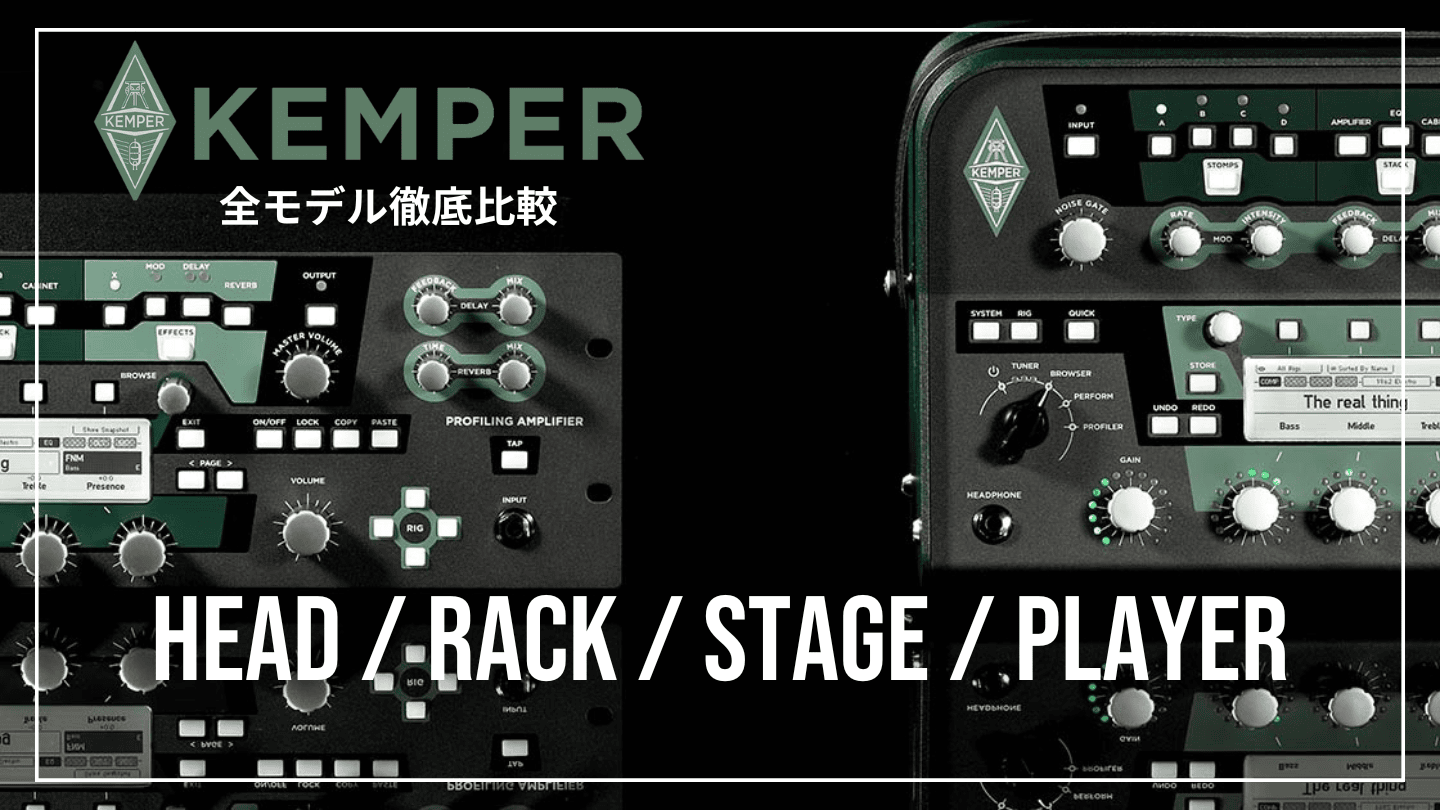
Kemper Profiler: Pure Organic Amp Feel
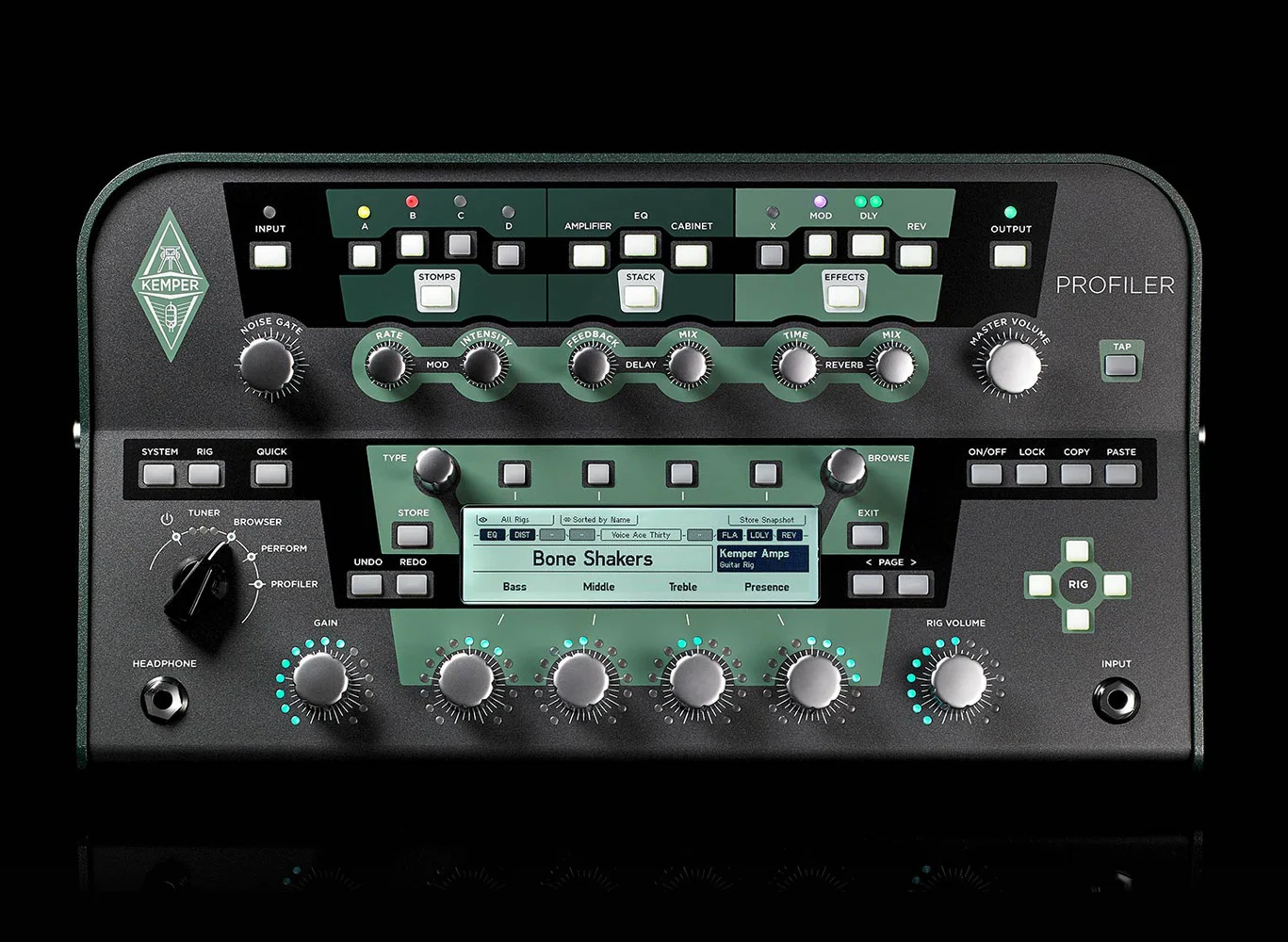
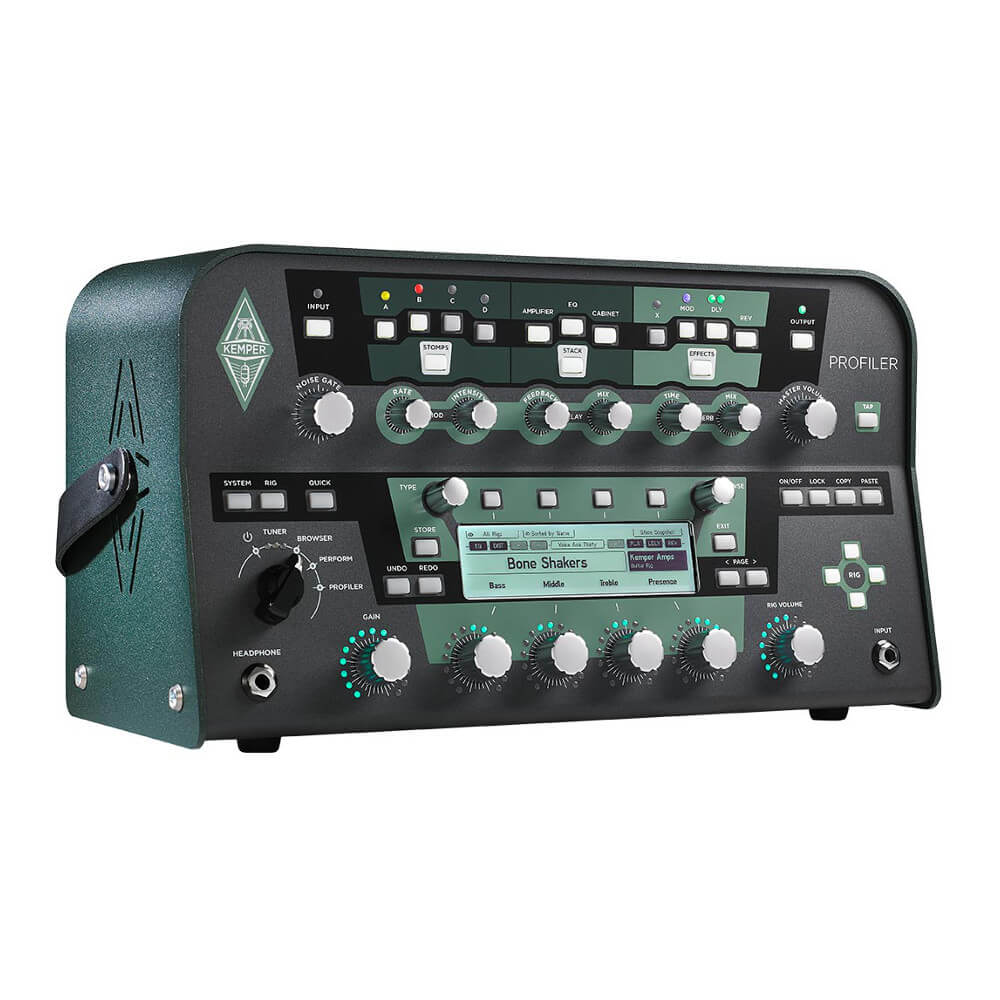
The Kemper Profiler is a groundbreaking processor that digitally analyzes and clones physical tube amps using proprietary "profiling" technology.
First debuting around 2011 in Head and Rack form factors, it became a live-rig staple with the introduction of the floorboard Profiler Stage in 2019. Today, the MK 2 generation (such as the Profiler Stage MK 2) anchors the current lineup, though original Stage, Head, and Rack units remain widely available new and used. This section focuses primarily on the battle-tested Stage and Head models, but buyers looking for new gear should also check out the MK 2 series.
Tone & Sound Character
The main draw of the Kemper is its realistic tube amp response.
By profiling (recording and analyzing) physical amps, it faithfully preserves micro-nuances that traditional modeling often misses.
High-gain profiles in particular receive high praise for their authenticity and feel, winning over touring professionals.
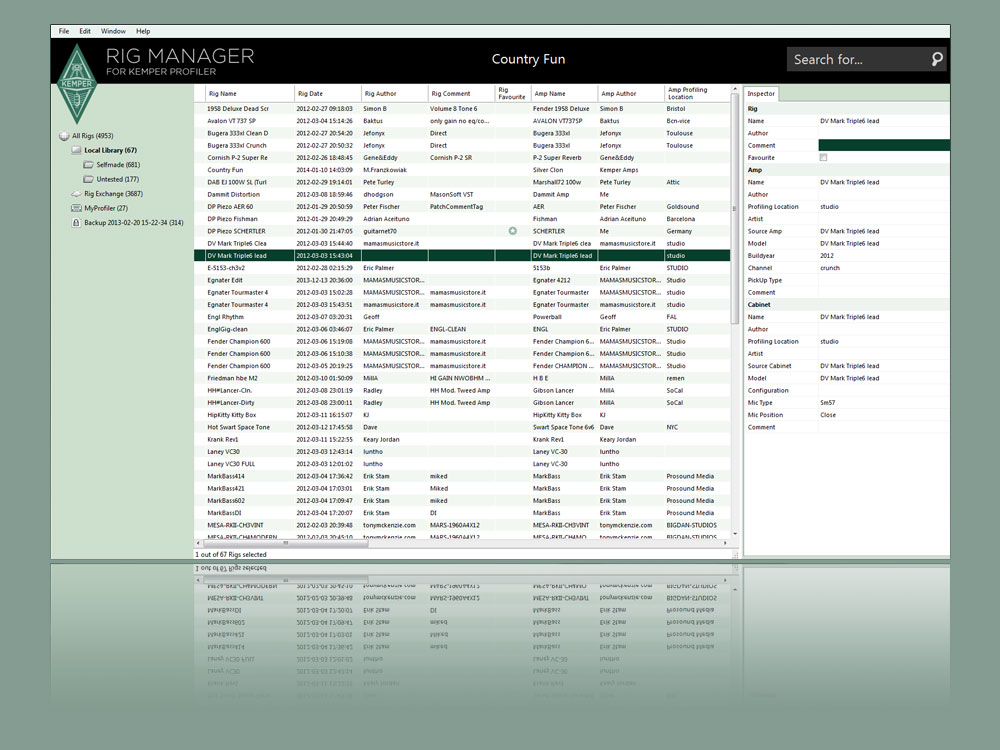
It comes out of the box with hundreds of factory profiles, plus access to thousands of user-created "Rigs" shared online.
You can also profile your own amps, making it an endless chameleon to chase your ideal tone.
Features & Expandability
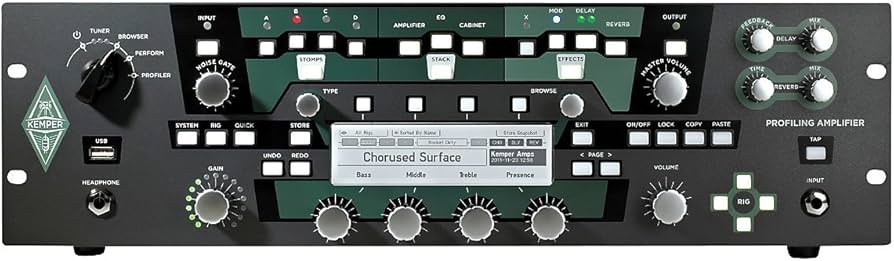
The core layout simulates a single amp + cabinet + FX signal chain.
While it doesn't run dual amp rigs simultaneously, this keeps the workflow simple and amp-like.
Front-panel controls mirror a physical amplifier head for intuitive tweaks.
Over years of firmware updates, Kemper has significantly upgraded its built-in effects, adding high-grade reverbs, delays, and drive algorithms.
It offers two FX loops for integrating outboard gear, along with full support for loading custom speaker IRs (impulse responses).
Additionally, the online Rig Exchange platform gives you access to a free library of profiles uploaded by players worldwide.
Usability & Workflow
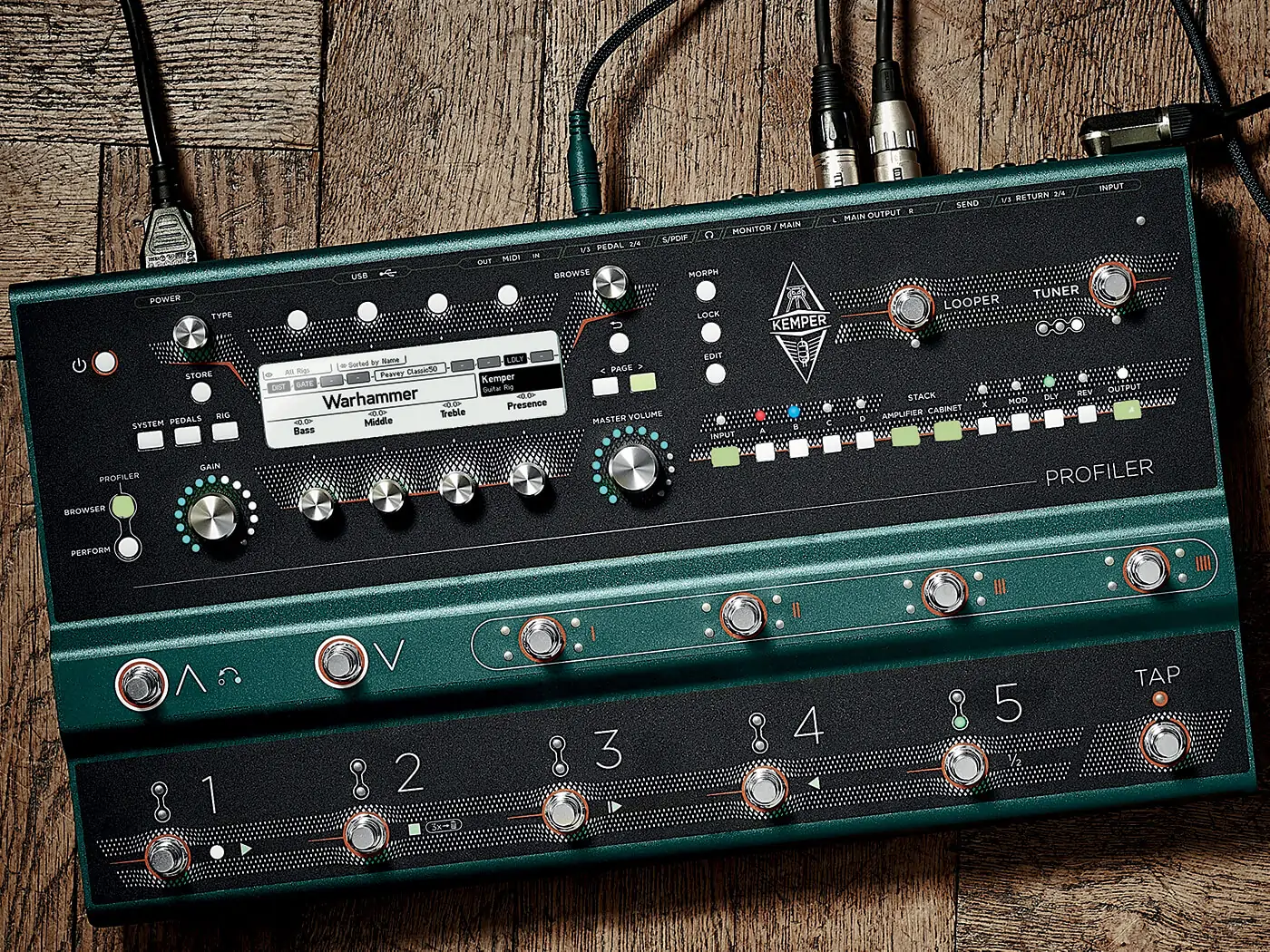
The Head version uses hardware knobs paired with a small LCD display; navigating deeper submenus takes some getting used to.
In contrast, the Profiler Stage incorporates footswitches directly onto the floor unit, making performance mode preset switching and the Morphing feature (sweeping parameters seamlessly on the fly) far more practical for live gigs.
The official PC/Mac editor, "Rig Manager," simplifies tone tweaking and library management.
While it lacks direct USB audio interface capabilities, it includes S/PDIF digital output for studio recording and re-amping.
Updates & Platform Lifespan
As a mature platform on the market for over a decade, its firmware is extremely stable.
Kemper continues to roll out free feature additions—such as updated drive algorithms ("Liquid Profiling"), expanded reverb engines, and dedicated speaker cabinet modeling for the Kemper Kone.
While its underlying DSP architecture is older compared to newer competitors, it easily handles standard processing demands for gigging and studio work.
Price & Dimensions
The Profiler Power Head/Rack (with built-in power amp) sells for around $2,200–$2,700 new, with the optional Remote footswitch adding another $500+.
The Profiler Stage floor unit includes integrated footswitches for roughly $1,700–$2,000.
The Stage footprint resembles a standard large pedalboard and weighs about 10.1 lbs (4.6 kg).
The Head unit features an iconic lunchbox format weighing under 11 lbs (5 kg).
Player Reviews & Buzz
Positive Feedback from Kemper Players
- "Authentic amp response"
"As a longtime tube amp player, I was blown away by the feel. Profiling my favorite rig let me leave heavy heads at home without sacrificing tone." - "Massive library of shared rigs"
"Rig Exchange gives access to practically any amp profile you can imagine. The high-gain community profiles in particular are studio quality." - "Pairs seamlessly with physical drive pedals"
"I run my pedalboard straight into the Kemper strictly for amp duties. It handles analog drive pedals like a real tube amp without the maintenance hassle." - "Battle-tested reliability on stage"
Widely adopted by touring pros since the 2010s, players consistently praise its rock-solid stability and dependable performance night after night.
Critiques & Considerations
- "Tone quality depends heavily on the profile"
"If a Kemper sounds flat, it's usually a bad profile. Stock or random free rigs can be hit-or-miss, so sorting through rigs to find good ones takes time." - "Hardware menu navigation can be clunky"
Deep editing from the front panel screen feels outdated compared to modern touchscreens, though the Rig Manager desktop app solves most workflow issues. - "Less dynamic routing flexibility"
Running complex dual-amp rigs simultaneously on a single unit isn't supported, making signal routing less flexible than Fractal or Helix. - "Aging hardware architecture"
Because the core design dates back a decade, processor headroom is tighter when stacking multiple heavy modulation and delay blocks at once.


Fractal Audio: The Go-To Ultimate Modeling Processor for Pros
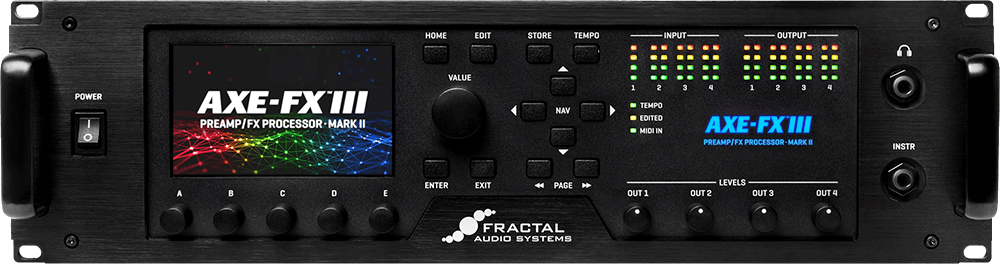
Fractal Audio Systems is a high-end gear manufacturer trusted immensely by professional musicians.
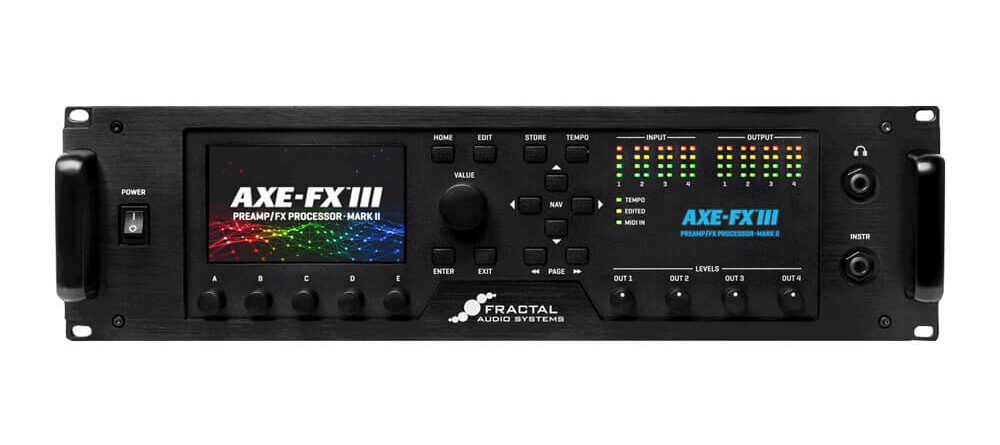
Its flagship model is the rackmount Axe-Fx III Mark II, with the floorboard-focused FM9 Mark II Turbo serving as its companion unit (the original FM9 and FM9 Turbo have transitioned to newer revisions).
Fractal products stand out by modeling amps and effects down to the component and circuit level, powered by massive DSP headroom.
Sound Quality & Tonal Character
Fractal's sound design centers on absolute realism and studio-grade clarity.
With over 289 amp models built in, the level of detail makes it nearly impossible to distinguish from a real tube amp.
From pristine clean transparency to articulate high-gain note separation, it delivers a remarkably high-resolution sound with wide dynamic range.
Thanks to Fractal's proprietary Cygnus amp modeling engine, tube amp behavior is simulated on a component level.
How the amp responds when adjusting tone knobs or gain controls feels remarkably authentic.
Additionally, its effects quality is world-class.
Even a single reverb block offers richness and depth that rivals dedicated studio hardware, earning praise for delivering mix-ready sounds straight out of the box for studio and stage.
Features & Expandability
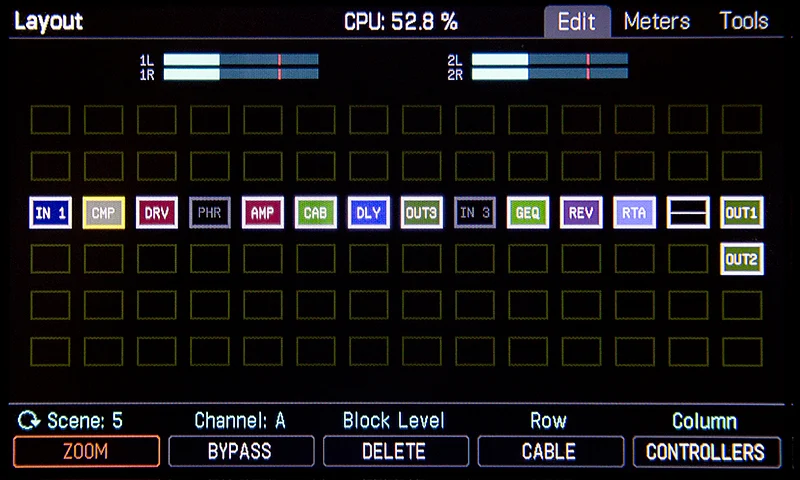
The available block counts for simultaneous processing and flexible signal routing are second to none.
On the Axe-Fx III, you can run two amp blocks (up to 8 channels) in parallel, allowing for dual stereo amp setups or instantaneous switching.
The cabinet section includes over 2,000 factory IRs, plus more than 2,000 user slots.
With dual cabinet blocks, you can mix up to 8 IRs simultaneously, enabling highly sophisticated cab simulation.
Connectivity is extensive, featuring four or more stereo outputs, effects loops, MIDI, and USB audio interfacing, fully equipped to meet pro standards.
It offers scene switching within presets, plus parameter control via LFOs or MIDI.
Frequent free firmware updates regularly add new amps, effects, and core modeling refinements.
Usability & Workflow
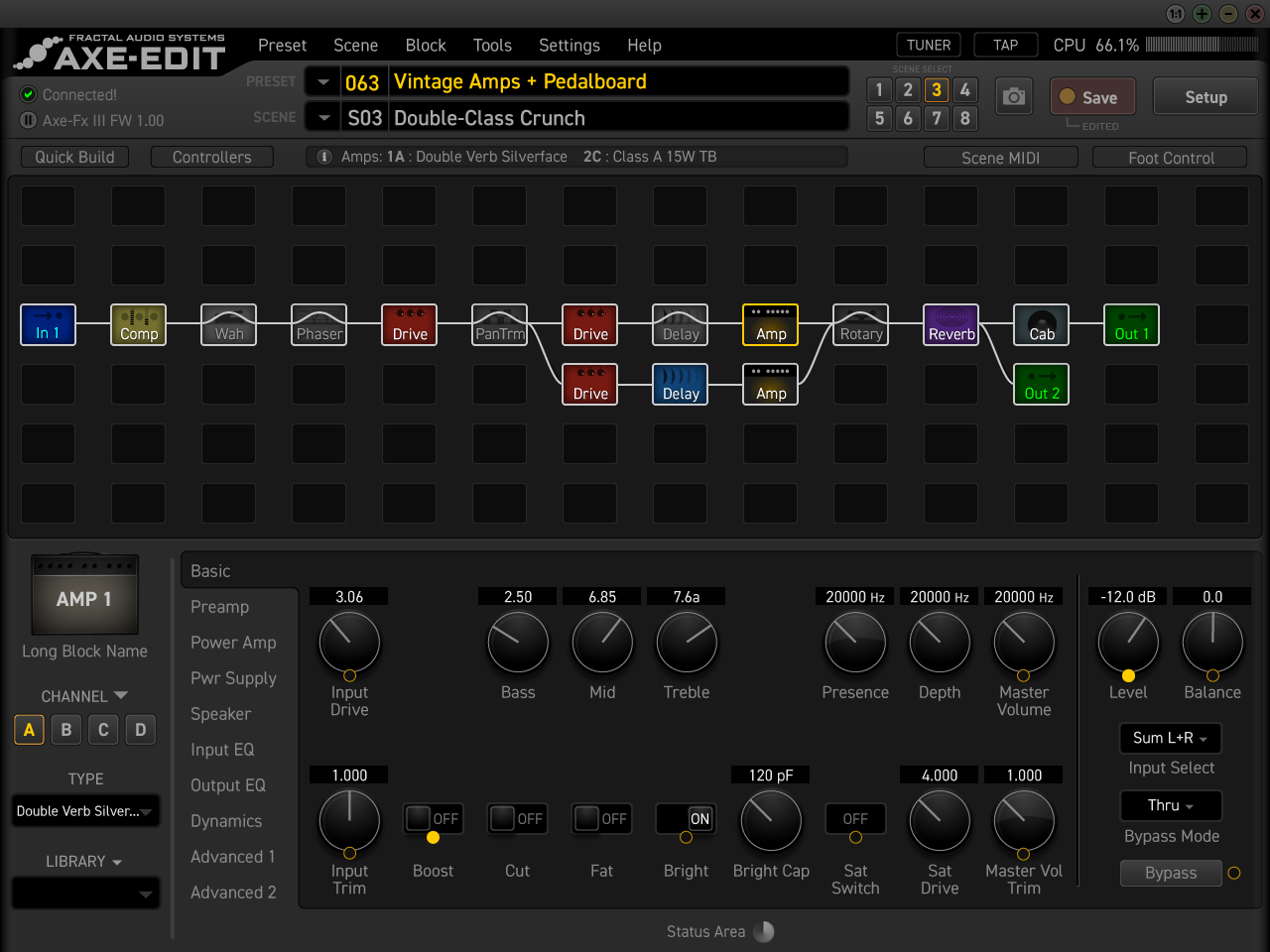
While massive feature sets can suggest a steep learning curve, the Axe-Fx III generation features a large color LCD and multi-function push knobs, making on-unit menu navigation surprisingly streamlined.
However, for deep editing, using the computer editor software (such as Axe-Edit III) is much faster.
For beginners, grasping every feature right away can be daunting, and many note that mastering the unit takes time and patience.
On the other hand, many users feel that learning just the basics or starting with stock templates is plenty, praising the system for being flexible and forgiving for different user levels.
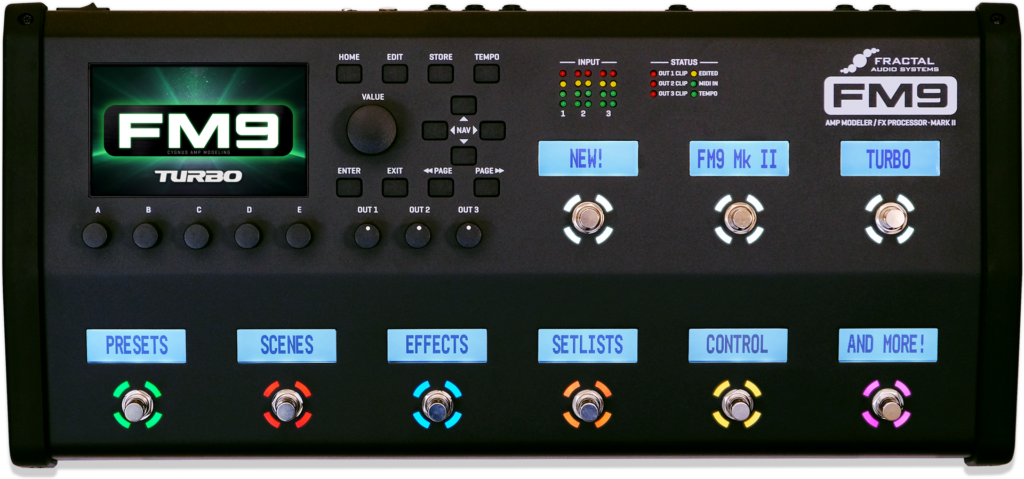
The floorboard FM9 (currently Mark II Turbo) features nine footswitches.
You can freely assign scenes, presets, or individual effect bypasses, with virtually gapless switching.
Some players mention that switch spacing feels a bit tight, leading to accidental stomps, but you can easily expand control using external MIDI controllers.
Updates & Longevity
Fractal is famous for long-term firmware support.
Since its release, the Axe-Fx III has seen significant additions to its amp library and continuous upgrades to its core modeling engine.
The user forum is active, offering an abundance of shared presets, IRs, and community knowledge from players worldwide.
It also serves as an 8-in/8-out USB audio interface, making DAW recording and re-amping effortless.
Price & Dimensions
The Axe-Fx III Mark II is the most expensive unit among models compared here, but players generally agree that the top-tier performance justifies the investment.
The floor-based FM9 Mark II Turbo commands a premium price point as well.
However, considering either unit functions as an all-in-one rig, many view them as cost-effective compared to buying multiple high-end amps and individual pedals.
The Axe-Fx III occupies a 3U rack space and weighs around 6 kg (13.2 lbs).
The FM9 series is similar in size to a Line 6 Helix Floor, built in a rugged metal chassis weighing roughly 4.5 kg (9.9 lbs).
User Reviews & Feedback
What Users Love About Fractal
- "Unrivaled sound quality"
"Stunned by the depth and spatial width. Both amps and effects are top-tier. Once you hear Fractal, there's no going back." Many note that its high adoption among pros makes complete sense. - "Endless tone-shaping flexibility"
"It handles dual amps, four cabs, and stacked effects effortlessly. If you can imagine a sound, Fractal can replicate it. A dream rig for deep tone tweaks." - "Continuous evolution via updates"
"Firmware updates keep adding new features long after purchase. Fractal gives you confidence that your unit won't become obsolete." - "Bulletproof reliability for touring pros"
"Used by Steve Vai, Metallica, and countless pros. The rock-solid stability in demanding studio and live environments is a huge selling point." - "Replaces complex rack rigs in one box"
"Players who used complex rack systems are amazed by the convenience. Sound quality improves while gear weight drops—the ideal upgrade."
Common Concerns & Drawbacks
- "Steep learning curve"
Beginners often complain that the overwhelming parameter options make tone tweaking time-consuming.
That said, experienced users advise sticking to basic parameters first. - "High price tag and supply issues"
Some cite stock availability and high price as major hurdles, noting it requires a serious financial investment (though global stock availability has improved recently). - "Rig transport takes planning"
"Since the Axe-Fx III is a rack unit, playing live requires a separate foot controller, adding extra gear to carry."
The FM9 is also somewhat large, which can feel tight on smaller stages. - "Easy to get lost in option paralysis"
With so many micro-adjustments available, players often end up spending more time tweaking than actually playing—a classic rabbit hole scenario caused by its immense depth.


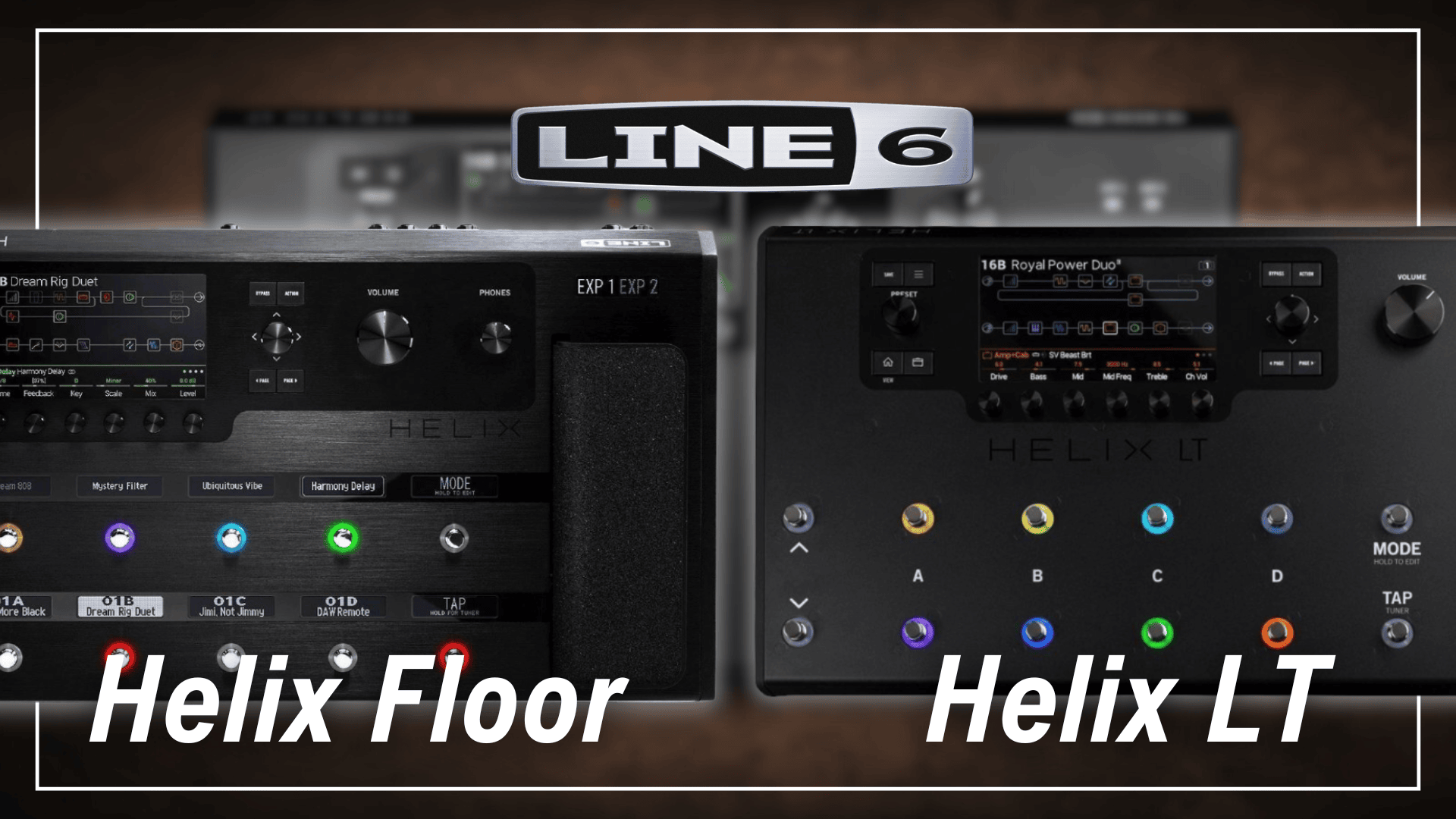
Line 6 Helix | The Standard for Usability and Real-World Balance (Post-Stadium Era)
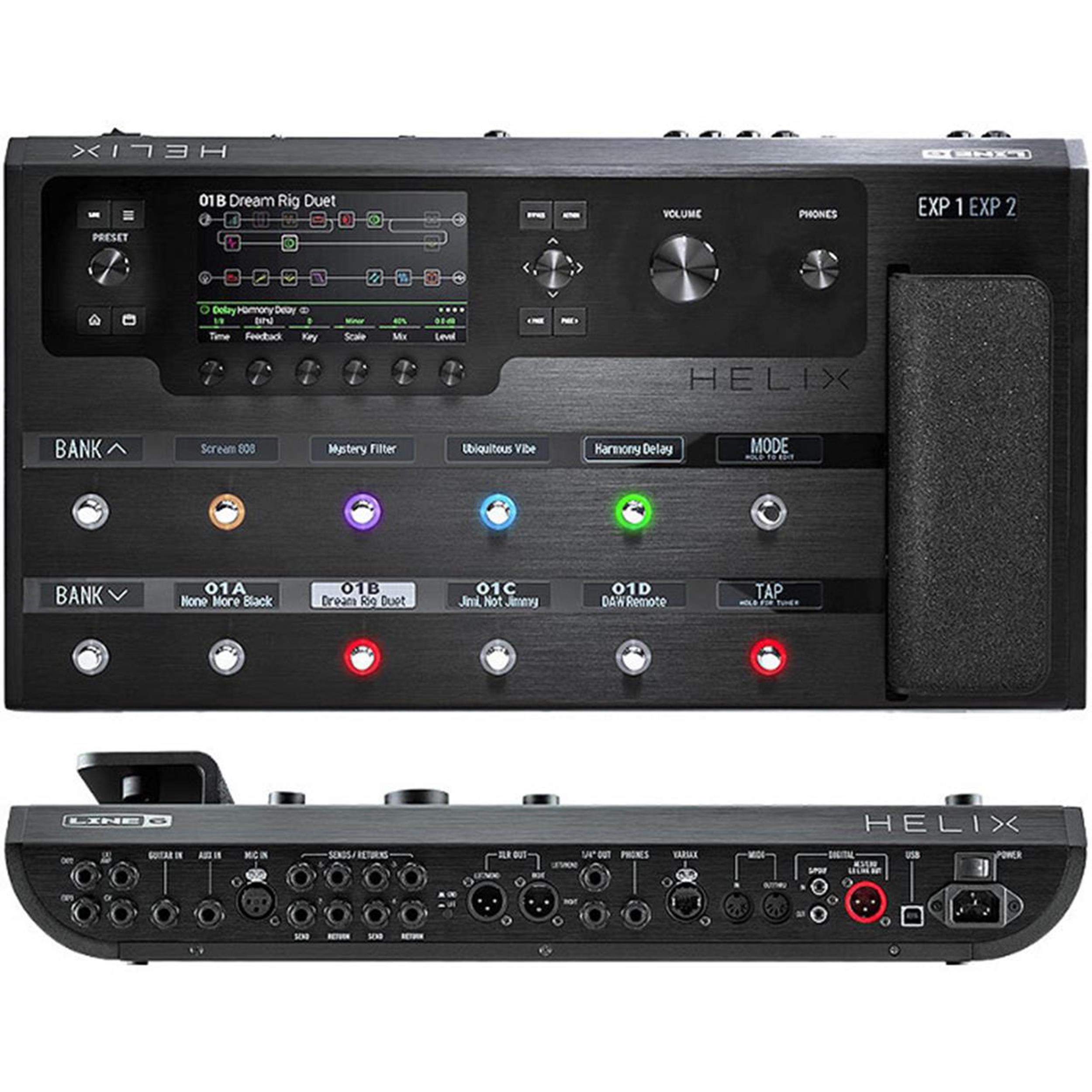
Released in 2015, the Line 6 Helix is an innovative multi-effects processor that has maintained massive popularity through years of continuous updates.
The lineup centers on two main models: the flagship Helix Floor board and the Helix LT, which maintains the core processing power while simplifying hardware I/O.
Known as an all-around unit with an excellent balance of usability and tone, it remains a favorite for both live performance and studio recording.
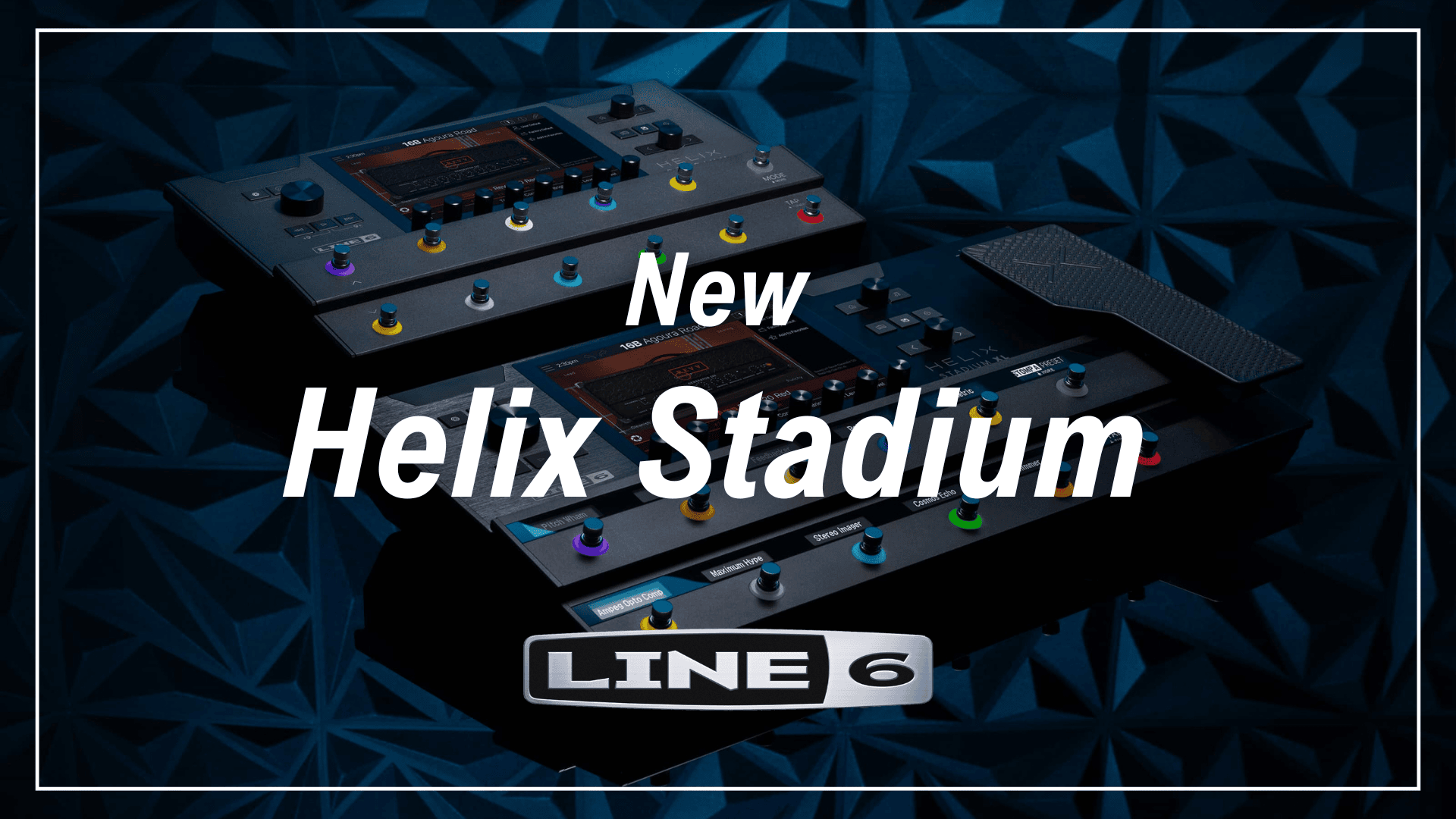
Note that the series' newest flagship line has shifted to the Helix Stadium. While this comparison focuses on the proven Floor and LT models, if you are looking at the latest generation, check out our Stadium guide as well.

Tone & Sound Character
Helix's amp and cab modeling relies on Line 6's proprietary HX Modeling technology.
It packs over 80 amp models and more than 300 effects.
While it may yield slightly to Fractal in terms of microscopic component modeling depth, it delivers highly practical tones that capture the essential character of real amps.
Players praise it for sitting perfectly in a live mix, featuring a tone with natural compression that isn't overly hi-fi.
Clean and crunch tones have a particularly strong fanbase, praised for cutting through the mix without overpowering the sonic space.
Recent firmware updates have upgraded the IR cabinet engine and added new amp models, expanding its capabilities to handle high-gain tones effortlessly.
Features & Versatility
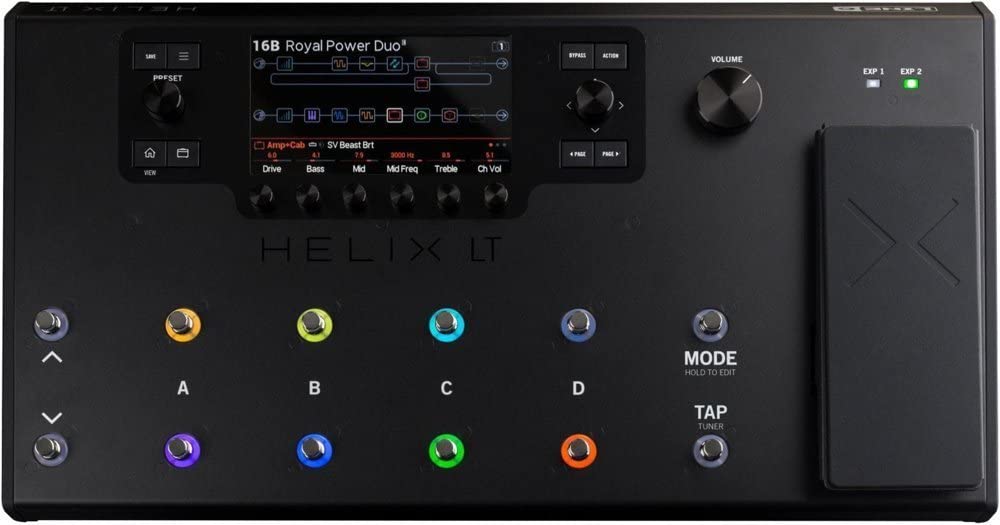
As a multi-effects unit, Helix is exceptionally well-polished, drawing on Line 6's decades of effects expertise alongside its amp models.
You can drag and drop blocks into place, setting up parallel processing with dual signal paths or multi-routing outputs.
It includes two external effects loops (one on the LT), making it extremely flexible for integrating your existing pedals.
Another standout feature is the 8 Snapshots feature.
You can instantly toggle between eight different effect configurations within a single preset, allowing complex sound changes during a song seamlessly with zero audio dropout.
Regular firmware updates continuously add amps, effects, and engine enhancements, giving it long-term value.
It also supports custom IR loading and acts as an 8-in/8-out USB audio interface for computer recording and re-amping.
This makes it seamless to integrate into a DAW-based home studio setup.
Ease of Use & Interface
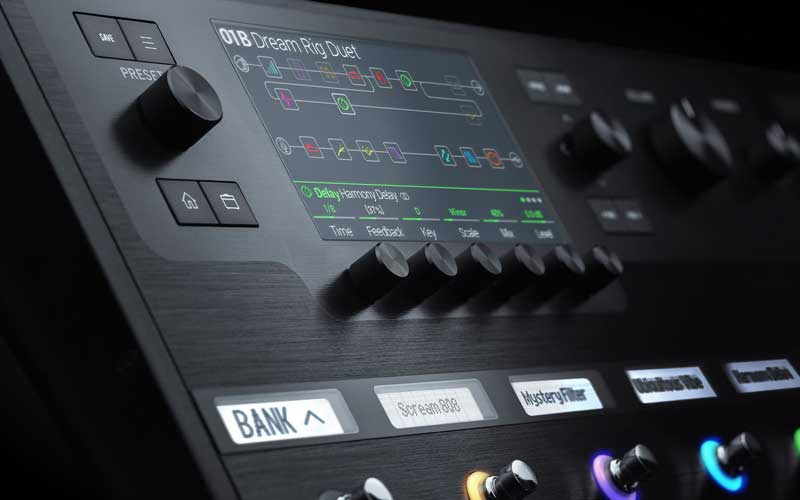
Helix's greatest strength is its intuitive, remarkably clear user interface.
It pairs high visibility with effortless operation, featuring a large 6-inch color LCD, scribble strips (label displays) above each footswitch, and color LED rings.
The Floor model also features touch-sensitive footswitches—simply touching a switch with your finger opens its detailed edit screen, which is incredibly convenient.
Building an effect chain feels like plugging in physical patch cables, and effect parameter knobs sync seamlessly with on-screen values.
Many reviewers note that even beginners to digital processors can use it with confidence.
The LT model omits the scribble strips to keep costs lower, but it shares the same core workflow and sound quality as the Helix Floor.
Expandability & Updates
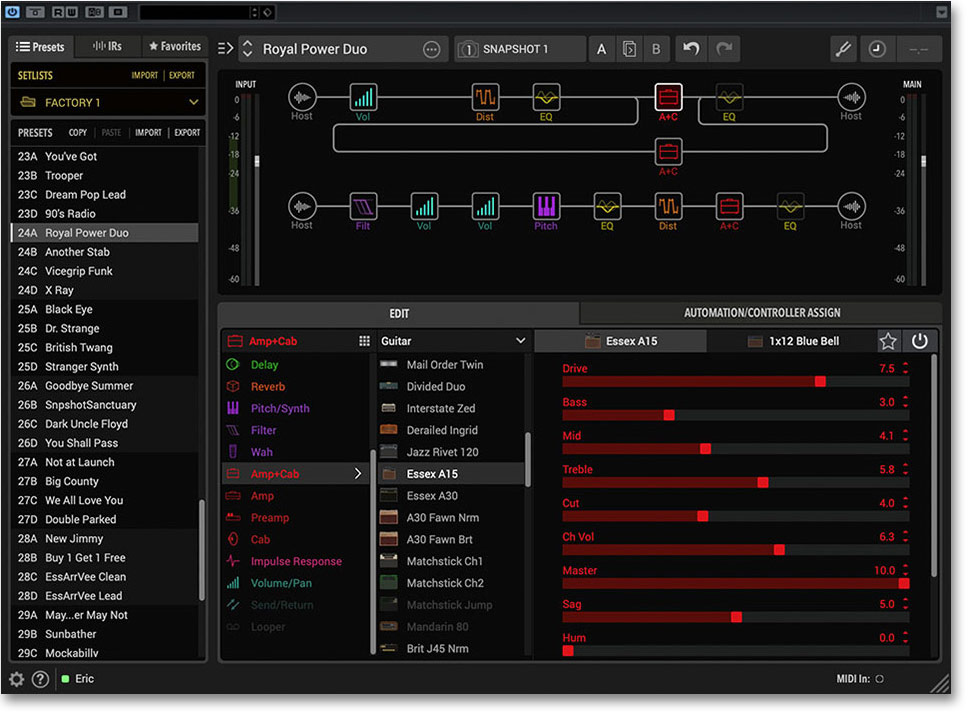
Line 6 actively updates the platform based on user feedback.
Major updates have done far more than add new amps and effects; they have delivered core upgrades like overhauling cabinet simulations and optimizing the DSP engine.
The user community is massive, with thousands of free presets available on Line 6 CustomTone.
A wide selection of professional commercial presets is also available, making it easy to find gig-ready sounds or inspiration for patch building.
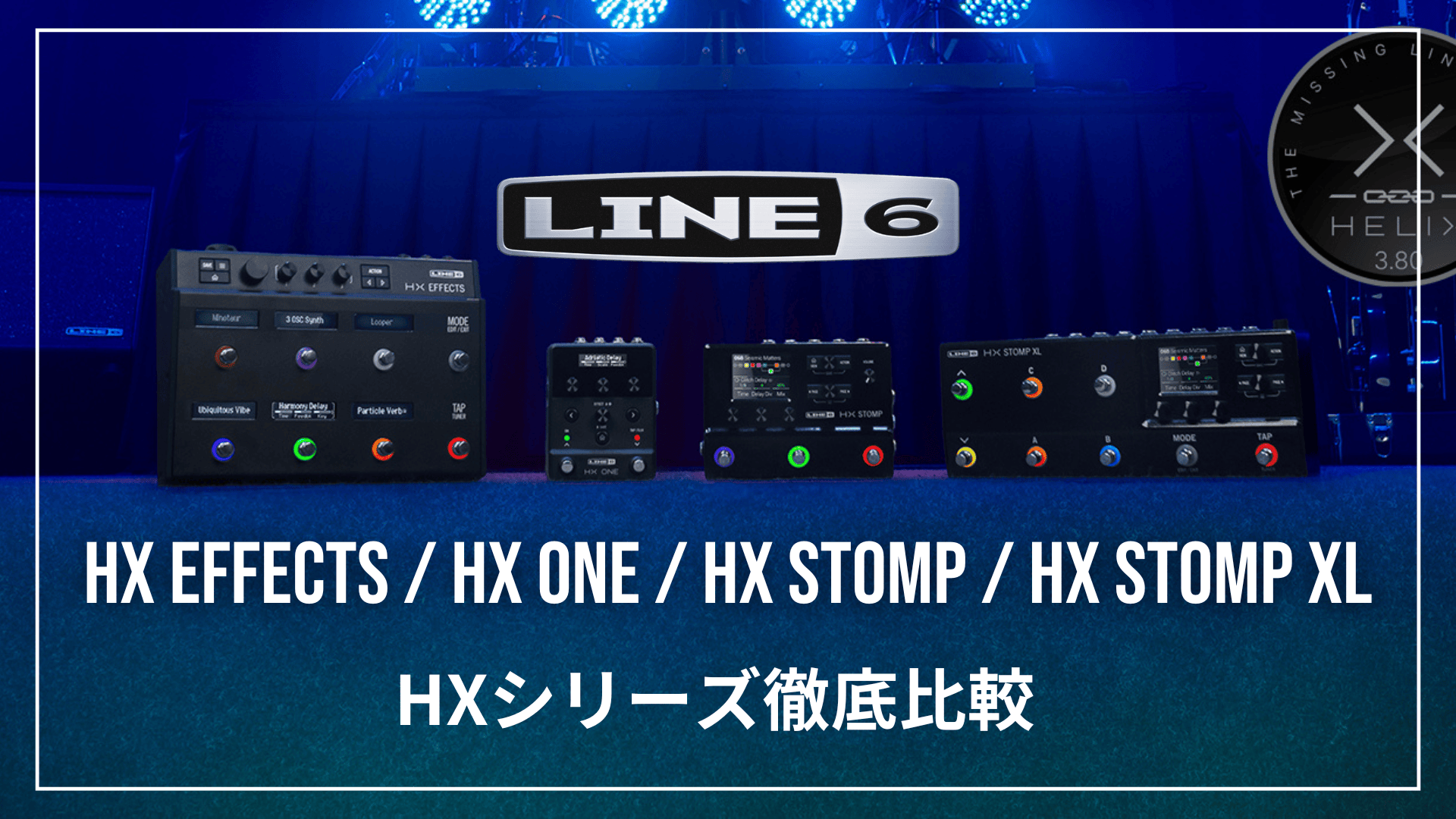
Furthermore, integration across the HX family (such as HX Stomp and HX Effects) is excellent, giving players flexible expansion options.
Price & Size
New prices run around $1,500–$1,700 for the Helix Floor and around $1,000–$1,200 for the Helix LT.
For a flagship multi-effects processor, it offers exceptional value for the feature set.
The active used market also makes it easy to find units in great condition at reasonable prices.
The Helix Floor includes an onboard expression pedal (with jacks to add up to 2 external pedals), while the LT has 1 onboard pedal plus 1 external input.
Dimensions are 22.05 in (56 cm) wide and 14.6 lbs (6.6 kg) for the Floor, vs. 20.87 in (52 cm) wide and 11.9 lbs (5.4 kg) for the LT.
Both feature heavy-duty metal chasses built for tour reliability.
User Reviews & Verdict
Positive Feedback & Highlights
- "Outstanding usability and easy setup"
"Helix lets you get close to your target tone from day one. The UI is user-friendly enough to operate without opening the manual if you know basic gear."
"The large display and bright labels give total confidence on stage or in the studio." - "Tone that fully handles professional demands"
"Early on people said it lagged behind Fractal, but now I have zero complaints."
"Seeing pros tour and record using only a Helix built real trust for me."
"The clean headroom shimmer and reverb quality are top-tier." - "Packs every feature you actually need"
"It covers everything required in real-world scenarios: complex routing, snapshots, IR management, USB recording, external switching control—it does whatever you ask of it." - "High expandability and longevity"
"Even years after release, it keeps evolving. Every update adds features that keep it running as a main-stage processor."
"Line 6's ongoing firmware support gives peace of mind."
Drawbacks & Things to Consider
- "Slightly trails units like Fractal in ultra-detailed modeling precision"
Some note that high-gain pick attack and nuanced dynamic response can feel slightly less refined when tweaking deeply. However, many add that "it's unnoticeable live" and "sounds fully pro with good IRs and dialing." - "DSP limit can be reached with heavy presets"
"Stacking pitch shifters and high-density reverbs can max out the DSP limit."
"Using extensive block counts in snapshots can hit a ceiling."
However, players note DSP is more than sufficient for standard gigging rigs. - "Fixed number of footswitches"
"Snapshots help, but for complex live sets I sometimes want extra footswitches."
"In some rigs, adding an external footswitch or MIDI controller is necessary." - "Age of the hardware platform"
Some players hesitate on timing because the core units have been out for years.
Still, given its proven performance and ongoing firmware support, most agree it remains a solid investment.


Neural DSP Quad Cortex | Next-Gen Profiler Powered by Cutting-Edge AI
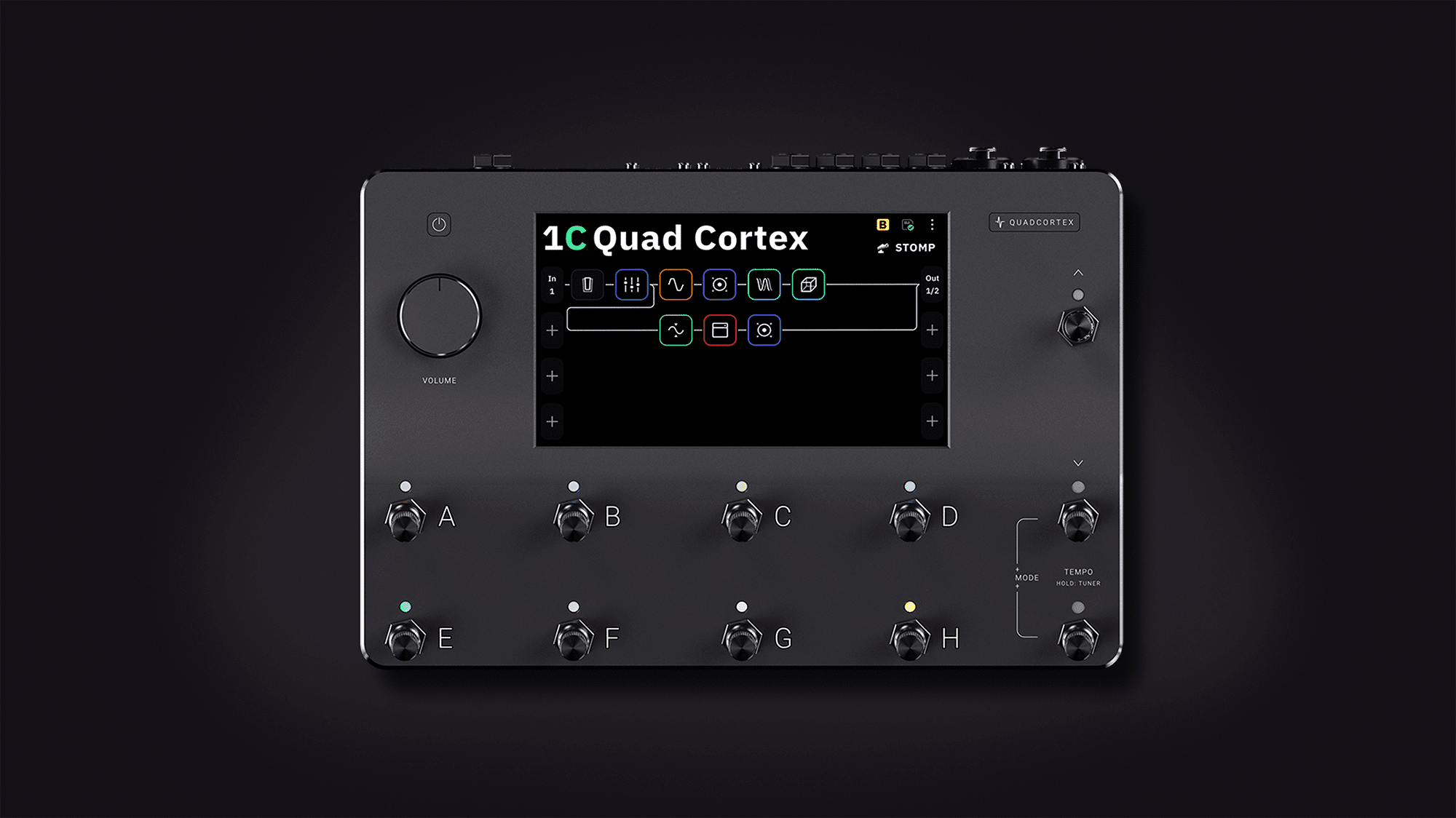
The Neural DSP Quad Cortex (QC) is a cutting-edge floor processor released in 2021 by Finnish manufacturer Neural DSP.
Powered by four high-performance DSP cores and AI-driven Neural Capture technology, this flagship next-gen unit learns and replicates the sound of amps and pedals. (The lineup also includes the Nano and Mini; see our Nano vs Quad Cortex comparison for how their roles differ.)
Sound & Tonal Character
It comes built-in with roughly 90 amp models and over 1,000 impulse responses (IRs).
However, its biggest asset is Neural Capture, which uses AI to capture actual amps, cabs, and drive pedals.
The capture quality is remarkably high, to the point where many claim "you can't tell it apart from a real tube amp in a blind test."
Compared to Kemper, many users note a slightly more open and natural sound, yielding an organic tone that sits cleanly in a mix.
However, it does not ship with the massive array of factory models found on Fractal or Helix units.
Some players may find it a drawback that while the core sound is great, you have to find or create the exact tones you need yourself.
That said, the official Neural DSP Cloud hosts captures shared by users worldwide, allowing you to download and use whatever tone you need right away.
Features & Expandability
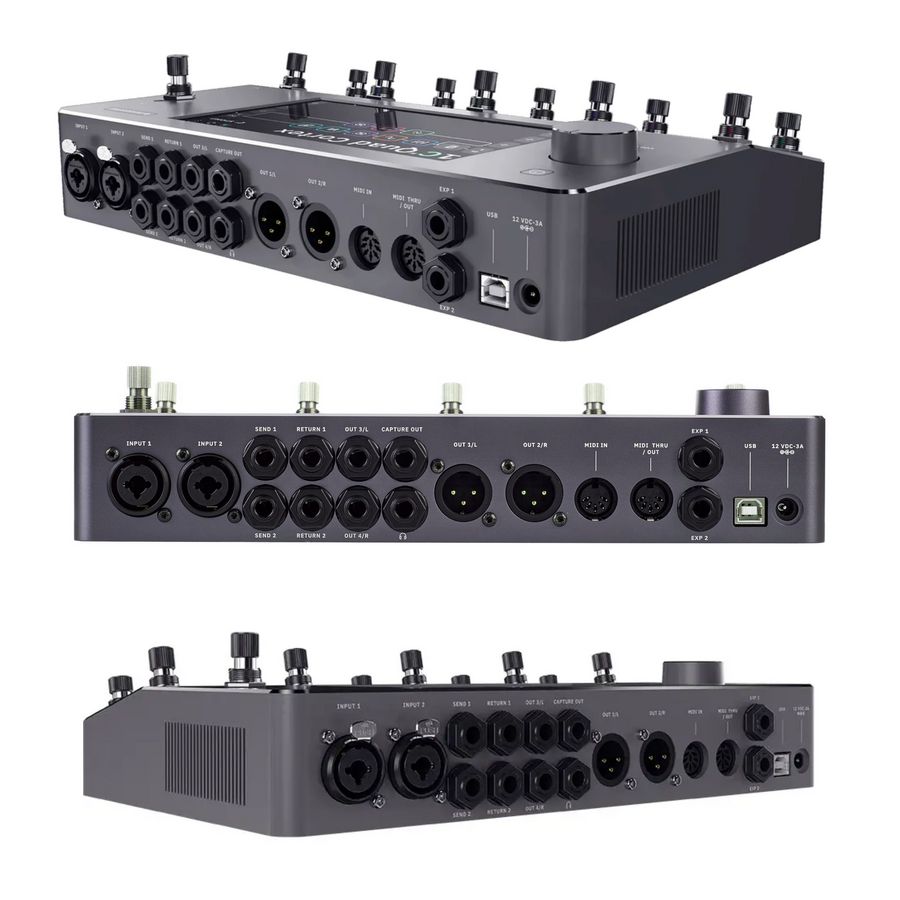
Despite its compact size, the Quad Cortex packs incredible I/O and features.
- 4 inputs / 4 outputs (analog) + 2 FX loops
- USB audio interface (8 in / 8 out)
- MIDI I/O, Wi-Fi, Bluetooth (planned future feature)
- 7-inch touchscreen + rotary footswitches
Routing flexibility is exceptional—for instance, you can route a guitar and bass to separate outputs simultaneously, or process a vocal mic alongside a guitar in a single setup.
The UI is extremely intuitive, allowing you to build signal chains via touch and adjust IR mic placement with pinch gestures.
The footswitches double as rotary encoders, so you can turn them like physical knobs to adjust parameters.
It also offers flexible mode switching, including seamless scene changes (snapshots), Preset Mode, and Stomp Mode.
Usability & Workflow
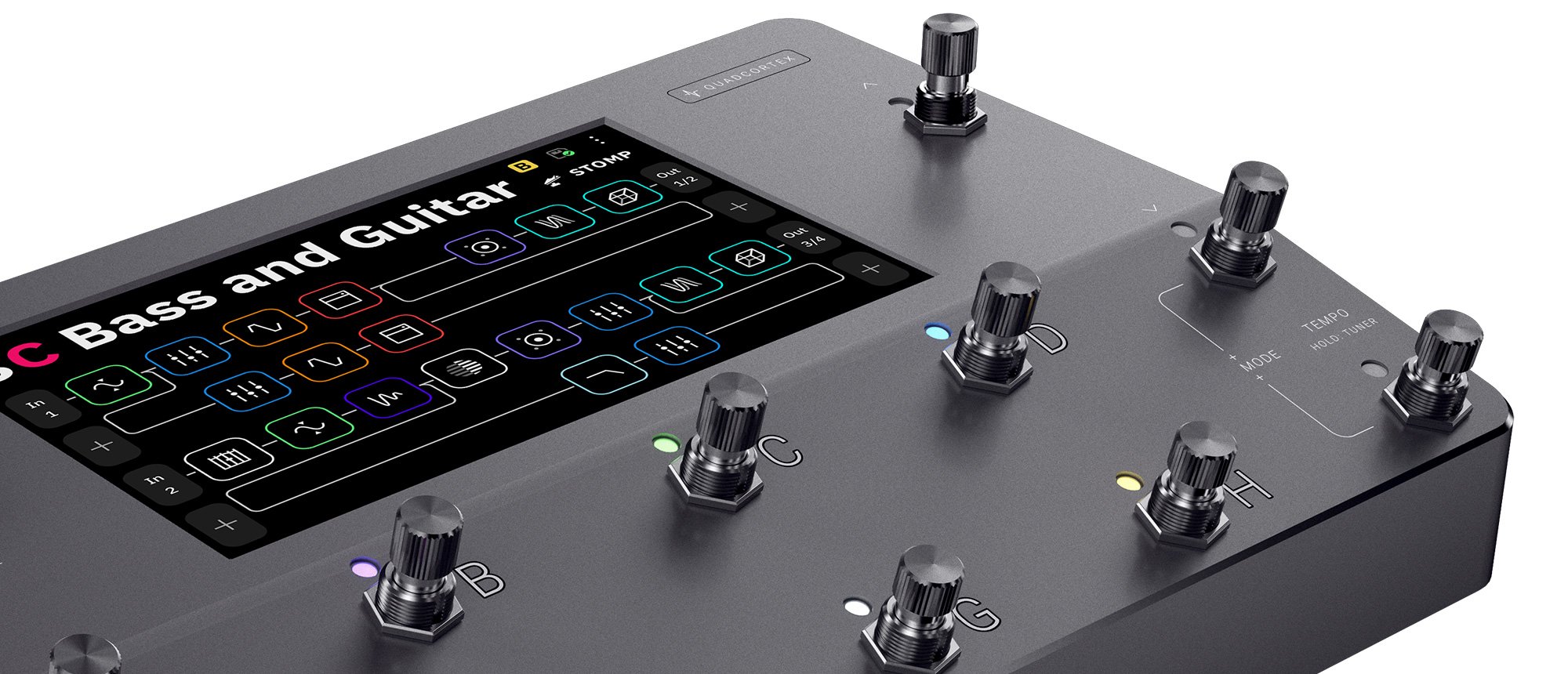
In terms of UI, it is by far the most intuitive among current multi-effects processors.
- Edit signal chains via smartphone-like touch controls
- Connect directly via Wi-Fi to download presets and captures from the cloud
- Back up and edit via the Cortex Control PC editor
Many users praise it for having unmatched ease of use, noting that its intuitive workflow easily surpasses competing multi-FX units.
On the other hand, some players note that the tight footswitch spacing can lead to accidental hits during live performances.
Because external MIDI switches can be added, many users expand their rig to improve control on stage.
Updates & Firmware
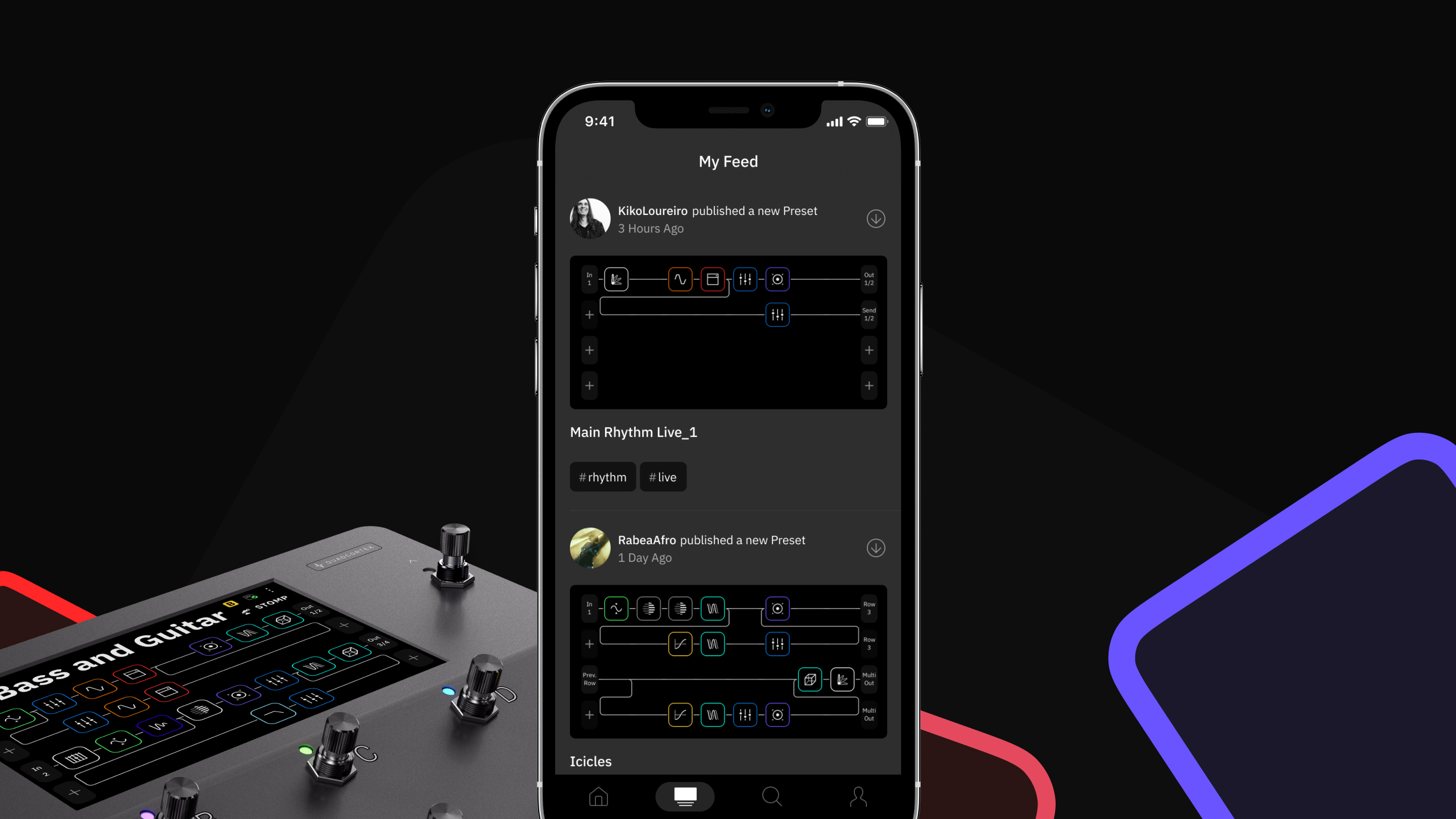
When first released, early bugs and missing features left a somewhat unstable impression.
However, ongoing software updates have resolved most of these issues in the current firmware version.
- Combine Scene Mode and Preset Mode
→ The best of programmable layouts and inline switching - Cortex Control PC editor support
- Search and instantly download captures from the cloud
- Ongoing addition of cabs and effects
Neural DSP actively listens to user feedback, earning high praise for their commitment to continuous updates despite being a relatively young brand.
Price & Dimensions
New unit pricing averages around $1,800–$2,000 (varying by region, currency, and retailer).
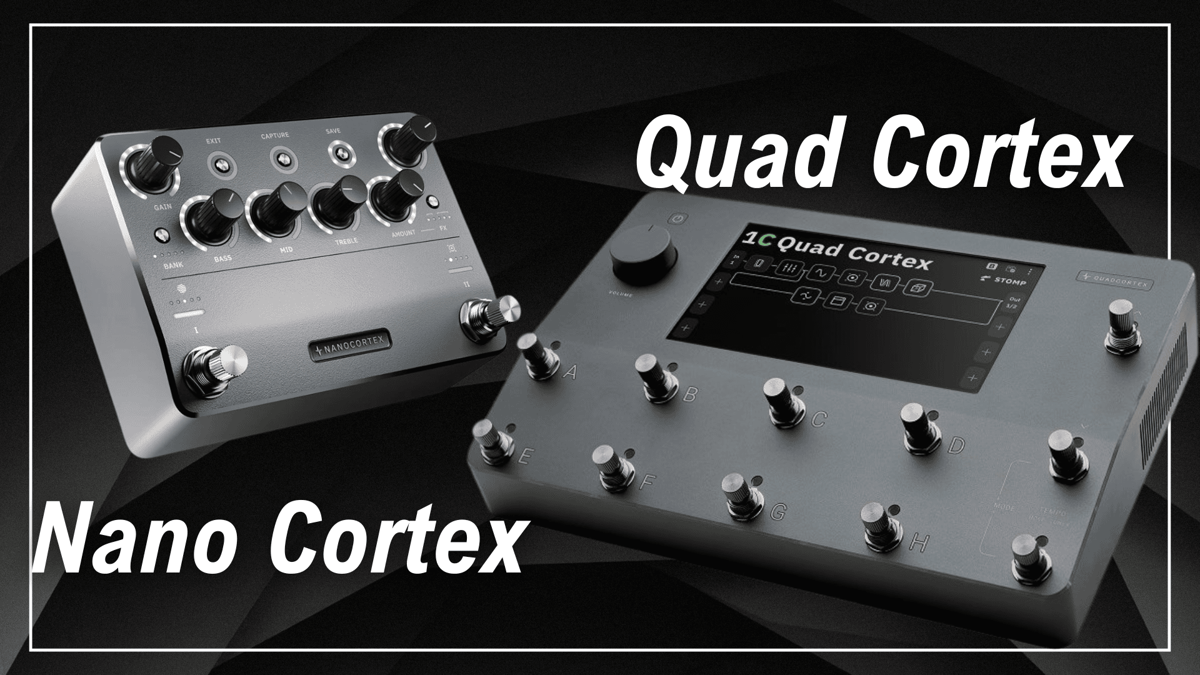
As a high-end unit, it sits higher than the Helix Floor/LT and slightly below top-tier Fractal gear. Note that alongside the compact Nano Cortex, the Quad Cortex Mini has also joined the lineup, but this comparison focuses on the full-sized Quad Cortex.
The unit is remarkably compact,
measuring roughly 11.4" x 7.5" x 2.0" (29 cm x 19 cm x 5 cm) and weighing just 4.2 lbs (1.9 kg).
This makes it one of the lightest and smallest in its class, making it a favorite for players who want a complete live rig that fits right into a backpack.
User Reviews & Feedback
Positive Feedback from Quad Cortex Users
- "Capture audio quality is shockingly authentic"
"In side-by-side tests with real tube amps, you can't tell the difference."
"Highs are never harsh, and the sounds are instantly mix-ready for recording." - "The UI is groundbreaking and foolproof"
"With other processors, you feel like you're fighting the workflow, but the QC just works."
"I didn't expect touchscreen editing on a floor unit to be this smooth." - "Massive performance in a small, lightweight chassis"
"Unbeatable tone and features in this form factor. For live gigs, nothing beats it."
"Perfect for carry-on travel, home recording, and session work—all in one box." - "Great future potential and worth the investment"
"Even as it evolves, it's already fantastic today. I'm excited for future updates."
Negative Feedback & Concerns from Quad Cortex Users
- "Early launch instability left a lingering impression"
"Early firmware had freezes and glitches, raising doubts about reliability on stage."
"It's much better now, but those early bugs pushed some players away." - "Footswitch layout can be tricky for live performance"
"The switches are closely spaced, making missteps easy."
"For gigging, adding external switches or a controller helps a lot." - "Fewer built-in effects compared to competitors"
"Reverbs and modulation cover the basics, but options aren't as extensive as Helix yet." - "Brand track record is still developing"
"Compared to Fractal or Kemper, Neural DSP is newer, leaving some uncertainty about long-term support."

High-End Multi-Effects Processors: Buyer's Guide
If Realism and "Amp-Like" Feel Are Your Top Priorities
Kemper Profiler
- A unique system that profiles and captures real amps
- Ideal for players who want to carry their exact amp tones anywhere
- Best for those who prefer capturing favorite tones over building sounds from scratch
For pros who refuse to compromise on features or tone
Fractal Audio Axe-Fx III / FM9 Mark II Turbo
- Overwhelming DSP power and deep editing parameters
- Widely used by touring and studio pros
- Expensive, but the ultimate all-in-one processor
If you want gig-ready gear balancing intuitive usability and sound quality
Line 6 Helix Floor / LT
- Intuitive UI easy for beginners to navigate, paired with high-quality tone
- Includes everything you need, from snapshots and IR support to recording features
- Relatively accessible pricing makes it an easy pick for your first high-end rig (the latest generation is Stadium)
Compact, lightweight, and high-performance—ideal if you want a forward-looking unit that keeps evolving
Neural DSP Quad Cortex
- A standout next-gen model featuring AI capture capabilities and an intuitive touch UI
- Top-tier future potential with exciting updates to look forward to
- Ideal for home recording and session work when you want everything in a single compact unit
Overall Evaluation | Shortlist by Use Case
Rather than asking "which is best," you are less likely to make a mistake by focusing on fit for your use case (this is not a trial ranking).
| Use Case | Top Pick | Runner-Up | Notes |
|---|---|---|---|
| Real amp feel & profiling | Kemper | Quad Cortex | If physical amp profiles are your priority, go Kemper |
| Deep editing & peak power | Fractal | Helix | Be ready for the learning curve and price tag |
| Usability & gig-ready balance | Helix Floor/LT | Quad Cortex | Consider Stadium for the latest generation |
| Compact size + headroom to grow | Quad Cortex | Helix LT | AI capture and room for future updates |
High-End Multi-Effects Processors | Summary & Highlights
| | | | |
|---|---|---|---|---|
| Model | Kemper Profiler | Fractal Audio | Line 6 Helix | Quad Cortex |
| Ideal For | Focused on authentic amp tone, wants easy access to profiles | Deep tone tweaking, wants maximum performance | Ease of use, versatile for any rig or genre | Compact form factor, wants cutting-edge tech |
| Strengths | Realistic response close to physical amps, straightforward layout | Top-tier audio quality and unmatched routing flexibility | Intuitive UI and a mature, polished feature set | AI capture, slick touch UI, and high growth potential |
| Weaknesses | No dual-amp setups, no USB audio recording | High price tag, steep learning curve | Modeling precision can fall slightly behind competitors | Minor concerns around hardware reliability and support history |
| Notable Players | Takayoshi Ohmura Mikio Fujioka | Steve Vai Ichika Nito Tosin Abasi John Petrucci Yamato | Satoshi Oka Tomo Fujita | Mateus Asato Assh (YOASOBI) Plini Cory Wong |
Every unit here is impressive, but the right choice depends on your workflow.
Asking yourself a few key questions can help clarify the best fit:
- Is your tone-building style "preset-focused" or "tweak every detail"?
- Are you mostly home recording, gigging live, or both?
- How much do size and weight matter for your setup?
- What is your budget and expected upgrade cycle?
Honestly, you will not go wrong with any of these options.
Each system is thoroughly engineered in terms of sound quality, features, usability, and value—and every single model is relied on by touring pros worldwide.
Pick the processor that fits your current setup best and enjoy a refined, high-grade guitar rig.