
日本語English
[Head-to-Head] TONEX Pedal vs. TONEX One: Key Differences, Recommended Uses & How to Choose
XTONES is a participant in affiliate programs including Amazon Associates and Reverb. We may earn a commission from qualifying purchases made through links on this page, at no extra cost to you.
Contents (13)
"I want high-quality amp modeling that's easy to manage on my pedalboard."
To meet that exact need for guitarists and bassists, IK Multimedia introduced the TONEX series.
The TONEX Pedal and TONEX One have drawn serious attention from musicians as compact, pedal-format profilers capable of delivering pro-level amp tones.
However, these two models differ significantly in price and functionality.
- "Which one is right for my setup?"
- "Is there any difference in sound quality?"
- "How do I choose based on my needs?"
In this guide, we compare the TONEX Pedal and TONEX One side-by-side, breaking down their key features and who each model is best suited for.
By understanding the strengths and trade-offs of both options, you can pick the ideal TONEX pedal for your setup.


TONEX Pedal vs TONEX One | Spec Comparison
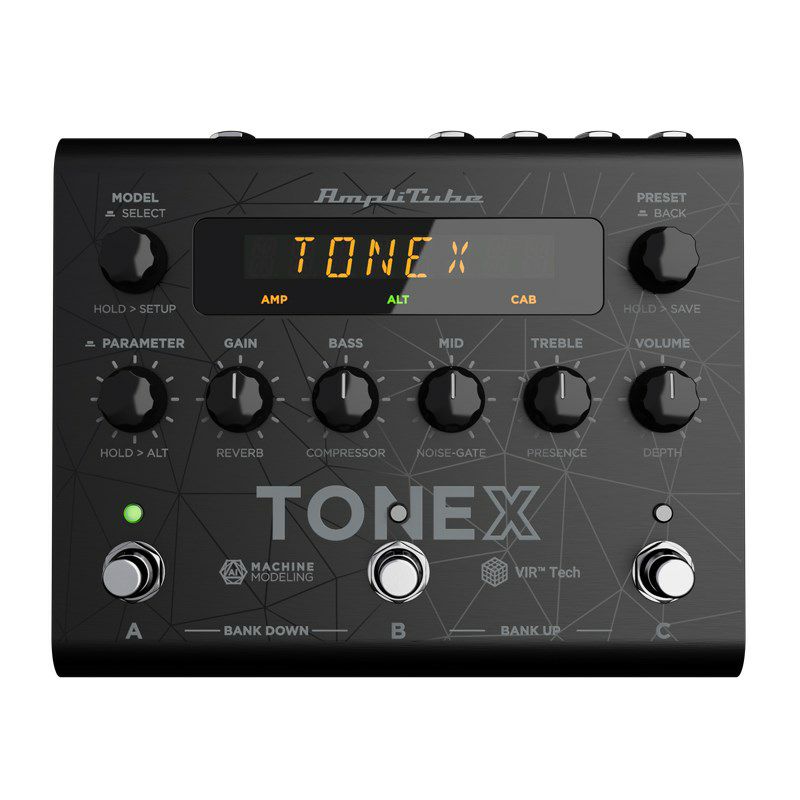 | 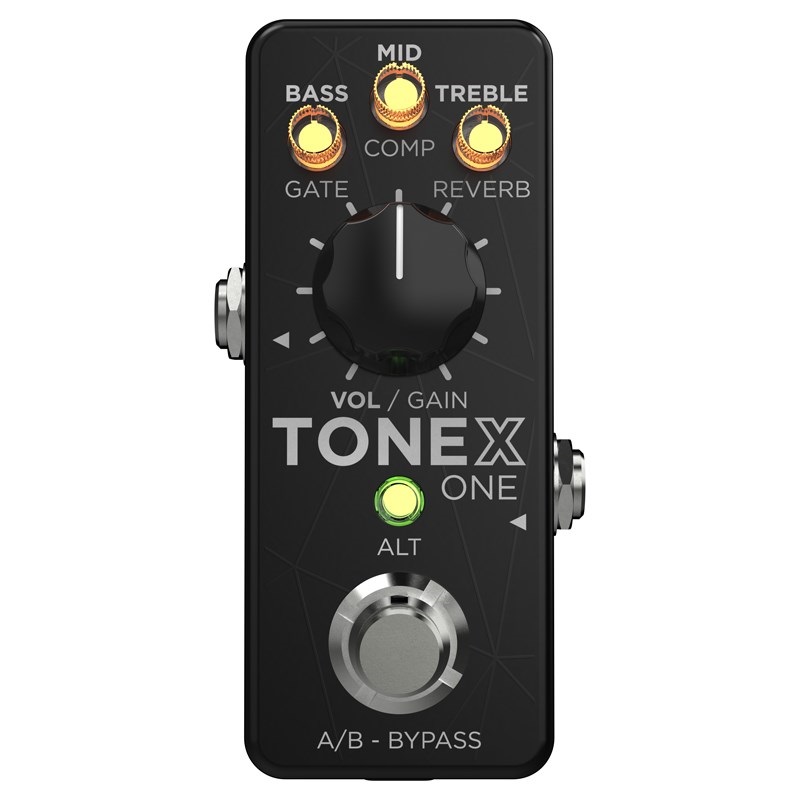 | |
|---|---|---|
| Model | TONEX Pedal | TONEX One |
| Dimensions | Approx. 176 × 142 × 55 mm | Approx. 48 × 94 × 53 mm |
| Weight | Approx. 1 kg (2.2 lbs) | Approx. 160 g (0.35 lbs) |
| Presets | 150 presets (50 banks × 3) | 20 presets (A/B toggle) |
| Included Tone Models | 1,100 models (TONEX MAX) | 200 models (TONEX SE) |
| Effects | 15 types (Includes delay & modulation) | Reverb, EQ, noise gate, etc. Basic effects only |
| I/O Terminals | Stereo Out Headphone Out MIDI In/Out Expression Input | Mono Out (TRS) USB-C |
| MIDI | Yes (In/Out) | None |
| Power | 9V DC adapter (320mA) | 9V DC adapter (120mA) or USB power |
| Price | Approx. $400 | Approx. $180 |
Approx. US street prices are rounded retailer prices as of November 6, 2026, before sales tax. Not a live quote.
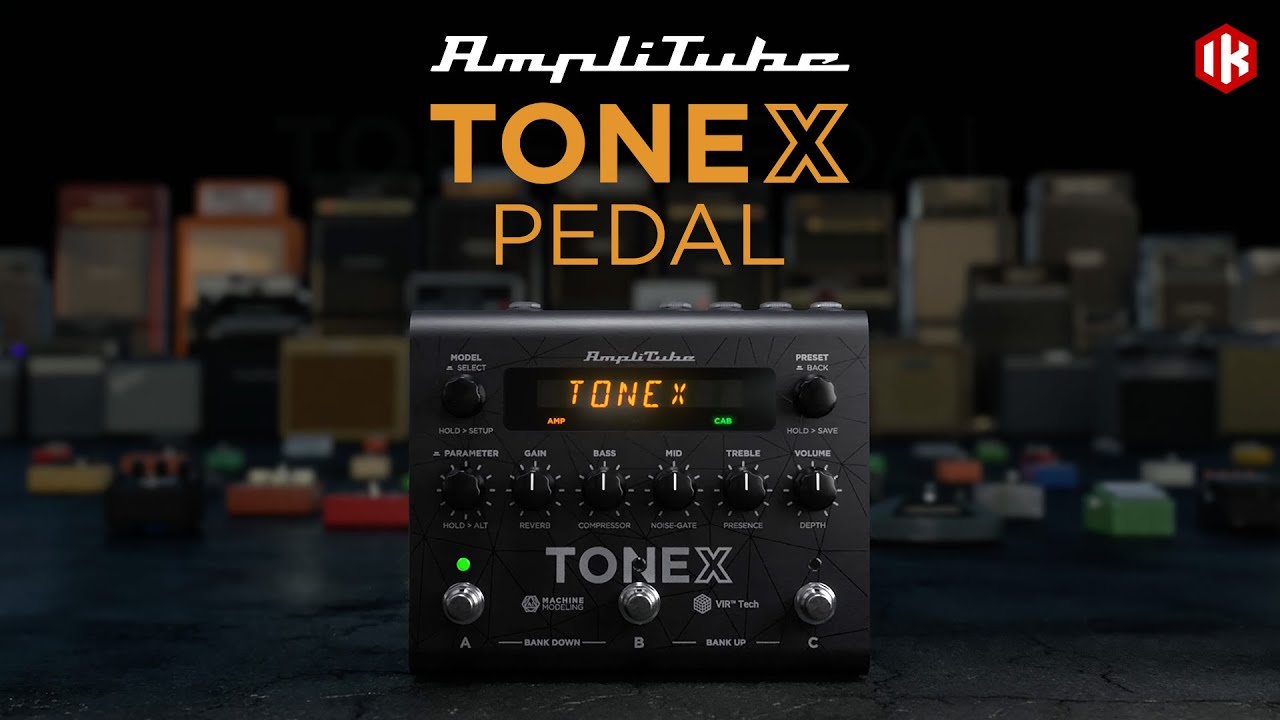
First, let me outline the basic hardware specs. The TONEX Pedal is a full-sized floor unit capable of storing up to 150 presets directly on the device.
It features three footswitches (A/B/C) to switch presets within a bank, organized into 50 banks of 3 presets each.
On the other hand, the TONEX One is an ultra-compact mini pedal that fits in your palm, holding up to 20 presets on board.
Preset switching on the One is limited to two active sounds at a time (channels A and B), toggling between them with a single footswitch.
While the TONEX Pedal leads in total storage, players who prefer a minimalist setup will find 20 presets more than sufficient.
TONEX Pedal vs TONEX One | Features & Capabilities
Tone Models & Effects Capabilities
Next, let's look at **built-in models** and **effects processing**.
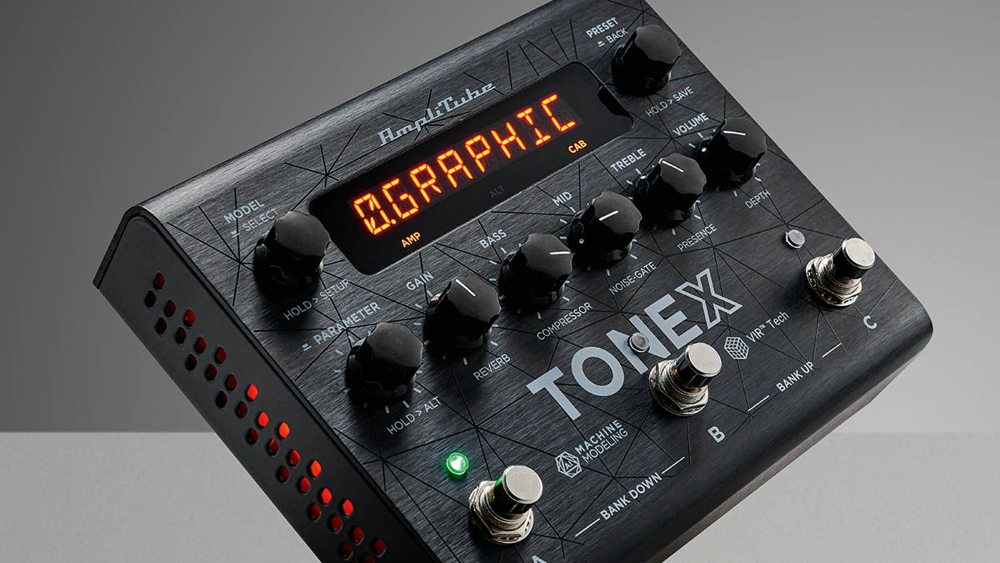
The TONEX Pedal includes the full TONEX MAX software license out of the box, offering 1,100 Tone Models (amp, rig, and pedal captures) for extensive sound design right away.
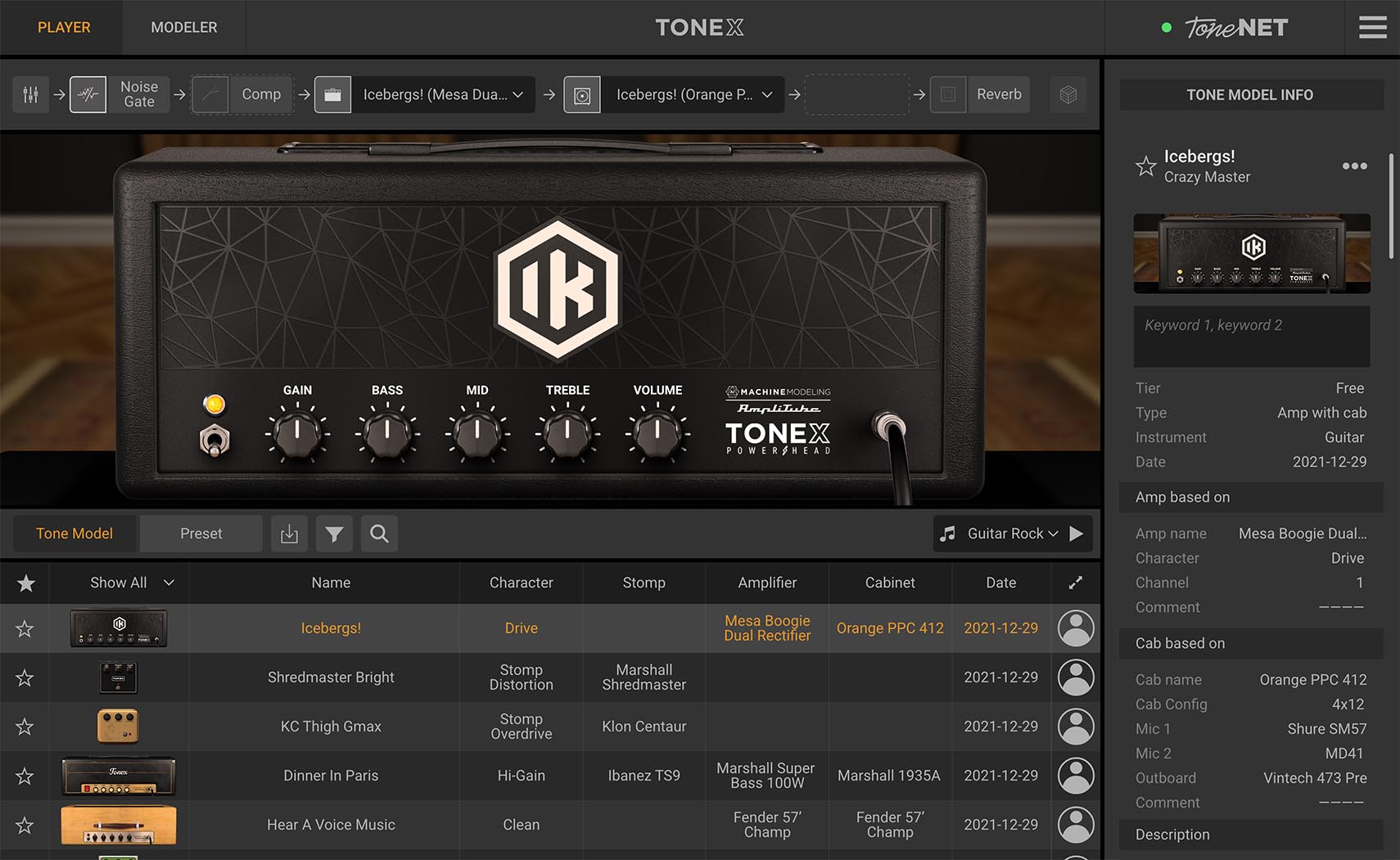
By contrast, the TONEX One comes with TONEX SE, which includes roughly 200 Tone Models. While a smaller selection, it still rivals many paid amp expansion packs.
Both units include **core utility effects** such as a noise gate, compressor, EQ, and reverb. However, the TONEX Pedal expands on this with 15 available effect types, including two delay options and five modulation algorithms.
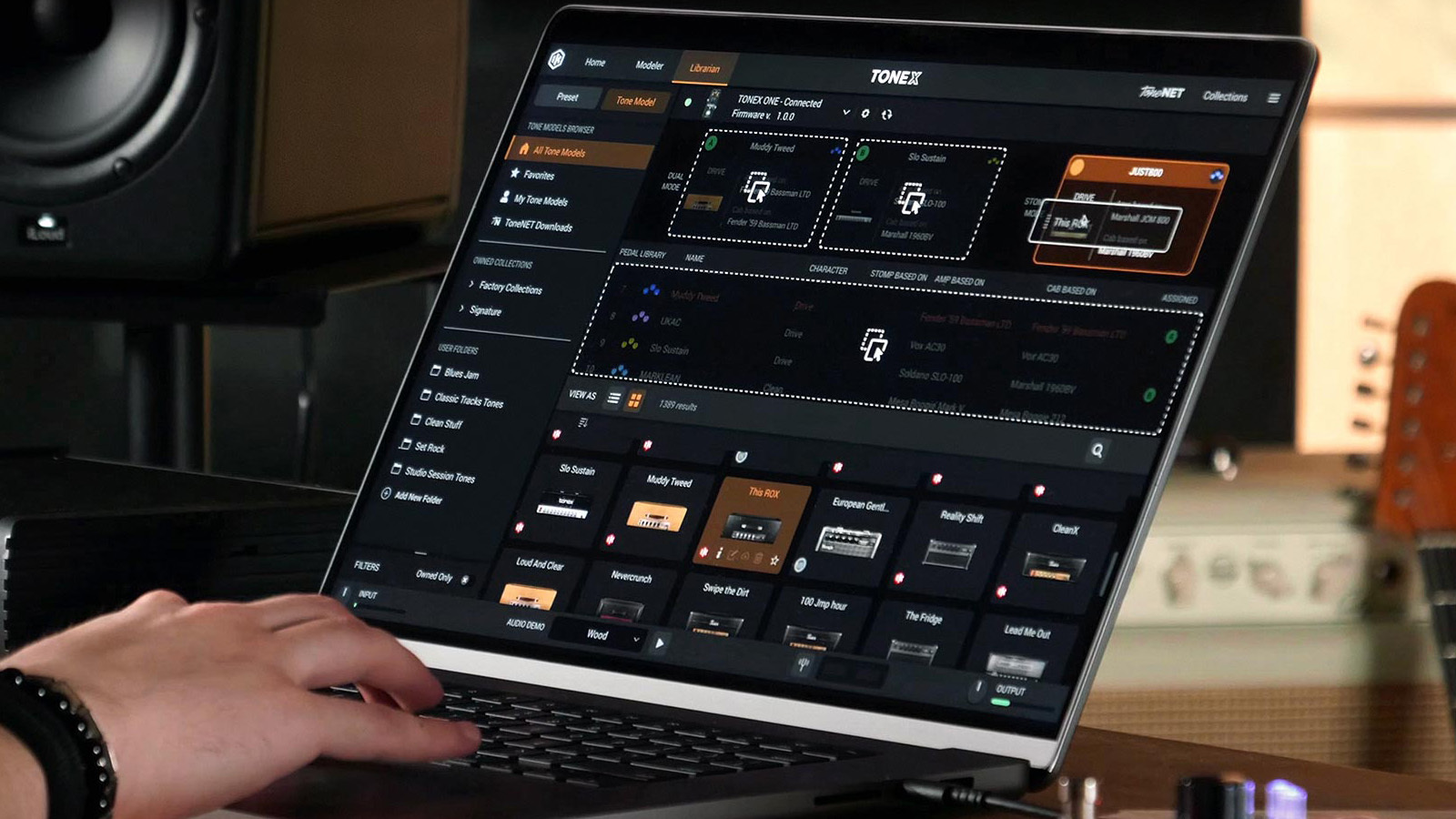
The TONEX One offers limited real-time control over effects directly on the hardware, requiring deeper settings like modulation or delay to be configured via the desktop app.
For instance, while the TONEX Pedal lets you dial in captured amps along with built-in reverb and delay directly on the pedalboard, the TONEX One can handle equivalent processing once configured via software.
Connectivity & Rig Integration
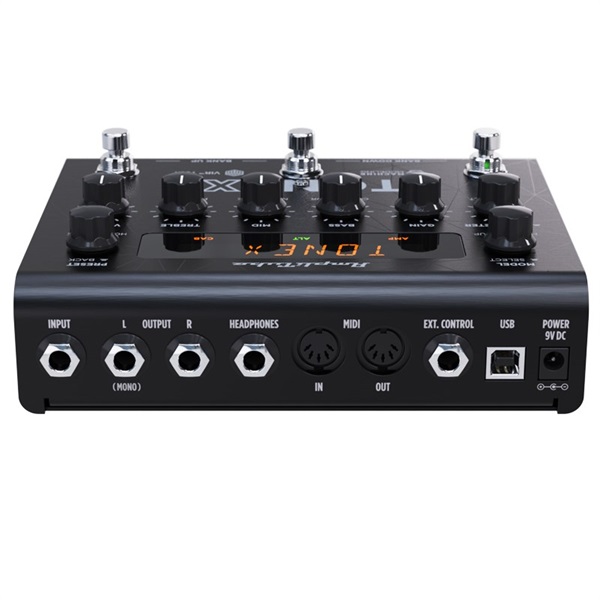
The TONEX Pedal features standard mono input alongside stereo outputs (L/Mono and R), a dedicated headphone jack, MIDI In/Out ports, and an expression pedal input.
This provides comprehensive integration options, such as changing presets via external MIDI switchers or controlling volume and wah with an expression pedal.
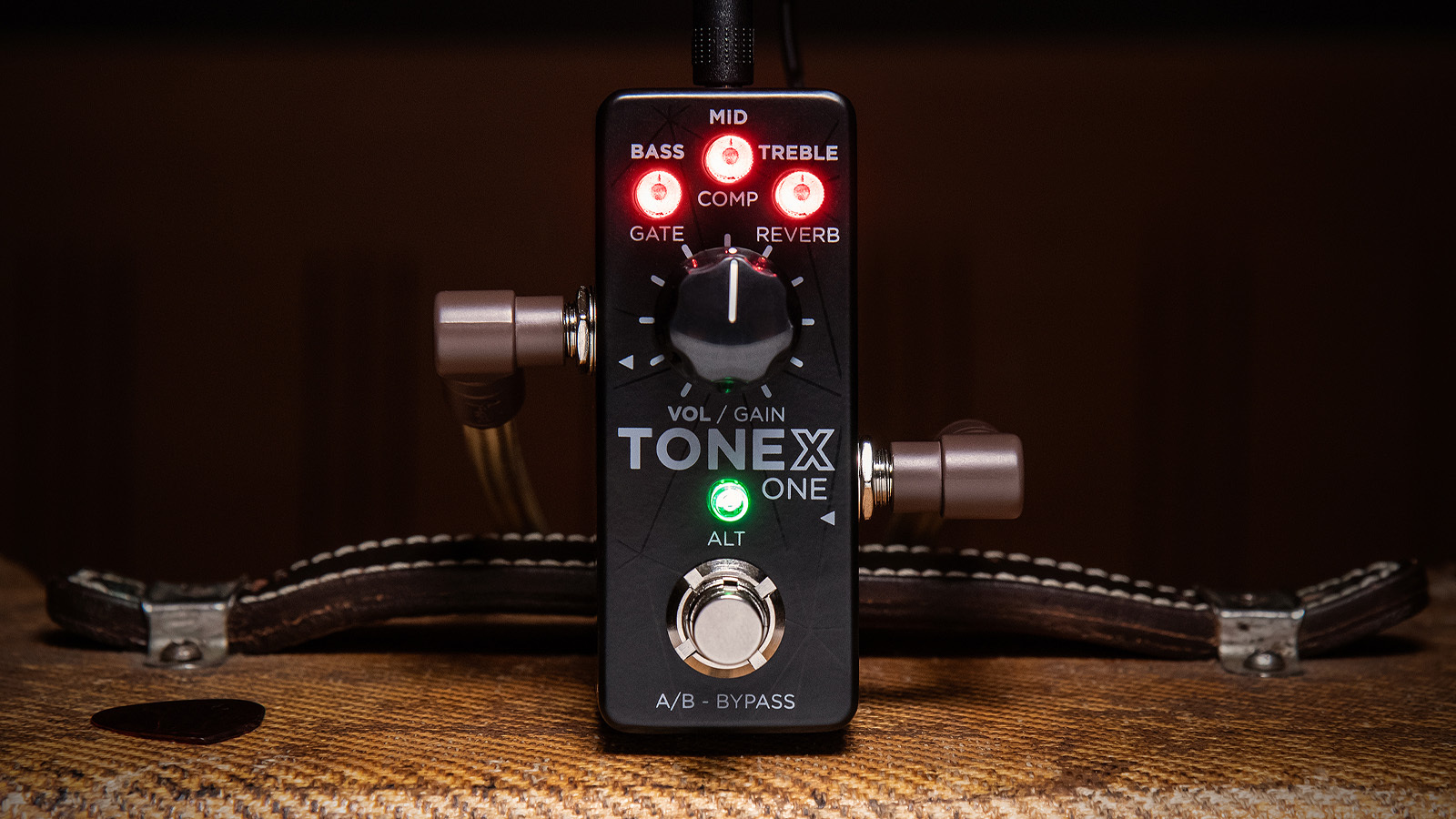
The mini-sized TONEX One keeps hardware connections minimal, featuring just **one input jack and one TRS output jack** (the TRS output can be split for stereo routing or headphones using a Y-cable).
Without MIDI or expression pedal ports, it is not designed for complex switcher integration or expression pedal control.
That said, connecting the TONEX One to a computer via USB-C allows it to function as a USB audio interface for DAW recording and tone editing.
Is There Any Difference in Sound Quality?
Simply put: there is no meaningful difference in sound quality.
Both the TONEX One and TONEX Pedal serve as host hardware for the exact same "Tone Model" files, utilizing identical modeling architecture and DSP algorithms.
IK Multimedia highlights that "TONEX One delivers the exact same hyper-realistic amp, cabinet, and pedal tones as the TONEX Pedal in a pocket-sized format."
In practice, side-by-side video comparisons loading identical Tone Models into both units show no audible difference. Because internal processing and sample rates are matched, the sound output is identical by design.
Professional sound producers have noted that the capture engine holds up exceptionally well against high-end hardware profilers, delivering natural dynamics without digital harshness.
Since the TONEX One inherits this exact processing engine, sound quality is identical between both units.
Hands-On Usability & Controls
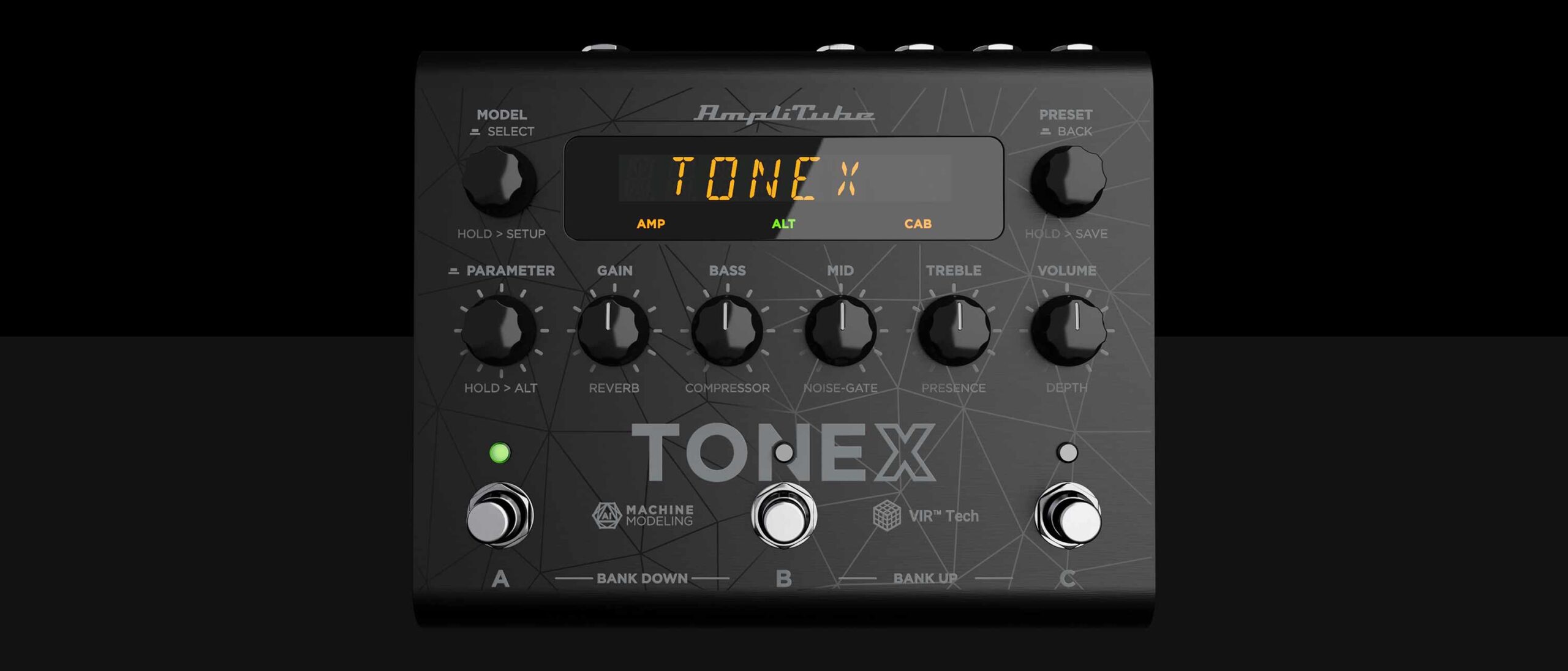
When it comes to practical use, footswitch configuration and interface layout create a clear distinction between the two pedals.
The TONEX Pedal features three footswitches. In Live Mode, you can **recall presets A, B, and C within a bank with a single tap**, while long-pressing or using external switches handles bank changes.
Full MIDI implementation also makes it straightforward to automate preset changes alongside MIDI clock or midi loop switchers.
The clear built-in display shows patch names and parameter settings, making stage navigation easy.
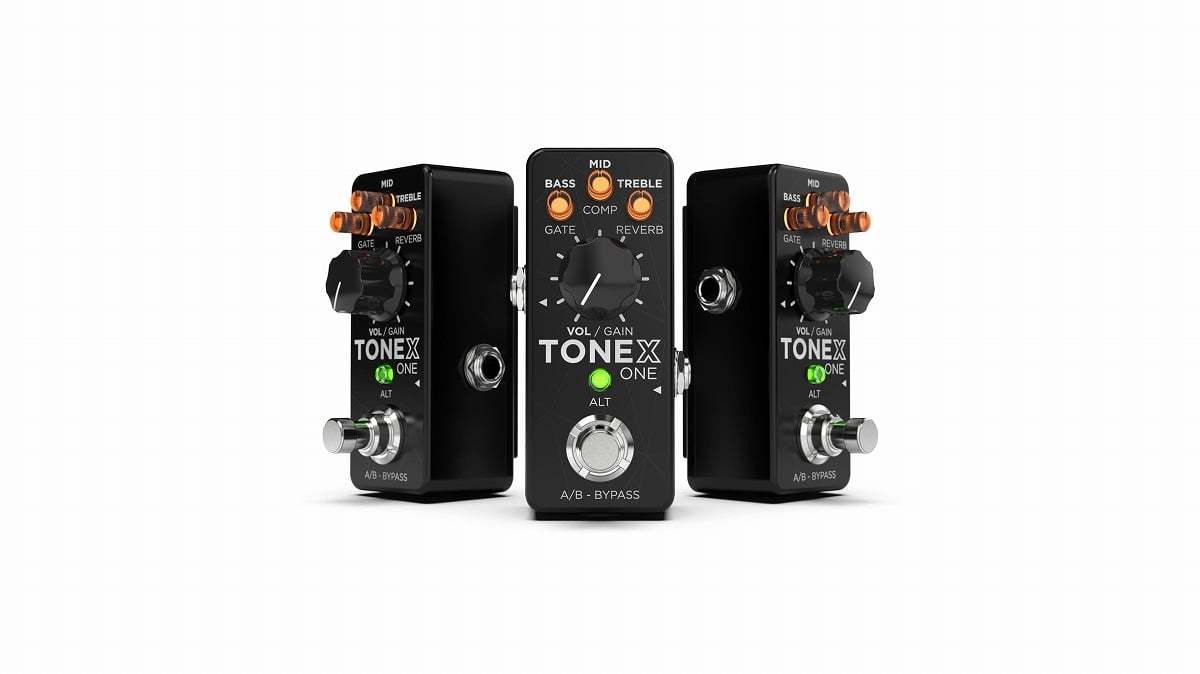
The TONEX One relies on a single footswitch, which can be assigned to **toggle between channels A and B** or **engage/bypass the effect (stomp mode)**.
Consequently, **you can only access up to two active sounds instantly**, requiring some planning if a gig requires three or more distinct tones mid-song.
You can manually select different presets on the One by entering Browse Mode and turning the micro knobs, but it is not intended for rapid multi-preset switching during live performance.
TONEX Pedal vs TONEX One | Which One Should You Buy?
Home Practice & Desktop Recording: TONEX One Excel
If your primary goal is desktop practice or home recording, the TONEX One is exceptionally practical.
Its compact footprint takes up almost no desk space, and over USB it functions as both an audio interface and hardware plugin, letting you lay down tracks with authentic amp sound instantly.
It also supports direct headphone connection, making it ideal for quiet late-night practice sessions.
While onboard preset slots are limited to 20, many home players find that a good clean sound and one drive sound are all they need on a daily basis.
With the TONEX One, you can dial in your core sounds at home and carry that exact rig to studio rehearsals or live gigs in your gig bag.
On the other hand, if you want to audition dozens of amp models on the fly or build complex signal chains directly on the device, the TONEX Pedal remains the better choice.
Sending Tone Models from the TONEX MAX software to the hardware to compare back-to-back is a core advantage of the full-sized pedal.
When auditioning guitar tones for songwriting or diverse setlists, the Pedal's 150-preset capacity ensures plenty of flexibility across different genres.
Rehearsals & Live Shows: TONEX Pedal
If your primary goal is band rehearsal and live gigs, the TONEX Pedal is generally the better choice.
Having the peace of mind to switch multiple sounds right on your pedalboard during a gig is a massive advantage, and its expandability—including MIDI control—makes the full pedal version far better suited for the stage.
"If you're playing live, having it in pedal form is just so much more convenient. It's approachable, and I could use it right out of the box without opening the manual," notes one pro player.
In addition, the TONEX Pedal features a rugged aluminum chassis built to handle touring, making it reliable for long-term use.
That said, many players run boards built primarily around stompboxes. In those setups, fitting a TONEX One into a tight spot as an amp replacement is an extremely effective option.
For example, you can take the sound shaped by your drive pedals or multi-FX unit and run it into the TONEX One at the end of the chain just to add amp and cabinet response before going direct to the PA.
In fact, the TONEX One has gained a lot of attention worldwide as an "amp and drive modeler that fits on even the most crowded pedalboard."
However, as mentioned earlier, the One lacks an effects loop on its own. If you plan to integrate it with your existing guitar amp (such as replacing just your amp's drive channel with TONEX), the full Pedal version offers far more flexibility.
Furthermore, because the One lacks MIDI support, it cannot be controlled via external switchers, giving the full Pedal version the edge if you need to manage patches while moving around a large stage.
TONEX Pedal vs TONEX One | Reviews & Feedback
TONEX Pedal Reviews & Feedback
| Pros | Cons |
|---|---|
| Preset management on TONEX Pedal is extremely convenient. Smooth patch changes on stage. AI Machine Modeling accuracy is top-notch, offering realistic tones nearly indistinguishable from real tube amps. Feature-rich with built-in EQ, compression, and noise gate alongside amp modeling for great versatility. MIDI support allows flexible setups when paired with external switchers or foot controllers. Built-in USB audio interface makes direct DAW recording effortless for home studios. | Footswitches feel a bit stiff and can be harder to engage than expected. Slight latency noticeable when switching presets. Software UI isn't very intuitive, taking extra effort to customize settings. Wide range of amp tones, but built-in modulation/time-based effects selection isn't as extensive as Fractal or Line 6. |
TONEX One Reviews & Feedback
| Pros | Cons |
|---|---|
| Ultra-compact and lightweight. Easy to throw in a gig bag and take anywhere. AI Machine Modeling quality matches the TONEX Pedal, accurately capturing real amp response. Simple, intuitive layout. Gets great sound immediately without complex tweaking. Perfect for home practice and recording. Minimal clutter lets you focus on playing. USB audio capability enables quick direct recording to PC. | Preset memory limited to 20 slots feels restrictive. Single footswitch makes switching tones live tricky, leaning more toward studio/home use. No MIDI support limits integration with external hardware switchers. Built-in effects are limited to reverb and EQ, requiring external pedals for a complete rig. |
Verdict | Which Should You Choose?
Who should choose TONEX One?
Players looking for top-tier amp tones in a simple, portable package
It is reasonably priced and offers all the core functionality needed for everything from home practice to small gigs.
Whether integrated into an existing pedalboard as an amp simulator or used to travel light for jam sessions, the compact footprint of the One is an unbeatable asset.
Although tone selection and control options are stripped down, you won't feel limited if your approach is keeping things simple with just two or three go-to sounds.
If you view it as a compact unit paired with your computer, it excels as a dedicated tone player, allowing you to download Tone Models from ToneNET and get great sounds immediately.
With a low barrier to entry for anyone buying their first amp-modeling pedal, it serves as a highly satisfying entry point.
Who should choose TONEX Pedal?
Players wanting versatile tone shaping and full stage readiness
While there is a price gap, the TONEX Pedal includes significant software value, such as the full TONEX MAX collection and AmpliTube 5. For tone purists looking to dive deep, the full Pedal version offers incredible value for money.
In fact, many note that it delivers tone quality comparable to high-end units like Kemper or Helix at a fraction of the cost, making it a solid long-term investment.
If you rely on stage preset switching, MIDI control, or real-time expression pedal control (like wah or volume), the TONEX Pedal is the clear choice.
For tone tweakers who want to capture their own amps and drive pedals to build custom Tone Models, the generous capacity and features of the full Pedal version offer complete peace of mind.
For guitarists building a versatile pedalboard around a single central unit, the TONEX Pedal is the ultimate partner.