
日本語English
13 Best Big Muff-Style Fuzz Pedals: From Originals to Boutique Icons

XTONES is a participant in affiliate programs including Amazon Associates and Reverb. We may earn a commission from qualifying purchases made through links on this page, at no extra cost to you.
Contents (22)
David Gilmour's (Pink Floyd) soaring lead tone that reaches for the stratosphere. J Mascis's (Dinosaur Jr.) and Billy Corgan's (The Smashing Pumpkins) crushing wall of sound.
The common thread behind these iconic sounds is the Big Muff.
Since its introduction in 1969, this pedal has become more than just another drive pedal—a signature voice on countless classic albums. Yet many guitarists fall in love with it, buy one, and quickly hit a wall: "It gets completely lost in a band mix..."
This deep-dive guide is for anyone captivated by the magic of the Big Muff. From historical context and circuit variations to 12 top-tier options that actually work in modern mix settings, here is how to find the right one for your pedalboard.
Key Differences vs. Fuzz Face | Lead Tone Roles
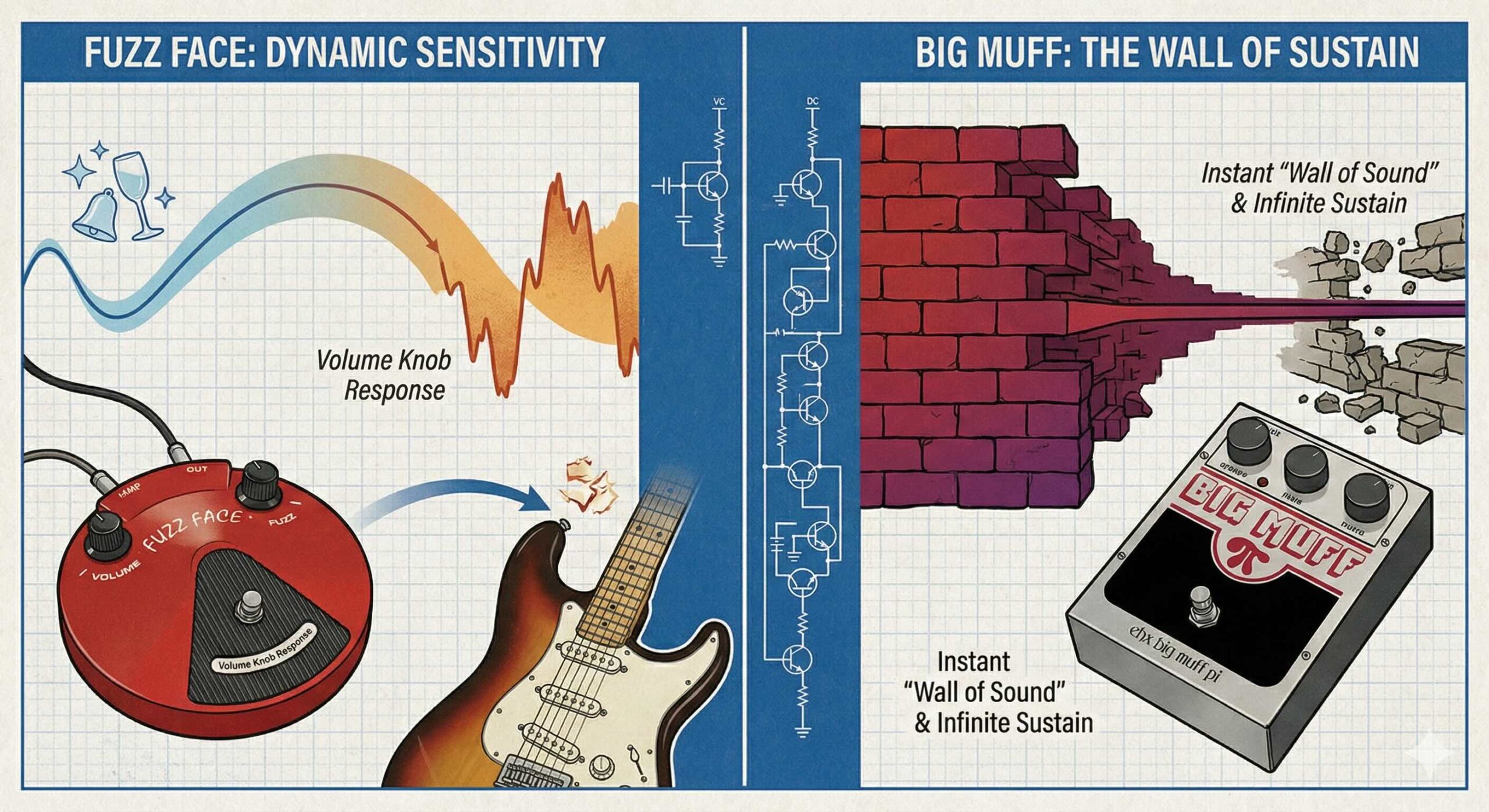
Fuzz Face: Dynamic Response to Guitar Volume
- Circuit
A simple amplifier circuit using two transistors. - Characteristics
Roll back your guitar's volume knob for a sparkling clean tone; turn it up for thick fuzz. An expressive, organic tone that feels like an extension of your amp. - Role
An expressive tool that amplifies player dynamics.
Big Muff: A Wall of Pure Sonic Distortion
- Circuit
A multi-stage circuit using four transistors with two diode clipping stages. - Characteristics
Stepping on it heavily compresses your guitar's dry tone, turning it into a massive wall of harmonics and near-infinite sustain. Rolling back the guitar volume doesn't alter the tone much; it mostly just lowers the output level. - Role
A powerhouse that dominates the sonic space. Dense, smooth sound approaching distortion territory.
The reason people say Muffs get lost in the mix stems from their signature tone stack—a deep mid scoop. Paradoxically, that scoop is exactly what carves out the unique sonic footprint of a Muff.
Era-by-Era Tone Differences | Three Iconic Eras
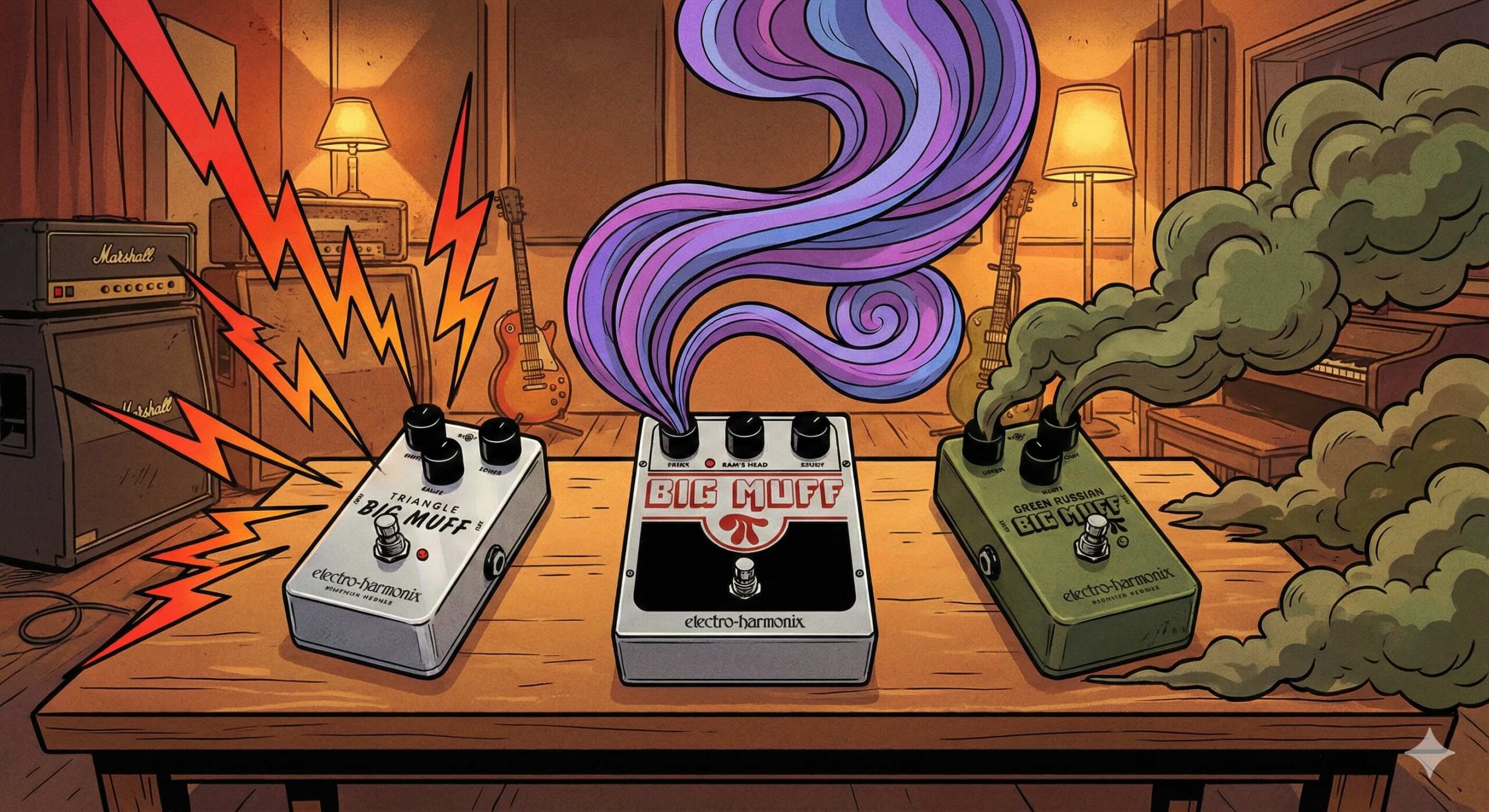
Background
The earliest iteration, named for its triangular three-knob layout.
Tone
The most aggressive and raw tone of the bunch. The low end stays relatively tight, with sharp treble bite and decent chord clarity. Ideal for players who want massive fuzz without losing chord definition.
Background
Known for the face graphic on the lower right of the chassis. Immortalized by David Gilmour.
Tone
Features a highly musical mid scoop and huge sustain. Single-note leads sound sweet and violin-like—a hallmark magic of this era.
Background
Produced by Sovtek in Russia following the bankruptcy of the original EHX operation. Includes variants like Civil War, Green Russian, and Black Russian.
Tone
Massive low end. Popular with both guitarists and bassists, making it a go-to for building huge walls of sound in grunge, alt-rock, and stoner rock. Darker top end with a thick, heavy voice.
Recommended Muff Pedals: Official EHX Era Reissues
Electro-Harmonix / Ram’s Head Big Muff Pi
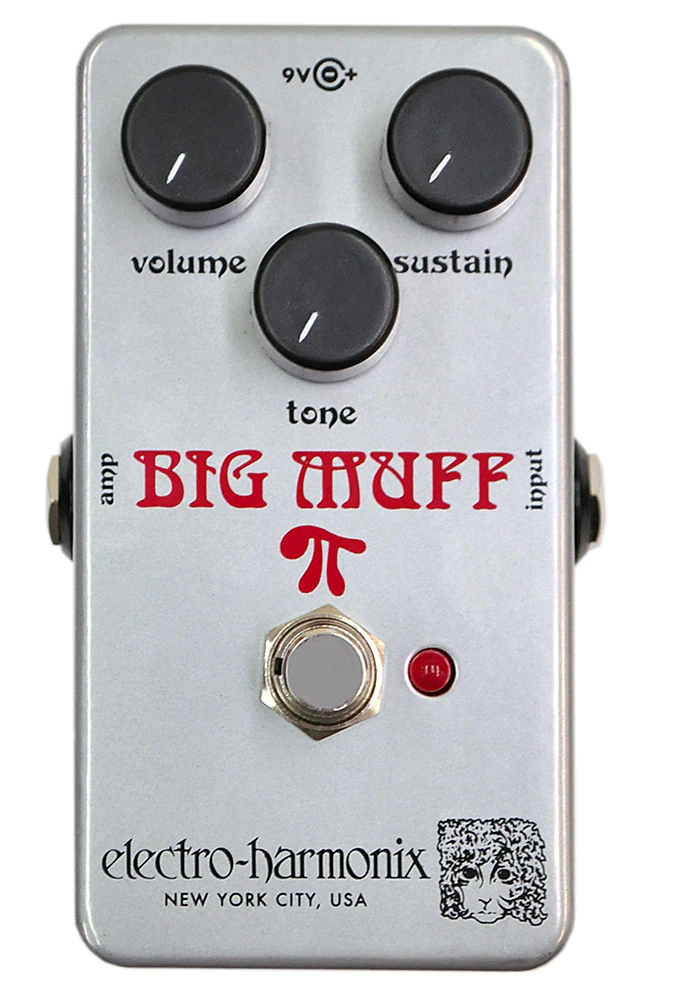
- Faithful reissue of the 1973 "Violet" Ram's Head circuit
- Excellent string separation with extremely long sustain
- True bypass specification, compatible with 9V power supply
Delivers the legendary David Gilmour tone in a compact, board-friendly enclosure at an accessible price point. Recreating the coveted "Violet" circuit, it handles everything from sweet, singing lead tones to raw rhythm chord work. An ideal entry point into the Muff world that you may never need to replace.
Positive Reviews
- "The moment I played a Gilmour solo, I couldn't stop smiling. Outstanding tone for the price."
- "None of the fussiness of vintage units, and noise is totally manageable. It earned a permanent spot on my pedalboard."
- "Great note definition—cuts through the ensemble better than many other Muffs."
Negative Reviews
- "The status LED is blindingly bright on a dark stage."
- "Might just be unit-to-unit variance, but it doesn't quite capture the delicate, woody dryness of an actual vintage unit."

Electro-Harmonix / Triangle Big Muff Pi
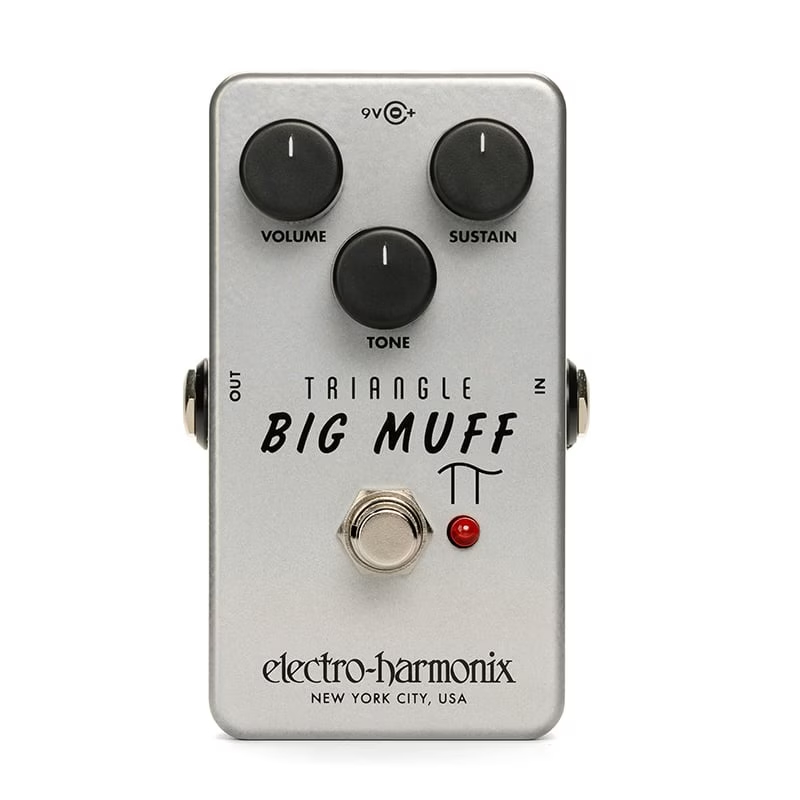
- Recreates the original 1969 "Triangle" circuit
- The most aggressive and articulate sound in the Big Muff lineup
- Relatively responsive to picking dynamics
Recreates the wild yet clear tone of the earliest Big Muff. It has a sharper bite than the Ram's Head with less low-end flub, keeping rhythm chops and fast riffs from muddying up. It covers everything from early Santana-esque singing sustain to modern garage rock.
Positive Reviews
- "Chords don't turn completely to mush; you still get a nice crunchy texture."
- "Responds better to volume changes than other Muffs. Very versatile on its own."
- "The vintage look adds great aesthetic appeal."
Negative Reviews
- "The high end can be quite aggressive, so it might depend on amp pairing."
- "If you're expecting the sweet tone of a Ram's Head, the treble might feel a bit harsh."

Electro-Harmonix / Green Russian Big Muff Pi
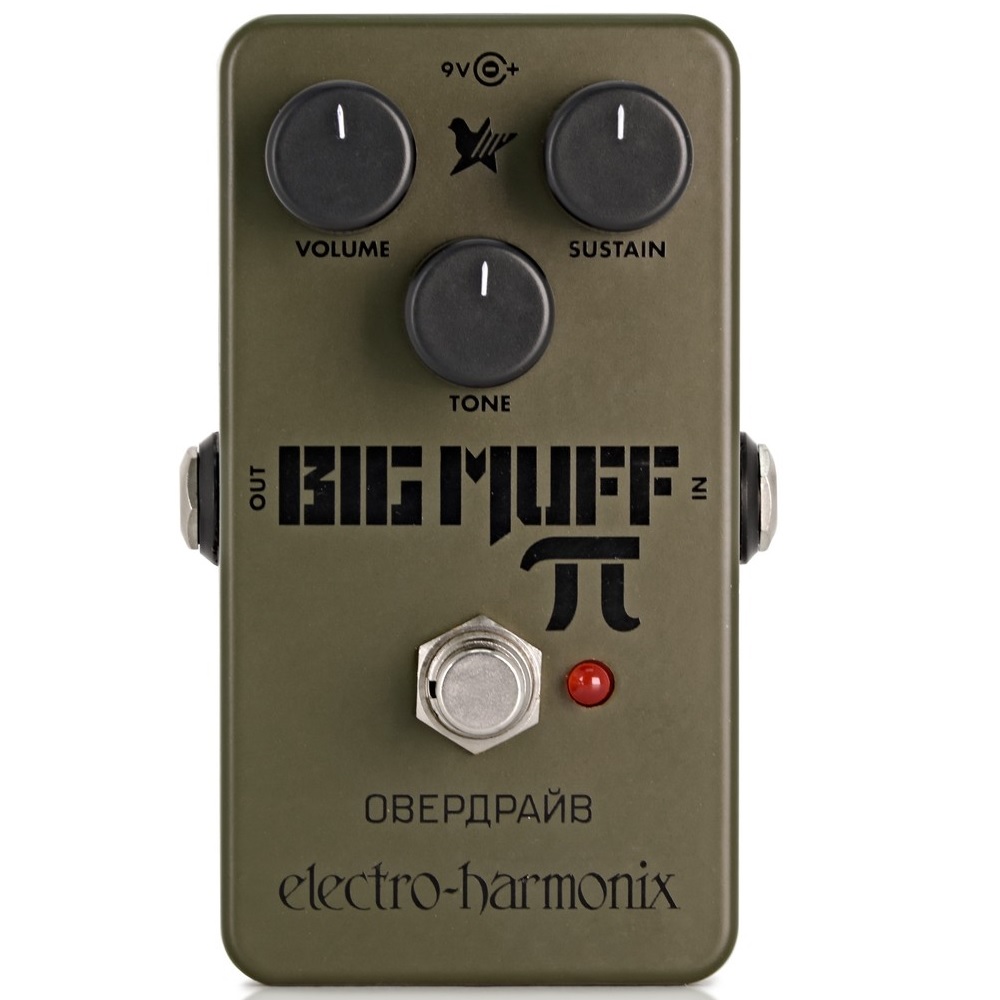
- Recreates the mid-1990s "Tall Font" Russian Muff
- Overwhelming low end and punchy sound pressure
- Great for bass players as well as guitarists
A reissue of the nicknamed "Army Green" model used by players like Dan Auerbach of The Black Keys. Compared to other Muffs, the gain is slightly lower, but it makes up for it with ground-shaking low end and massive thickness. If you're laying down heavy, low-slung riffs for doom metal or stoner rock, this is the go-to choice.
Positive Reviews
- "I use it on bass, and it delivers thick dirt while retaining the core of my dry signal."
- "The sound is super thick. Even on a Strat bridge pickup, it gives you Les Paul-like body."
- "Low noise and easy to dial in."
Negative Reviews
- "The top end doesn't cut through easily, so it can sound muddy unless paired with a bright, glassy clean amp."
- "Sometimes I wish it had a bit more gain. You might need a boost pedal with it."

Electro-Harmonix / Op-Amp Big Muff Pi
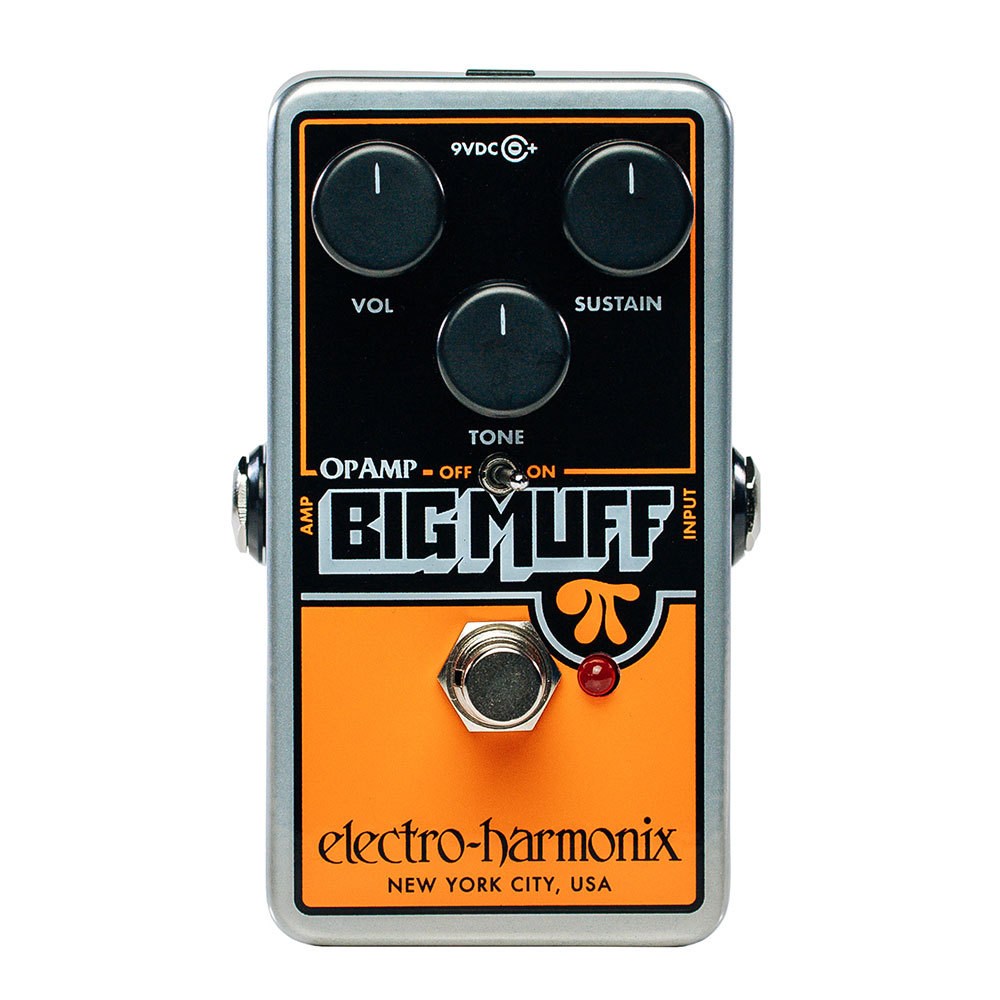
- Recreates the late-1970s IC (op-amp) circuit
- Delivers the exact tone of The Smashing Pumpkins' Siamese Dream
- Includes a switch to bypass the tone circuit
An unconventional Muff built around ICs (op-amps) rather than transistors. It achieved legendary status thanks to Billy Corgan's iconic use. It features a grittier, crunchier texture than other Muffs. Engaging the tone bypass switch outputs full-frequency sonic roar, letting you build a true wall of sound.
Positive Reviews
- "If you love Smashing Pumpkins, there's no substitute. It nails that 'Cherub Rock' sound."
- "The tone bypass mode is brutal—a true wall of sound."
- "The unique compression and grit set it apart from other Muffs in a great way."
Negative Reviews
- "Not very versatile. Feels like a dedicated tool specifically for '90s alt-rock."
- "The tone feels flat, and some might find it almost digital-sounding."

Recommended Muff-Style Pedals | High-End Vintage Recreations
Wren and Cuff / The Caprid
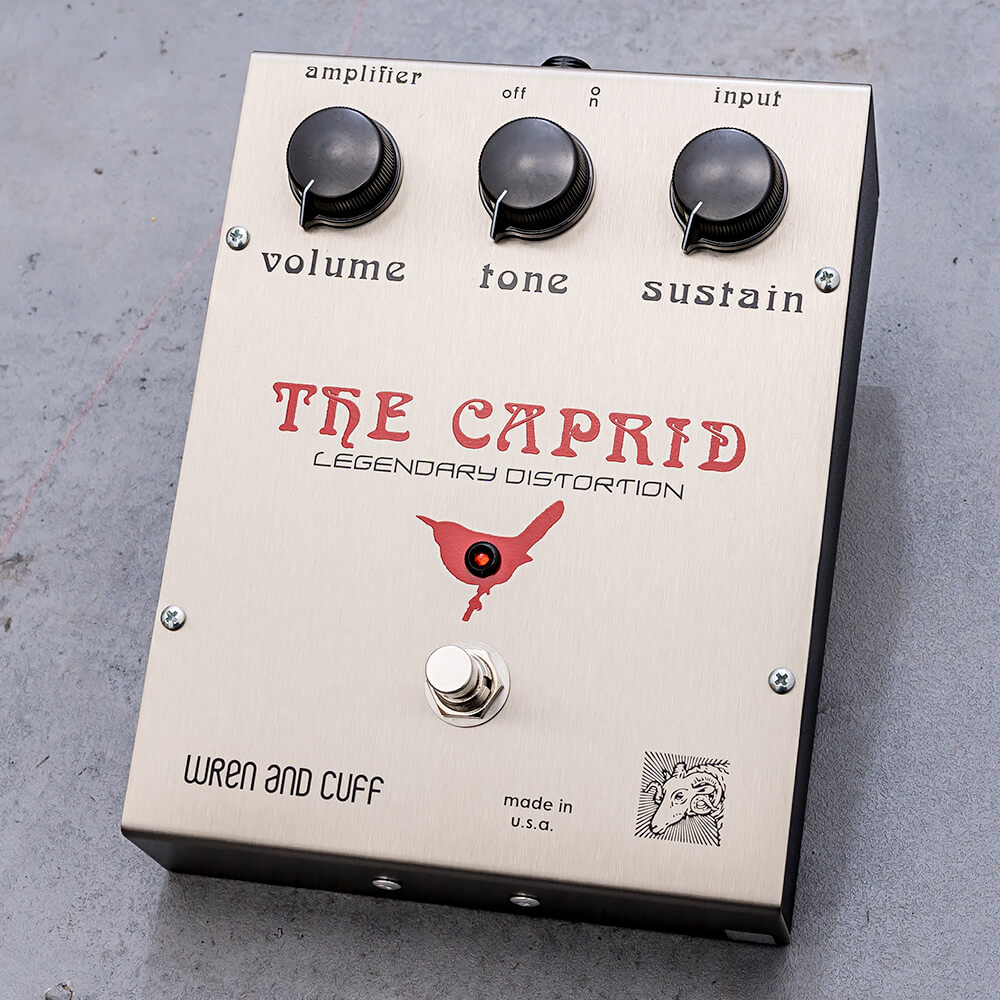
- A complete physical replica of the '70s Ram's Head, including the "3003" circuit board
- Recreates the original massive enclosure size (Small Foot version also available)
- Premium harmonic richness from hand-selected components
A masterpiece from Wren and Cuff, whose obsession with the Big Muff borders on fanatical. Rather than just following a schematic, they accounted for how the original circuit board trace patterns and enclosure size affect the tone. The moment you play, rich harmonics bloom alongside endless sustain—just like a true vintage unit. The pride of ownership is second to none.
Positive Reviews
- "Even the background noise sounds musical. Completely eliminated my need for an actual vintage unit."
- "Rolling back the guitar volume transitions into a chimey clean that operates on a whole different level compared to other Muffs."
- "The massive enclosure is fantastic. Just looking at it gets you hyped."
Negative Reviews
- "It's huge. Takes up way too much pedalboard real estate (the Small Foot version is recommended)."
- "Pricy. The tone is stellar, but it's tough when you consider it costs as much as three EHX reissues."

JHS Pedals / Muffuletta
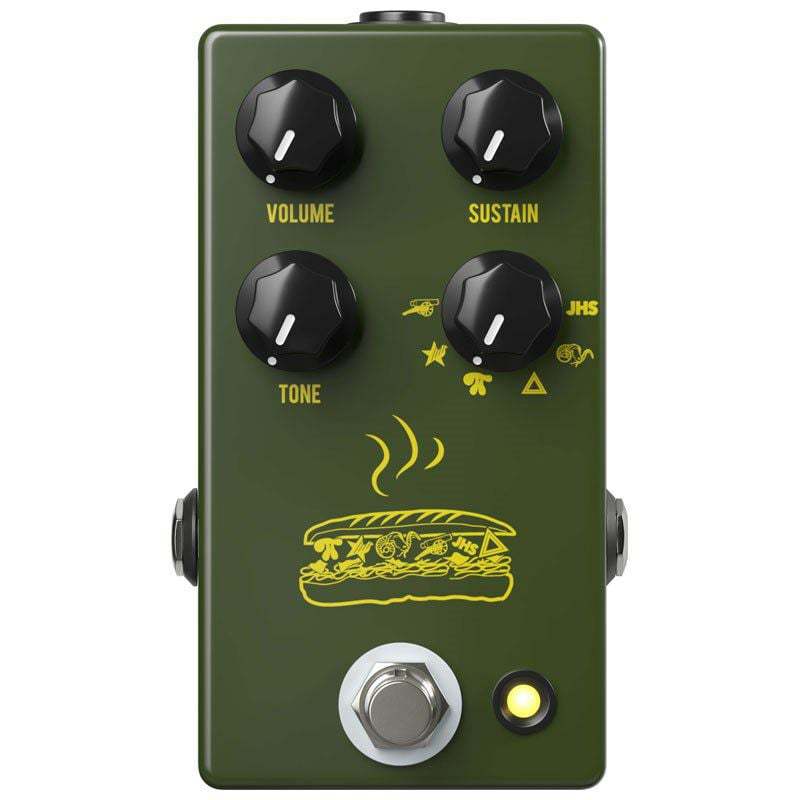
- Packs 5 classic Muff circuits plus a JHS original into one pedal
- Switches actual all-analog circuitry rather than digital modeling
- Ultra-compact enclosure
This pedal solves the dilemma of deciding which era of Big Muff to buy. A rotary switch lets you select between six modes: Civil War, Russian, Pi, Triangle, Ram's Head, and JHS's custom mode. Notably, it physically routes through true analog circuits rather than using DSP modeling—putting a museum of Big Muff history right on your pedalboard.
Positive Reviews
- "Covers the whole history of the Big Muff in one box. Incredible value."
- "Super convenient for recording when you want to match different Muff flavors to each song."
- "The JHS mode is surprisingly usable and cuts through well in modern band mixes."
Negative Reviews
- "There are noticeable volume jumps between modes, so switching during live shows requires caution."
- "Jack of all trades, master of none. Might not beat a pedal dedicated to dialing in one specific vintage sound."

Skreddy Pedals / P19
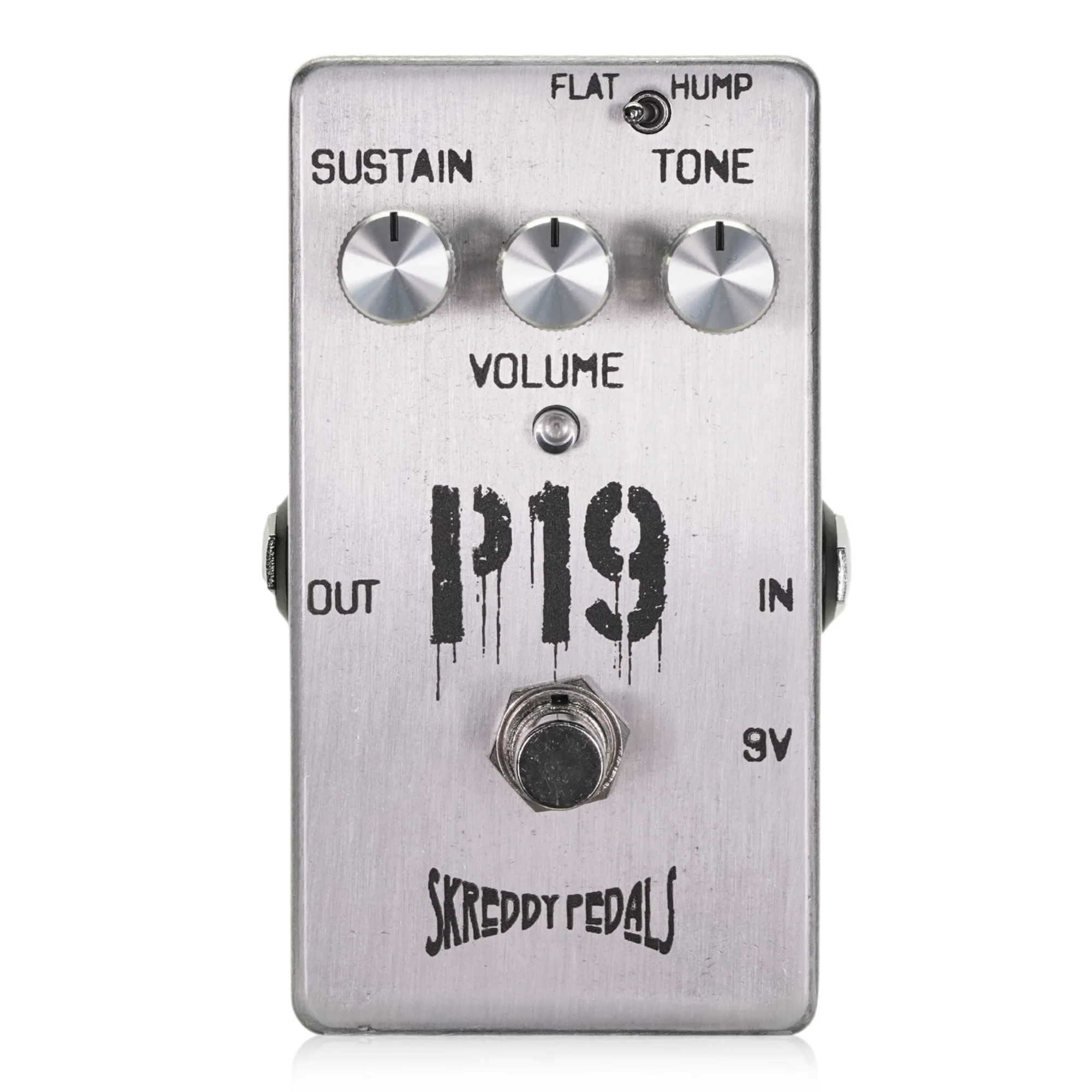
- Recreates David Gilmour's tone from "The Wall" era
- Reduces the typical Muff mid-scoop so it won't get lost in the mix
- Clear, hi-fi sound quality
A pedal designed specifically to overcome the classic Muff problem of getting lost in a band mix. While based on a Ram's Head circuit, it features voiced tweaks that lift the midrange and tighten up flubby low end. As a result, you get the classic Muff character with distortion-like versatility that cuts through. If you want Gilmour-style singing lead tone, this is it.
Positive Reviews
- "Doesn't get buried in a full band mix. Sounds like a true Muff while sitting front and center."
- "Chord separation is incredible, and the tone doesn't get squashed even at high gain."
- "Extremely low noise, making it super reliable for live gigs."
Negative Reviews
- "A bit too refined if you're looking for wild, woolly low end or gritty fuzz."
- "Hard to find, and sells out almost immediately whenever it's in stock."

Recommended Muff-Style Pedals | Modern Workhorses that Cut Through
EarthQuaker Devices / Hoof Fuzz
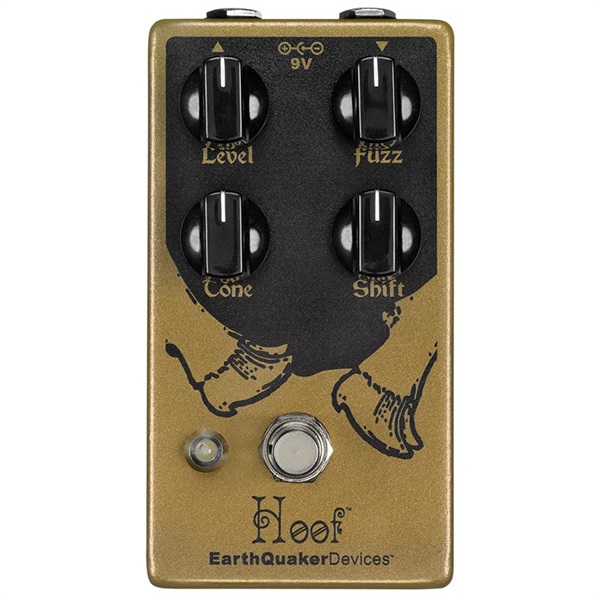
- Hybrid germanium and silicon circuit
- "Shift" knob provides complete control over mid frequencies
- Based on the Green Russian Muff while balancing warmth and stability
A modern iconic pedal made famous by Dan Auerbach of The Black Keys. While based on the Russian Big Muff, its standout feature is the "Shift" control. This lets you continuously adjust from classic scooped-mid Muff tones to a mid-forward sound. It solves the common complaint that Muffs get lost in the mix, making it a true modern standard.
Positive Reviews
- "The Shift knob is magic. You can craft a tone that cuts through on any amp."
- "Thanks to the germanium transistors, the sound feels organic and warm."
- "It has a wide gain range, so you can even use it like an overdrive."
Negative Reviews
- "Might be a bit too smooth if you want an aggressively scooped metal sound."
- "Taking off the back plate to change the battery is a bit annoying."

Way Huge / Swollen Pickle Jumbo Fuzz MkIIS
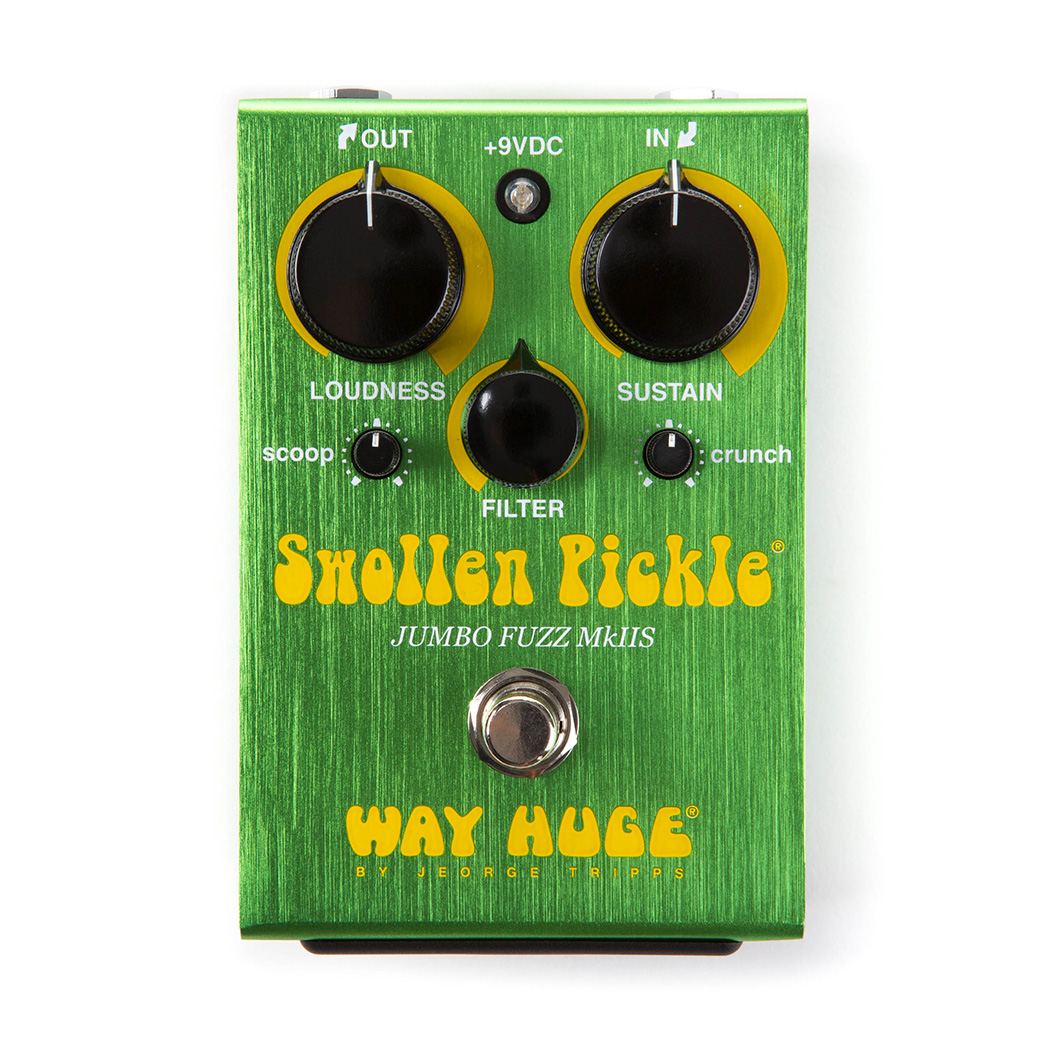
- Massive tone-shaping potential via 5 external knobs and 2 internal trimpots
- "Scoop" and "Crunch" controls let you fine-tune EQ filtering and compression
- Top-tier output punch and versatility among Big Muff-style pedals
True to its name, the Swollen Pickle delivers an ultra-thick, massive sound. It expands on the classic Big Muff circuit by putting Scoop (mids) and Crunch (compression) controls on the outside, while internal trimpots let you alter the clipping character. It can be tricky to dial in, but once you hit the sweet spot, you get a uniquely powerful fuzz tone that stands out from the crowd.
Positive Feedback
- "The range of tone shaping is insane and so fun. You can craft your own custom Muff sound."
- "The low end is massive. It works amazingly well on bass, too."
- "The MkIIS enclosure is much smaller, making it way easier to fit on a pedalboard."
Negative Feedback
- "Dialing it in is pretty tough. It takes time to find the sweet spot."
- "There are so many knobs that if something gets bumped mid-gig, it's hard to get back to your settings."

Walrus Audio / Eons
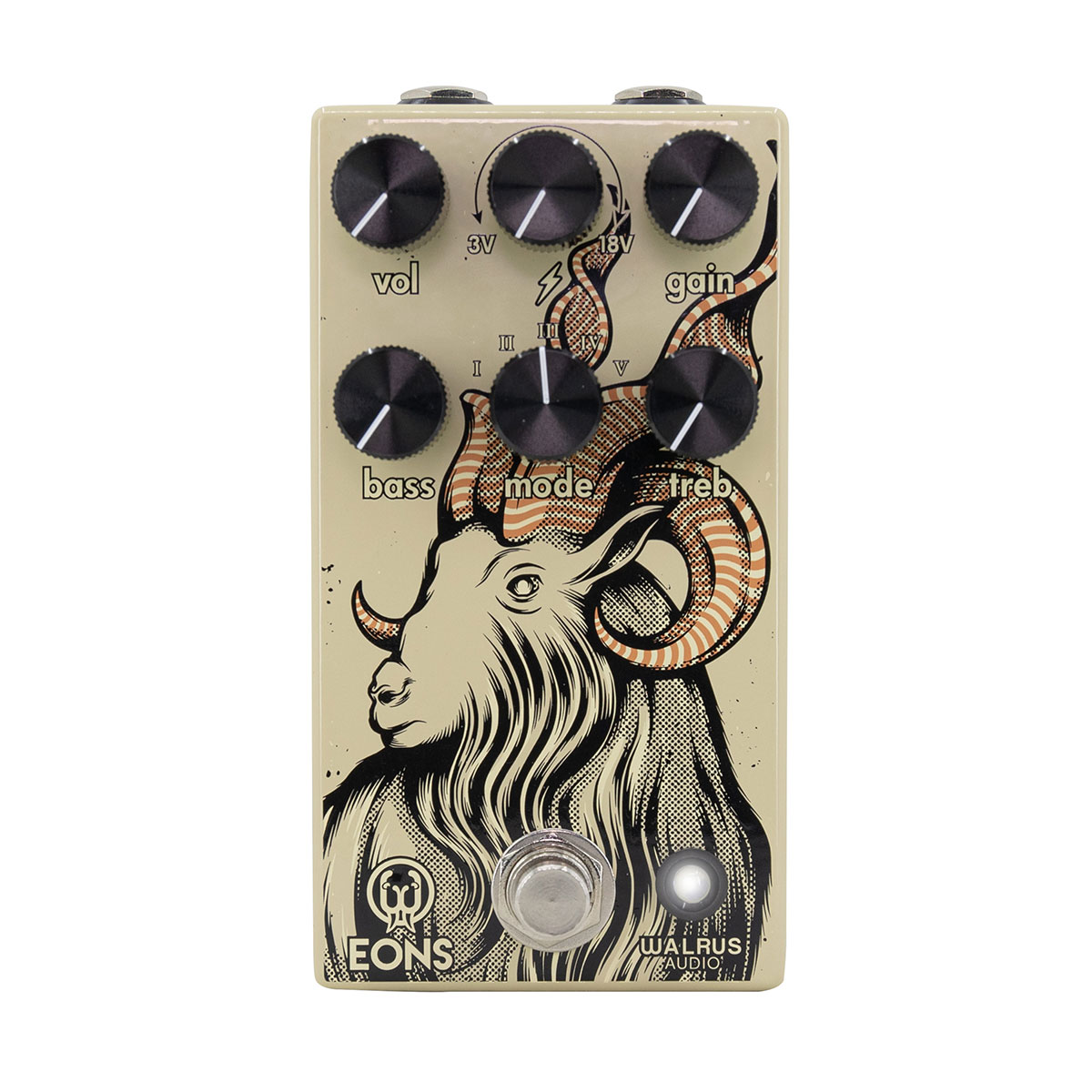
- Equipped with a Voltage control knob
- 5 selectable clipping modes
- Variable voltage from 3V to 18V covers everything from gated fuzz to open tones
Released in 2022, this "five-state" fuzz pedal stands out with its lightning-bolt Voltage knob. Lowering the voltage yields sputtering, dying-battery gated fuzz, while raising it delivers high-headroom, modern distortion-like textures. Built around a Muff-inspired topology, it embraces an experimental spirit by letting you select between silicon, germanium, and LED clipping.
Positive Feedback
- "The velcro fuzz sound when dropping the voltage is seriously cool."
- "With the selectable modes, it handles everything from vintage to modern fuzz tones."
- "The EQ is super responsive, and having separate Bass and Treble controls is very convenient."
Negative Feedback
- "It has so many features that it might be overkill if you just want a straightforward Big Muff."
- "Adjusting the voltage can occasionally introduce a bit of noise."

Recommended Muff-Style Pedals | Japanese Boutique Brands
Phantom fx / Sabbath Black Gaze
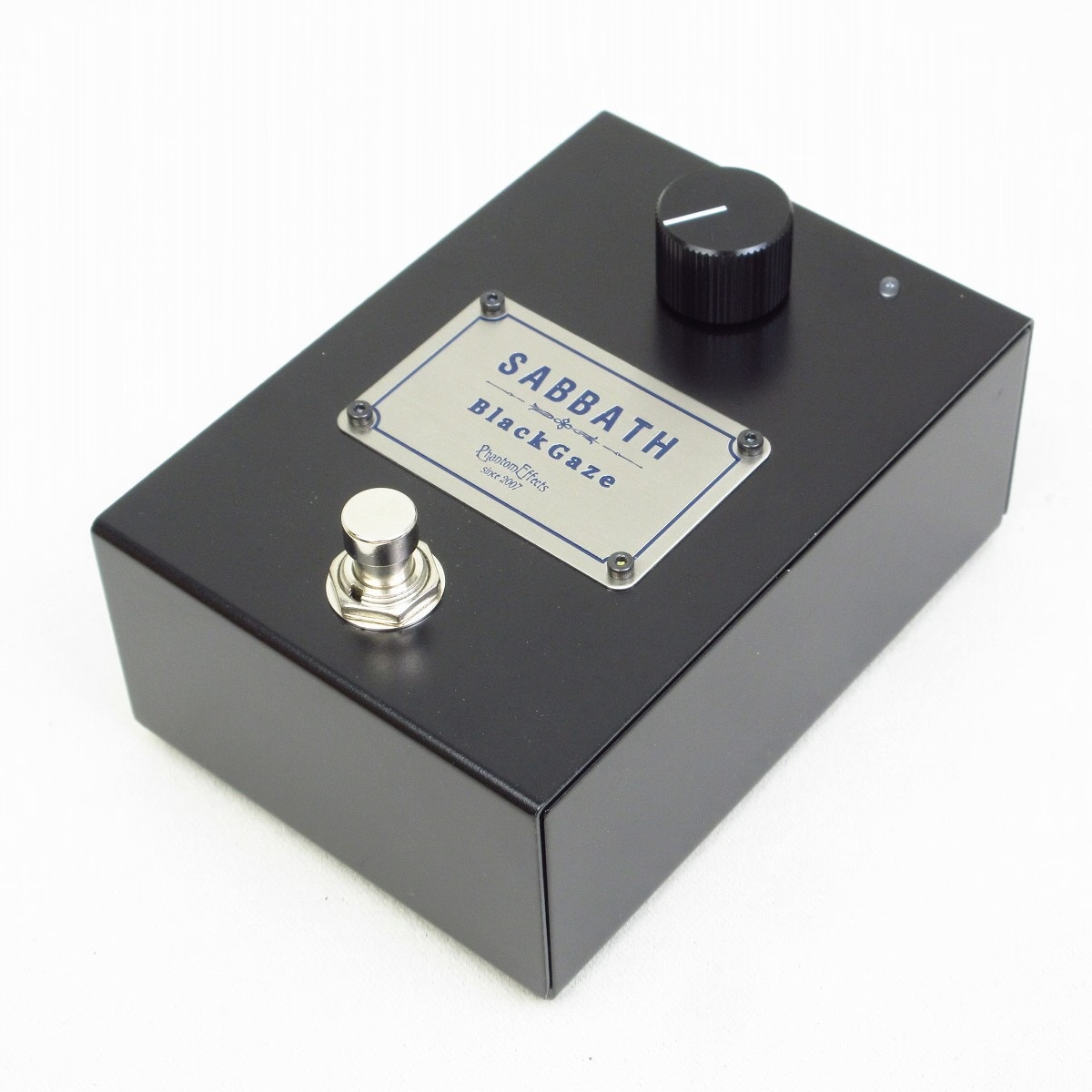
- Reimagines the legendary "Sabbath" for the modern shoegaze and blackgaze scenes
- Retains Big Muff-style weight while adding razor-sharp harmonics that cut through the mix
- Handmade by Masafumi Todaka (ART-SCHOOL / MONOEYES); a cult model that sells out instantly on every drop
While inheriting the dark, heavy low-end DNA of the original Sabbath, this model enhances clarity and the ability to build massive walls of sound that fill the room. True to its name, it excels at crafting beautiful yet destructive soundscapes at the intersection of black metal and shoegaze. Even with vintage Big Muff-style saturation, heavy strumming won't turn into mud—its voicing stays articulate and emotional, making it a true modern work of art.
Positive Feedback
- "The spatial spread when you play chords is insane. One chord fills the entire space."
- "Despite the intense distortion, it somehow maintains an strangely transparent feel."
- "The enclosure design is always so cool. It becomes the centerpiece of any pedalboard."
Negative Feedback
- "It sells out within a minute on web stores, making it nearly impossible to buy."
- "Its sheer volume and wide frequency range are so aggressive that it can stick out in standard pop arrangements."

Phantom fx / Sabbath Bliss
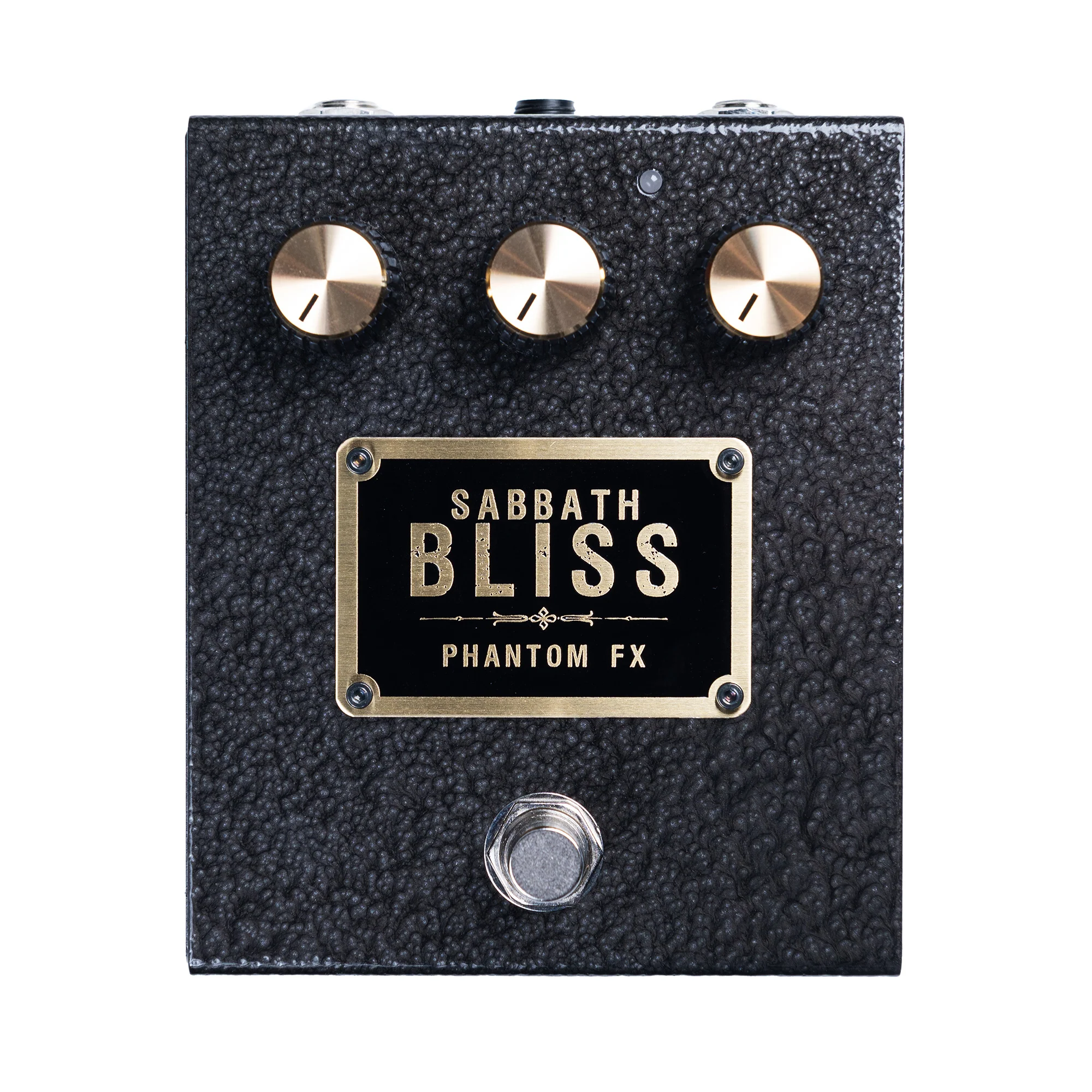
- The ultimate "musical tone" fuzz created in collaboration with PEDAL SHOP CULT
- Circuitry packed with rare vintage capacitors like Iskra and Wima
- Outstanding response that rolls down from massive fuzz to clean crunch right from your guitar's volume control
If "Black Gaze" represents chaos and destruction, "Bliss" embodies pure bliss, just as its name implies. While preserving the Sabbath's signature wall-of-sound fuzz, meticulously selected vintage components elevate the tone to something even more musical and lush. Its note response is particularly remarkable—despite the thick fuzz, playing lightly yields a chimey crunch, shifting dynamics naturally with your attack. Down to the pristine internal wiring, it is a work of art.
Positive Reviews
- "Opening the back plate reveals wiring so beautiful it looks like artisan craftsmanship."
- "Despite the massive wall of fuzz, it feels so good to play that you never want to turn it off."
- "The tone when rolling back the guitar volume is exquisite. You could write an entire song with that sound alone."
Negative Reviews
- "Most drops are made-to-order or limited runs, making it tough to buy one when you want to."
- "Because it is so refined, it might sound too polite for players looking for the 'broken' tone of early Sabbath units."

Organic Sounds / The Tower
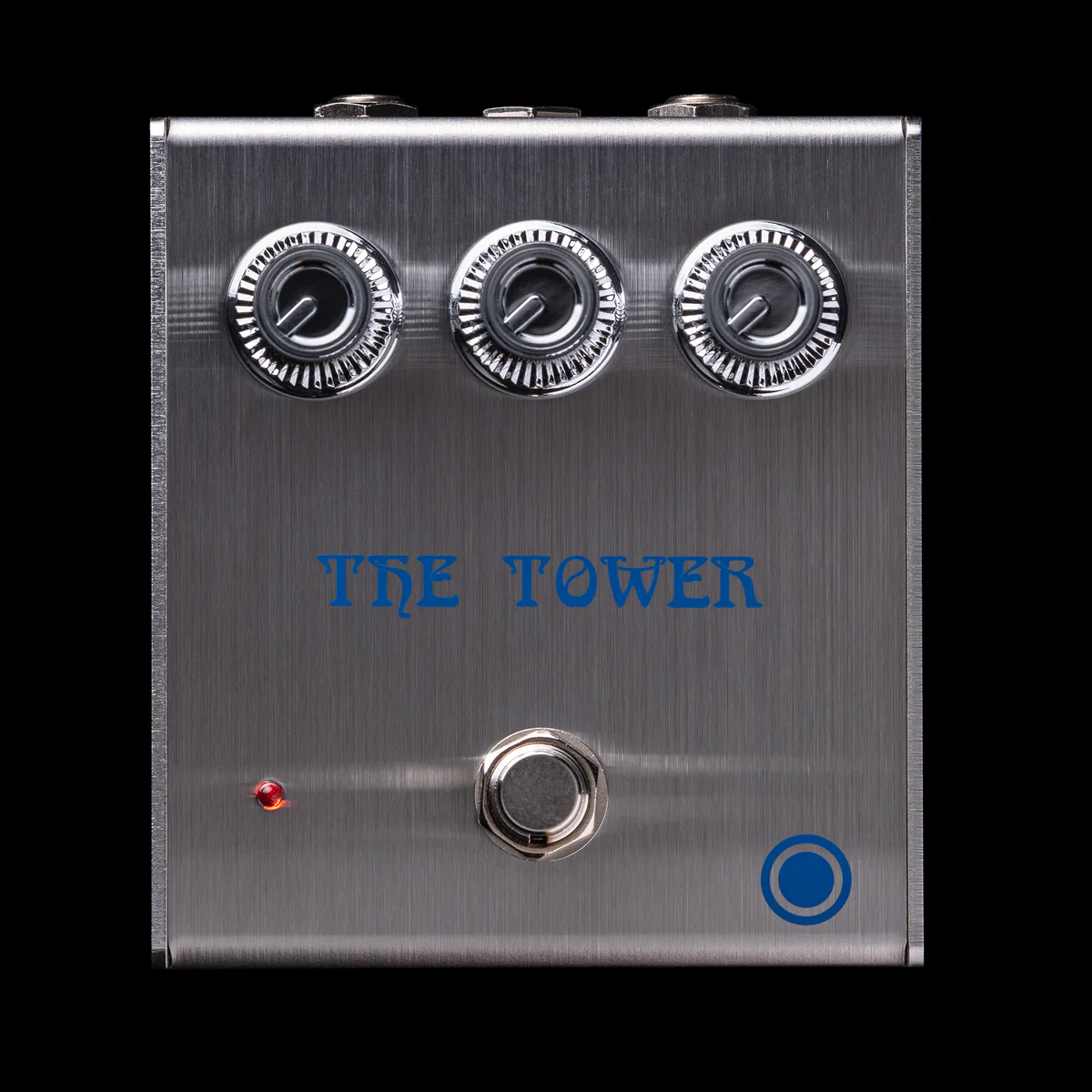
- Thoroughly analyzed and reconstructed from vintage Ram's Head Big Muffs
- Packed with rare, hand-selected vintage components
- Three-dimensional harmonic projection that responds dynamically to picking attack
Organic Sounds has emerged as a major force in the Japanese pedal scene in recent years. Their Ram's Head builds, like The Tower, are far more than simple clones. Drawing on deep insights gained from analyzing hundreds of vintage originals, they captured the magic of golden-era specimens, reproducing both the seasoned dryness and lush warmth of aged units in a brand-new pedal. The response is fast and remarkably three-dimensional.
Positive Reviews
- "I own an actual vintage unit, but I take this one to gigs. The tone is rock solid and consistent."
- "The clean tone when rolling off the guitar volume is gorgeous. I could play it forever."
- "The relic work and finish, down to the worn paint, look fantastic."
Negative Reviews
- "It's pricey. But it's worth every bit of it."
- "It's so popular that stock sells out immediately, making it hard to buy."

Summary: Beyond the Wall of Sound
The world of Muff-style fuzz pedals is a rabbit hole you can't escape once you step in, but it's also an endless pursuit of tone for guitarists.
The 12 pedals featured here are all outstanding units that recreate iconic walls of sound and endless sustain for modern rigs. Whether you want to play melancholic, Gilmour-style lead lines or chop through heavy grunge riffs, finding the right pedal for your style will make playing guitar that much more inspiring.